
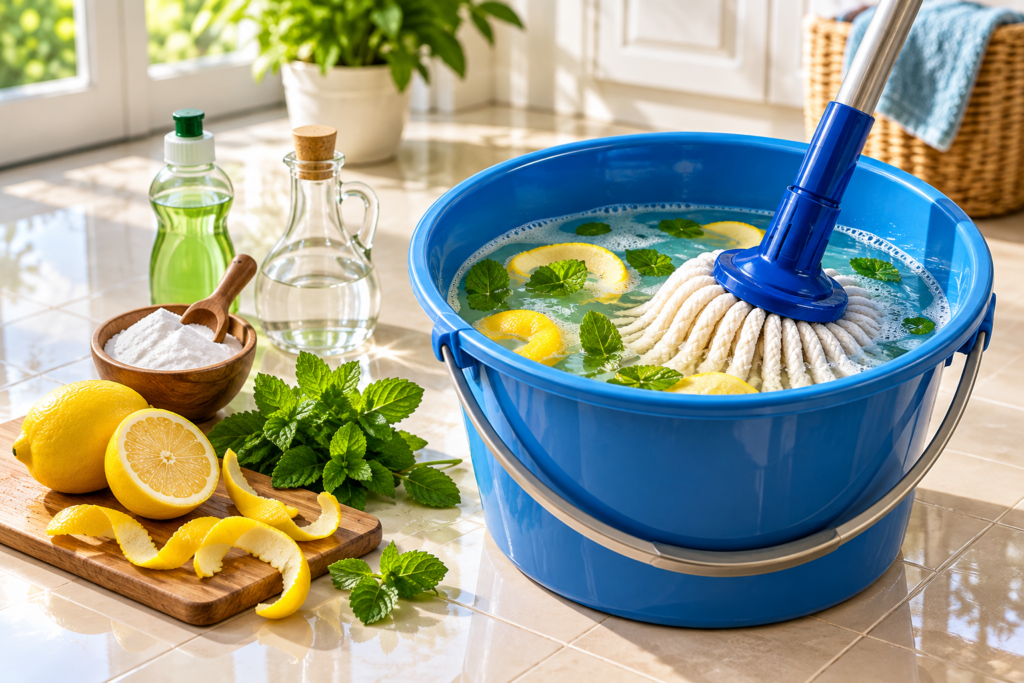
You may have seen the viral “Grandma’s mop water” recipe circulating online: add lemon peels to hot water, stir in baking soda, pour in a little vinegar, toss in some mint leaves, and mop as usual.
It sounds like the perfect old-fashioned cleaning trick. 🍋🌿
But there’s one problem: mixing baking soda and vinegar in the same bucket isn’t as useful as it looks. That impressive fizz is a chemical reaction, but the acid and base react with each other, reducing the properties you wanted from each ingredient.
So, should you forget the entire trick? Not necessarily. With a few changes, you can make a simple mop-water mixture that is much more practical.
🫧 Why Baking Soda and Vinegar Shouldn’t Be Mixed in the Bucket
Baking soda is alkaline, while vinegar contains acetic acid.
When you combine them, they react immediately, producing carbon dioxide—the bubbles and foam you see—along with water and sodium acetate.
The fizz can sometimes be mechanically useful when the ingredients are applied sequentially in certain cleaning situations. But once the reaction settles in a bucket, you no longer have the same properties of either plain vinegar or baking soda.
For routine floor cleaning, it makes more sense to choose a cleaner appropriate for the floor instead of mixing both together.
🧹 A Better Everyday Mop-Water Mixture
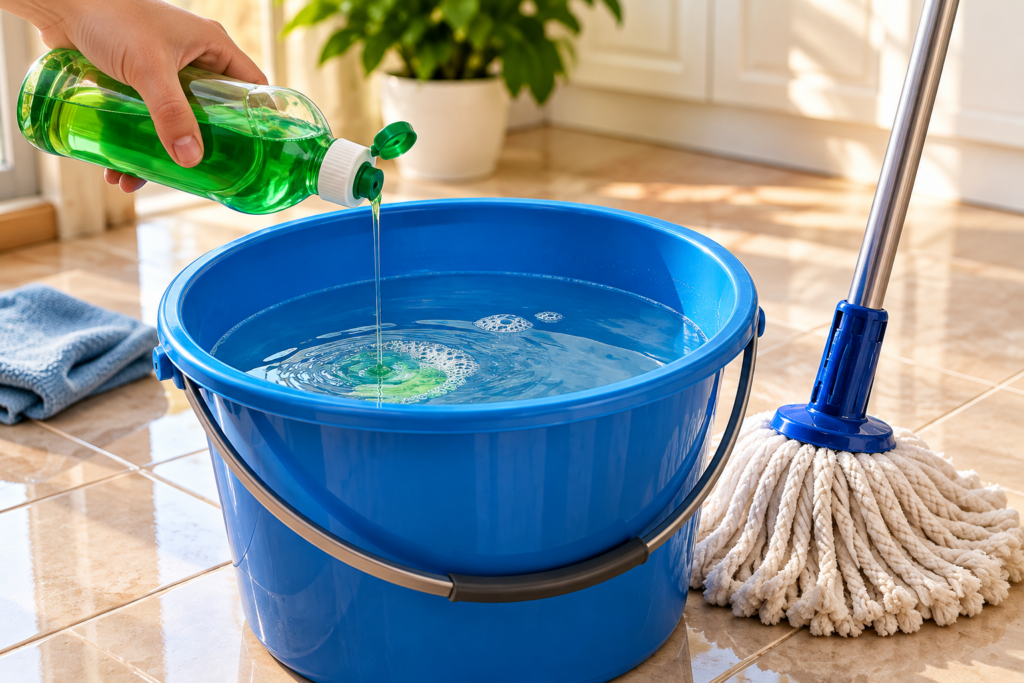
For many water-safe tile and vinyl floors: 4 L warm water + 1 teaspoon mild dish soap.
What You’ll Need
- 4 liters (about 1 gallon) warm water
- 1 teaspoon mild dish soap
- A clean mop
Optional Fragrance Infusion (Lemon or Mint)
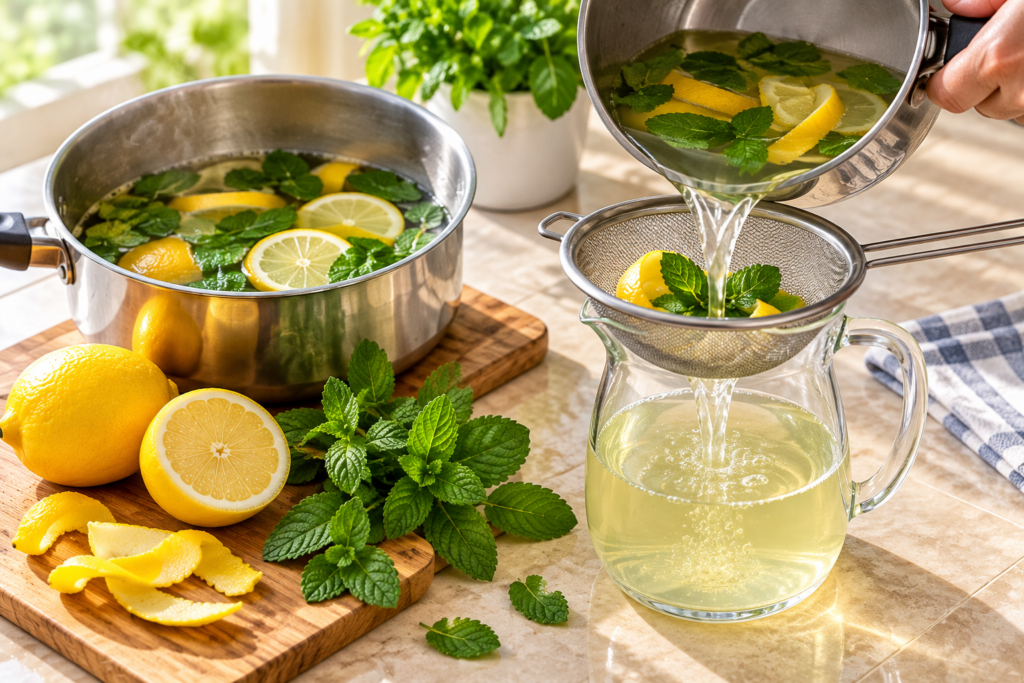
- A few lemon peels or mint leaves
- Note: Steep and strain them separately before adding the scented water to your bucket to keep plant pieces out of your mop.
How to Make It
- Fill the bucket with warm water. Warm—not necessarily boiling—water is sufficient for routine cleaning.
- Add just 1 teaspoon of mild dish soap. More soap isn’t necessarily better. Too much can leave a film behind and make the floor look dull or feel sticky.
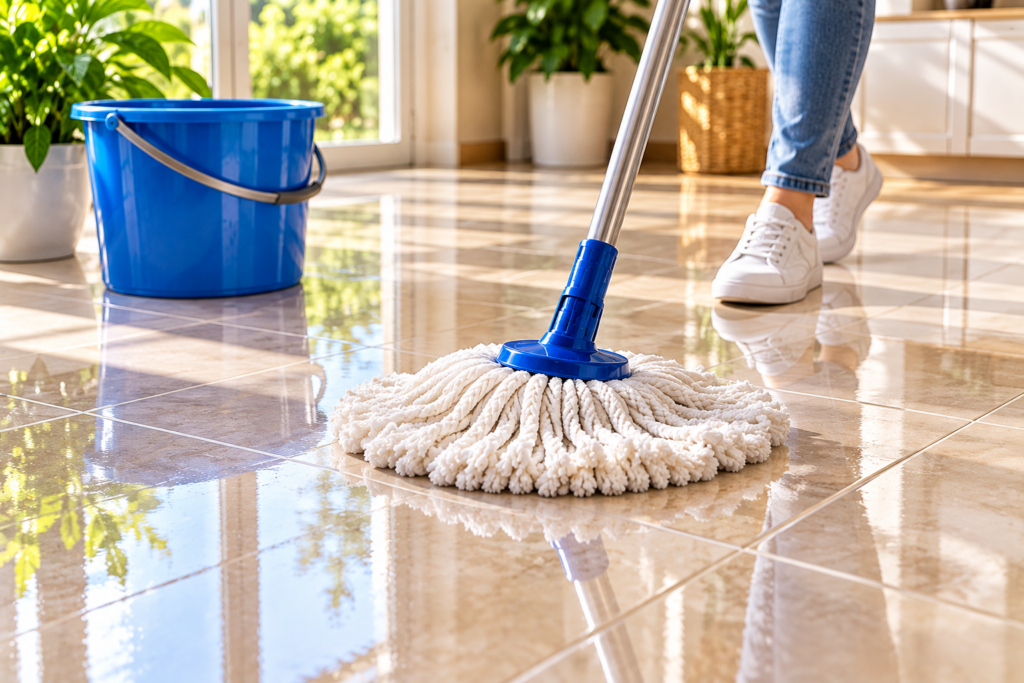
- Mop with a well-wrung mop. Avoid flooding the floor with water.
- Allow the floor to dry. If you notice a soapy film afterward, reduce the amount of dish soap next time or make a final pass with clean water.
🍋 What About Vinegar?
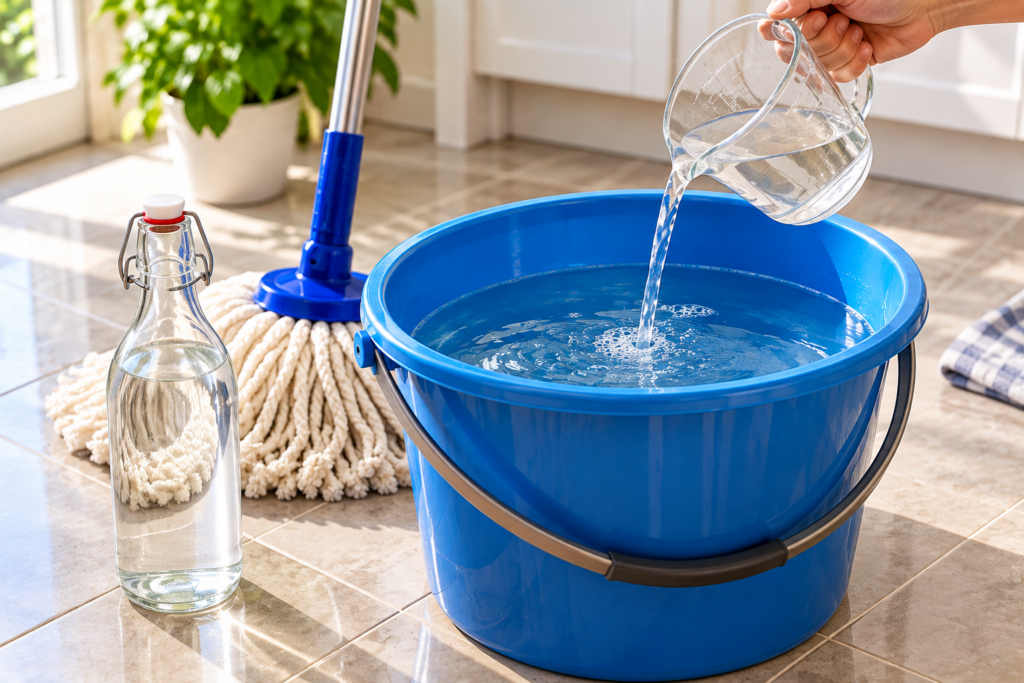
Vinegar can still have a place in household cleaning—you simply don’t need to combine it with baking soda.
For a vinegar-compatible surface, you can use this simple alternative recipe instead:
- 4 liters (about 1 gallon) warm water
- About 120 ml (½ cup) white vinegar
⚠️ Vinegar Is Not Safe for Every Floor
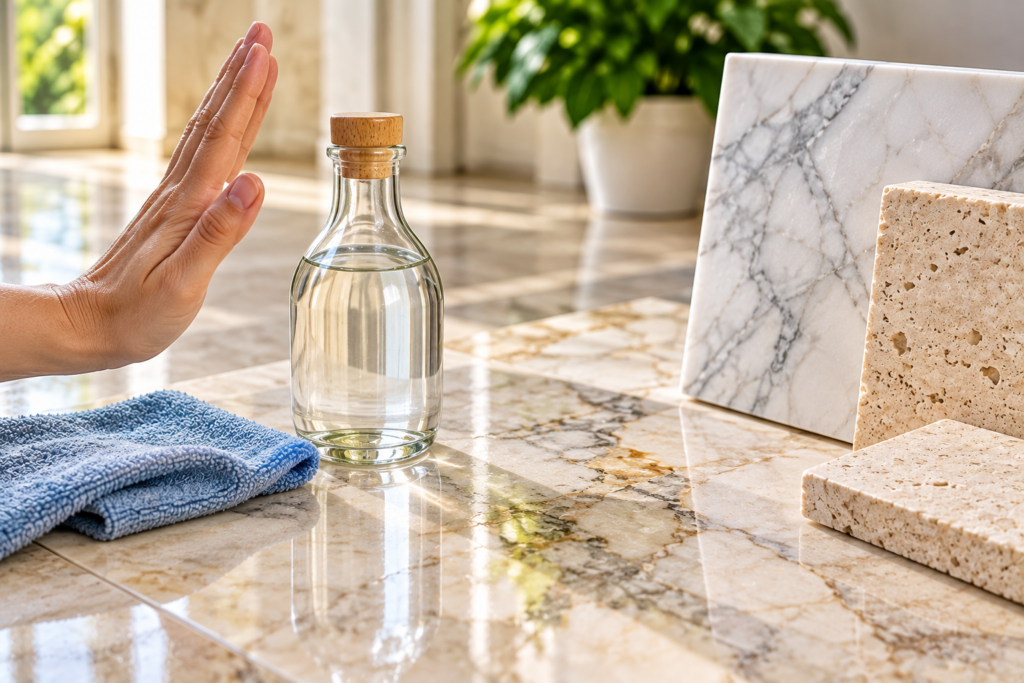
This is the most important limitation of the viral recipe.
Because vinegar is acidic, don’t automatically use it on every floor in your home.
Avoid vinegar on acid-sensitive natural stone such as:
- Marble
- Limestone
- Travertine
You should also be cautious with wood, laminate and specialty floor finishes. Follow the flooring manufacturer’s cleaning instructions, especially when you’re unsure about the finish.
When in doubt, use the manufacturer-recommended cleaner rather than experimenting with vinegar.
🌿 Do Mint Leaves Actually Clean the Floor?
Mint is probably the least important ingredient in the viral recipe.
Fresh mint can make the bucket smell pleasant, but adding a handful of leaves shouldn’t be presented as a reliable way to disinfect a floor.
Think of mint as an optional fragrance ingredient, not the cleaning agent.
The same applies to lemon peel. It can make the mixture smell fresher, but a few pieces floating in several liters of water don’t turn the bucket into a powerful lemon cleaner.
🥄 Can You Still Use Baking Soda?
Yes—but it’s often more useful as a separate cleaning tool than as an ingredient in your entire mop bucket.
For example, baking soda can sometimes help with odors or stubborn grime on compatible surfaces.
However, because it can leave residue and has mild abrasive properties, it shouldn’t automatically be spread over every type of flooring.
Always test an unfamiliar method on a small, hidden area first.
✨ Does This Homemade Mop Water Make Floors Shine?
Be careful with this promise.
A freshly cleaned floor may naturally look brighter once dirt and greasy residue are removed. But lemon peel, mint, baking soda and vinegar do not guarantee extra shine.
In fact, using too much soap or leaving cleaning residue behind can make some floors look dull.
For shine, the safest approach is usually:
Use the correct cleaner + use the correct amount + avoid residue + follow the flooring manufacturer’s instructions.
🚫 5 Mistakes to Avoid With Homemade Mop Water
- Mixing Baking Soda and Vinegar Expecting Extra Cleaning Power: The dramatic bubbling looks powerful, but the acid and base react with each other, reducing the properties you wanted from each ingredient. For a mop bucket, choose the ingredient that actually suits the cleaning job.
- Using Vinegar on Natural Stone: Acid can damage acid-sensitive stone surfaces. Marble, limestone and travertine deserve special caution.
- Adding Too Much Dish Soap: More soap can mean more residue, not a cleaner floor. Start with a tiny amount.
- Soaking the Floor: A dripping-wet mop is particularly problematic for moisture-sensitive flooring. Use a well-wrung mop and follow your floor manufacturer’s recommendations.
- Assuming “Natural” Means Safe for Every Surface: Even common kitchen ingredients can damage certain finishes and materials. The surface matters as much as the cleaning ingredient.
🧽 Which Version Should You Use?
- For water-safe tile and vinyl: Keep it simple with the everyday recipe:
- 4 L warm water + 1 teaspoon mild dish soap
- Add strained lemon- or mint-infused water only if you enjoy the fragrance.
- For a vinegar-compatible surface: You can use the alternative recipe instead:
- 4 L warm water + about 120 ml (½ cup) white vinegar
- But skip the vinegar entirely on acid-sensitive stone and whenever your flooring manufacturer advises against it.
- For wood, laminate or specialty flooring: Don’t assume either homemade recipe is appropriate. Check the manufacturer’s care instructions first.
❓ Frequently Asked Questions
- Can I mix vinegar and baking soda to mop my floors? You can physically mix them, but there’s little reason to do so for routine mopping. The acid and base react with each other, reducing the properties you wanted from each ingredient. It’s better to choose a cleaning solution appropriate for your floor.
- Can I put lemon peels directly in mop water? You can, but it’s not particularly practical. If you want the fragrance, steep the peels in water first and strain the liquid before putting it into your bucket.
- Does mint disinfect floors? Don’t rely on a few mint leaves as a disinfectant. They’re better treated as an optional fragrance ingredient.
- How much dish soap should I put in mop water? For roughly 4 liters of water, start with about 1 teaspoon. Using too much can leave a sticky or dull-looking residue.
- Is vinegar safe for all floors? No. Avoid it on acid-sensitive natural stone, and check manufacturer recommendations before using it on wood, laminate or specialty finishes.
🌟 Final Thoughts
The viral “Grandma’s Mop Water Trick” gets one thing right: floor cleaning doesn’t always require a complicated list of ingredients.
But lemon + baking soda + vinegar + mint isn’t a magic combination.
For many compatible washable floors, warm water and a tiny amount of mild dish soap is a much more sensible starting point. Strained lemon or mint can add fragrance, while diluted vinegar should be reserved as an alternative for surfaces where acidic cleaners are appropriate.
Sometimes the best improvement to an old cleaning trick is simply using fewer ingredients—and using them correctly.