
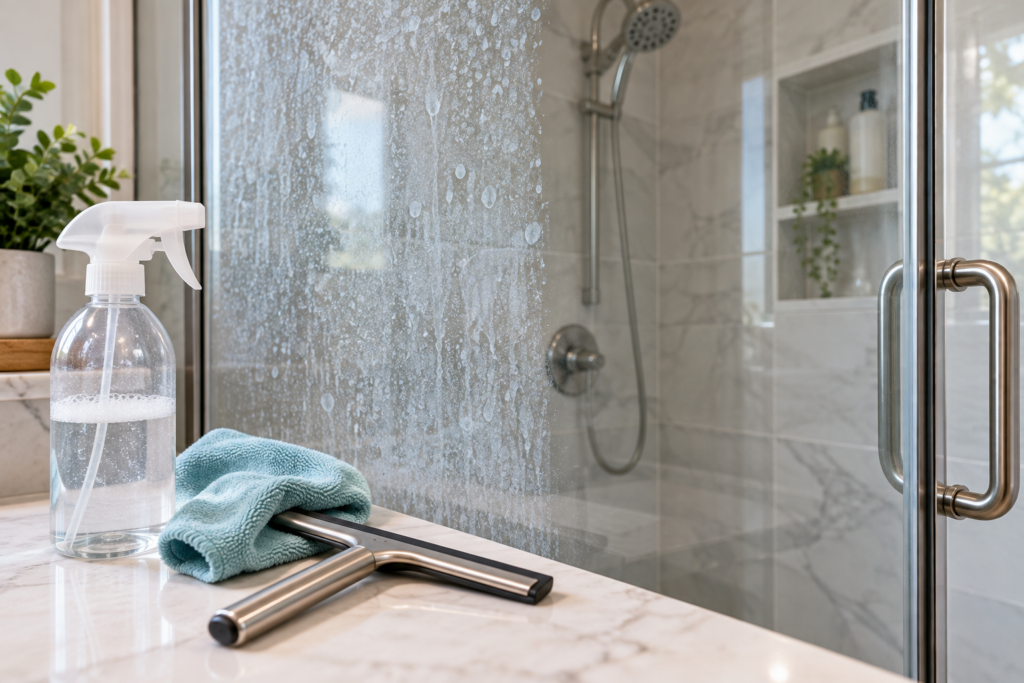
Are your glass shower doors, faucets, or bathroom fixtures constantly covered in a stubborn, cloudy white film? 🌫️ If you prefer to avoid strong-smelling or more aggressive cleaners, you are not alone. Mineral buildup—commonly known as hard water stains—is one of the most frustrating household cleaning challenges. 🧽
Here is a practical, eco-friendly guide featuring 5 targeted natural methods—centered around a citric-acid spray and other careful techniques—to help tackle hard-water deposits throughout your bathroom! 🌱💧
🔍 Why Citric Acid is a Great Ally
While standard white vinegar can work for light spots, mineral deposits (calcium and magnesium) often require a targeted approach. Citric acid can help dissolve mineral deposits responsible for cloudy hard-water buildup without leaving strong chemical fumes behind. 🍋
🛠️ What You Will Need for the Main Glass Cleaner:
- Citric acid powder 🍋 (approx. 1 level tablespoon / 15 g)
- Warm water 💧 (500 ml)
- Mild dish soap 🧼 (½ teaspoon)
- An empty spray bottle 🧴
- A soft sponge or microfiber cloth & a squeegee 🪟
📝 1. The Natural Glass Cleaner Recipe (For Shower Doors)
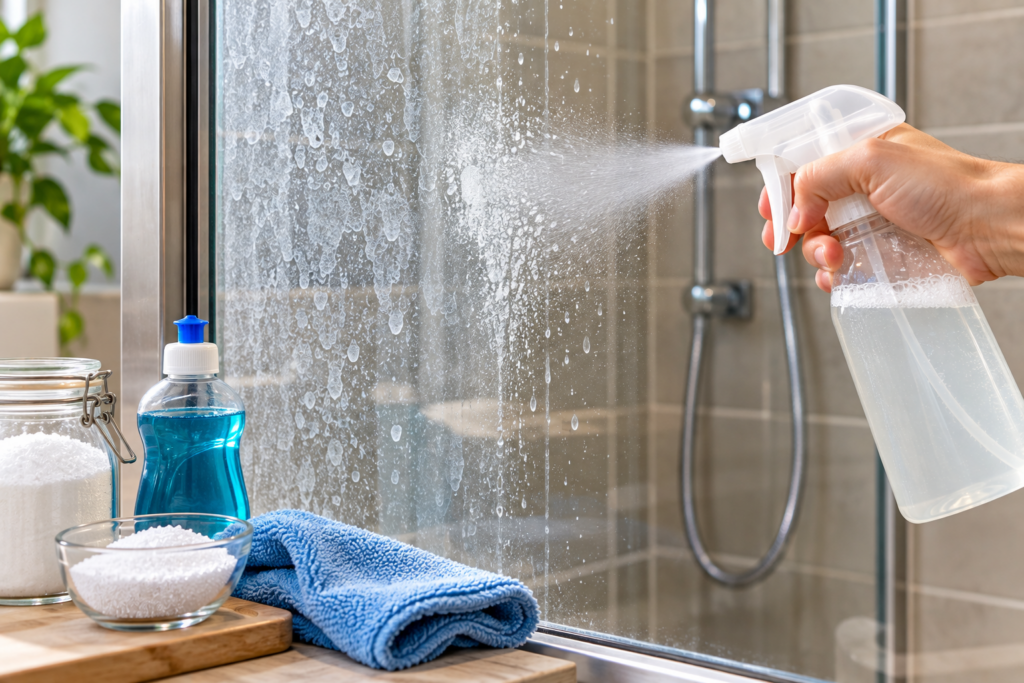
- 500 ml warm water + 1 level tbsp (about 15 g) citric acid + ½ tsp mild dish soap
For compatible shower glass. Check the manufacturer’s care instructions first, especially for glass with a factory-applied protective coating. ⚠️
How to Mix and Use It:
- Mix: Combine the citric acid powder with warm water in your spray bottle until completely dissolved, then gently add the mild dish soap.
- Test & Apply: Check manufacturer instructions and do a quick patch test. Spray onto the glass surface only, avoiding metal frames, hinges, and rubber seals as much as possible.
- Let It Work: Leave it to work for about 5 minutes. Do not let the solution dry out completely on the glass.
- Wipe, Rinse & Polish: Pass a soft, non-abrasive sponge or microfiber cloth gently across the surface. Rinse very thoroughly with clean water, then finish with a squeegee and a dry microfiber cloth!
🛁 2. Four Other Targeted Natural Anti-Calcaire Methods
🚰 The Cleaning Clay Paste (For Faucets & Chrome)
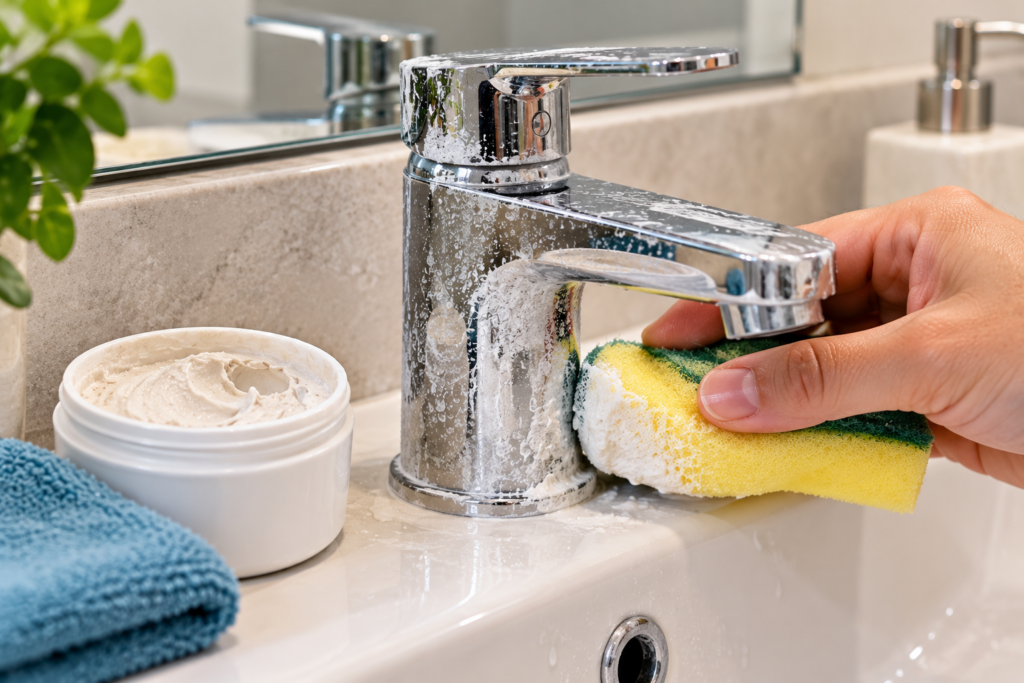
- The Method: If the fixture manufacturer allows it, use a non-scratch cleaning clay very gently (pierre d’argile). Always test first on an inconspicuous area.
- How to use: Rub a damp sponge onto the clay to create a light foam, apply gently, rinse well with clean water, and buff dry.
🚿 The Baggy Trick (For Shower Heads)
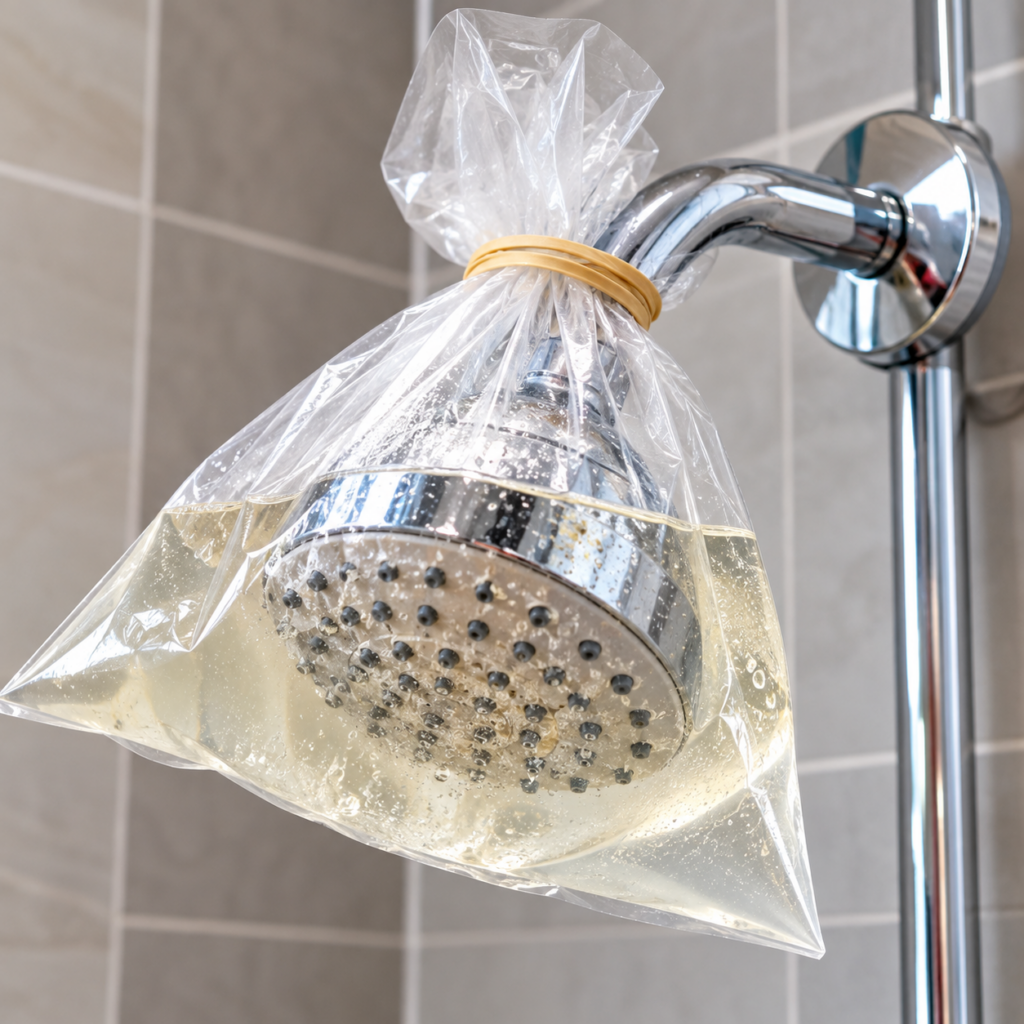
- The Method: A great visual subject, but note that it is not a one-size-fits-all solution—some manufacturers and delicate finishes advise against prolonged acidic soaking.
- How to use: If compatible, fill a sturdy plastic bag with a mild water-vinegar or water-citric acid solution, secure it around your shower head for a limited time (30 minutes max). Remove the bag, rinse thoroughly, run clean water through the shower head, and gently clean the nozzles if needed.
🚽 Citric Acid for Mineral Toilet Bowl Rings
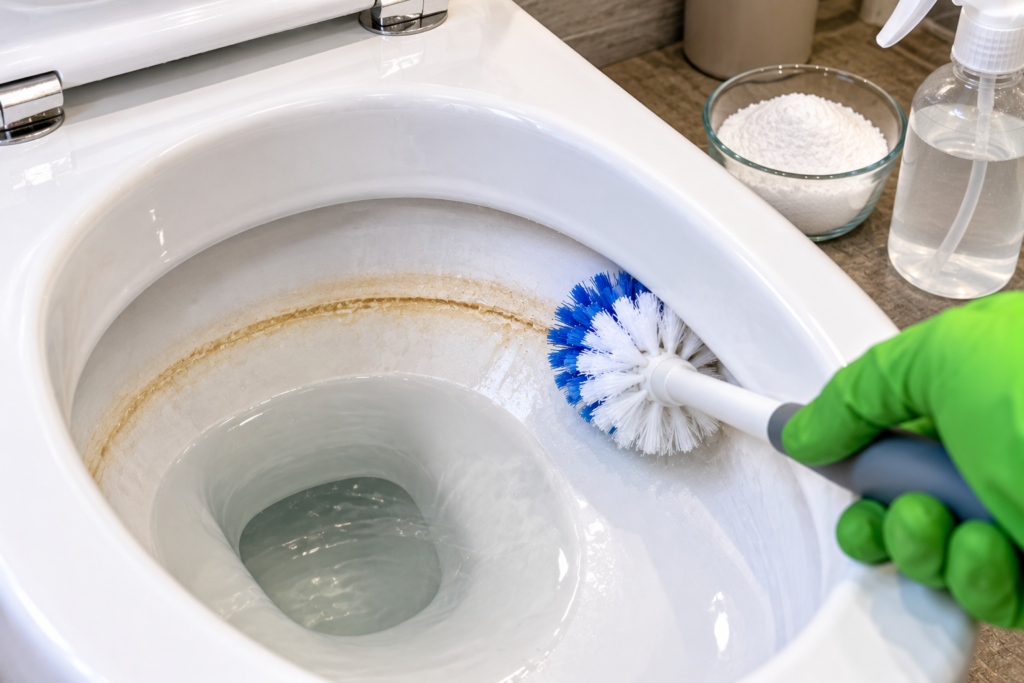
- The Method: Lower the water level if practical so the mineral ring is exposed. Prepare a citric-acid solution according to the product directions and apply it to the affected ceramic surface.
- How to use: Allow appropriate contact time without letting the product dry, scrub with a toilet brush, then flush and rinse thoroughly.
📝 The Vinegar “Cataplasm” (For Vertical Faucet Bases)
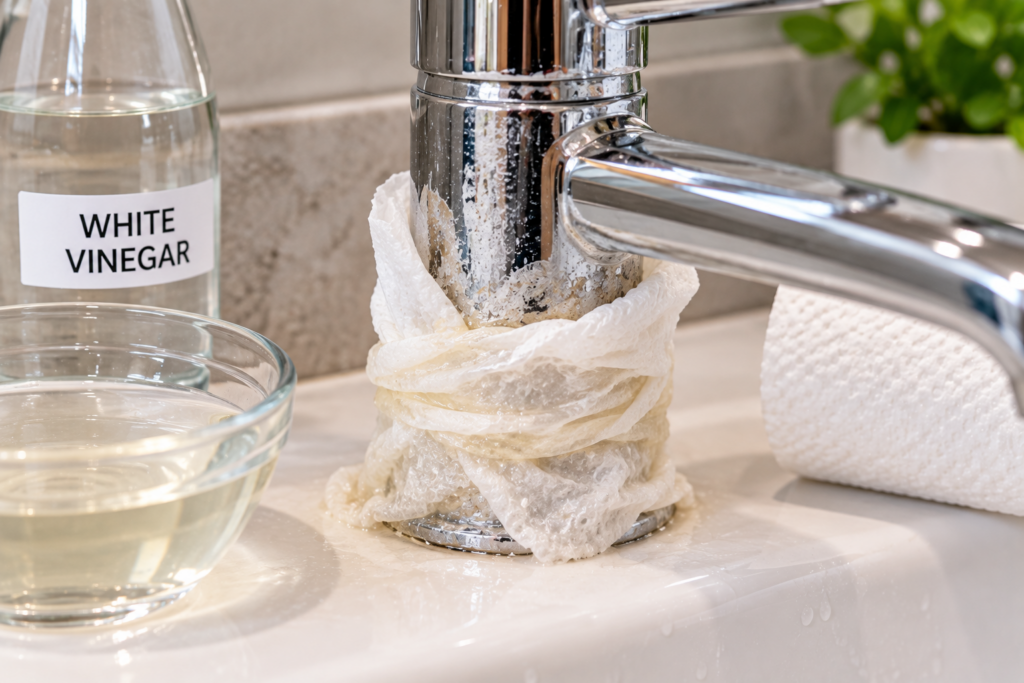
- The Method: Soak paper towels or old rags in white vinegar and wrap them tightly around stubborn scale buildup at the base of faucets.
- Important: Use only on vinegar-compatible finishes and for limited contact time, as some decorative metal finishes can be sensitive to acids.
⚠️ Safety & Important Precautions:
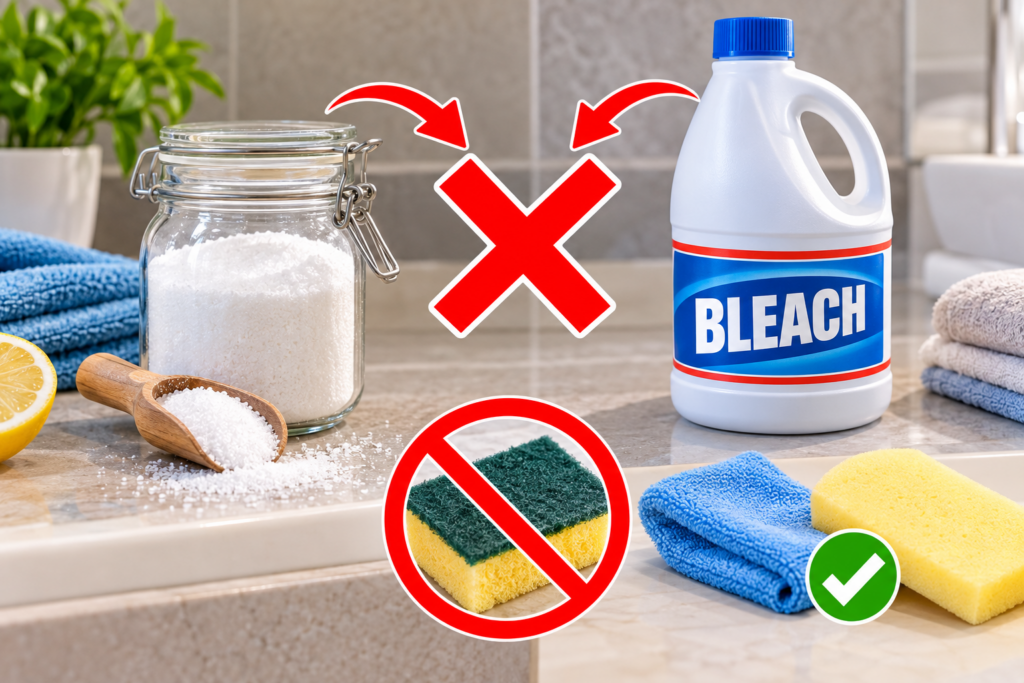
- Never mix acid cleaners with chlorine bleach or other cleaning products. Rinse surfaces thoroughly before switching cleaners. 🚫
- No baking soda in the spray recipe: Mixing it with citric acid will neutralize the acid. ❌
- Avoid abrasive tools: Use only soft tools and sponges to protect glass and polished metal surfaces. 🪨
❓ Frequently Asked Questions (FAQ)
Q: Can I use white vinegar instead of citric acid in the spray? A: White vinegar can be useful for light maintenance, while citric acid is another option for stubborn mineral deposits and is convenient because its concentration can be measured when preparing the solution. 🍋
Q: Will this spray scratch my glass shower door? A: Citric acid is dissolved in this solution rather than being used as an abrasive. Use only a soft sponge or microfiber cloth, since abrasive tools can scratch glass, and always follow the shower-door manufacturer’s care instructions. 🪟
Q: How often should I clean my glass shower doors? A: Using this spray regularly as part of your maintenance routine, combined with wiping down the glass with a squeegee after showers, can help reduce recurring water spots. 📅
Q: Are these acidic methods safe for metal frames and fixtures? A: It’s best to keep acidic solutions focused strictly on glass or ceramic, and always check manufacturer guidelines. Acidic solutions can potentially tarnish or damage certain raw or polished metal finishes if left in prolonged contact with them. 🚿
Found this helpful? Don’t forget to save this pin 📌 to your Natural Cleaning board for your next cleaning session!