
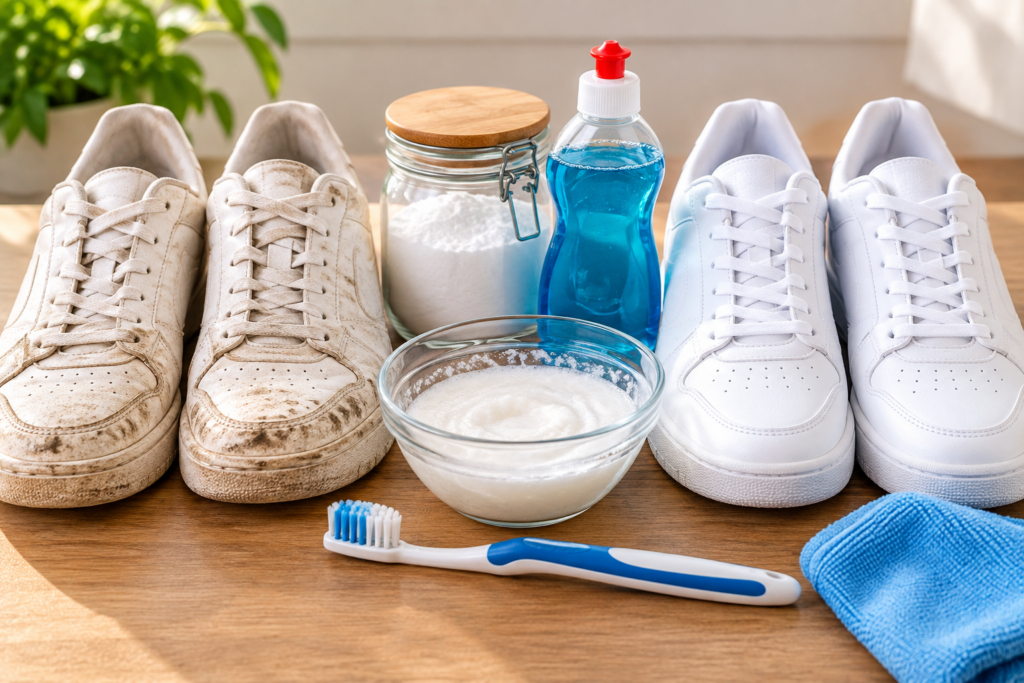
White shoes look fresh, clean, and easy to match with almost anything—but keeping them white is another story.
Dust settles into the fabric, rubber soles develop gray marks, and everyday dirt can quickly turn bright white sneakers into dull-looking shoes.
One viral solution is to mix baking soda and vinegar, but there’s a simpler combination that makes more sense for everyday grime: baking soda + mild dish soap + a little water.
Dish soap helps remove greasy dirt, while baking soda provides gentle abrasive action that can help lift stubborn surface grime from suitable materials.
The result? Dirty white shoes can look noticeably brighter and cleaner without relying on an unnecessarily complicated mixture.
But there’s an important catch: not every white shoe should be cleaned the same way. Here’s how to use this trick properly—and when you should choose another method.
⭐ The Main Trick: Baking Soda + Dish Soap
This is the method I would start with for many washable white canvas shoes and sturdy white rubber areas.
🥣 What You’ll Need
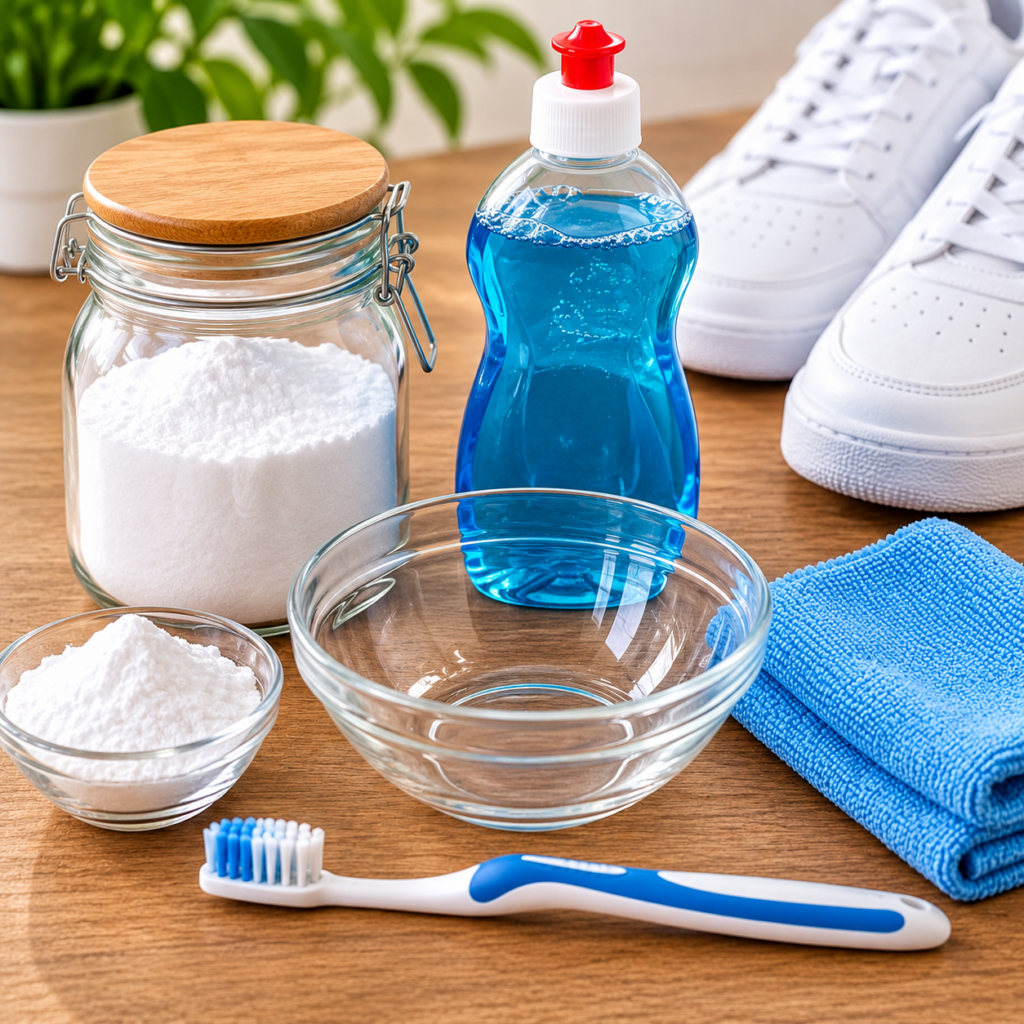
- 1 tablespoon baking soda
- 1 tablespoon mild dish soap
- A small amount of water
- A soft toothbrush or shoe-cleaning brush
- A microfiber cloth
- A small bowl
You only need enough water to turn the ingredients into an easy-to-spread paste.
👉 Important: Always check the shoe manufacturer’s cleaning instructions first and test the mixture on a small, inconspicuous area.
🧼 How to Clean White Shoes Step by Step
1. Remove the Laces
Start by taking out the shoelaces. This gives you better access to the tongue, eyelets, and other areas where dirt tends to accumulate. Don’t forget about the laces—they can make freshly cleaned shoes still look dirty if they’re gray or stained.
2. Brush Away Dry Dirt First
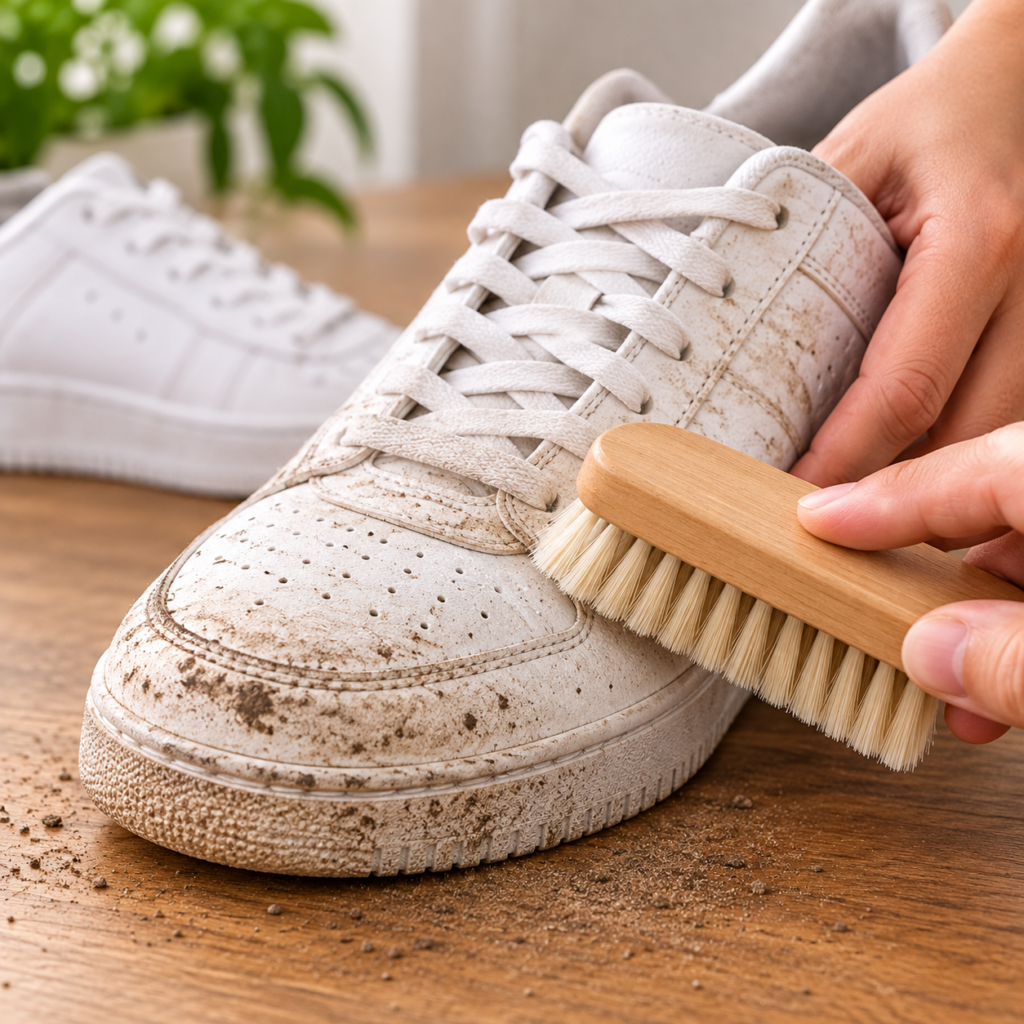
Before adding water or cleaner, use a dry soft brush to remove:
- ✔ Dust
- ✔ Loose soil
- ✔ Dried mud
- ✔ Dirt trapped around the sole
This small step is important. Adding liquid immediately can turn loose dirt into muddy residue that’s harder to remove.
3. Make the Cleaning Paste
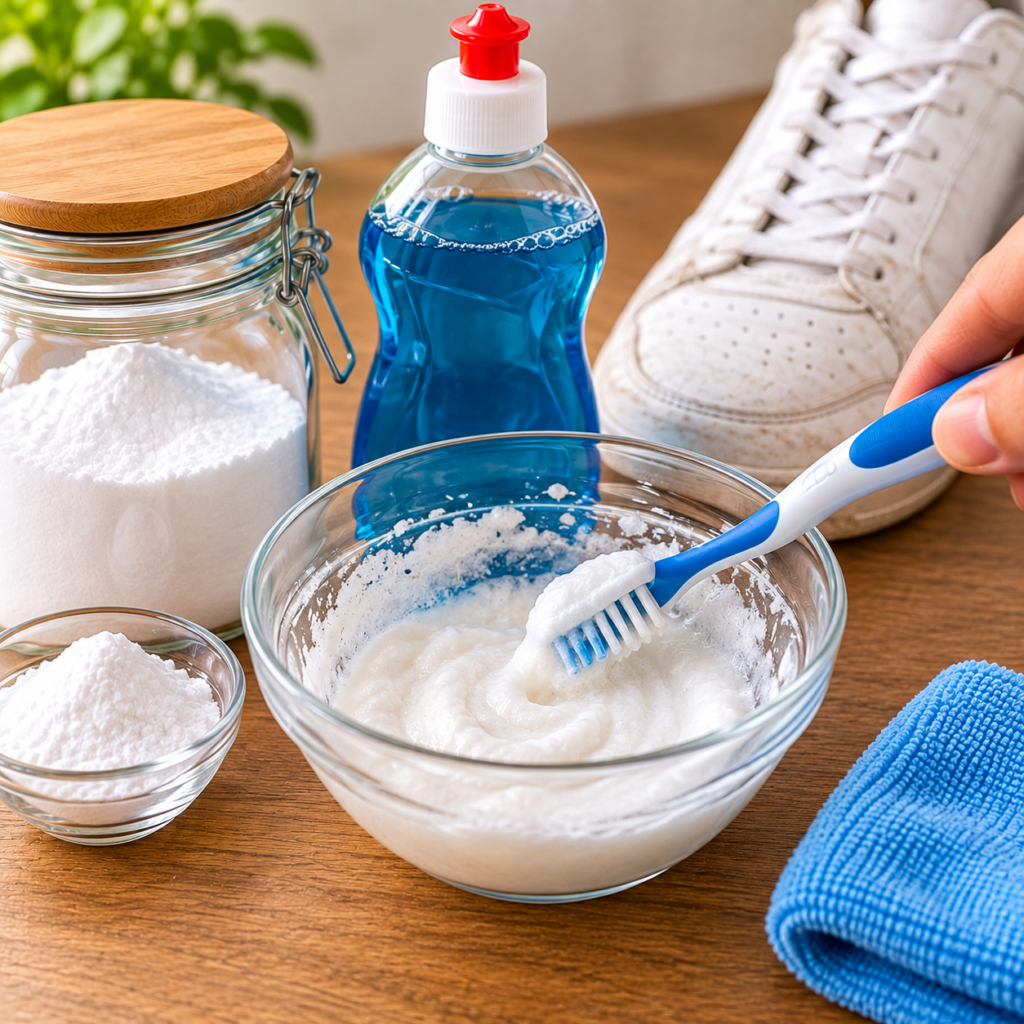
In a small bowl, combine 1 tablespoon baking soda + 1 tablespoon mild dish soap. Add a little water and mix until you have a soft, spreadable paste. You don’t need a thick layer covering the entire shoe. A little goes a long way.
4. Gently Work It Into Dirty Areas
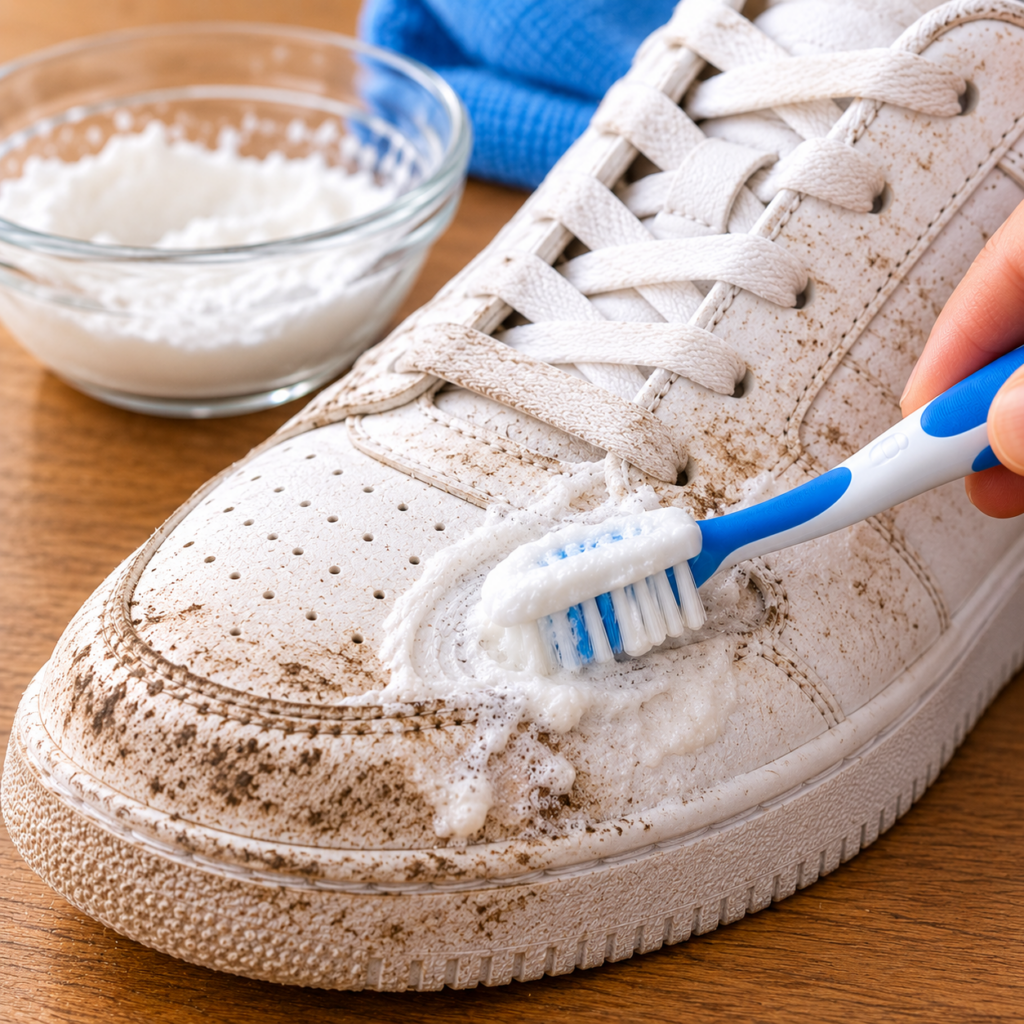
Dip a soft toothbrush into the mixture and gently work it over suitable dirty areas using small circular motions. Concentrate on:
- ✔ Stained canvas
- ✔ Fabric around the toe
- ✔ Edges around the sole
- ✔ White rubber midsoles
- ✔ Areas around the laces
Avoid aggressive scrubbing. More pressure doesn’t necessarily mean better cleaning and can damage delicate fibers.
⚠️ Be Extra Gentle With Mesh: Thin sneaker mesh can snag, fuzz, or lose its shape when scrubbed too aggressively. Use considerably less pressure—or simply use diluted dish soap and a soft cloth instead.
5. Don’t Forget the Rubber Soles
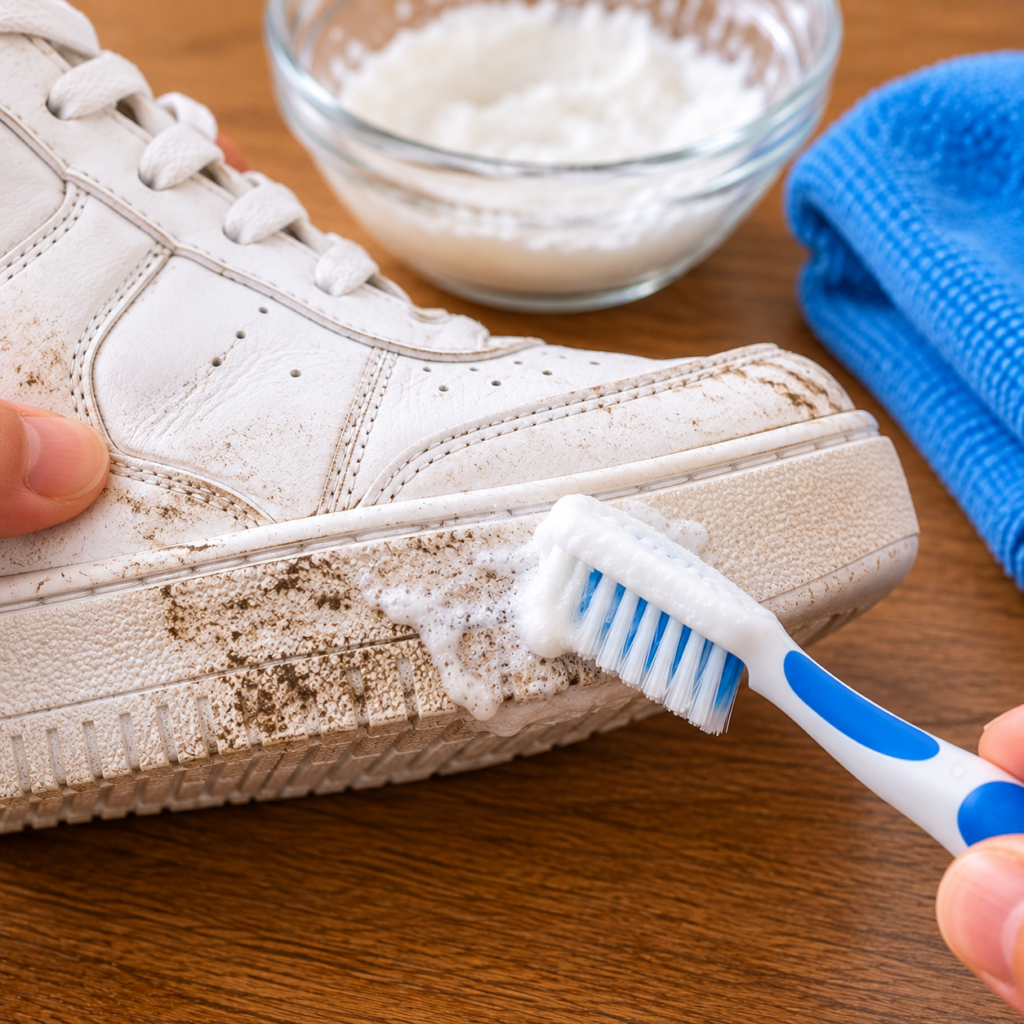
White rubber is often where the transformation is most noticeable. Work the mixture gently over dirty rubber edges and midsoles with the toothbrush. For stubborn black scuff marks, there’s another useful option later in this article.
6. Remove the Cleaning Mixture
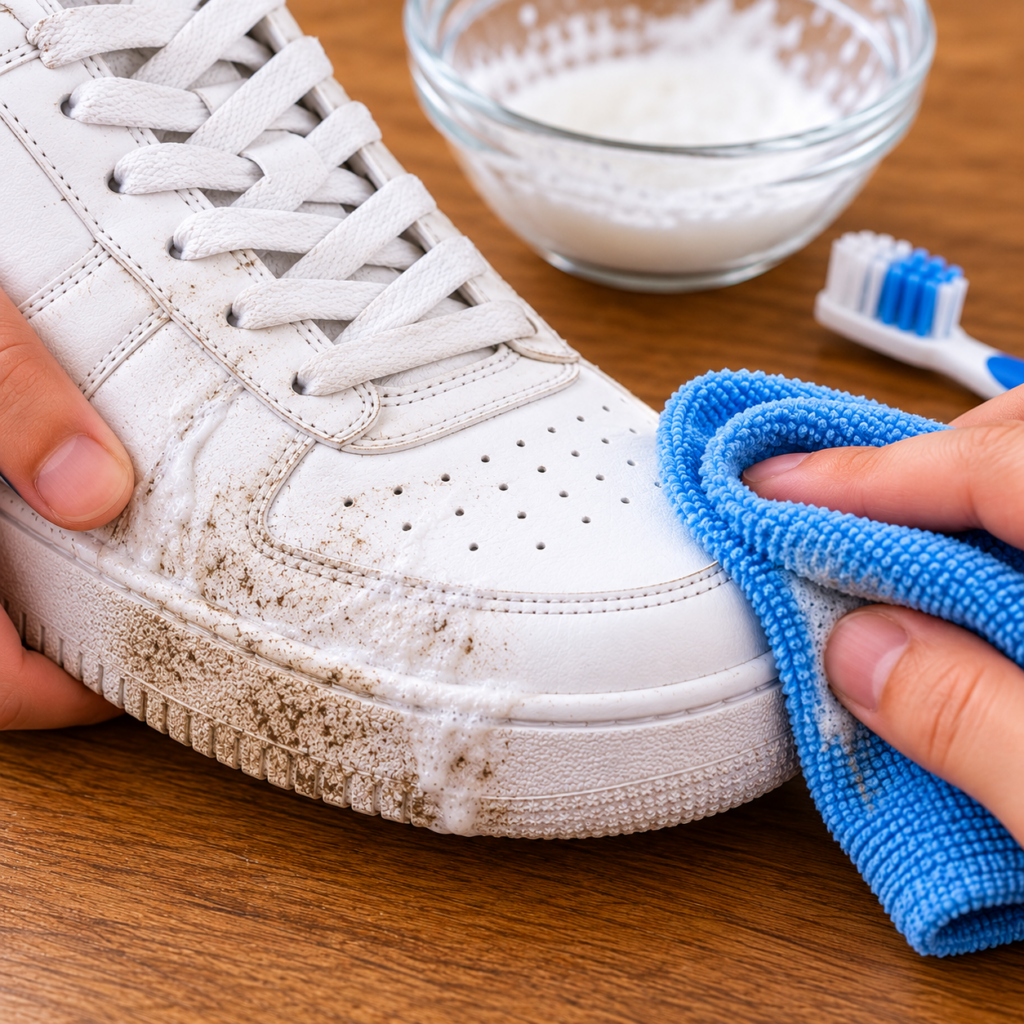
Once you’ve finished cleaning, don’t leave a thick baking-soda coating on the shoes. Use a clean, damp microfiber cloth to repeatedly wipe away the mixture (rinse and wring out the cloth as necessary). Continue until you can no longer see or feel cleaning residue. Avoid unnecessarily soaking the entire shoe.
7. Let the Shoes Air-Dry
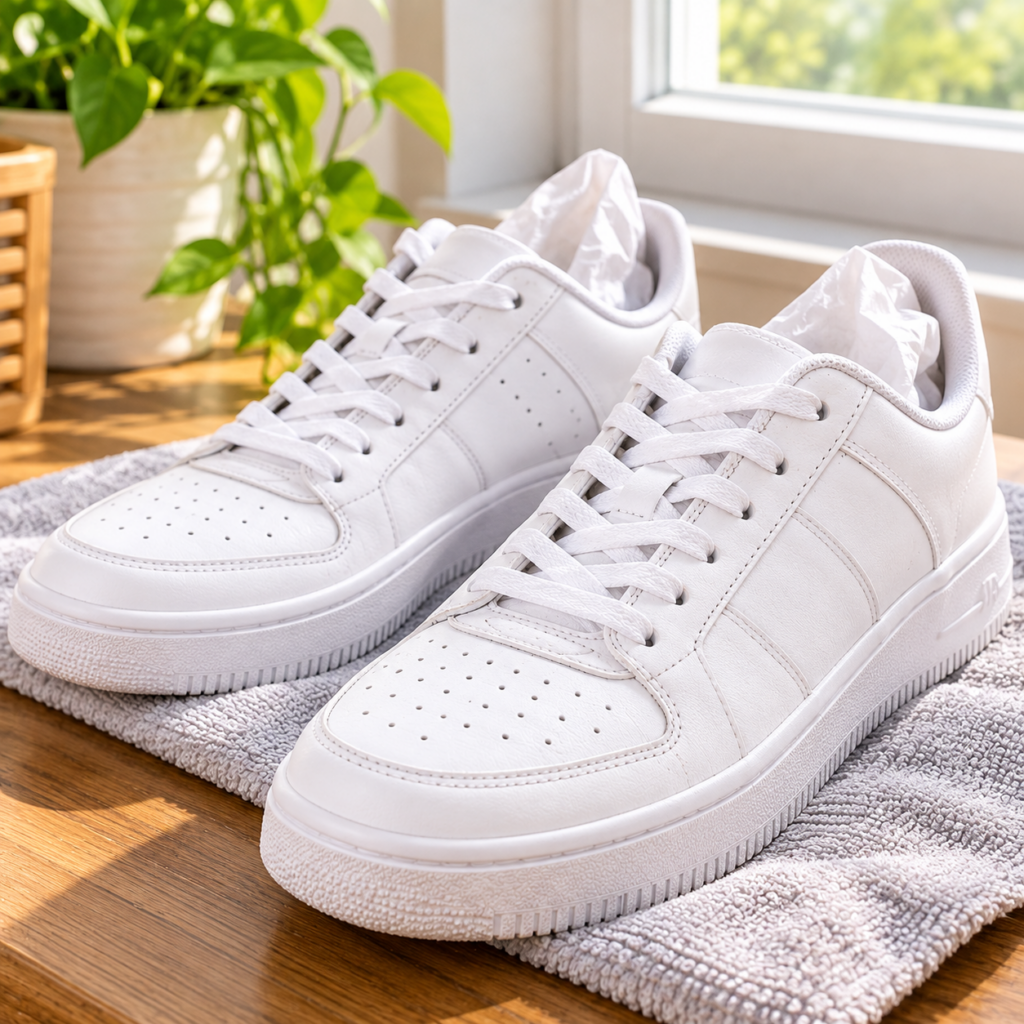
Allow the shoes to dry naturally in a well-ventilated place. Avoid placing them directly against a radiator or blasting them with very high heat, which can affect certain materials, adhesives, and the shoe’s shape. You can loosely stuff the shoes with clean white paper to help them maintain their shape and absorb some moisture (avoid colored newspaper or printed paper that could potentially transfer ink when wet).
✨ Will This Make White Shoes Look Like New?
Sometimes the improvement can be dramatic—but “like new” isn’t something any cleaning trick can guarantee.
This method works particularly well when the shoes look dull because of surface dirt, everyday grime, greasy marks, dirty rubber, or some superficial stains. Cleaning removes material sitting on or within the surface; it cannot necessarily reverse changes to the shoe material itself.
For example, cleaning may not completely fix:
- ❌ Permanent yellowing
- ❌ UV or sun discoloration
- ❌ Deep-set stains
- ❌ Worn fabric
- ❌ Damaged coatings
- ❌ Yellowed adhesive
- ❌ Permanent dye transfer
So think “bright and clean again”, rather than automatically expecting an old pair to become factory-new.
🧽 Extra Trick #1: Magic Eraser for White Rubber
If the fabric looks good but the white rubber still has gray or black scuff marks, a melamine sponge (commonly known as a Magic Eraser) can be surprisingly useful. Lightly dampen it and gently rub the white rubber portion only. Don’t scrub aggressively. Melamine foam works through very fine abrasive action, so repeated or forceful rubbing can dull some finishes. I would avoid using it indiscriminately on leather, painted details, glossy coatings, or delicate fabric.
🪥 Extra Trick #2: White Toothpaste for Small Rubber Marks
Plain white, non-gel toothpaste can be another targeted option for small dirty areas on white rubber. Apply a tiny amount to an old soft toothbrush, gently work over the mark, and wipe it away thoroughly with a damp cloth. I wouldn’t cover an entire pair of shoes in toothpaste; think of this as a spot-cleaning trick, particularly for rubber toe caps and sole edges.
🧼 Extra Trick #3: Wash the Laces Separately
Clean shoes with dirty laces still look dirty. Place white laces in a bowl of warm water with a small amount of laundry detergent. Gently work the detergent through them, allow them to soak according to the detergent directions, then rinse thoroughly. Let them dry completely before putting them back into the shoes. It’s a tiny step that can make a surprisingly noticeable visual difference.
👟 Different Materials Need Different Cleaning Methods
This is where many viral shoe-cleaning hacks go wrong. One recipe isn’t suitable for every white shoe.
- White Canvas: Canvas generally tolerates gentle cleaning relatively well. The baking soda + dish soap method can be useful here, provided the shoe manufacturer allows this type of cleaning. Don’t oversaturate the material.
- White Mesh: Mesh needs a gentler approach. Try diluted mild dish soap + water with a microfiber cloth or very soft brush. Avoid heavy scrubbing, because delicate mesh can become fuzzy or damaged.
- White Leather: Don’t treat leather like canvas. Use a damp microfiber cloth with a very small amount of mild soap or, preferably, a cleaner specifically intended for the type of leather. Wipe away residue and follow the manufacturer’s care instructions. Avoid soaking leather.
- Suede and Nubuck: Don’t use the baking-soda paste as your default method here. Suede and nubuck require specialized care. A suede brush, suede eraser, or cleaner designed specifically for the material is a much safer starting point.
🧪 What About Baking Soda + Vinegar?
This combination appears constantly in viral cleaning videos. When baking soda and vinegar meet, they produce dramatic fizzing—it certainly looks powerful.
But the bubbles don’t automatically mean you’re getting a stronger shoe cleaner. Baking soda is alkaline, while vinegar contains acid. When combined, they react with each other and partially neutralize the properties you might otherwise use separately.
For everyday dirty white canvas and rubber, I’d rather use the simpler baking soda + mild dish soap approach. Save vinegar for situations where its acidity actually serves a purpose and the material is known to tolerate it.
🚫 What About Bleach?
Bleach can whiten certain compatible materials, but I wouldn’t make it the first choice for everyday white sneakers. Depending on the shoe and concentration, bleach can potentially:
- Damage certain materials
- Affect colored details
- Weaken some fabrics
- Interact badly with other cleaners
- Contribute to unwanted discoloration in some situations
If a shoe manufacturer specifically allows a bleach treatment, follow its instructions carefully. Never mix chlorine bleach with vinegar, ammonia, or other household cleaners.
🧺 Should You Put White Shoes in the Washing Machine?
Not automatically. Some manufacturers allow certain shoes to be machine washed, while others specifically advise against it. Machine washing can potentially affect adhesives, foam components, leather, decorative details, shape, and specialty coatings.
Check the care instructions for your particular shoes before putting them into a washing machine. Hand cleaning gives you much more control.
☀️ Should White Shoes Dry in Direct Sunlight?
Be cautious. Strong sunlight and heat can affect some fabrics, adhesives, dyes, and other shoe materials. A well-ventilated area away from intense heat is generally a safer drying environment unless the manufacturer says otherwise. And don’t put the laces back in until everything is completely dry.
⚠️ 7 Mistakes That Can Ruin White Shoes
Even a good cleaning method can produce poor results when used incorrectly. Avoid these common mistakes:
- Scrubbing delicate mesh aggressively: It can damage or fuzz the fibers.
- Soaking the entire shoe unnecessarily: Water can reach adhesives and internal materials.
- Using the same method on leather, suede, canvas, and mesh: Different materials require different care.
- Assuming more baking soda means more cleaning power: Excessive abrasive action can damage surfaces.
- Using high heat to dry shoes quickly: Heat can affect shape and adhesives.
- Ignoring the laces and sole edges: These areas strongly influence how clean the entire shoe looks.
- Mixing multiple cleaning chemicals: This can be ineffective, damage materials, or—in some combinations—be dangerous.
💡 How to Keep White Shoes Cleaner for Longer
Once you’ve cleaned them, a few habits can reduce how often you need a deep clean:
- Clean Marks Early: Fresh dirt is often easier to remove than a stain that has been sitting for weeks.
- Brush Off Dry Mud: Allow mud to dry and gently brush away as much as possible before wet cleaning.
- Store Them Properly: Keep white shoes away from unnecessary moisture, dirt, and prolonged intense sunlight when they aren’t being worn.
- Clean the Soles Regularly: A quick wipe of the white rubber edges can keep the whole pair looking fresher between deeper cleanings.
❓ Frequently Asked Questions
- What is the best homemade cleaner for white shoes?There isn’t one cleaner that’s best for every shoe. For suitable washable white canvas and sturdy rubber, mild dish soap with baking soda and a little water can be a useful DIY method. Leather, mesh, suede, and specialty materials may require different approaches.
- Can baking soda make shoes white again?Baking soda can help remove surface dirt and some stains, making suitable white materials appear brighter. It cannot reverse permanent yellowing, wear, or material discoloration.
- Can I use dish soap alone?Yes. In fact, diluted mild dish soap and water is a good starting point for many everyday stains and may be preferable to baking soda on more delicate materials.
- Can toothpaste whiten white sneakers?White non-gel toothpaste can help with some superficial marks, particularly on sturdy white rubber. It’s better used as a targeted spot treatment than as a universal whole-shoe cleaner.
- Why did my white shoes turn yellow?Yellowing can have several causes, including aging, material oxidation, UV exposure, adhesive changes, accumulated residue, or improper cleaning and drying. If the material itself has discolored, ordinary cleaning may not completely restore the original white.
- How often should I clean white shoes?There’s no fixed schedule. Spot-clean fresh marks as they appear and deep-clean only when necessary. Excessive washing can shorten the life of some shoes.
🏡 Final Thoughts
You don’t need an explosive mixture of household ingredients to make dirty white shoes look better. For suitable white canvas and sturdy rubber, a simple combination of baking soda, mild dish soap, and a little water can help lift everyday dirt and make shoes look noticeably brighter.
The real secret, however, is using the right method for the material:
- Treat mesh gently.
- Don’t soak leather.
- Keep wet DIY mixtures away from suede unless specifically recommended.
- Clean the laces separately, tackle rubber scuffs individually, and let everything air-dry without excessive heat.
Your white shoes may not literally become brand-new again—but when the problem is mostly accumulated dirt and grime, a careful clean can make a surprisingly big difference.