
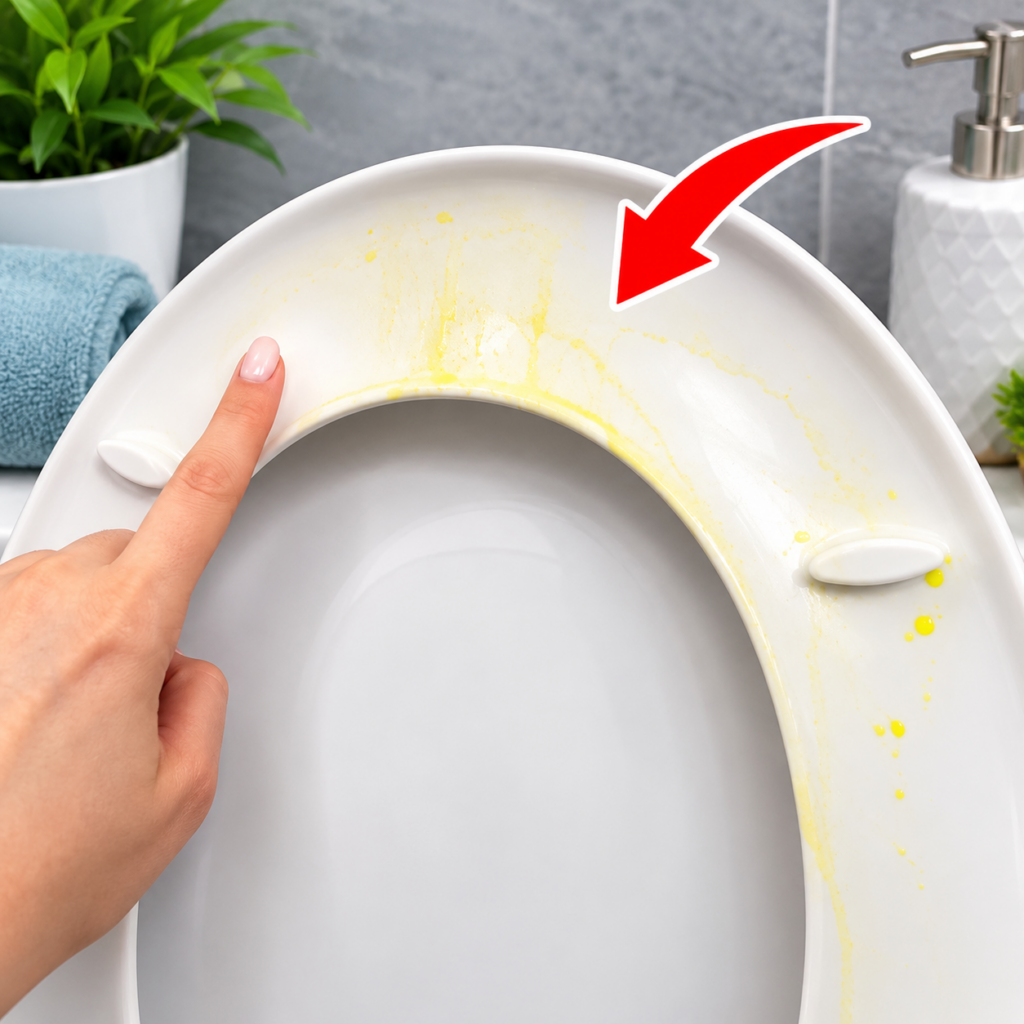
Are you tired of looking at those stubborn yellow stains on your toilet seat that seem impossible to scrub away? If you’ve ever noticed discoloration on the surface or underside of a toilet seat, it can instantly make an otherwise clean bathroom look unkempt.
Before rushing to use viral cleaning hacks or aggressive commercial cleaners, it is important to pause. Not all toilet seats are made of the same material, and using the wrong cleaning agent or tool can permanently scratch or ruin the finish.
This guide covers a safer, more balanced approach: starting with gentle everyday methods, understanding what actually causes toilet seat yellowing, testing homemade solutions responsibly, and tackling tough stains with simple household ingredients instead of relying automatically on harsh chlorine bleach.
🔍 Why Do Toilet Seats Turn Yellow?
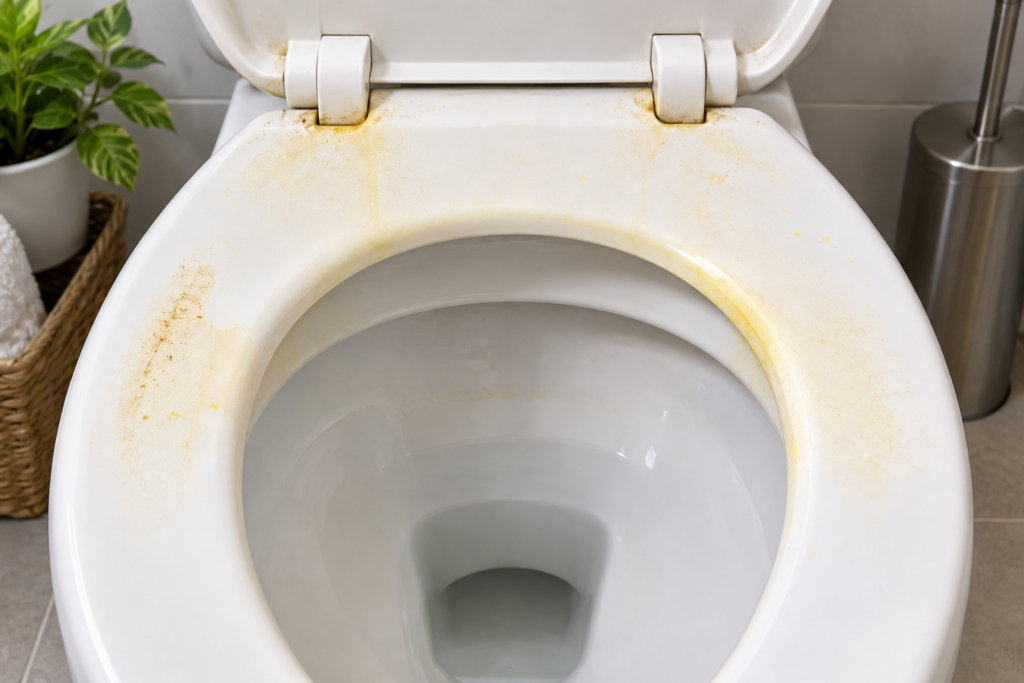
It is easy to assume that all yellow stains come from the exact same source, but the reality is more complex. Depending on the specific seat material and usage, yellowing can be caused by several factors:
- Mineral deposits and organic residues: Hard water minerals and daily use can leave behind buildup that darkens over time.
- Plastic aging and UV exposure: Over the years, plastics naturally degrade, oxidize, and yellow when exposed to light, air, and household cleaners.
- Aggressive cleaning products: Using harsh chemicals or abrasive tools previously can strip or micro-scratch the protective top layer of the plastic, making it far more porous and prone to absorbing stains permanently.
Because the cause isn’t always identical, it is best to start with the mildest cleaning approach before moving on to stronger home solutions.
🛑 Step 1: Always Check the Manufacturer’s Guidelines First
Before applying any cleaner or scrub, check the care instructions provided by your toilet seat manufacturer (such as Kohler, Bemis, or TOTO).
- Many manufacturers recommend a simple routine of warm water and mild dish soap applied with a soft cloth.
- Major brands often advise against using abrasive pads, stiff brushes, or harsh chemicals that can degrade plastic finishes.
🧽 Method 1: The Gentle Everyday Approach (Start Here)
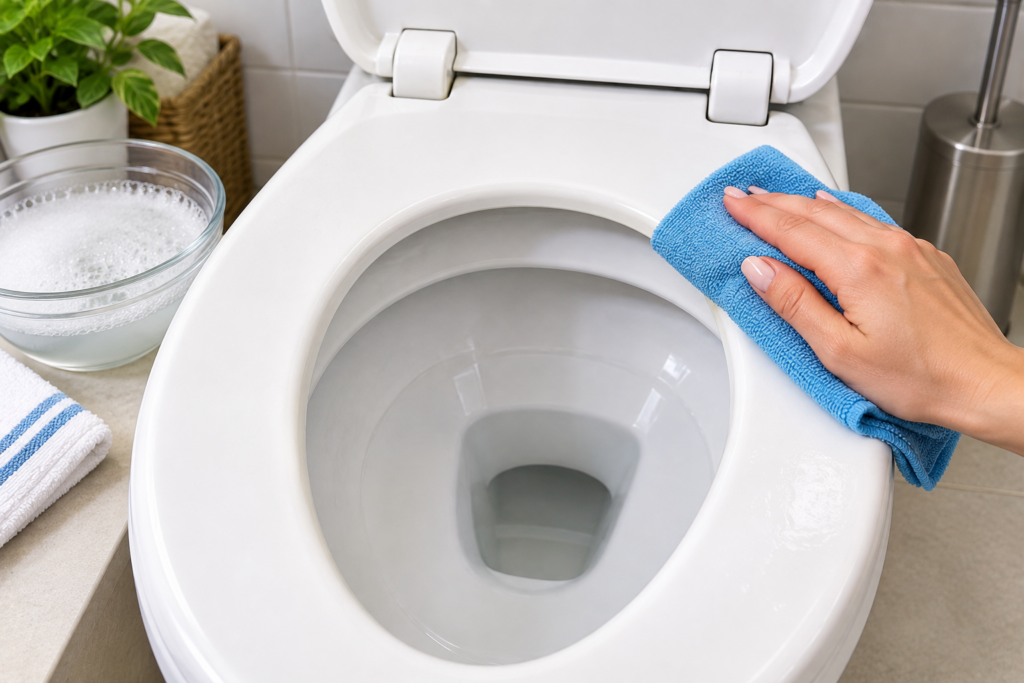
Before mixing any active ingredients, try the safest method recommended by most manufacturers:
- Mix a few drops of mild dish soap into a bowl of warm water.
- Using a soft microfiber cloth or sponge, wipe down the entire seat and hinges.
- Rinse thoroughly with clean water and dry with a soft towel.
If routine soap and water aren’t enough to lift persistent yellow discoloration, you can move on to a cautious spot-treatment method.
🥣 Method 2: The Baking Soda & Hydrogen Peroxide Spot Treatment (If Compatible)
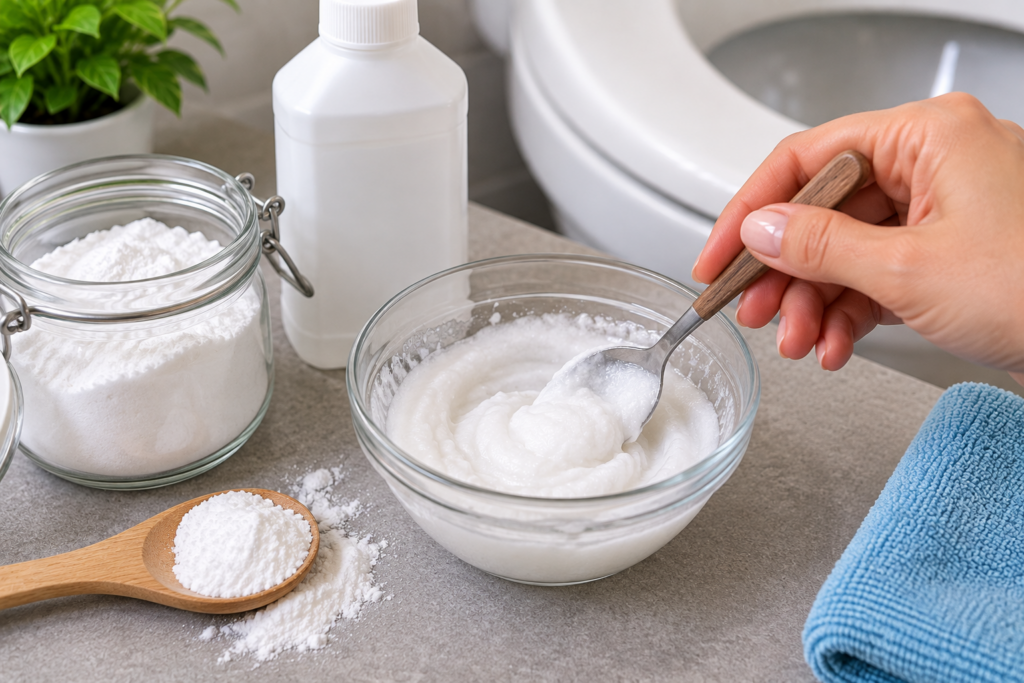
If your manufacturer’s guidelines allow and you want a stronger lift using simple household ingredients, you can try a targeted spot treatment.
Important Safety Precautions Before You Start:
- Test first: Always test any cleaning paste on a small, hidden area of the toilet seat first to ensure it doesn’t react poorly with the plastic finish.
- Never mix chemicals: Never mix hydrogen peroxide with bleach or other commercial bathroom cleaners. Mixing cleaning agents can release dangerous fumes.
- Avoid harsh tools: Instead of traditional brushes, use a soft cloth or sponge for application.
Step-by-Step Spot Cleaning:
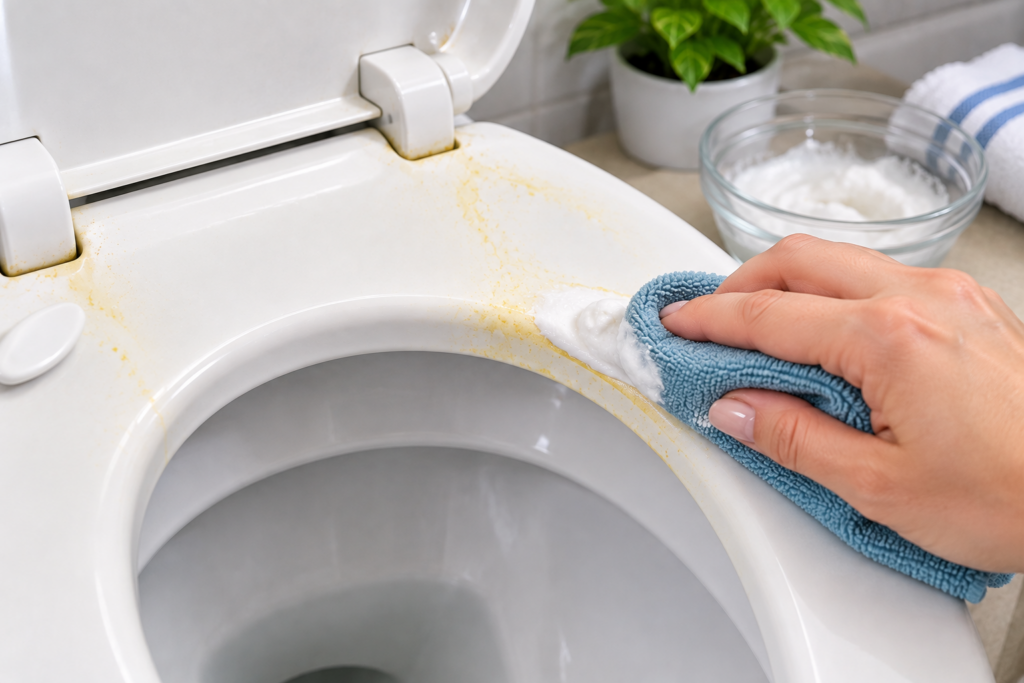
- Mix a simple paste: In a small container, combine a small amount of baking soda with just enough hydrogen peroxide to form a spreadable paste.
- Apply carefully: Using a soft cloth, apply the paste only to the stained areas.
- Keep contact time short: Start with a brief contact time (such as 2 to 3 minutes) rather than letting it sit for an extended period, especially on your first test. Do not let cleaner pool indefinitely on plastic.
- Wipe and rinse: Gently wipe away the paste, rinse the area thoroughly with clean water, and dry completely.
⚠️ What to Avoid When Cleaning a Toilet Seat
To keep your bathroom fixtures looking their best, avoid these common mistakes:
- Avoid harsh scouring pads or stiff brushes: They can create fine scratches that dull the finish and make the surface more difficult to keep clean over time.
- Avoid leaving cleaners to soak for too long: Prolonged exposure to active compounds can dull or pit plastic surfaces.
- Don’t assume it’s just dirt: If a plastic seat has undergone deep chemical degradation or structural aging, the yellowing may be a permanent physical change in the material rather than surface grime that can be scrubbed away.
💡 How to Prevent Future Stains
- Wipe down regularly: Give the seat a quick wipe with mild soap and water weekly to prevent residue buildup.
- Dry after cleaning: Leaving standing water or cleaner residue on the seat can accelerate wear. Always dry surfaces with a clean microfiber cloth.
- Choose gentle routine products: Stick to mild cleaners that preserve the smooth, non-porous finish of your toilet seat.
❓ Frequently Asked Questions (FAQ)
Q: Can I use chlorine bleach on a plastic toilet seat?
A: Check your specific manufacturer’s instructions, as recommendations depend heavily on the brand and the exact plastic material used. Many manufacturers advise against strong chlorine bleach because it can weaken, dull, or prematurely yellow plastic surfaces over time.
Q: What if the yellow stain doesn’t come off with baking soda and peroxide?
A: If the discoloration remains completely unchanged after gentle cleaning and spot testing, the plastic itself may have permanently yellowed due to aging, previous chemical exposure, or other material changes. In that case, additional scrubbing may not restore the original color, and replacement may be the most practical option.
Q: Is it safe to leave a cleaning paste on the toilet seat for 10 or 15 minutes?
A: For many resilient surfaces, short intervals are fine, but it is much safer to start with a very brief contact time (a few minutes) and test a hidden area first. Leaving active mixtures on sensitive plastics too long can cause dull spots or surface damage.
Q: Why should I avoid certain brushes?
A: Some toothbrushes and cleaning brushes can be too abrasive for glossy plastic finishes. A soft microfiber cloth or sponge cleans effectively while protecting the smooth finish of the seat.