
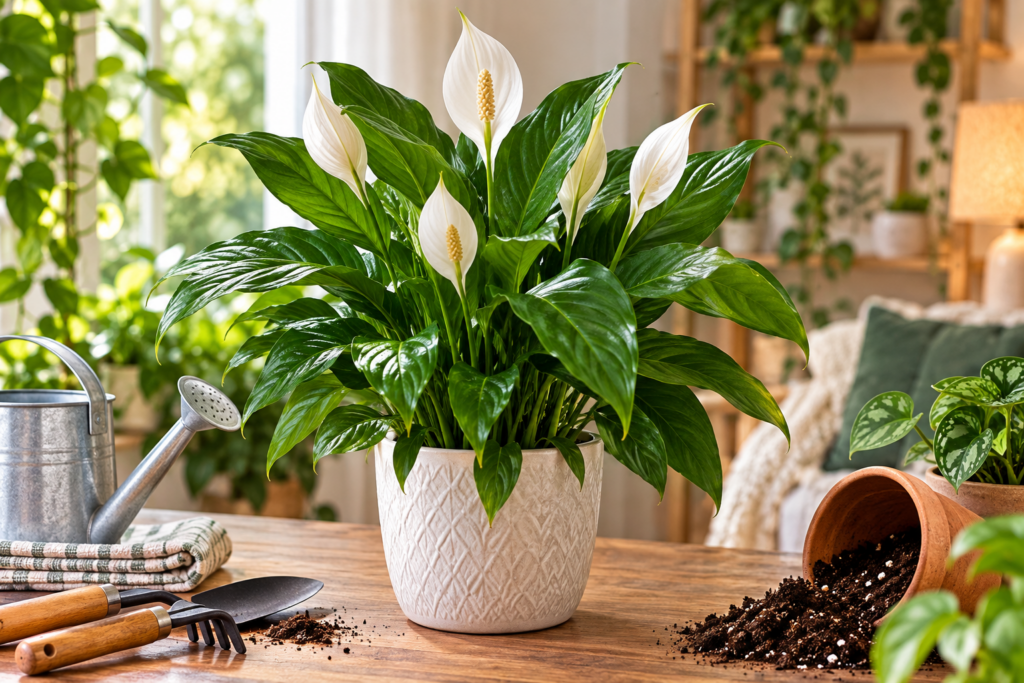
Peace lilies (Spathiphyllum) have a reputation for being easy houseplants—and they usually are. The problem is that “easy” doesn’t mean impossible to get wrong.
One week your peace lily is standing tall with glossy green leaves. The next, it may suddenly droop, develop brown tips, or stop producing those elegant white flowers.
The good news? You don’t need complicated plant-care tricks to keep a peace lily healthy for years. Getting a few basics right—especially light, watering, drainage, and feeding—makes a much bigger difference than most viral houseplant hacks.
Here are the 7 peace lily care rules that actually matter, plus the common mistakes that can quietly weaken your plant.
1. Give Your Peace Lily Bright, Indirect Light
Peace lilies are often advertised as low-light plants. That’s partly true: they can tolerate relatively low light.
But tolerating a location and thriving in it are two different things.
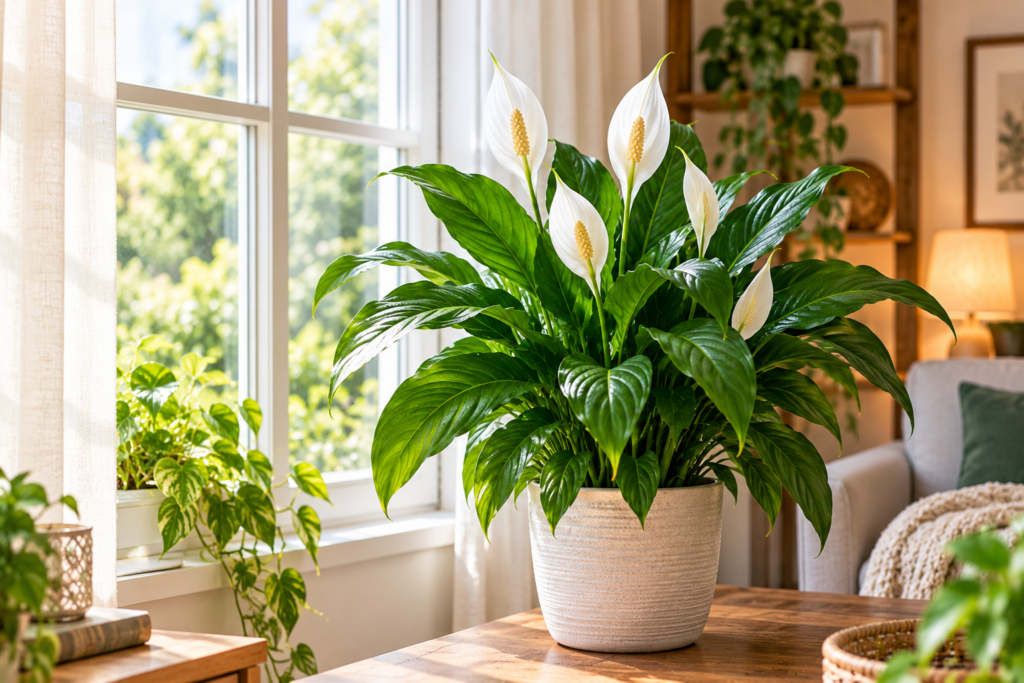
For stronger growth and a better chance of flowering, place your peace lily somewhere with bright, indirect light.
A position near a window can work beautifully as long as the leaves aren’t exposed to intense direct afternoon sun for long periods.
Signs Your Peace Lily May Need More Light
A plant receiving insufficient light may:
- grow slowly
- produce fewer flowers
- develop stretched or weak-looking growth
- remain alive but show very little new growth
If your peace lily looks healthy but hasn’t flowered in a long time, light is one of the first things worth checking.
Can a Peace Lily Get Too Much Sun?
Yes. Strong direct sunlight can scorch the foliage, leaving pale, yellowish, or brown damaged areas.
If you’re moving a plant from a darker location to a brighter one, make the transition gradually rather than suddenly placing it in intense sunlight.
2. Water According to the Soil—not the Calendar
This is probably the most important peace lily care rule.
Don’t water simply because it is Tuesday or because exactly seven days have passed.
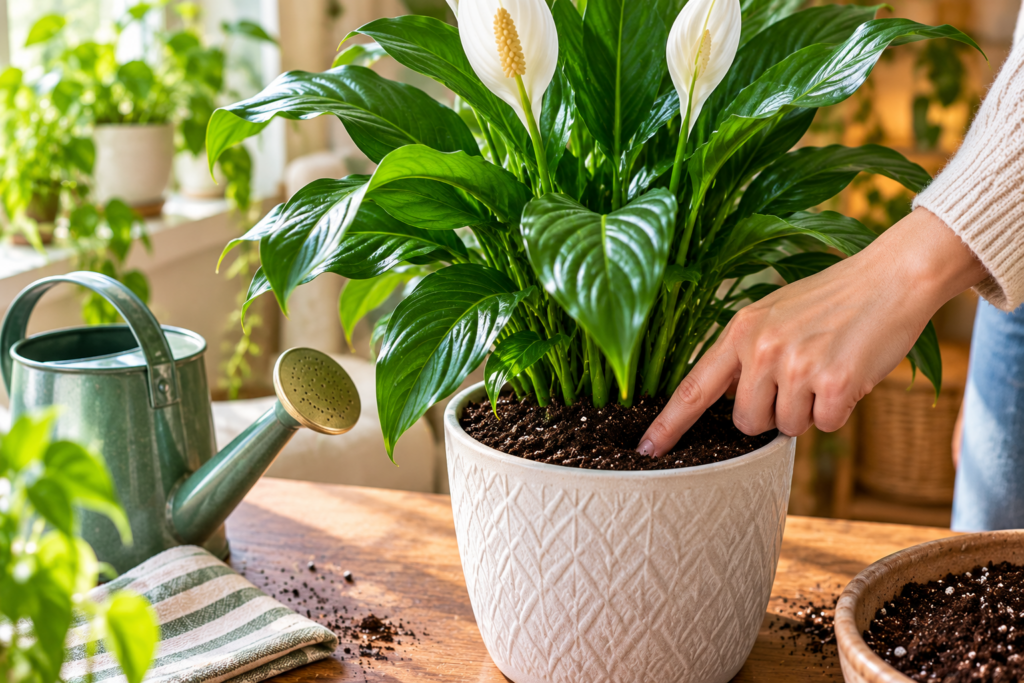
Instead, check the soil.
When the upper layer begins to feel dry, check slightly deeper with your finger. If the soil is still quite moist below the surface, give the plant a little more time.
Then water thoroughly when needed and allow excess water to drain from the bottom of the pot.
Why Peace Lilies Suddenly Droop
Peace lilies are famous for dramatic wilting when they’re thirsty. The leaves can go from upright to noticeably droopy surprisingly quickly.
However, don’t automatically assume that every drooping peace lily needs more water.
A plant with waterlogged roots can also wilt.
Check the soil first. If it’s dry, watering may be appropriate. If it’s already soaking wet, adding even more water could make the problem worse.
3. Never Let the Roots Sit in Water
Good drainage is just as important as watering.
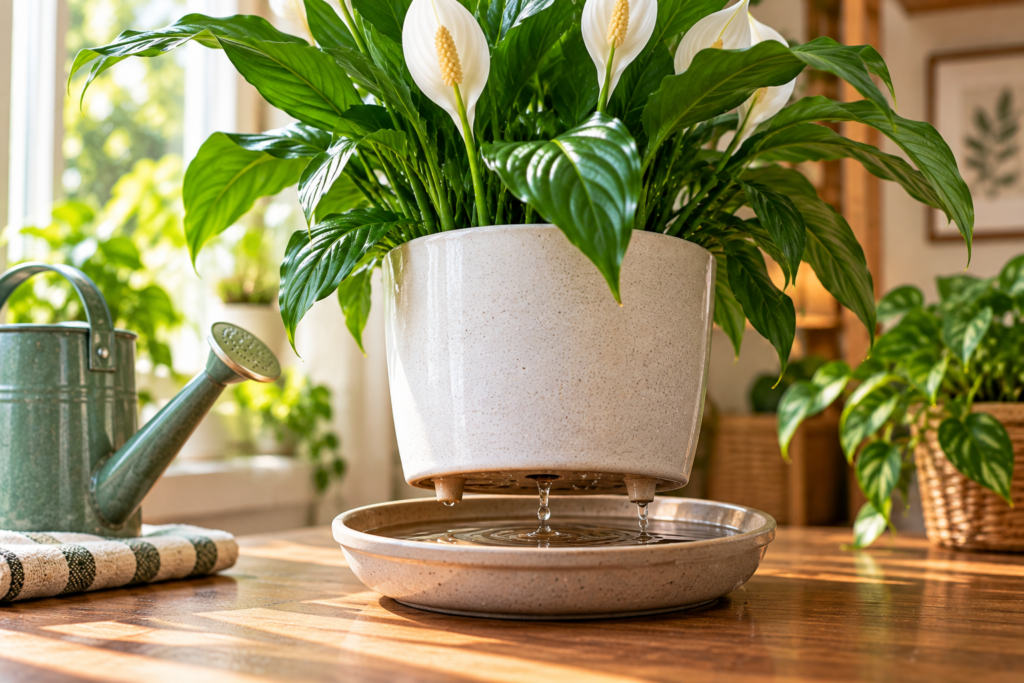
A decorative pot may look beautiful, but if water continually collects around the root ball, the roots can struggle.
- Ideally, your peace lily should grow in a container with proper drainage holes.
- After watering, allow the excess to escape.
- If you’re using a decorative outer pot or saucer, check it afterward and remove accumulated water rather than leaving the inner pot sitting in it.
What About the Potting Mix?
Peace lilies generally do well in a loose, well-draining indoor potting mix that still retains some moisture. The goal is balance—you don’t want a mix that becomes bone-dry immediately, nor do you want dense soil that remains saturated for days.
4. Keep the Temperature Comfortable
Fortunately, peace lilies generally enjoy temperatures similar to those that feel comfortable inside our homes. What they don’t appreciate are sudden extremes.
Keep your plant away from:
- cold drafts
- frequently opened doors during cold weather
- air-conditioning vents
- radiators
- heating vents
- other sources of intense temperature fluctuations
A seemingly perfect windowsill can become a poor location if the glass gets extremely cold during winter or the plant receives blasts of hot or cold air.
5. Humidity Helps—but Don’t Overcomplicate It
Peace lilies are tropical plants and generally appreciate moderate to higher humidity. However, you don’t need to turn your living room into a greenhouse.
If your home has very dry air and the plant repeatedly develops crispy leaf edges despite appropriate watering, increasing the surrounding humidity may help. A humidifier can be useful in particularly dry indoor environments, or you can group several houseplants together to create a slightly more humid microenvironment.
Do You Need to Mist a Peace Lily Every Day?
No. Regular misting is often presented online as essential peace lily care, but it isn’t a substitute for proper watering or meaningful humidity control. Focus first on light, correct watering, drainage, and appropriate temperature.
6. Fertilize Lightly During Active Growth
More fertilizer does not necessarily mean more flowers. Peace lilies don’t need aggressive feeding.
If you’re using a balanced houseplant fertilizer, follow the product directions and err on the conservative side. Feeding lightly during periods of active growth is usually preferable to repeatedly giving the plant strong fertilizer.
Too much fertilizer can contribute to root damage and brown leaf tips. If the plant is stressed, recently repotted, or growing very slowly because of poor conditions, fixing the growing conditions comes first.
7. Remove Damaged Leaves and Spent Flowers
A yellow leaf isn’t going to turn green again.
Once a leaf has become mostly yellow or brown, you can remove it using clean scissors or pruning shears. Spent flower stalks can also be removed once they’ve finished their display. Make a clean cut rather than tearing plant tissue.
You can also gently wipe dusty leaves with a soft damp cloth from time to time. There’s no need to coat them with milk, mayonnaise, oil, or homemade leaf-shine mixtures. Clean water and a soft cloth are enough for routine dust removal.
🌱 When Should You Repot a Peace Lily?
Don’t repot simply because a certain number of months have passed. Look at the plant. Possible signs that it may be ready for a larger container include:
- roots emerging from drainage holes
- roots becoming densely crowded inside the pot
- water running through unusually quickly because roots occupy much of the container
- the plant drying much faster than it previously did
- growth becoming difficult to maintain despite otherwise good care
When you do repot, avoid jumping from a small container to an enormous one. A modestly larger pot is generally easier to manage because an oversized volume of wet soil can remain moist for too long. Always make sure the new container provides adequate drainage.
Should You Divide a Peace Lily When Repotting?
You can—but you don’t have to. Mature peace lilies naturally form clumps, making division a useful way to propagate them if you want additional plants. But if you simply want a larger, fuller peace lily, keeping the clump together is completely fine.
🌸 Why Isn’t My Peace Lily Flowering?
This is one of the most common peace lily questions, and adding more fertilizer isn’t always the answer.
- Check the light exposure: A peace lily may survive in fairly low light while producing few or no flowers. Moving it to brighter indirect light may improve its growing conditions.
- Consider overall health: A plant struggling with soggy soil, damaged roots, or temperature stress isn’t in ideal condition for flowering. Focus on maintaining healthy foliage and roots.
🍃 What Do Brown Tips on a Peace Lily Mean?
Brown leaf tips can point to several potential contributors:
- inconsistent watering
- excessively dry conditions
- fertilizer buildup
- water-quality issues
- environmental stress
Instead of immediately cutting off the brown tips and continuing your routine, look for a pattern. For example, if browning appeared shortly after increasing fertilizer, overfeeding deserves attention.
💛 Why Are My Peace Lily Leaves Turning Yellow?
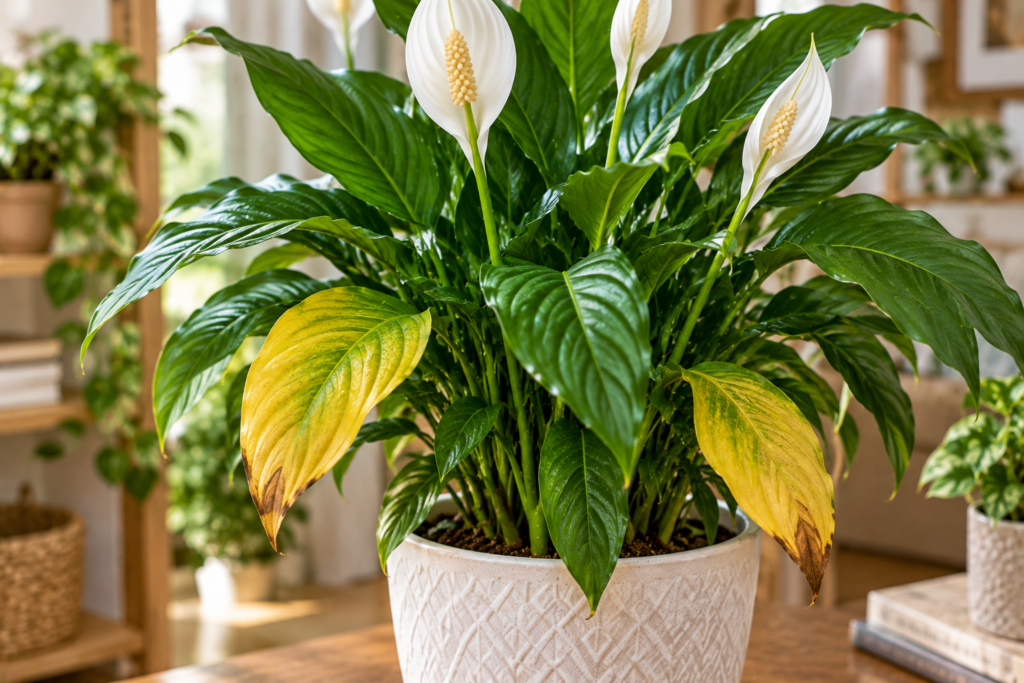
An occasional older yellow leaf can simply be part of normal plant aging. However, multiple yellow leaves appearing together deserve investigation:
- Check the soil first to see if it stays wet for long periods.
- Look at light conditions, temperature stress, pests, and the overall root environment.
Don’t automatically reach for fertilizer—yellow leaves are a symptom, not a diagnosis.
🪴 The Biggest Peace Lily Mistakes to Avoid
Most struggling peace lilies don’t need a secret ingredient; they need one basic problem corrected. The most common mistakes include:
- Watering on a rigid schedule
- Leaving the roots sitting in water
- Keeping the plant in extremely dark conditions
- Suddenly exposing it to intense sun
- Overfertilizing
- Using an oversized pot
- Trying multiple homemade treatments before identifying the actual problem
🐛 Check for Pests Before They Become a Bigger Problem
Peace lilies grown indoors can occasionally develop common houseplant pests. When watering, take a few seconds to inspect leaf undersides, new growth, leaf joints, stems, and the base where leaves emerge.
Look for unusual webbing, sticky residue, cottony material, tiny insects, or unexplained discoloration. Catching an infestation early is much easier than dealing with a full-blown spread.
⚠️ One Important Peace Lily Safety Note
Despite its common name, the peace lily isn’t a true lily. However, that doesn’t mean it should be eaten.
Peace lily tissues contain insoluble calcium oxalate crystals, which can cause painful irritation of the mouth and digestive tract if chewed or swallowed. Keep the plant somewhere that young children and pets are unlikely to reach it.
🌿 A Simple Peace Lily Care Routine
You don’t need to spend every day fussing over your plant. A simple routine works best:
- Every few days: Glance at the foliage and check the soil when necessary.
- When the upper soil begins drying: Determine whether the root zone is ready for watering rather than following a fixed calendar.
- When watering: Soak the soil thoroughly and let excess water drain away.
- During active growth: Fertilize lightly according to the fertilizer label.
- Occasionally: Wipe dusty leaves and inspect for pests.
- As needed: Remove dead foliage and spent flowers.
- When roots become crowded: Consider repotting into a slightly larger container.
Consistency beats complicated hacks.
❓ Peace Lily FAQ
How often should I water a peace lily?
There isn’t one correct number of days for every plant. Temperature, light, humidity, pot size, soil, and season all influence how quickly the pot dries. Check the soil instead of following a fixed watering schedule.
Can peace lilies survive in low light?
They can tolerate lower-light conditions better than many flowering houseplants, but brighter indirect light generally provides better conditions for growth and flowering.
Should I cut yellow leaves off my peace lily?
Once a leaf is substantially yellow or dead, it can be removed with a clean cutting tool. However, if many leaves are yellowing simultaneously, investigate the underlying cause rather than simply removing them.
Should I mist my peace lily?
Misting isn’t essential. If indoor air is genuinely very dry, improving the surrounding humidity more consistently is generally more useful than relying on occasional misting.
Can I use tap water for a peace lily?
Many peace lilies are successfully grown with tap water. However, water quality varies by location, and some plants can be sensitive to certain dissolved salts. If you’re repeatedly seeing unexplained leaf-tip problems, water quality is one factor worth investigating.
Why does my peace lily droop even after watering?
If the soil is already wet and the plant remains wilted, don’t keep adding water. Poor drainage, root problems, temperature stress, and other issues can also cause wilting.
How can I make my peace lily bloom again?
Start with bright indirect light and healthy growing conditions. Avoid assuming that extra fertilizer or a homemade “bloom booster” will solve the problem.
How long can a peace lily live?
With appropriate care, peace lilies can be maintained as long-lived houseplants. Concentrate on healthy roots, appropriate light, careful watering, and periodic repotting as the plant grows.
🌱 Final Thoughts
Keeping a peace lily beautiful for years isn’t about finding a miracle fertilizer or secret kitchen ingredient. The fundamentals do most of the work.
Give it bright indirect light, water according to what the soil actually needs, provide excellent drainage, protect it from temperature extremes, feed it conservatively, and pay attention when the leaves begin telling you something has changed. Once you understand those signals, peace lily care becomes much easier.