
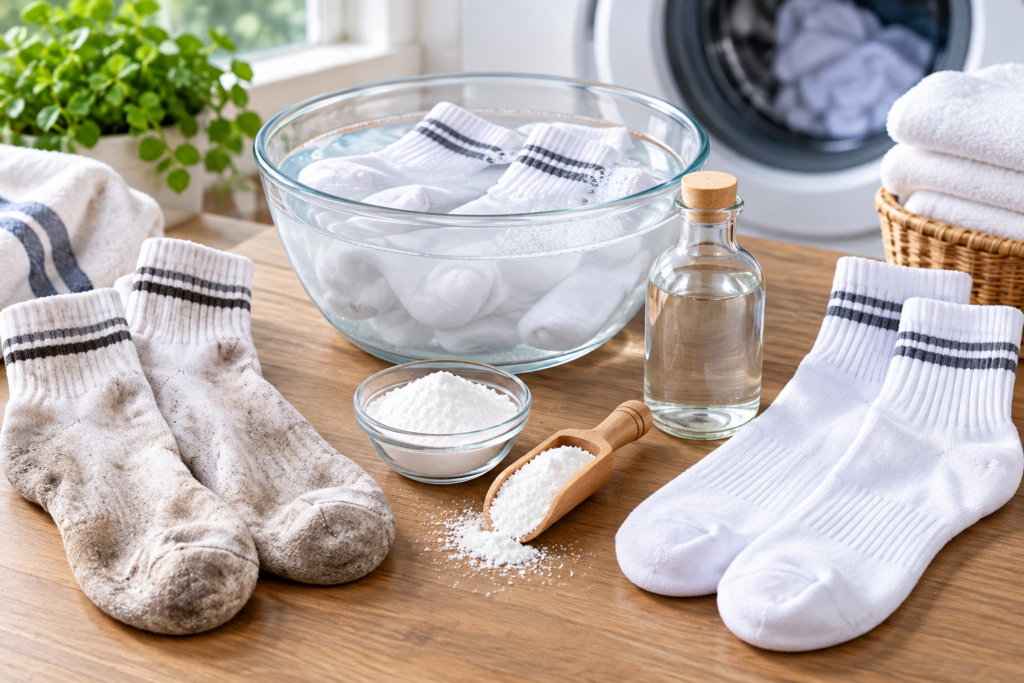
White socks are a classic wardrobe staple, but keeping them looking fresh and crisp is an ongoing battle. Over time, sweat, body oils, and floor dirt penetrate deep into the fibers, leaving socks looking dull, yellowed, or grey.
While many viral internet “hacks” promise instant miracles by mixing vinegar and baking soda together, basic chemistry shows that combining an acid and a base largely neutralizes their individual cleaning benefits.
To help restore brighter-looking whites without damaging fabric elastics or relying on harsh chlorine bleach, you need a practical, effective approach: a targeted pre-soak combined with a smart washing strategy.
🧼 Why Do White Socks Turn Grey and Yellow?
Understanding the cause of discoloration helps you target the problem effectively:
- Organic Oils and Sweat: Body oils from feet bind to cotton and synthetic fibers, yellowing over time under heat and friction.
- Detergent Buildup: Using too much laundry detergent or washing in hard water leaves soap residue that locks in microscopic dirt particles.
- Ground-in Dirt: Direct contact with floors and shoe insoles forces grime deep into the tight weave of the fabric.
🧪 Understanding Your Cleaning Ingredients
Rather than mixing ingredients that cancel each other out, use these household and laundry agents for their specific strengths:
- Sodium Percarbonate (Oxygen Bleach): An effective option for whitening. When dissolved in hot water, it releases hydrogen peroxide to help break down organic stains without degrading fibers as aggressively as chlorine bleach.
- Washing Soda (Sodium Carbonate): Helps raise the pH of the water to loosen oils and dirt. Washing soda works well as a laundry booster, but it does not replace oxygen bleach for whitening power.
- White Distilled Vinegar (Used Separately): Best used separately during the rinse cycle to help strip away detergent residue and counteract mineral deposits.
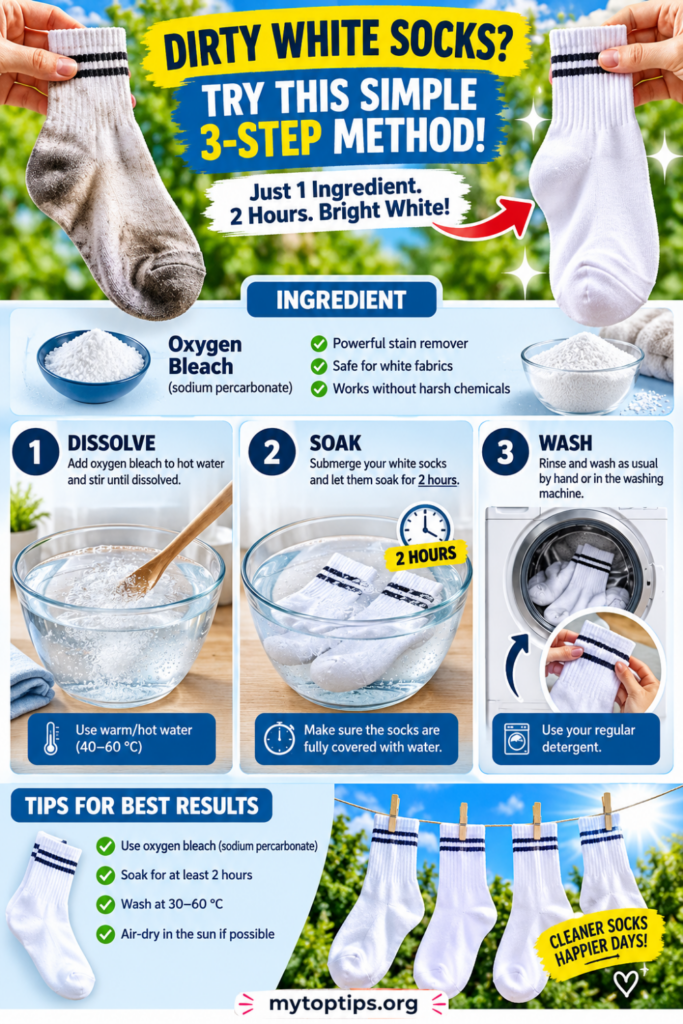
📋 The 3-Step Method for White Socks
Step 1: Prepare an Oxygen Soak
Fill a basin with hot water (always check garment care labels for maximum temperature limits). Add oxygen bleach according to the product label instructions. Stir until fully dissolved before submerging your socks.
Step 2: Soak for 1 to 2 Hours
Submerge your white socks completely in the solution. Let them soak for 1 to 2 hours to allow the oxygen soak to break down organic oils and embedded grime.
Note: Avoid soaking socks with delicate elastic bands or wool blends for extended overnight periods, as prolonged immersion in hot water can weaken synthetic fibers over time.
Step 3: Wash with Proper Detergent Dosing
Remove the socks, allow excess solution to drain, and place them in the washing machine.
- Wash on a standard cycle with your regular detergent, taking care not to overdose the soap.
- Optional Rinse Boost: If permitted by your washing machine and garment-care instructions, a small amount of diluted white vinegar can occasionally be added during the rinse cycle to help remove mineral or detergent buildup.
- Hang socks outside to air-dry in direct sunlight when possible, as natural UV light acts as a mild brightener for white fabrics.

🚫 4 Common Mistakes That Ruin White Socks
Avoid these frequent laundry errors to extend the life and brightness of your socks:
- Mixing Vinegar and Baking Soda in the Same Water: Combining an acid and a base neutralizes both active ingredients, reducing much of the useful acidity and alkalinity that each ingredient provides when used separately.
- Overusing Chlorine Bleach: Frequent chlorine bleach use degrades elastic threads and can chemically turn synthetic fibers permanently yellow.
- Washing Whites with Darks: Micro-dyes from dark clothing transfer easily onto white socks, turning them a dull grey over time.
- Using Too Much Detergent: Excessive soap creates a film on fabrics that traps dirt rather than rinsing it away cleanly.
💡 Practical Maintenance Tips
- Wash Inside Out: Flipping socks inside out before washing helps remove dead skin cells and sweat buildup directly from the interior surface.
- Treat Stains Early: Don’t let heavily soiled socks sit in the hamper for weeks—soak them as soon as possible after heavy wear.
- Check Colorfastness: If your white socks have colored logos, stripes, or toe caps, test any whitening agent on a small area first to ensure colors won’t bleed or fade.
❓ Frequently Asked Questions (FAQ)
Is oxygen bleach safe for socks with colored stripes? Oxygen bleach is generally color-safe when used according to package instructions, but it is always wise to check the garment label and avoid prolonged soaking for items with sensitive dyes.
Is vinegar safe for washing machine parts and elastics? Used occasionally and properly diluted in the rinse cycle, white vinegar is widely used. However, always consult your appliance manual and garment care labels, as undiluted acids can affect rubber seals over time.
Why shouldn’t I dry stained socks in a hot dryer? High heat from a tumble dryer can set remaining organic stains into the fabric fibers, making them significantly harder to remove in future washes.
Conclusion: Real Results Through Smart Laundry Habits
Keeping your white socks looking clean and bright doesn’t require risky viral “miracle hacks” or harsh chemicals. By replacing neutralized mixtures with a proper oxygen pre-soak and optimizing your wash cycle, you can effectively lift deep-set grime and maintain your socks wash after wash.