
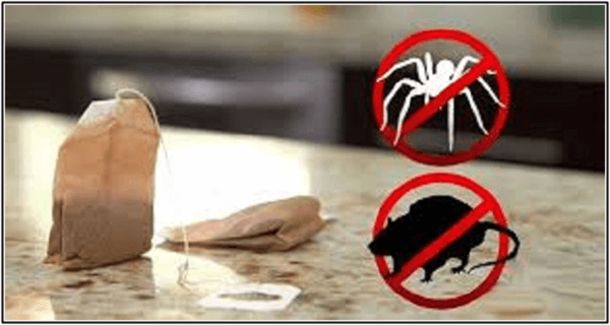
Mice in the kitchen or spiders appearing in quiet corners can quickly become frustrating. It’s no surprise that simple home remedies—especially those using ingredients already sitting in the cupboard—have become so popular.
One frequently shared trick is surprisingly simple: place peppermint tea bags around the house.
The idea is that the strong minty aroma may make certain areas less attractive to unwanted visitors. But can a used tea bag really keep mice and spiders away?
The answer is more nuanced than many viral tips suggest. Peppermint can be an interesting supplementary household trick, but it shouldn’t replace proven pest-prevention measures.
Here’s how to try the tea-bag method safely, what you can realistically expect, and what else you should do to protect your home.
🐭 Why Do Mice Enter the House?
Before reaching for peppermint tea, it helps to understand what actually attracts mice.
Homes can provide exactly what rodents are looking for: food, water, warmth and shelter. Tiny openings around doors, pipes, foundations and utility lines can also provide convenient entry points.
Once inside, mice may settle behind appliances, inside wall cavities, in garages, basements, attics or other quiet areas.
Signs that may indicate mouse activity include:
- small droppings
- gnawed food packaging
- scratching sounds, particularly at night
- shredded paper or insulation
- unexplained food damage
- a persistent musky smell
If you notice several of these signs, relying on scent-based home remedies alone is unlikely to solve the problem.
🕷️ Why Are Spiders Coming Indoors?
Spiders generally aren’t entering a home because they’re interested in human food. They’re often looking for shelter or prey, such as flies, mosquitoes and other small insects.
You may therefore notice more spiders around windows, basements, garages, storage areas and other places where insects are present.
Reducing their food source and closing entry points is generally more useful than trying to make an entire house smell unpleasant to spiders.
🌱 The Peppermint Tea-Bag Trick
Peppermint contains aromatic compounds responsible for its characteristic strong smell.
This has led to a popular household idea: placing peppermint-scented materials in locations where pests are frequently seen.
What you’ll need
For the simplest version, you only need:
- peppermint tea bags
- hot water
- a cup
- small dishes or saucers, if desired
☕ Step 1: Brew the peppermint tea
Prepare peppermint tea normally and allow the bag to steep.
Enjoy the tea—you only need the bag for the household trick.
Remove the tea bag and allow it to cool completely.
🌿 Step 2: Place it strategically
Instead of randomly scattering tea bags throughout the house, concentrate on potential problem areas.
Try placing cooled tea bags near suspected entry points, behind furniture, near doors or windows, or in corners where you’ve noticed activity.
Important: Don’t leave wet tea bags directly on wooden furniture, carpets or other moisture-sensitive surfaces. Put them on a small washable dish instead.
🔄 Step 3: Replace them regularly
A tea bag doesn’t remain strongly aromatic indefinitely. It can also become damp or moldy.
Remove it if it develops an unpleasant smell or visible mold, and replace it rather than leaving old damp organic material around the house.
🤔 Does Peppermint Tea Really Keep Mice Away?
This is where the viral claim needs some perspective.
A strong unfamiliar odor may temporarily discourage a mouse from exploring a particular spot, but a peppermint tea bag shouldn’t be considered a reliable mouse-control method.
If a mouse has access to food, warmth and a safe nesting location, a pleasant-smelling household remedy is unlikely to outweigh those advantages.
So rather than saying:
“One tea bag will keep mice out of your home.”
A more accurate conclusion is:
Peppermint can be tried as an additional deterrent, while eliminating food sources and blocking entry points remain much more important.
🕷️ What About Spiders?
The same caution applies here.
Peppermint is commonly recommended online as a natural spider deterrent, but simply putting a peppermint tea bag in a room doesn’t guarantee spiders will disappear.
A more effective strategy is to make the home less attractive to both spiders and the insects they feed on.
That means cleaning webs, vacuuming regularly, repairing screens, sealing gaps and reducing insect activity.
🏠 6 Measures That Matter More Than the Tea Bag
The peppermint trick is easy to try, but these practical steps should form the foundation of your pest-prevention strategy:
- Seal gaps and openings. Check around doors, windows, pipes, vents and foundations. Even surprisingly small openings can provide access for mice.
- Store food securely. Keep cereals, flour, pet food, seeds and similar products in well-sealed containers.
- Clean crumbs and spills promptly. Pay particular attention underneath ovens, refrigerators, cabinets and furniture.
- Reduce clutter. Cardboard, paper, fabrics and rarely disturbed storage areas can provide excellent hiding or nesting locations.
- Control indoor insects. Fewer flies and other insects can mean fewer attractive feeding opportunities for spiders.
- Check doors and windows. Repair damaged screens and address gaps underneath exterior doors.
🌿 What About Peppermint Essential Oil?
Peppermint essential oil is far more concentrated than peppermint tea, so its aroma will generally be considerably stronger.
People sometimes place a few drops on cotton balls and position them near suspected entry points.
However, stronger doesn’t automatically mean proven or permanent pest control.
Essential oils also require more caution than tea. Keep concentrated oils away from children and pets, avoid putting them on surfaces that could stain, and follow the product’s safety directions.
🍋 Are Citrus Peels a Good Alternative?
Lemon and orange peels are another popular internet remedy.
They certainly provide a fresh citrus fragrance, but don’t depend on them as your primary mouse or spider defense.
There’s another drawback: fresh fruit peel is organic material. Left sitting around for too long, it can dry out, rot or attract other insects.
For that reason, citrus peel is better regarded as a short-lived household experiment rather than a pest-control solution.
🧴 What About Vinegar?
Vinegar is useful for many household cleaning jobs, and its strong smell has also led to claims that it repels spiders and other pests.
Again, expectations should remain realistic.
Cleaning areas where insects gather can certainly be useful, but spraying vinegar around the home isn’t a substitute for closing entry points and dealing with the source of an infestation.
Also avoid spraying vinegar indiscriminately because its acidity can damage certain natural stone, finishes and other surfaces.
⚠️ When a Tea Bag Isn’t Enough
Finding an occasional spider is very different from discovering an established mouse infestation.
If you repeatedly find mouse droppings, hear scratching inside walls, discover damaged food packaging or continue seeing rodents despite preventative measures, it’s time to move beyond scent-based tricks.
Identifying and closing the entry route and using appropriate rodent-control measures—or contacting a qualified pest-control professional—will be far more effective.
🌿 The Best Natural Strategy: Prevention First
The biggest mistake with many viral pest-control tricks is expecting one ingredient to solve the entire problem.
Peppermint tea bags can be inexpensive, pleasant-smelling and simple to experiment with. But they’re most sensible as one small part of a larger prevention strategy.
Think of it this way:
Peppermint = optional extra
Sealing + cleaning + food storage + monitoring = the real foundation
That distinction makes the trick much more realistic.
❓ FAQ: Peppermint Tea Bags, Mice and Spiders
Can one peppermint tea bag keep mice away?
Don’t rely on a single tea bag to prevent or eliminate mice. At most, the aroma may make a small area temporarily less attractive. Physical exclusion and removing food sources are much more important.
Should I use fresh or used peppermint tea bags?
Either provides peppermint aroma, although a freshly brewed bag will be damp. If using a wet bag, place it on a washable dish and remove it before mold develops.
How often should I replace the tea bags?
Replace them when the peppermint aroma has largely disappeared, and immediately discard any bag that becomes moldy or unpleasant-smelling.
Can I put peppermint tea bags inside cupboards?
You can place a dry peppermint tea bag in a cupboard, but don’t allow a wet bag to touch food, wood or other moisture-sensitive materials.
Does peppermint kill mice?
No. Peppermint tea shouldn’t be presented as a mouse poison or extermination method.
Will peppermint eliminate spiders?
There is no guarantee. Removing webs, reducing insects and sealing openings are more dependable preventative measures.
Is peppermint essential oil better than tea?
It produces a much stronger aroma, but that doesn’t make it a guaranteed pest-control solution. Essential oils also require additional safety precautions.
What should I do if mice keep returning?
Look for entry points and accessible food sources first. Persistent signs of mice usually require proper rodent-control measures rather than additional scent remedies.
🌱 Final Thoughts
The peppermint tea-bag trick is worth viewing as a simple household experiment—not a miracle pest remedy.
If you already drink peppermint tea, placing the cooled bag near a suspected entry point costs almost nothing. Just don’t let the simplicity of the trick distract from the measures that really matter.
Keep food sealed, eliminate crumbs, reduce clutter, repair screens and seal gaps where pests can enter.
Do those things first, and the humble peppermint tea bag can remain what it should be: a pleasant-smelling extra in a much stronger home-protection strategy.