
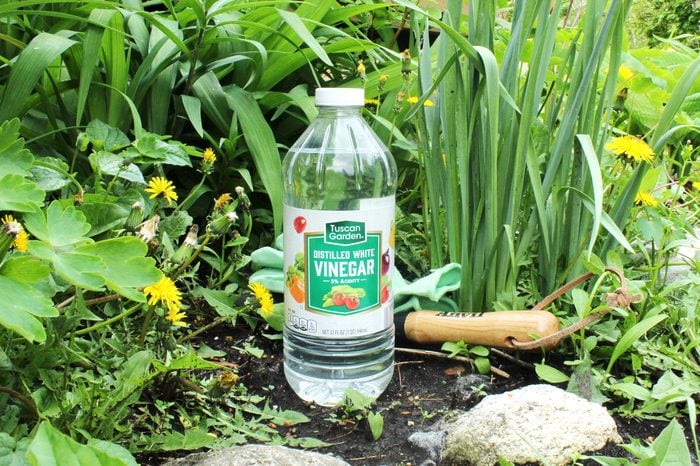
White vinegar is one of those inexpensive household staples that seems useful almost everywhere. In the garden, it can help with cleaning, mineral deposits, cut flowers, traps for small fruit flies, and even certain young weeds.
But there is an important warning:
White vinegar is acidic and non-selective.
That means it can damage weeds—but it can also damage flowers, vegetables, lawns, roots, and some outdoor surfaces.
Many viral garden recipes go too far by presenting vinegar as a natural fertilizer, universal pesticide, fungicide, soil acidifier, and weed killer all at once.
It is none of those things.
Used carefully, however, vinegar can still be a very handy garden helper. Here are 10 practical ways to use it, along with safer recipes and the mistakes worth avoiding.
🧪 First: What Is White Vinegar?
Household white vinegar is mainly water plus acetic acid, typically around 5%.
That acidity explains many of its useful properties. It can help:
✔ dissolve certain mineral deposits
✔ loosen grime
✔ reduce some odors
✔ damage tender plant foliage
✔ acidify liquids temporarily
But it is important to remember:
⚠️ Vinegar is not fertilizer
It does not provide plants with the balanced nutrients they need.
⚠️ Vinegar is not selective
If it touches desirable leaves, it may damage them too.
⚠️ Stronger vinegar is not automatically better
Concentrated horticultural vinegar can cause much more serious skin, eye, and plant damage than ordinary kitchen vinegar.
🌿 1. Target Very Young Weeds Carefully
Vinegar is best known in gardening as a homemade weed treatment.
Household vinegar can damage the foliage of young, tender weeds, especially when applied directly.
However, it usually works best on annual weeds that have not yet developed large root systems.
Simple targeted method
Use ordinary household white vinegar directly on the leaves of a small weed, taking great care not to hit nearby plants.
Apply only where accidental contact with desirable vegetation can be avoided.
⚠️ What NOT to add
Many online recipes recommend:
- 1 gallon vinegar
- 1 cup salt
- dish soap
The salt is the main problem.
Salt can remain in soil and interfere with future plant growth, so it is a poor choice for vegetable beds, flower beds, or anywhere you may want plants to grow later.
Better rule
👉 Skip the salt.
And remember that established perennial weeds may simply regrow from their roots after their leaves are burned.
Better alternatives in planted beds
✔ hand pulling
✔ hoeing
✔ mulching
✔ repeated removal before seed formation
💐 2. Help Cut Flowers Last Longer
Vinegar can be used as one part of certain homemade cut-flower solutions because it helps lower the pH of the vase water.
However, vinegar alone does not preserve flowers.
Cut flowers also benefit from:
✔ clean water
✔ clean containers
✔ properly trimmed stems
✔ regular water changes
✔ an appropriate carbohydrate source
✔ control of microbial growth
🌸 Simple homemade option
For approximately 1 quart of water:
- 2 tablespoons white vinegar
- 1 teaspoon sugar
Stir until the sugar dissolves.
Add the flowers after removing any leaves that would sit below the waterline.
Important
Replace the water every few days or sooner if it becomes cloudy.
For valuable bouquets, a commercial flower preservative is generally more predictable.
🪰 3. Make a Simple Fruit-Fly Trap
Apple cider vinegar is especially useful for attracting certain small fruit flies.
The key word is attracting.
A vinegar trap does not create an invisible barrier around your fruit trees.
🍎 Simple trap
You will need:
- a small jar
- apple cider vinegar
- 1 drop of dish soap
Pour a small amount of apple cider vinegar into the jar and add a single drop of dish soap.
Place it where small fruit flies are active.
The vinegar attracts them, while the soap reduces the surface tension of the liquid.
⚠️ Garden note
Not every insect attacking fruit is a common household fruit fly.
If fruit is being damaged directly on a tree or crop, identify the pest before relying on a trap.
🪴 4. Remove Mineral Deposits From Terracotta Pots
This is one of the best uses for vinegar in the garden.
Terracotta pots often develop a white crust caused by mineral salts from:
💧 hard water
🌱 fertilizer
🪴 repeated watering
White vinegar can help dissolve some of those deposits.
How to clean an empty pot
- Remove all soil.
- Brush off loose dirt.
- Mix equal parts white vinegar and water.
- Apply the solution to the mineral deposits.
- Scrub with a stiff brush.
- Rinse very thoroughly.
- Allow the pot to dry before reuse.
✨ This can make old terracotta pots look dramatically cleaner.
🛠️ 5. Clean Garden Tools and Light Rust
Pruners, trowels, hoes, and other garden tools often develop:
✔ dirt
✔ mineral buildup
✔ sap residue
✔ light surface rust
Vinegar can help loosen some of this material.
Tool-cleaning method
- Brush off loose soil.
- Apply vinegar to the affected area.
- Allow brief contact for stubborn deposits.
- Scrub with a brush.
- Rinse.
- Dry the tool immediately.
For light rust
A removable metal part may sometimes be soaked briefly in vinegar, then scrubbed and rinsed.
Afterward:
👉 dry completely
👉 apply an appropriate protective oil if needed
⚠️ Important
Vinegar can react with some metals and finishes, so do not soak every tool indiscriminately.
And remember:
Cleaning is not necessarily the same as disinfecting.
If you are trying to prevent the spread of a known plant disease, use a sanitation method appropriate for the pathogen and tool.
🐦 6. Clean a Birdbath
Birdbaths quickly collect:
🟢 algae
🍂 debris
💧 mineral deposits
🦠 organic residue
Regular cleaning is important.
Simple cleaning method
- Empty the birdbath.
- Remove leaves and debris.
- Scrub thoroughly.
- Use diluted vinegar on compatible surfaces if mineral deposits are stubborn.
- Rinse repeatedly with clean water.
- Refill only when no cleaning residue remains.
🐦 Very important: Birds should never be exposed to leftover cleaning solution.
Mechanical scrubbing and regular water changes remain the most important steps.
🪣 7. Remove Hard-Water Deposits From Watering Cans and Saucers
Watering cans, plant saucers, buckets, and trays can develop a chalky white film over time.
White vinegar is useful for dissolving some calcium-based mineral residue.
How to use it
For acid-resistant materials:
- Empty the container.
- Apply diluted vinegar to the deposits.
- Let it sit briefly.
- Scrub.
- Rinse thoroughly.
- Allow it to dry.
This works especially well on empty containers rather than on anything currently holding a plant.
🏷️ 8. Clean Reusable Plant Labels
Garden labels become dirty surprisingly quickly.
They may collect:
🌱 soil
🟢 algae
💧 water spots
🪴 mineral residue
Rather than throwing them away, clean and reuse them.
Method
Wipe compatible labels with diluted vinegar and scrub lightly if necessary.
Rinse and allow them to dry before writing on them again.
♻️ Simple, inexpensive, and practical.
🧽 9. Clean Potting Benches and Garden Work Surfaces
Potting areas can become covered with:
🌱 soil residue
💧 mineral spots
🪴 fertilizer stains
🍂 plant material
For compatible acid-resistant surfaces, diluted vinegar can be an effective cleaner.
Simple mixture
Mix:
- 1 part white vinegar
- 1 part water
Apply it to a cloth rather than spraying indiscriminately.
Wipe the surface, then rinse if appropriate.
⚠️ Avoid vinegar on
❌ marble
❌ limestone
❌ travertine
❌ other acid-sensitive natural stone
❌ certain metals
❌ delicate finishes
Acid can permanently etch or discolor some materials.
💐 10. Clean Vases and Propagation Jars
Glass jars used for:
🌱 plant cuttings
💐 flowers
🌿 propagation
often develop cloudy mineral residue along the waterline.
White vinegar is excellent for this task.
How to clean them
- Empty the container.
- Add diluted vinegar.
- Let it contact the cloudy deposits.
- Scrub or wipe.
- Rinse thoroughly.
- Refill with fresh water.
This is one of the safest ways to use vinegar around plants because you are cleaning an empty container rather than spraying living tissue.
🚫 7 Vinegar Garden Hacks You Should Avoid
Some viral vinegar tricks sound useful but can cause more problems than they solve.
❌ Myth #1: Vinegar Is Food for Acid-Loving Plants
Plants such as:
🫐 blueberries
🌺 azaleas
🌿 rhododendrons
🌸 hydrangeas
may prefer acidic soil.
But this does not mean they should routinely be watered with vinegar.
Why not?
Vinegar can temporarily lower pH, but it is not a reliable long-term soil amendment.
It also does not provide balanced plant nutrition.
Better method
- Test the soil.
- Check the ideal pH range for the plant.
- Use an appropriate horticultural amendment if correction is necessary.
🧂 Myth #2: Vinegar + Salt Is a Safe Natural Weed Killer
This is one of the most popular homemade recipes—and one of the least suitable for garden beds.
Salt can remain in soil and interfere with water uptake.
Repeated applications can make the area increasingly difficult for plants to grow in.
Better approach
Use targeted vinegar only when appropriate, and avoid adding salt to soil you want to keep productive.
🐛 Myth #3: Vinegar Is a Good Aphid Spray
It is tempting to assume that if vinegar harms insects, it must be a useful pesticide.
But it can also damage leaves.
Better options for aphids
✔ spray sturdy plants with water
✔ remove small infestations by hand
✔ prune heavily infested shoots when appropriate
✔ encourage beneficial insects
✔ use a properly labeled insecticidal product if necessary
Don’t damage the plant while trying to remove the pest.
🍄 Myth #4: Vinegar Is a Universal Fungicide
Plant diseases are much more complicated than that.
A strong acidic spray may injure the plant itself.
If you see:
⚪ white growth
🟤 leaf spots
🍂 discoloration
🌿 damaged stems
identify the disease before applying a homemade spray.
Better prevention often includes:
✔ good airflow
✔ correct spacing
✔ appropriate watering
✔ removing infected debris
✔ avoiding prolonged leaf wetness
🐌 Myth #5: Spray Undiluted Vinegar on Slugs and Snails
Direct contact with vinegar can harm slugs and snails, but spraying concentrated acid around a planted garden is not a good general strategy.
It can also contact:
🌱 seedlings
🌸 flowers
🌿 leaves
🪱 soil organisms
Better slug-management options
✔ hand-picking
✔ removing hiding places
✔ reducing unnecessary damp shelters
✔ using physical barriers or appropriate controls
🐈 Myth #6: Pour Vinegar Into Soil to Keep Cats Away
Some cats dislike the smell of vinegar, but pouring it directly into garden soil is unnecessary and unreliable.
Rain quickly dilutes the smell, and animals respond differently.
Better options
✔ physical barriers
✔ covering exposed soil
✔ safe garden deterrent systems
✔ keeping sandboxes covered when not in use
Avoid changing soil chemistry just to create an odor.
👐 Myth #7: Wash Garden Allergens Off Your Hands With Vinegar
After gardening, regular soap and water is the better default choice.
Vinegar can irritate sensitive or already damaged skin.
If you have been handling an irritating plant, follow appropriate washing guidance for that specific exposure rather than using vinegar as a universal remedy.
⚠️ Where You Should Never Casually Spray Vinegar
Avoid spraying vinegar:
❌ on desirable plant foliage
❌ near exposed roots
❌ across lawns you want to keep
❌ on seedlings
❌ on acid-sensitive natural stone
❌ near wildlife water sources without thorough rinsing
Remember:
Natural does not automatically mean harmless.
Acetic acid is still an acid.
🧪 Household Vinegar vs. Horticultural Vinegar
This distinction matters.
Ordinary household vinegar is typically around 5% acetic acid.
Horticultural vinegar can be much more concentrated.
That means it may cause:
⚠️ serious eye injury
⚠️ skin irritation or burns
⚠️ severe plant damage
Never increase concentration casually because a homemade remedy “isn’t working fast enough.”
If using a horticultural product, follow the label exactly and use the required protective equipment.
🌱 Better Alternatives for Common Garden Problems
Vinegar is not the best answer for every problem.
🌿 For weeds
Use mulch, hand pulling, or hoeing.
🐛 For aphids
Use water, manual removal, beneficial insects, or an appropriate treatment.
🐌 For slugs
Reduce shelters and use physical or targeted control.
🍄 For fungal problems
Improve airflow, adjust watering, and identify the disease.
🌺 For soil acidity
Test the soil before changing pH.
🌱 For plant nutrition
Use compost and an appropriate fertilizer rather than vinegar.
🍎 White Vinegar vs. Apple Cider Vinegar
They are often treated as interchangeable online, but each is more useful for different jobs.
White vinegar
Best suited to:
✔ cleaning
✔ mineral deposits
✔ tools
✔ pots
✔ containers
✔ certain young weeds
Apple cider vinegar
Especially useful as:
✔ an attractant in traps for certain small fruit flies
Neither one should be treated as a complete fertilizer or universal pesticide.
❓ FAQ – Using White Vinegar in the Garden
Is white vinegar safe for plants?
Not automatically. Acetic acid can damage plant tissue, especially young leaves and tender growth.
Can I pour vinegar directly onto weeds?
It may damage young weeds, but it can also affect nearby desirable plants. Use it only in carefully targeted locations.
Should I add salt to vinegar weed killer?
It is better to avoid salt in productive garden soil because it can persist and interfere with future plant growth.
Can vinegar make hydrangeas blue?
Do not rely on vinegar. Hydrangea color depends on several soil factors, including pH and aluminum availability. Test the soil and use appropriate amendments.
Does vinegar help blueberries grow?
Vinegar is not blueberry fertilizer. If the soil pH is too high, use a tested horticultural approach to acidification.
Is vinegar good for garden tools?
Yes, it can help remove some mineral buildup and light rust from compatible tools.
Can I use vinegar to clean terracotta pots?
Yes. Diluted vinegar can help remove white mineral deposits from empty terracotta pots.
Does vinegar kill ants?
It may kill some ants on direct contact or disrupt scent trails temporarily, but it usually does not eliminate the colony.
Does vinegar kill slugs?
Direct exposure can harm them, but spraying vinegar around plants is not recommended because it can also damage vegetation.
Can vinegar keep cats out of the garden?
Its smell may temporarily discourage some cats, but it is unreliable. Physical barriers are usually more predictable.
Is vinegar a natural fertilizer?
No. Vinegar does not provide the balanced nutrients plants need.
🏁 Final Thoughts
White vinegar can be incredibly useful in the garden—but its best uses are usually more practical than magical.
Use it for:
🪴 cleaning terracotta pots
🛠️ removing deposits from tools
🪰 making simple fruit-fly traps
💐 helping with cut-flower care
🐦 cleaning compatible birdbaths
🧽 cleaning garden surfaces
🌿 carefully targeting certain young weeds
Avoid using it as:
❌ fertilizer
❌ routine soil acidifier
❌ universal insecticide
❌ fungicide
❌ salt-based weed treatment
❌ slug spray
❌ general treatment for living plant leaves
🌱 The smartest way to use vinegar in the garden is to keep it targeted, controlled, and mostly away from desirable plants.