
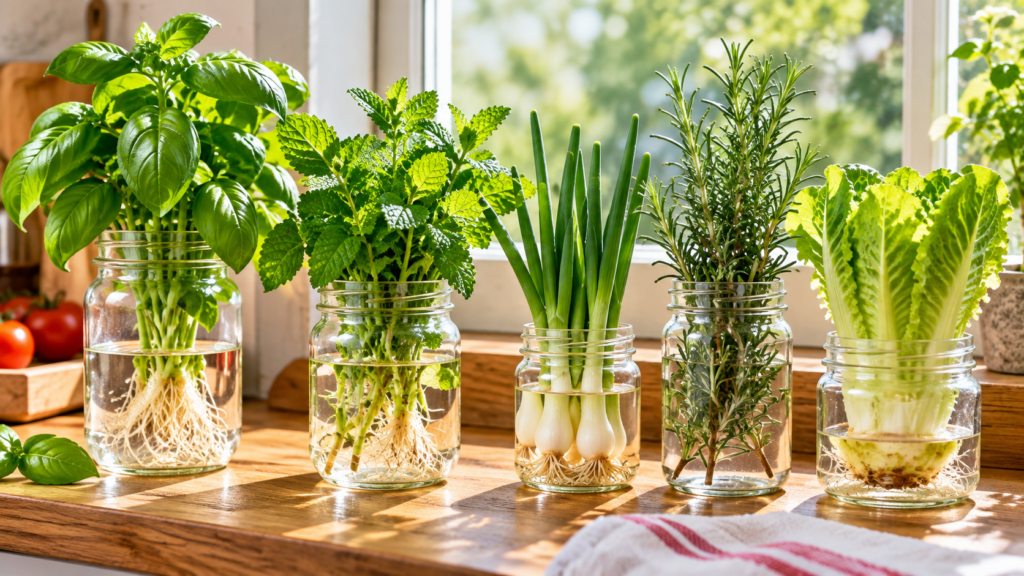
Imagine snipping a few leaves for dinner from plants growing right on your kitchen windowsill—without starting everything from seed.
You may have seen pictures claiming that basil, mint, rosemary, lettuce, celery, and many other plants can simply be placed in jars of water and grown indefinitely. The idea is appealing, but there is an important distinction.
Some herbs can develop roots from cuttings in water and later be transplanted into soil. Some kitchen scraps can produce a limited amount of fresh growth when their bases are placed in water. And a few plants can remain in water for longer periods—but ordinary tap water alone does not provide everything most plants need for permanent growth.
So rather than promising that all 15 plants will “grow forever in water,” here is a more practical guide to what you can actually expect from each one.
🌱 Before You Start: Rooting vs. Regrowing vs. Growing in Water
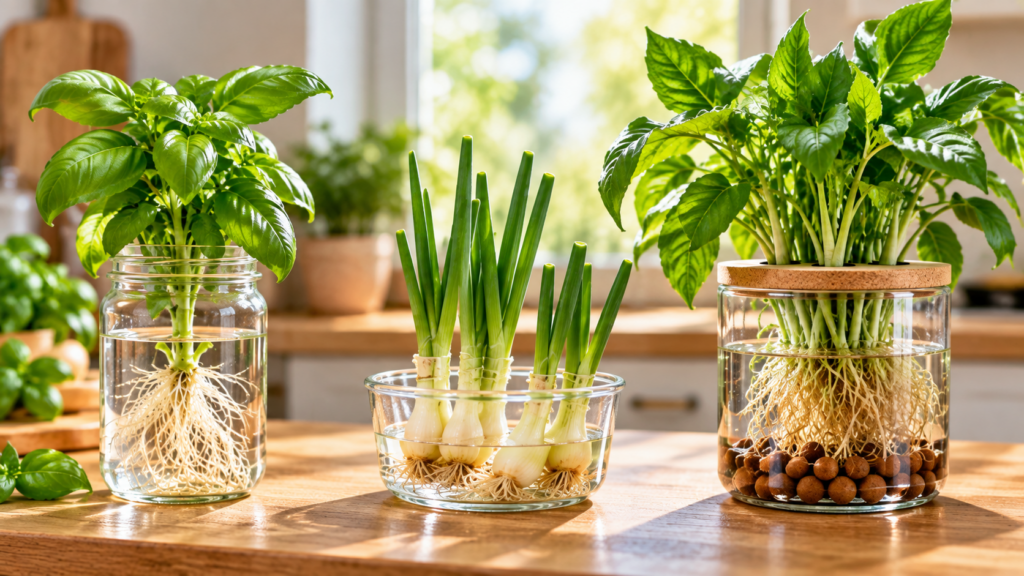
These three methods are often confused online.
- Rooting in water means taking a stem cutting from a plant and placing it in water until new roots develop. Once the roots are established, the cutting can usually be transferred to potting soil.
- Regrowing kitchen scraps means placing the base of something such as green onions, celery, or romaine lettuce in shallow water. New leaves may emerge, but this doesn’t necessarily create an endlessly productive new plant.
- Growing permanently in water is different again. Long-term water culture generally requires suitable nutrients, adequate light, oxygen around the roots, and proper maintenance.
With that distinction in mind, here are 15 plants worth trying.
1. 🌿 Basil
Best for: rooting from cuttings
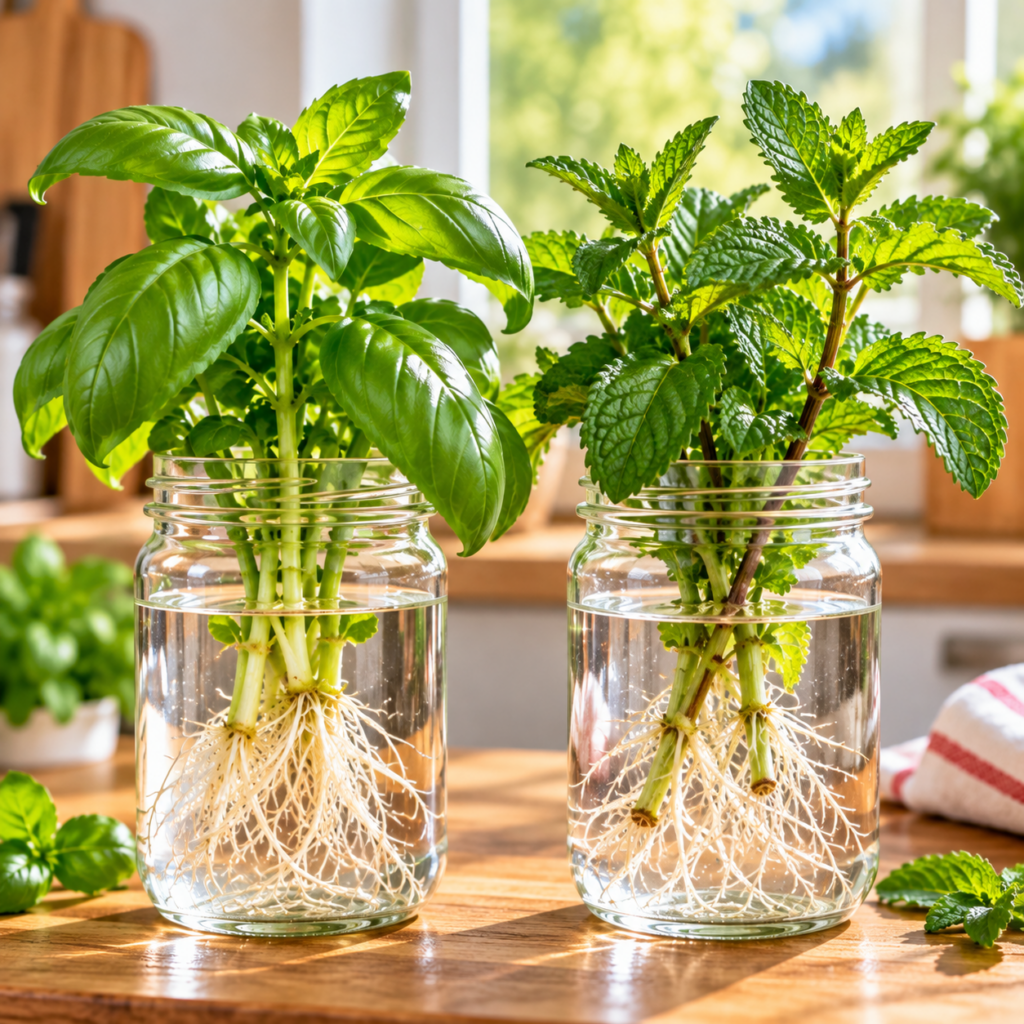
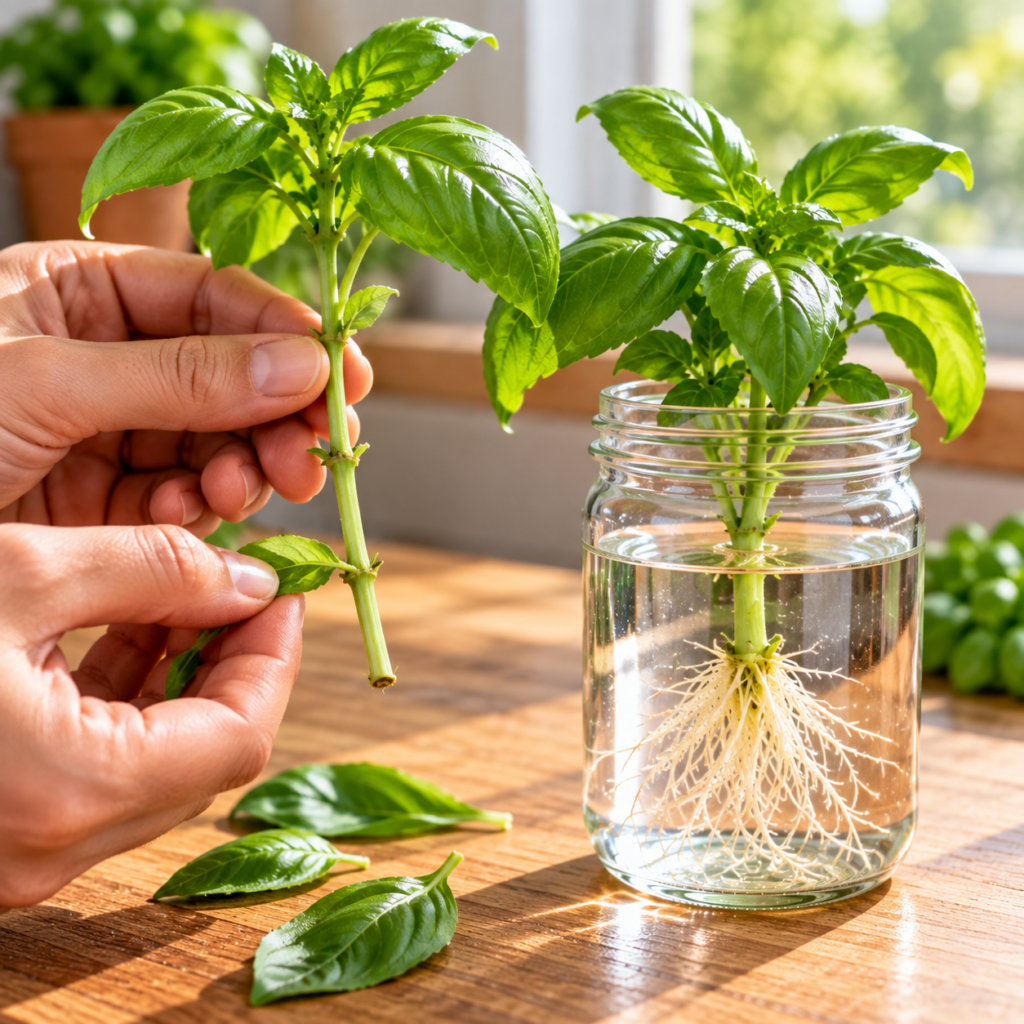
Basil is one of the easiest herbs to experiment with. Cut a healthy stem just below a node and remove the lower leaves. Place the lower part of the stem in a clean glass of water while keeping the remaining leaves above the waterline.
Put the glass somewhere bright with indirect light and replace the water regularly. Once a healthy root system develops, the young basil can be transferred to a pot.
💡 Tip: Avoid submerging leaves, as leaves sitting in water can deteriorate.
2. 🌱 Mint
Best for: rooting from cuttings
Mint is another excellent choice for water propagation. Take a healthy stem cutting, remove the leaves from its lower portion, and place the bare stem in water.
Mint is vigorous, so it can be particularly satisfying for beginners. After a good network of roots develops, move it into soil for continued growth.
3. 🌿 Cilantro/Coriander
Best for: experimentation, but less reliable than basil or mint
Cilantro deserves a little caution because it is often presented online as though it behaves exactly like mint. It doesn’t.
You can experiment with fresh stems, but cilantro is not my first recommendation if your main goal is reliable propagation from cuttings. For a dependable crop, growing cilantro from seed is generally the better approach.
4. 🌿 Parsley
Best for: limited experimentation rather than effortless water propagation
Parsley is another plant that can be misleading in viral “grow herbs in water” lists. Cut parsley placed in water may stay fresh for a while, but that is not the same thing as producing a vigorous new parsley plant.
If you want a long-term parsley plant, starting from seed or an established plant is more dependable.
5. 🌿 Rosemary
Best for: rooting suitable cuttings
Rosemary can be propagated from stem cuttings, although it generally requires more patience than mint or basil. Choose healthy, relatively young growth rather than a very old, woody stem. Remove the lower leaves and place the lower portion in water.
Keep it in bright indirect light and watch for root development. Once sufficient roots have formed, the cutting can be transferred carefully to an appropriate growing medium.
6. 🌿 Oregano
Best for: rooting from cuttings
Oregano is another herb you can try propagating from a healthy stem. Remove the lower leaves before putting the stem into water, keeping foliage above the waterline.
When a healthy root system develops, transplant it into soil.
7. 🌿 Thyme
Best for: rooting young cuttings
Thyme can also be propagated from cuttings, although results can be slower and less dramatic than with vigorous mint. Use healthy, non-flowering growth where possible and keep only the bare lower stem submerged.
Think of the glass of water primarily as a propagation station, rather than the herb’s permanent home.
8. 🧅 Green Onions
Best for: easy kitchen-scrap regrowth
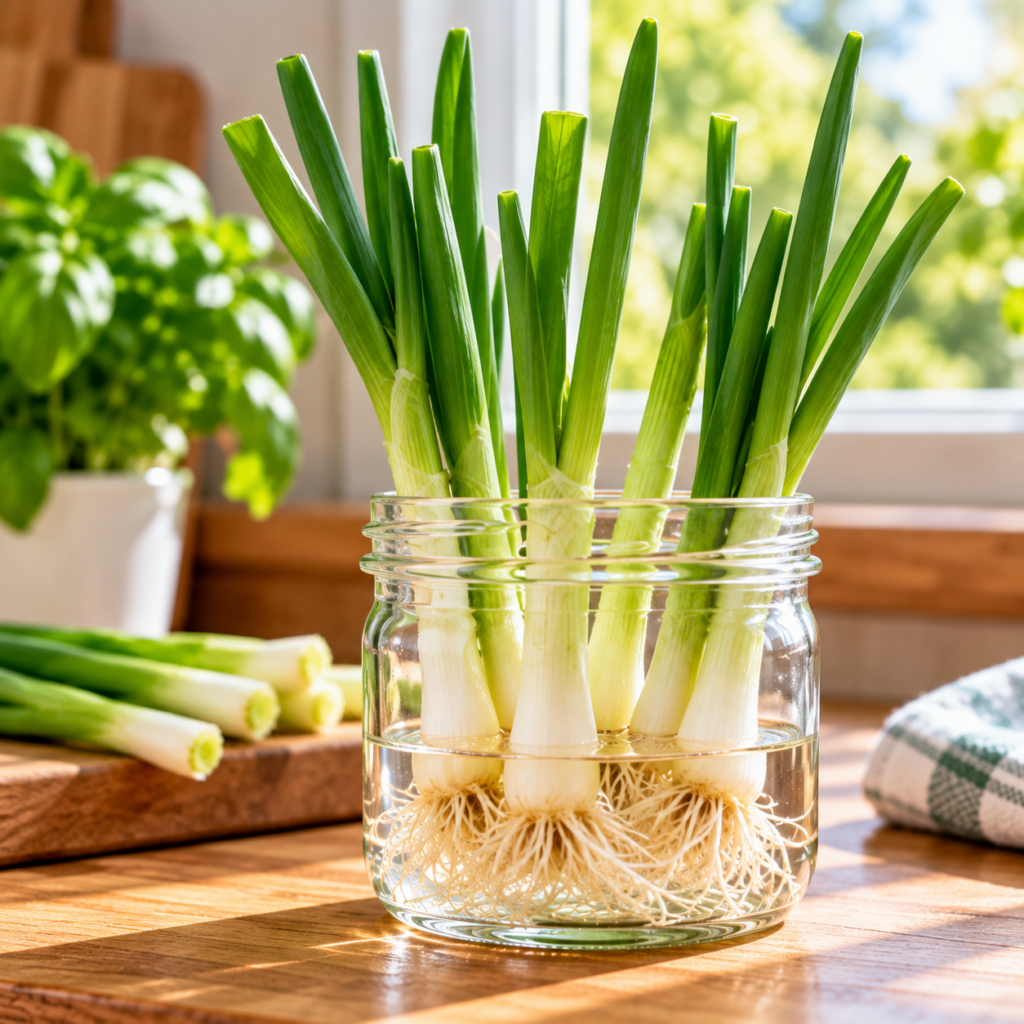
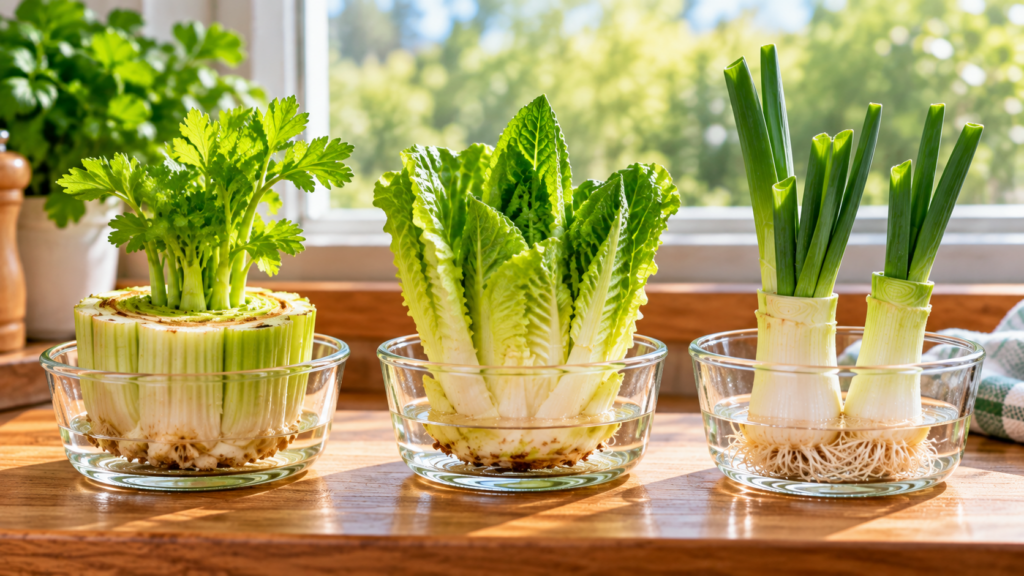
This is one of the simplest experiments on the list. Keep the white base of the green onion with its roots attached and place the root end in a small amount of water. Keep most of the stalk above the waterline.
Fresh green shoots can continue growing from the center, allowing you to harvest some additional greens.
⚠️ Important: Replace the water regularly and don’t submerge the entire bulb.
9. 🌱 Celery
Best for: limited regrowth from the base
Don’t throw away the bottom of a celery bunch just yet. Place the base in a shallow dish containing a small amount of water. New leaves can begin emerging from the center.
This is a fun kitchen experiment, but expectations should remain realistic: you’re encouraging new growth from the existing base, not magically producing endless full-sized supermarket celery stalks in plain water. For substantial continued development, the plant will eventually need better growing conditions.
10. 🥬 Romaine Lettuce
Best for: short-term regrowth
The bottom portion of a romaine lettuce head can produce fresh leaves. Place the base upright in a shallow container with a little water, keeping the upper portion above the waterline.
You may see fresh leaves emerging from the center. However, this should be considered a small second harvest, not an unlimited source of new lettuce heads.
11. 🌱 Leeks
Best for: regrowing green shoots
Leeks can be treated somewhat like green onions. Keep the root end and place it upright in shallow water. Fresh green growth may emerge from the center.
Again, this is primarily useful for obtaining additional shoots from a kitchen scrap rather than growing a completely new mature leek indefinitely in water.
12. 🫚 Ginger
Best for: sprouting rather than simple permanent water culture
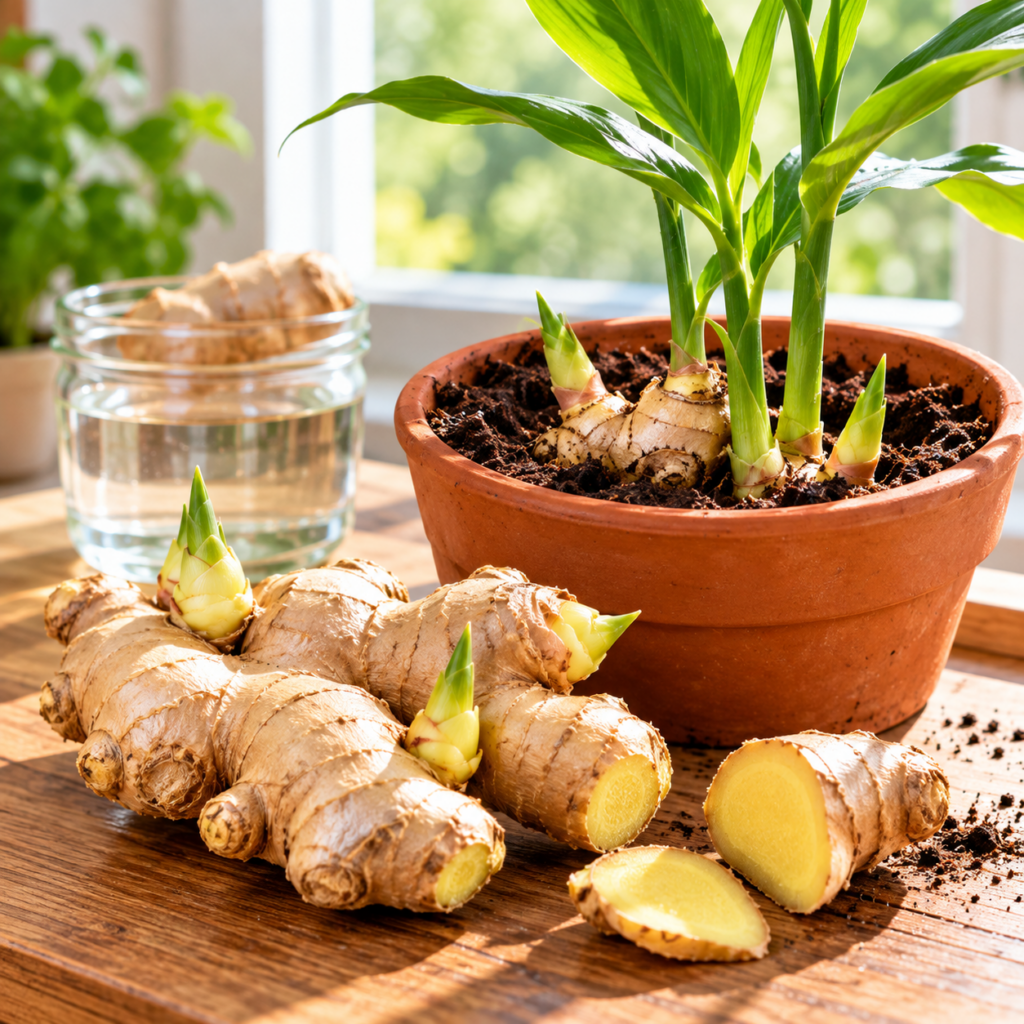
Ginger is one plant I would remove from the category of “just put it in a jar of water and let it grow.” A healthy piece of ginger rhizome with visible buds can sprout under suitable conditions, but ginger is better treated as a plant that ultimately needs an appropriate growing medium.
You can use water briefly as part of some sprouting methods, but leaving a ginger rhizome submerged for long periods increases the risk of deterioration.
💡 Better approach: Start with a healthy rhizome with visible growth buds and move it into a suitable potting medium for continued growth.
13. 🌿 Another Variety of Mint
Best for: rooting from cuttings
Different mint varieties—such as spearmint—can generally be propagated in much the same way as other mint. Take a healthy cutting, remove its lower leaves, place the stem in clean water, and wait for roots.
Using two different mint varieties can also make a small windowsill herb collection more interesting.
14. 🌿 Tarragon
Best for: cuttings, depending on the type
Tarragon can be propagated vegetatively, but this is another case where I wouldn’t promise instant results from simply putting supermarket stems in a glass. Healthy cuttings from an established plant are a better starting point.
Remove the lower leaves, keep foliage above the water and watch carefully for root development.
15. 🌱 Watercress
Best for: moist or water-based growing conditions
Watercress is the plant on this list whose name already gives away its preference for very moist conditions. Healthy stems can develop roots at nodes under suitable conditions.
However, a jar of stagnant kitchen water is not automatically an ideal permanent growing system. Clean water, adequate light and appropriate nutrition still matter if you want vigorous long-term growth.
💧 How to Root Herbs in Water Successfully
Although every plant behaves differently, a few simple habits can improve your chances.
- Start with healthy plant material and use a clean container.
- Remove any leaves that would otherwise sit below the waterline.
- Keep the container somewhere bright but avoid immediately exposing tender cuttings to intense, scorching sun.
- Check the water frequently and replace it when necessary. If a stem becomes soft, slimy, badly discolored or begins to smell unpleasant, discard it rather than leaving deteriorating material in the container.
- And most importantly, be patient. Different plants root at very different speeds.
🪴 When Should You Move a Cutting to Soil?
For herbs such as basil, mint, oregano, thyme and rosemary, water is often most useful as a temporary propagation method.
Once several healthy roots have formed and the cutting appears established, it can be transferred carefully into moist potting mix. Keep the soil reasonably moist during the initial adjustment period because roots formed in water suddenly have to adapt to a very different environment.
☀️ Don’t Forget About Light
A glass of water isn’t enough on its own.
Plants still need adequate light for photosynthesis. A bright windowsill can work well for many kitchen propagation projects, although the ideal amount of direct sunlight varies by species.
Insufficient light can result in weak, pale or stretched growth even when the cutting has successfully produced roots.
🚫 7 Common Mistakes to Avoid
- Submerging too much of the plant: Usually only the lower stem, roots or vegetable base should be in the water.
- Leaving leaves underwater: Submerged foliage can decay.
- Never changing the water: Keep an eye on its condition and refresh it regularly.
- Expecting every herb to root equally easily: Mint and basil are much more beginner-friendly than some woody herbs.
- Confusing regrowth with a new mature plant: Lettuce and celery scraps can produce new leaves without necessarily becoming another full supermarket-sized vegetable.
- Expecting plain water to sustain plants forever: Long-term water cultivation is closer to hydroponics and requires more than putting a cutting in a jar.
- Keeping unhealthy stems: Soft, rotting or foul-smelling material should be removed.
⭐ Which Plants Are Best for Beginners?
If you’re trying this for the first time, start with basil, mint and green onions. They provide a much clearer demonstration of what water propagation or regrowth can do.
After that, you can experiment with oregano, thyme or rosemary.
Celery, lettuce and leeks are especially fun if your goal is to see kitchen scraps produce fresh growth, rather than propagate a herb from a cutting.
❓ Frequently Asked Questions (FAQ)
- Can herbs really grow in just water?Some herbs root very well in water, but rooting a cutting and maintaining a productive plant permanently in plain water are two different things. For many herbs, water is best used for propagation before transplanting.
- How often should I change the water?Check it frequently and replace it regularly, particularly if it becomes cloudy or develops an odor. Keeping the container clean helps reduce deterioration around the stems.
- Can I regrow a whole romaine lettuce from the base?The base can produce fresh leaves, but don’t expect it to recreate an endless succession of full supermarket-sized lettuce heads.
- Can celery regrow in water?Yes, the base can produce new central growth. For substantial long-term growth, however, it needs more than a shallow dish of plain water.
- Which herbs are easiest to root in water?Basil and mint are two of the most beginner-friendly choices.
- Can ginger grow permanently in a glass of water?That isn’t the method I would recommend. Ginger is better sprouted and then grown in an appropriate medium rather than kept submerged in plain water.
🌿 Final Thoughts
The viral idea that “15 herbs grow in water” contains a useful concept, but the reality is more interesting.
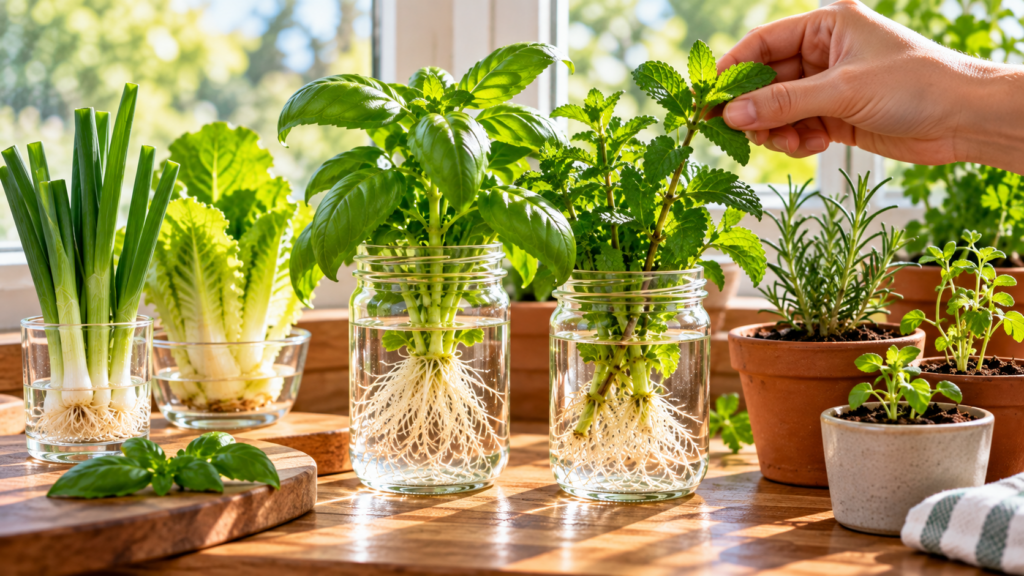
Some plants, such as basil and mint, can be rooted from cuttings. Others, including green onions, celery, romaine lettuce and leeks, can regrow from kitchen scraps. And plants such as rosemary and thyme require a little more patience.
The key is knowing what you’re actually trying to achieve:
root a cutting → regrow edible shoots → or grow a plant long-term.
Once you understand that difference, a few glasses of water on a bright windowsill can become a surprisingly useful little propagation station. 🌱