
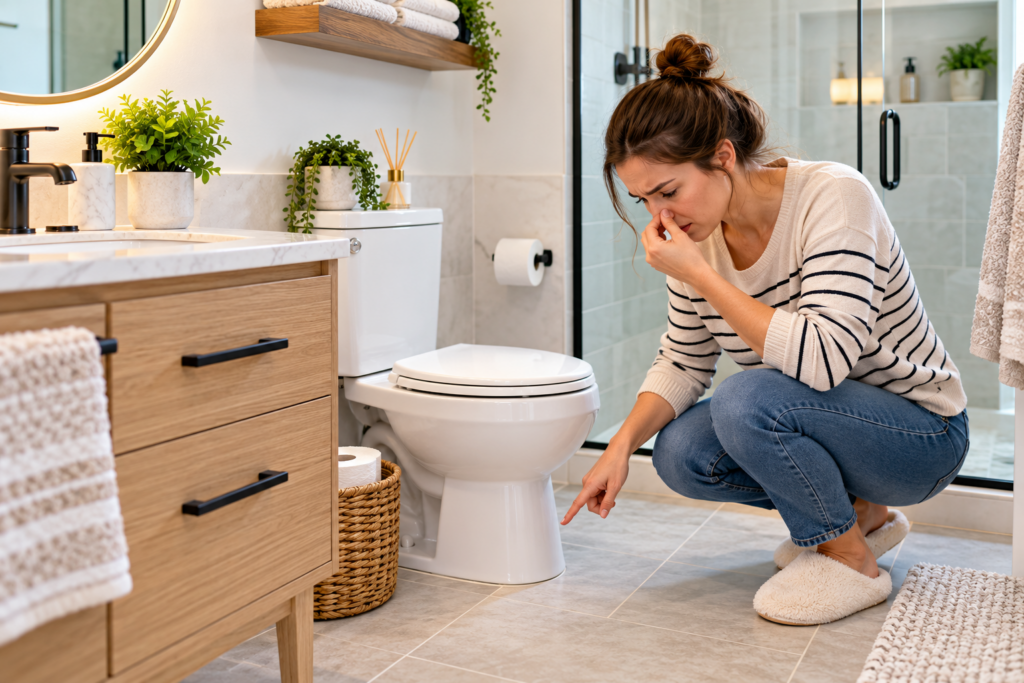
You scrub the toilet, wipe down the sink, mop the floor, and leave everything looking spotless. But a few hours later, that unpleasant bathroom smell is back.
Sound familiar?
A bathroom can look perfectly clean and still smell bad. That’s because the source of the odor isn’t always visible. It may be hiding around the toilet base, inside the sink drain, beneath the toilet seat hinges, or even in a damp towel that never dries completely.
And here’s something many homeowners overlook: making a bathroom smell pleasant isn’t the same as removing the cause of the odor.
Air fresheners, scented candles, and essential oils may temporarily cover unpleasant smells, but they won’t fix a dirty drain, persistent moisture, or a plumbing problem.
The good news? Many common bathroom odors have surprisingly simple solutions.
In this guide, you’ll discover 9 hidden reasons your bathroom still smells bad after cleaning, how to identify each one, and practical ways to make your bathroom feel fresher without relying on strong fragrances.
🔍 Why Does My Bathroom Smell Bad Even When It’s Clean?
Before reaching for another cleaning product, pay attention to the type of smell. Different odors point toward distinct issues:
| Type of Smell | Possible Cause | First Thing to Check |
| Urine smell | Residue on floor/walls around toilet | Toilet base joint, surrounding tile grout, rear wall |
| Rotten egg or sewer smell | Drain or plumbing issue | Shower and sink drains (P-trap) |
| Musty smell | Excess moisture | Towels, grout lines, ventilation fan |
| Sour smell | Bacterial buildup | Sink drain stopper and overflow opening |
| Stale or stuffy smell | Poor airflow | Exhaust fan airflow and window ventilation |
| Garbage smell | Waste buildup | Bathroom trash can interior |
💡 Quick tip: Try identifying where the smell is strongest before cleaning the entire bathroom again. This can save time and help you focus on the actual problem.
1. Hidden Urine Residue Around the Toilet Base & Surrounding Floor
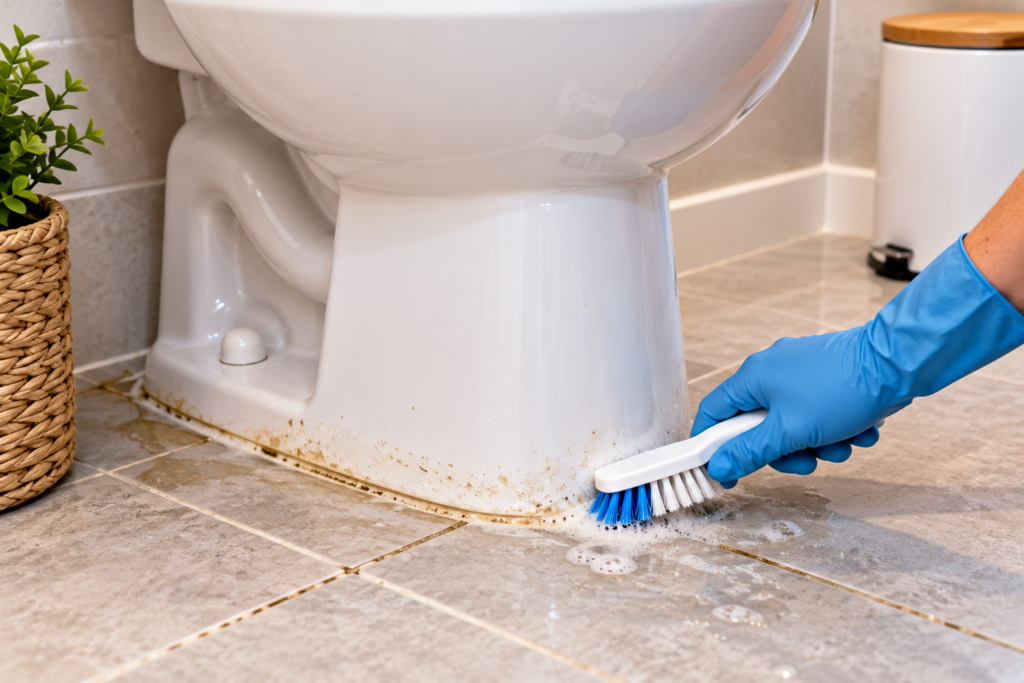
One of the most common reasons a bathroom smells like urine—even after cleaning—is that residue settles on low-visibility floor surfaces and tile grout around the fixture. Small splashes accumulate along the silicone joint between the toilet and the floor, as well as on nearby walls and baseboards.
- Where to look: Pay special attention to the floor joint directly around the toilet base, the narrow space behind the toilet, the wall tile grout behind the bowl, and adjacent floor corners.
- How to remove the smell:
- Put on cleaning gloves and remove any loose dust or hair from around the base.
- Clean the outer ceramic base and surrounding floor tiles with warm water and a neutral detergent suitable for your floor type.
- Scrub surrounding tile grout with a soft grout brush to lift trapped liquid residue.
- Wipe away the solution with a damp cloth and dry all surfaces completely.
- If the smell persists in floor grout or ceramic porous zones, apply an enzyme-based cleaner specifically formulated for organic urine odors according to manufacturer directions.
- Why this works: Regular soap removes surface dirt, while targeted enzyme cleaners break down organic uric acid salts embedded in porous materials.
⚠️ Important: If moisture continuously pools around the toilet base after flushing, don’t assume it’s just a splash issue. A compromised wax ring or leaking base connection requires mechanical plumbing repair.
2. The Toilet Seat Hinges and Mounting Hardware

While the toilet bowl and seat might shine, the mounting hinges that secure the seat to the ceramic bowl are frequent odor traps. Splashback, dust, cleaning chemicals, and moisture collect inside the small crevices of the hinge assembly.
- The Simple Cleaning Method:
- Check whether your toilet seat features a quick-release mechanism (push-button or twist-latch).
- If equipped, unlatch and remove the seat completely according to manufacturer instructions.
- Scrub the exposed mounting posts and underside hinge cavities using warm water, mild soap, and a soft detail brush or old toothbrush.
- Rinse thoroughly with a clean damp cloth and dry completely.
- Re-seat the toilet seat securely back onto its posts.
💡 How often should you do this? For busy household bathrooms, inspect and quick-release the seat hinges during your regular weekly deep-clean routine.
3. Your Sink Drain Is Hiding Soap Scum and Buildup

Does your bathroom smell unpleasant when you lean over the sink? The drain assembly could be responsible. Hair, toothpaste, soap scum, skin oils, and debris collect around the popup stopper and inside the upper drain pipe.
- How to clean a smelly bathroom sink drain:
- Remove the stopper: Pull or unscrew the popup stopper according to your faucet’s design.
- Remove visible debris: Use a flexible drain zip-tool to pull out trapped hair clumps.
- Scrub accessible surfaces: Scrub the stopper assembly and upper drain opening with warm water, dish soap, and a small cylindrical bottle brush.
- Rinse thoroughly: Flush with warm tap water to clear loosened residue.
- Check the overflow opening: Locate the overflow hole near the upper rim of the basin. Insert a small flexible brush with mild detergent to clear internal slime buildup.
What about baking soda and vinegar? While baking soda and vinegar create a fizzy chemical reaction, physical brushing and mechanical debris removal are significantly more effective for grease and hair buildup. Never pour chemical drain cleaners into pipes that may contain residual household mixtures.
4. A Dry Shower Drain or Evaporated P-Trap
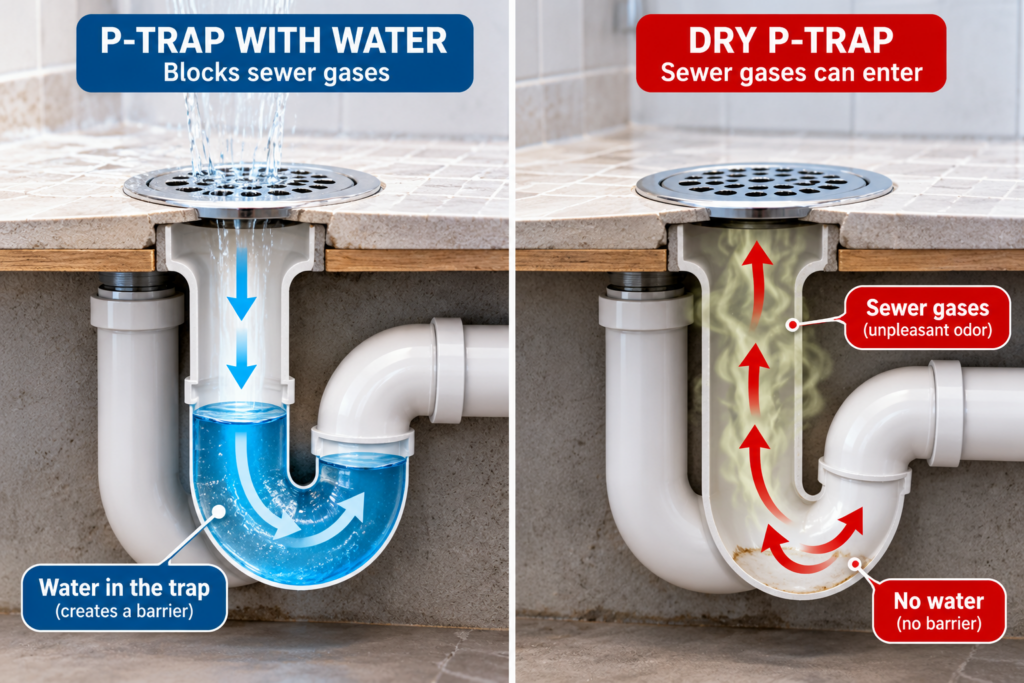
A sudden rotten-egg or sewage smell often points to an evaporated water barrier inside an unused plumbing fixture. Plumbing drains rely on a curved P-trap that holds standing water, preventing hazardous sewer gas from entering the home.
- How to check: Identify infrequently used fixtures: a guest bathroom shower, a seldom-used powder room sink, or a floor drain in a utility zone.
- What to do: Run tap water into unused drains for 30–60 seconds to refill the P-trap, then check if the odor disappears within an hour.
🛑 Important safety note: According to public health guidelines, persistent sewer-gas smells should never be masked with air fresheners. If refilling the P-trap does not solve the smell, arrange a professional plumbing inspection to check for damaged vent stacks or broken pipe seals.
5. Damp Towels Trapping Musty Odors

Even a pristine bathroom will smell stale if damp textiles remain folded or bunched together. Wet towels hung in poorly ventilated spaces foster mildew and bacterial proliferation, creating a heavy, sour smell across the room.
- Best Practice Towel Care:
- After every use: Spread towels completely open across a wide towel bar to maximize airflow.
- When washing: Wash towels according to care labels using appropriate detergent amounts; avoid overloading the machine drum.
- After washing: Ensure towels are 100% dry before folding or placing in storage linen closets.
- Deep cleaning stale towels: Rewash musty towels on a warm cycle according to care instructions and check your washing machine drum for residue.
❌ Avoid this mistake: Adding excessive fabric softener leaves a coating on towel fibers that reduces absorbency and traps moisture inside the fabric. Never leave damp bath mats or towels piled on the floor.
6. Poor Ventilation and Excess Humidity
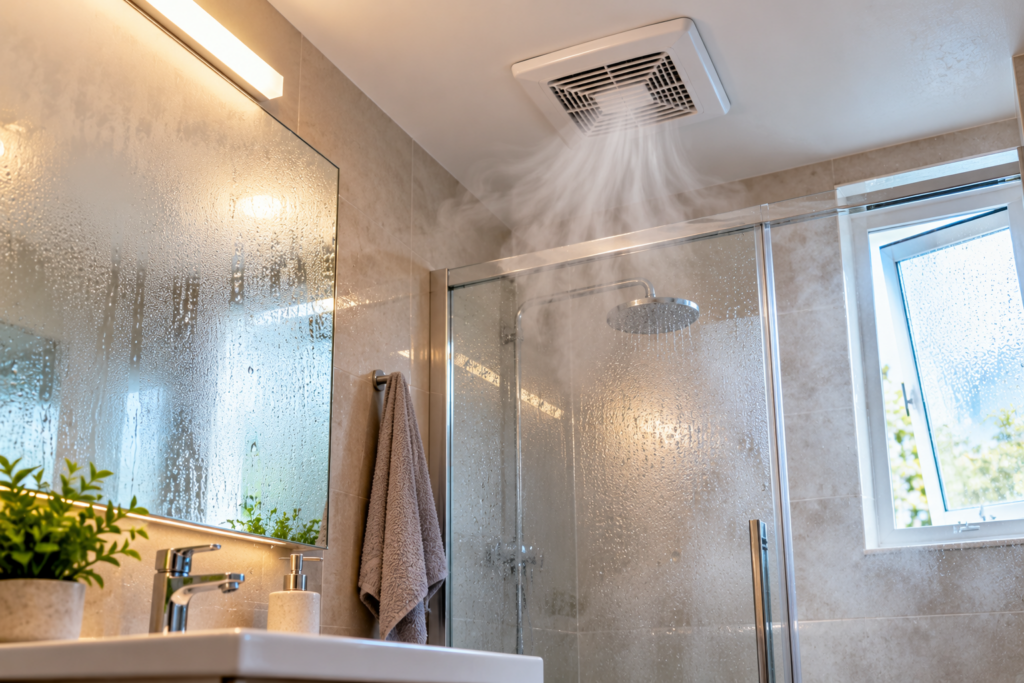
If your bathroom smells stuffy or musty following a shower, inadequate airflow is likely trapping moisture on walls, ceilings, and grout lines. Uncontrolled humidity encourages mold spores and persistent damp odors.
- How to control indoor humidity:
- Run the exhaust fan: Turn on the fan before starting a shower and keep it running for 20–30 minutes afterward.
- Ventilate with outdoor air: Open windows slightly when outdoor conditions permit to facilitate cross-ventilation.
- Squeegee wet surfaces: Wipe down glass shower doors and tiled walls after use to reduce standing water evaporation.
- Maintain relative humidity: According to the U.S. Environmental Protection Agency (EPA), indoor relative humidity should ideally be maintained between 30% and 50% (and strictly below 60%) to prevent mold growth and associated odors.
Addressing visible mold: Small surface mold on nonporous tiles can be cleaned using water and detergent followed by thorough drying. Recurring mold or moisture within drywall requires structural remediation.
7. Odor Retention in the Bathroom Trash Can
Trash cans are frequently overlooked during routine cleaning. Liquid drips, damp hygiene products, and used tissues can leave smelly organic residue at the bottom of the container, even after replacing the plastic liner.
- How to clean the bin:
- Empty the liner completely.
- Wash both interior and exterior surfaces with warm water and mild dish soap.
- Scrub the underside of the lid and foot-pedal mechanisms if applicable.
- Wipe dry with a clean cloth before inserting a fresh liner.
💡 Prevention tip: Use a small, easy-to-empty trash container with a lid. Emptying smaller bins more frequently prevents organic decomposition inside the bathroom.
8. Dirty Water Trapped in the Toilet Brush Holder
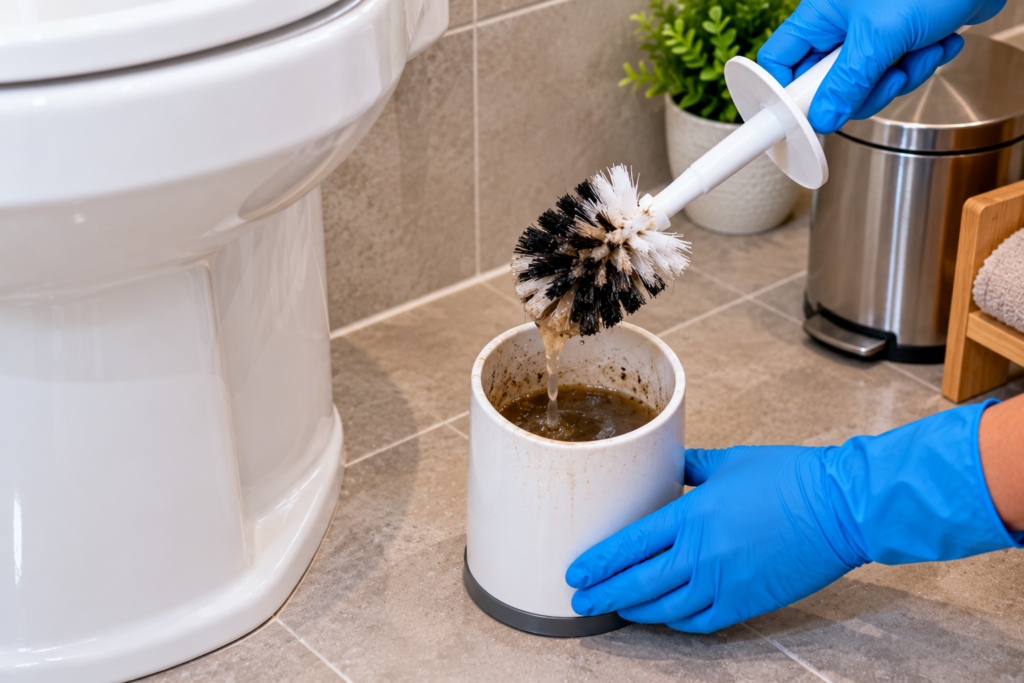
Placing a wet toilet brush directly back into a sealed holder traps contaminated rinse water at the bottom of the cup. Over time, standing water inside the holder becomes a major source of hidden odors.
- Correct Brush Maintenance:
- Sanitize the brush: Clean the brush head with toilet bowl cleaner or detergent according to manufacturer instructions.
- Air dry before storing: Sandwich the handle beneath the toilet seat over the bowl to allow all excess water to drip completely dry into the toilet before placing it back in the holder.
- Wash the container: Periodically empty standing water from the holder base, wash with soap and water, and dry thoroughly.
⚠️ Critical Chemical Safety Warning: According to the Centers for Disease Control and Prevention (CDC), never mix household bleach with ammonia, vinegar, acids, or other cleaning chemical products. Combining these substances creates dangerous, toxic gases (such as chloramine or chlorine gas).
9. Hidden Plumbing Leaks and Moisture Behind Surfaces

When bad smells persist despite thorough surface cleaning, hidden moisture behind cabinets, under vanity sinks, or beneath flooring may be supporting unseen bacterial or mold growth.
- Warning signs of hidden leaks:
- Peeling paint, blistering drywall, or swollen vanity panels
- Dark discoloration along floor grout or silicone caulking
- Water stains or soft spots on flooring around fixtures
- A localized, heavy musty smell that worsens near cabinets or walls
- Recommended action: Inspect under-sink pipe connections, supply lines, and shower enclosures. Repair active plumbing leaks immediately and dry affected materials thoroughly. Consult a professional contractor if moisture has penetrated subflooring or wall cavities.
⏱️ A Simple 15-Minute Bathroom Odor Check
Use this rapid inspection checklist to locate hidden odor sources before starting your deep clean:
| Time | Area to Check | Action Item |
| 0–3 min | Toilet base & surround | Inspect floor joint and grout behind bowl |
| 3–5 min | Seat hinges | Unlatch quick-release seat & check mounting posts |
| 5–7 min | Sink drain & overflow | Inspect stopper for hair and overflow for buildup |
| 7–9 min | Shower & floor drains | Run water to refill P-traps; check drain cover |
| 9–11 min | Towels & bath mats | Remove damp textiles; spread towels to dry |
| 11–13 min | Trash bin & brush holder | Empty standing water in holder; clean bin interior |
| 13–15 min | Humidity & ventilation | Verify fan airflow; check under sink for pipe drips |
🌿 5 Everyday Habits That Keep Bathrooms Fresh
- Squeegee shower walls: Remove standing surface water immediately after showering.
- Spread out wet towels: Avoid hanging towels folded in half or piling damp mats on the floor.
- Run exhaust fans regularly: Allow fans to run 20–30 minutes post-shower to clear steam.
- Detail small hardware weekly: Include seat hinges, drain stoppers, and trash bins in routine wipes.
- Investigate recurring smells: Treat persistent odors as potential indicators of moisture or plumbing needs rather than masking them.
🧪 Practical Cleaning Materials: Uses & Guidelines
| Material | Primary Application | Usage Guidelines & Limitations |
| Mild dish soap & water | Surface dirt and soap scum | Safe for most nonporous surfaces; not a disinfectant |
| Enzyme-based cleaner | Organic residues (e.g., urine) | Follow surface compatibility label; breaks down organic compounds |
| Baking soda | Mild abrasive cleaning | Safe for general scrubbing; does not replace mechanical unclogging |
| Fresh airflow | Diluting indoor humidity | Effective when outdoor air is dry; requires functional fan or window |
| White vinegar | Dissolving mineral deposits | Acidic: Do not use on marble, granite, natural stone, or unsealed grout |
⚠️ Safety Reminder: Always verify product label instructions and never combine chemical cleaning agents.
🚨 When to Call a Professional
While routine cleaning resolves most everyday odors, contact qualified specialists under these circumstances:
- Contact a Licensed Plumber if:
- Sewer gas odors persist after refilling all drain traps.
- Water repeatedly pools around the toilet base during flushes.
- Multiple fixtures drain slowly or make gurgling sounds.
- Contact a Restoration / Moisture Specialist if:
- Mold recurs continuously across large wall or ceiling surfaces.
- Drywall, subflooring, or cabinetry shows swelling or water saturation.
🚨 Emergency Gas Safety: If you detect a strong rotten-egg smell and suspect a natural gas or propane fuel leak, evacuate the premises immediately and contact your gas utility or local emergency services from a safe outdoor location.
❓ Frequently Asked Questions (FAQ)
1. Why does my bathroom smell like urine even after I clean the toilet?
Urine residue often accumulates on tile grout around the base, along the floor joint, or behind the bowl. Thoroughly scrub the surrounding floor, tile joints, and baseboard area. If moisture repeatedly pools around the base, inspect the wax ring seal for leaks.
2. How do I get rid of a musty bathroom smell naturally?
Ensure adequate ventilation by running your exhaust fan for 20–30 minutes after showers, spread towels open to dry completely, and wipe down shower walls with a squeegee. Keeping relative indoor humidity between 30% and 50% prevents musty moisture buildup.
3. Why does my bathroom smell like sewage at night?
This often occurs when water inside a shower or sink P-trap evaporates, allowing sewer gas to pass through the pipe into the room. Running tap water into unused drains for 30 seconds refills the trap barrier. If the smell persists, consult a plumber to inspect your vent stack.
4. Can baking soda remove bathroom odors?
Baking soda can help absorb light localized odors and serves as a mild abrasive cleaner, but it cannot resolve sewer gas leaks, clogged P-traps, or structural moisture problems.
5. Why does my bathroom smell worse after a shower?
Warm steam and elevated humidity amplify pre-existing odors trapped in damp towels, dirty drain stoppers, or hidden mold. Running the exhaust fan during and after your shower helps remove moisture promptly.
📌 Final Thoughts
If your bathroom still smells bad after cleaning, don’t assume you need a stronger air freshener. The real problem may be something small: a dirty toilet hinge, a damp towel, a clogged drain stopper, or water trapped in a toilet brush holder.
In other cases, persistent odors can point to a plumbing leak or moisture problem that needs professional attention.
The most effective approach is simple: Find the source. Clean or repair it. Keep the area dry. Prevent the problem from returning.
A bathroom that smells fresh shouldn’t depend on constantly adding fragrance. Sometimes, the biggest difference comes from cleaning the one place you’ve been overlooking!