
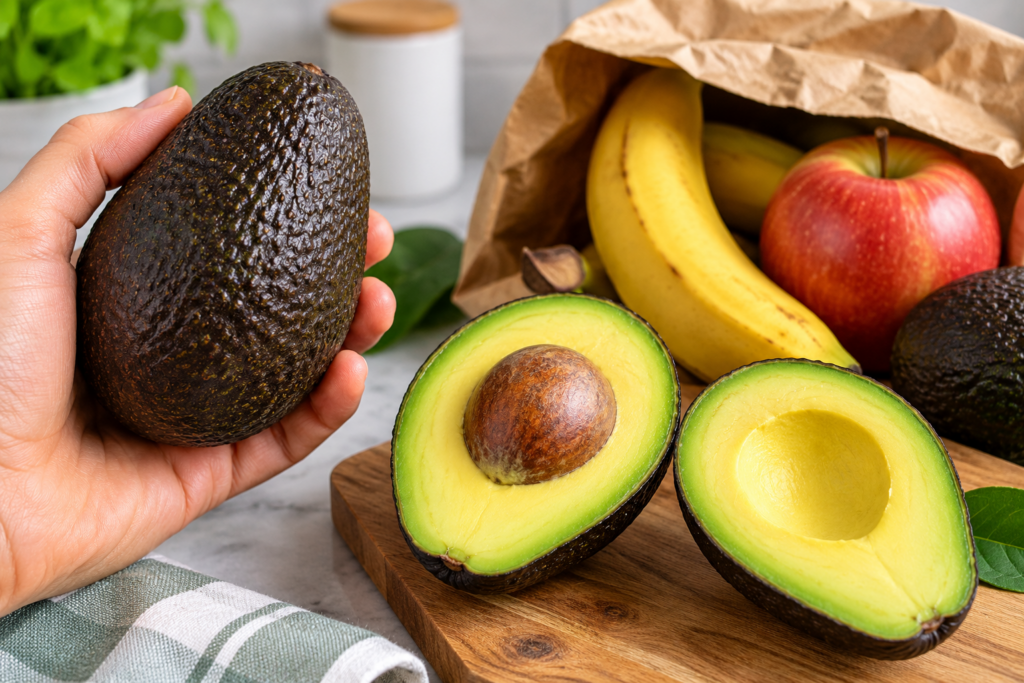
You cut into an avocado expecting soft, creamy flesh… and instead it feels almost as hard as a potato.
Then you remember all those viral tricks online: wrap it in foil and put it in the oven, microwave it, bury it in rice, or leave it in the sun.
Some even promise to turn a rock-hard avocado into a ripe one in just 10 minutes.
But do these tricks actually ripen an avocado — or do they simply make it softer?
I looked at the most popular avocado hacks and separated the useful ideas from the ones that don’t quite work the way social media suggests.
And if your avocado really is rock-hard, don’t worry. There are better ways to speed things up.
🔥 Viral Hack #1: Wrap the Avocado in Foil and Put It in the Oven
This may be the most famous avocado-ripening hack online.
The instructions usually go something like this:
- Wrap a hard avocado in aluminum foil.
- Place it on a baking sheet.
- Put it in a low oven.
- Heat it until it becomes soft.
- Let it cool before using it.
Some versions claim you’ll have a ripe avocado in about 10 minutes.
Does it work?
Sort of — but there’s an important catch.
Heating can make an avocado softer, especially if it was already beginning to ripen. But softening an avocado with heat isn’t the same thing as allowing it to ripen naturally.
Ripening involves a series of biological and chemical changes that gradually create the flavor, aroma and creamy texture we associate with a good avocado. The oven is mainly cooking and softening the flesh.
That’s why an oven-softened avocado may be mashable while still tasting different from a naturally ripe one.
When could it be useful?
If you’re in an emergency and simply need softer avocado for a cooked recipe, it might help. But for guacamole, avocado toast or salads, I’d wait for proper ripening whenever possible.
⚡ Viral Hack #2: Microwave the Avocado
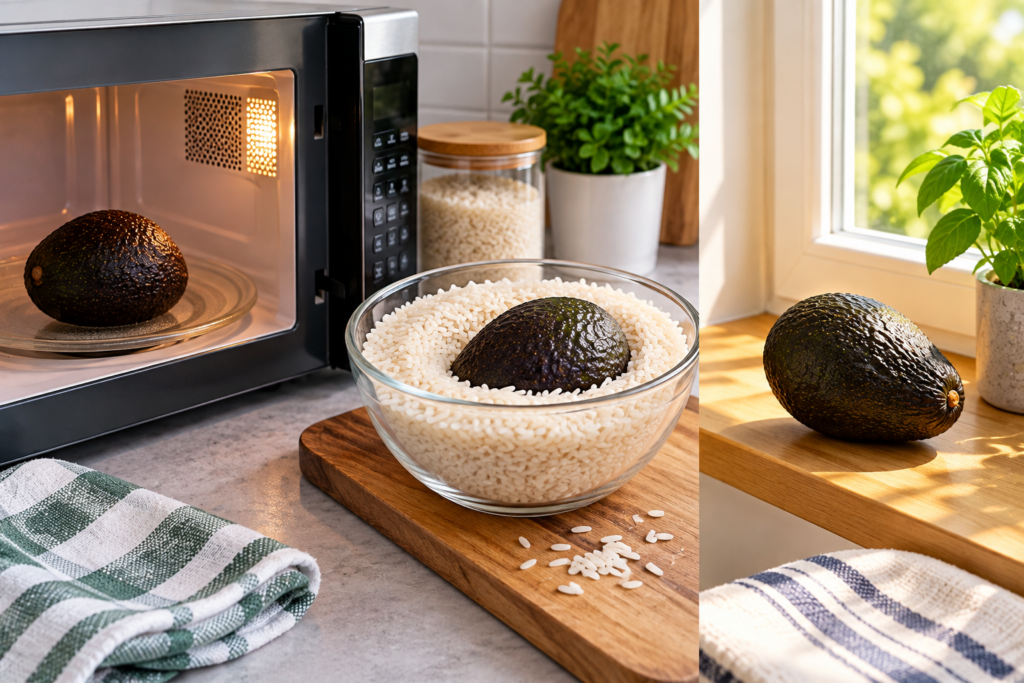
Another popular shortcut is to microwave an underripe avocado for short intervals until it becomes soft.
Does it work?
Again, it can soften the avocado — but it doesn’t instantly ripen it.
Microwaves heat the flesh. Depending on the avocado and microwave, you may also end up with:
- Unevenly softened areas
- Partially cooked flesh
- Altered flavor
- A texture that isn’t as creamy as naturally ripe avocado
So if the goal is simply softness, the microwave can change the texture. If the goal is a delicious ripe avocado, it’s not the solution I’d choose.
🍚 Viral Hack #3: Bury the Avocado in Rice
You’ve probably seen this one too. The idea is to completely surround an unripe avocado with uncooked rice, leave it there and check it regularly. The theory is that the rice helps trap ethylene around the avocado.
Does it work?
The idea of concentrating ethylene around an avocado makes sense, but rice isn’t necessary to accomplish that.
So rather than using a bowlful of rice, I’d choose the simpler paper-bag method described below.
☀️ Viral Hack #4: Put the Avocado on a Sunny Windowsill
Another common suggestion is to leave hard avocados in direct sunlight.
Does it work?
Leaving an avocado at room temperature allows it to continue ripening naturally. But you don’t need intense direct sunlight to make that happen. A normal room-temperature spot is sufficient. Excessive heat isn’t the goal — natural ripening is.
🥑 So, What Actually Works?
To understand the better methods, it helps to know one thing about avocados.
Avocados continue ripening after harvest, and a natural plant hormone called ethylene plays an important role in that process. Instead of trying to cook an avocado into softness, you can use that natural ripening process to your advantage.
And that’s where the paper bag comes in.
🍎 Method #1: Put the Avocado in a Paper Bag
This is one of the simplest methods.
You’ll need:
- 1 hard avocado
- 1 brown paper bag
Put the avocado inside the bag and loosely fold the top closed. Leave it at room temperature and check it daily.
Why does this help? As an avocado ripens, it produces ethylene. The bag helps keep some of that ethylene around the fruit rather than allowing it to disperse freely into the room. You’re not cooking the avocado or artificially changing its texture. You’re simply creating a better environment for its normal ripening process.
🍌 Method #2: Add a Banana or Apple
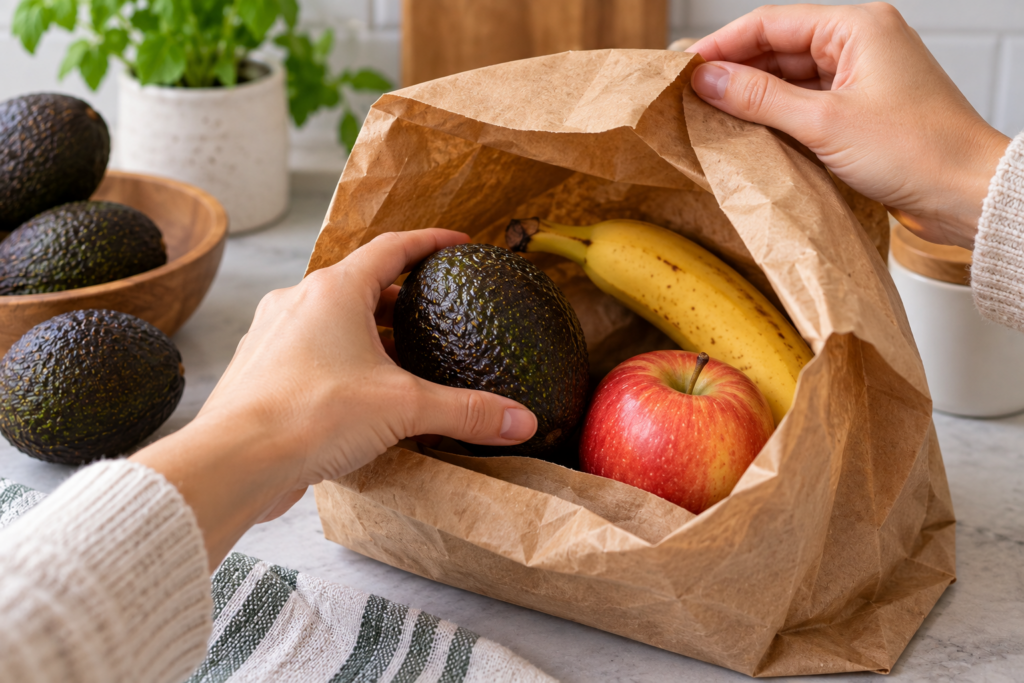
Want to give the paper-bag method an extra boost? Add a ripe banana or apple. These fruits also produce ethylene.
Try this: Place 1 hard avocado + 1 ripe banana or apple inside a paper bag. Fold the bag closed loosely and keep it at room temperature. Check the avocado every day. Depending on how underripe it was to begin with, it may take a couple of days or longer.
Don’t forget about it: Once the avocado starts ripening, things can move surprisingly quickly. Check it every day so your perfect avocado doesn’t become an overripe one.
🥝 Method #3: Try a Kiwi
Don’t have a banana or apple? A kiwi is another option. Place the avocado and kiwi together inside a paper bag and leave them at room temperature. The principle is the same: you’re using ethylene to encourage the avocado’s own natural ripening process.
🌡️ Method #4: Simply Leave It at Room Temperature
If you’re not in a hurry, you don’t actually need any trick. Leave the whole avocado on your kitchen counter at normal room temperature. Check it once a day. A very hard avocado may take several days, while one that’s already beginning to soften may be ready much sooner.
It’s not exciting enough for a viral video — but sometimes doing almost nothing is the best method.
🧊 Should You Put a Hard Avocado in the Refrigerator?
Not if you’re trying to make it ripen quickly.
Cold temperatures slow the ripening process. Instead, keep a whole unripe avocado at room temperature. Once it reaches the ripeness you like, however, the refrigerator becomes useful because cooler temperatures can help slow further ripening and give you more time to eat it.
🤏 How to Tell When an Avocado Is Ready
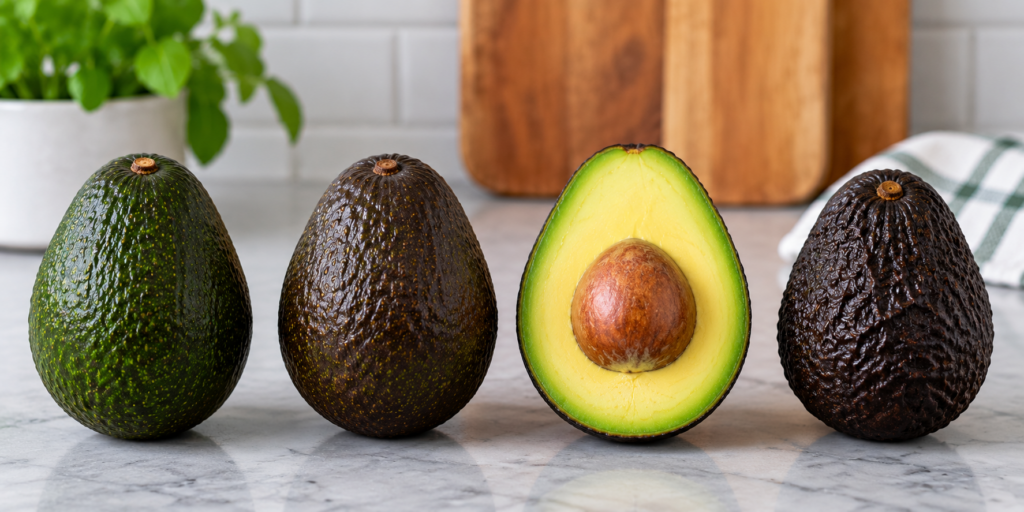
Don’t rely only on skin color. Appearance varies between avocado varieties. Instead, gently hold the avocado in your palm and apply light pressure:
- Very hard: It’s still underripe.
- Firm but starting to give slightly: It’s getting close.
- Gently yields to pressure: It’s generally ready to eat.
- Extremely soft or mushy: It may be overripe.
⚠️ Try not to repeatedly press hard with your fingertips because that can bruise the flesh.
🔪 What If You’ve Already Cut the Avocado?
This is one of the most frustrating avocado mistakes. The outside looks promising, you cut it open… and the flesh is still hard.
Don’t leave the cut avocado sitting on the counter for days trying to finish the ripening process. Instead, protect the exposed flesh with a little lemon or lime juice to help reduce browning, cover it well and refrigerate it. If it’s extremely underripe, consider using it in a cooked recipe rather than expecting it to become perfect guacamole.
🍟 Too Hard to Eat? Use the Firm Texture to Your Advantage
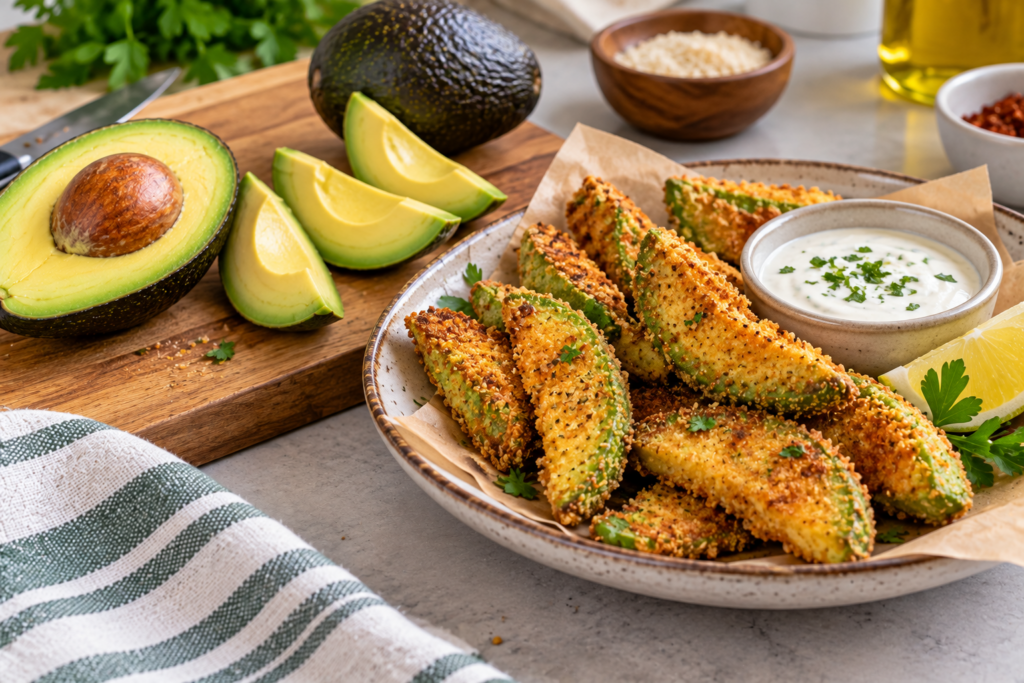
A hard avocado doesn’t necessarily have to end up in the trash. In fact, some recipes benefit from firmer flesh.
- Make avocado fries: Cut a firm avocado into wedges. Coat the pieces with breadcrumbs and your favorite seasonings, then bake or air-fry them. Because the avocado isn’t extremely soft, the wedges can hold their shape better during preparation.
- Add it to a cooked recipe: If you’ve already cut the avocado, consider using it in a recipe where it will be heated anyway. That’s a much better use for an underripe avocado than trying to make it taste naturally ripe by microwaving it.
❌ 5 Avocado Ripening Myths Worth Knowing
- “The oven makes an avocado ripe in 10 minutes.”Not exactly. Heat can soften avocado flesh, but that’s different from completing the natural ripening process.
- “The microwave does the same thing as natural ripening.”No. It primarily heats and softens the flesh.
- “You need rice to ripen an avocado faster.”Not really. A paper bag provides a much simpler way to help concentrate ethylene around the avocado.
- “The refrigerator will make a hard avocado ripen faster.”Generally, it’s the opposite. Refrigeration slows ripening.
- “If an avocado feels soft, it must be perfectly ripe.”Not necessarily. Cooking can soften an underripe avocado, and damaged or overripe fruit can also feel soft.
💡 A Better Trick: Buy Avocados at Different Stages
There’s an easy way to avoid desperately searching for avocado hacks in the first place. When shopping, don’t buy every avocado at exactly the same stage. Choose:
- One that’s nearly ready
- One that’s moderately firm
- One that’s still quite firm
Eat the softest one first. Allow the others to continue ripening at room temperature. As each avocado reaches the ideal stage, you can move it to the refrigerator to slow things down. This simple rotation makes it much easier to have a ripe avocado available throughout the week.
❓ Frequently Asked Questions
- Can you really ripen an avocado in 10 minutes?Not in the same way an avocado naturally ripens. Heat can make the flesh softer, but it doesn’t instantly reproduce all the changes that occur during natural ripening.
- What is the best way to ripen a hard avocado faster?Place the avocado in a paper bag at room temperature. Adding a ripe banana, apple or kiwi can help increase the amount of ethylene around it.
- How long does the paper bag method take?It depends on how underripe the avocado is. Don’t expect an extremely hard avocado to become perfectly ripe in minutes. Check it daily.
- Is the oven avocado trick fake?It’s better described as misleading rather than completely fake. The avocado really can become softer when heated, but softness shouldn’t be confused with natural ripeness.
- Does aluminum foil make an avocado ripen?Wrapping an avocado in foil and heating it is primarily a softening/cooking technique. Foil doesn’t magically reproduce natural ripening.
- Can I microwave a hard avocado for guacamole?You can soften it, but the flavor and texture may be disappointing compared with naturally ripe avocado. If good guacamole is your goal, waiting is the better option.
- Should I put an avocado in the fridge?Leave an unripe whole avocado at room temperature when you want it to ripen. Once it’s ripe, refrigeration can help slow further softening.
- Can you eat an underripe avocado?An underripe avocado is generally very firm and may have an unpleasant flavor or texture. If you’ve already cut one open, using it in an appropriate cooked recipe can be more enjoyable than eating it raw.
🥑 The Bottom Line
The viral avocado hacks aren’t all completely imaginary — they’re just often described incorrectly.
An oven or microwave can make a hard avocado softer. That doesn’t mean it has suddenly become naturally ripe. If you want the creamy texture and flavor of a properly ripened avocado, give the fruit time to complete its natural ripening process.
And if you want to speed things up, the most useful trick is wonderfully simple: Put your avocado in a paper bag with a banana, apple or kiwi and check it every day.
It may not deliver the dramatic “perfect avocado in 10 minutes” transformation promised on social media. But you’ll have a much better chance of ending up with the avocado you actually wanted.