

Limescale in your kettle doesn’t just look unpleasant—it can also affect the taste of your water and shorten the lifespan of your appliance. Especially in areas with hard water, calcium and magnesium deposits can quickly build up inside the kettle.
Fortunately, you don’t need harsh chemicals. With a few simple household remedies, you can descale your kettle effectively, affordably, and more naturally. 🌿
Why Does Limescale Build Up in a Kettle?
Tap water contains minerals such as calcium and magnesium. When water is heated, some of these minerals can form the familiar white, chalky deposits inside the kettle.
If limescale isn’t removed regularly, the kettle may become less efficient and take longer to heat water. Heavy buildup can also affect the appliance over time.
🧪 5 Natural Ways to Remove Limescale
🍋 1. Citric Acid – The Classic Method
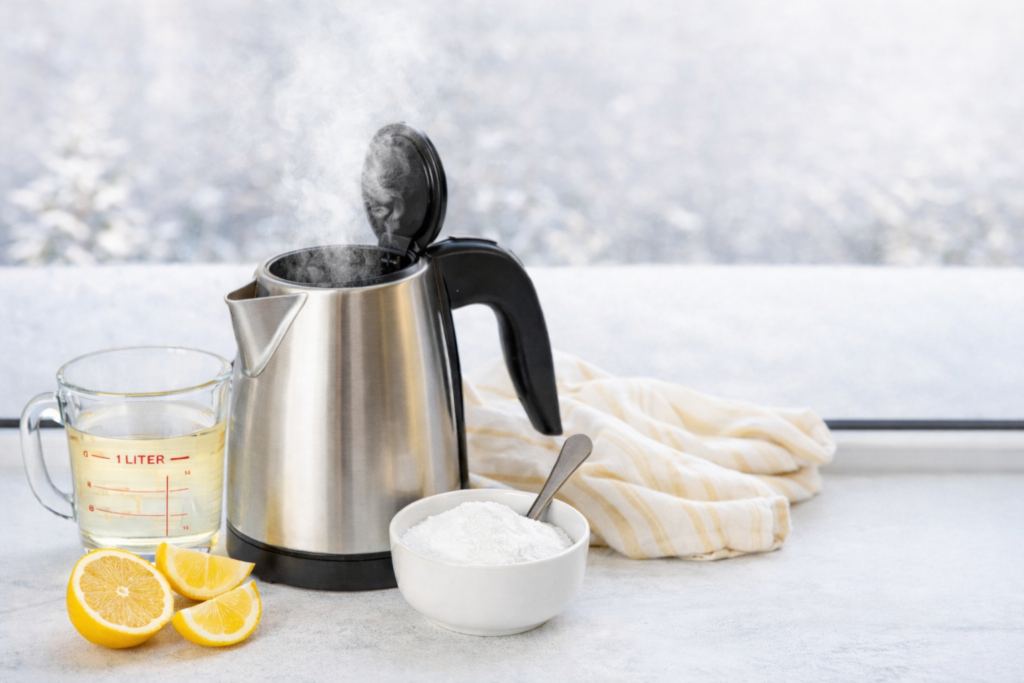
Citric acid is particularly effective at dissolving calcium deposits.
How to use it:
- Add 2 tablespoons of citric acid to 1 liter of water.
- Pour the mixture into the kettle.
- Do not boil it unless the citric-acid product or kettle manufacturer specifically says this is safe.
- Let it sit for about 15–30 minutes.
- Pour it out and rinse thoroughly with clean water.
Important: Heating citric acid too strongly can encourage the formation of calcium citrate, which is harder to remove. Warm water is usually the safer approach.
🍶 2. White Vinegar
The acetic acid in vinegar reacts with mineral deposits and can help dissolve limescale.
How to use it:
- Mix 250 ml of white vinegar with 750 ml of water.
- Pour the mixture into the kettle.
- Let it sit for 15–30 minutes. For stubborn buildup, gentle heating may help if permitted by the manufacturer.
- Empty the kettle.
- Rinse thoroughly and boil fresh water once or twice before using the kettle again.
🍊 3. Lemon Peels
Lemon peels are best suited to light limescale deposits and can leave the kettle smelling fresh.
How to use them:
- Place the peels of 2 lemons in the kettle.
- Add enough water to cover the affected areas.
- Heat the water and allow the peels to soak for around 20 minutes.
- Empty and rinse thoroughly.
For heavier limescale, citric acid or vinegar will generally be more effective.
🧴 4. Apple Cider Vinegar
Apple cider vinegar can also be used to tackle mineral deposits, although it may leave more odor or residue than plain white vinegar.
Method:
- Mix 1 part apple cider vinegar with 2 parts water.
- Pour it into the kettle.
- Allow it to sit for around 15–30 minutes.
- Empty the kettle and rinse thoroughly.
- Boil fresh water afterward and discard it before using the kettle normally.
🧂 5. Baking Soda + Vinegar – The Fizzing Method
Baking soda and vinegar create an impressive fizzing reaction, but there’s an important point to understand:
Vinegar is the ingredient that primarily helps dissolve limescale. Mixing it with baking soda neutralizes some of the acid, so this combination is not necessarily more effective against heavy limescale than vinegar alone.
However, baking soda can be useful for loosening grime and helping with certain odors.
If you want to try it:
- Add 1 tablespoon of baking soda to the kettle.
- Add about 500 ml of warm water.
- Slowly add 100 ml of white vinegar.
- Allow the mixture to fizz and sit for around 15 minutes.
- Empty the kettle and rinse thoroughly.
⚠️ Never close or seal the kettle while the mixture is fizzing.
For stubborn mineral deposits, vinegar or citric acid used correctly is usually the better choice.
⚠️ Important Note
Baking soda alone is not an effective limescale remover because limescale responds much better to acids such as vinegar or citric acid.
Also, always check your kettle manufacturer’s cleaning instructions. Certain materials, coatings, heating elements, or filters may require specific care.
🌿 Advantages of Simple Household Descaling Methods
✔ Affordable
✔ Easy to use
✔ Widely available ingredients
✔ Can reduce reliance on specialized cleaning products
✔ Effective when used correctly
❓ FAQ – Frequently Asked Questions
How often should you descale a kettle?
With hard water, you may need to descale it every 2–4 weeks. In areas with softer water, every 2–3 months may be sufficient.
The best indicator is visible limescale buildup inside the kettle.
Is limescale in water harmful to your health?
Limescale mainly consists of mineral compounds associated with calcium and magnesium and is generally not considered harmful at the levels normally found in drinking water.
However, buildup can affect your kettle’s performance and the appearance or taste of the water.
How can I get rid of the vinegar smell?
Rinse the kettle thoroughly, then fill it with fresh water, boil it, and discard the water. Repeat if necessary.
Is lemon juice as effective as citric acid?
Lemon juice contains citric acid and can help with light deposits, but concentrated citric acid is generally more effective for substantial limescale buildup.
Can I use these methods in a coffee machine?
Not automatically. Coffee machines can contain sensitive components, seals, aluminum parts, and internal tubing.
Always follow the coffee machine manufacturer’s descaling instructions rather than assuming a kettle method is suitable.
🏁 Conclusion
You can keep your kettle clean and efficient without relying on aggressive cleaners. 🌱 White vinegar and properly used citric acid are among the most effective household options for removing limescale, while lemon can be useful for lighter deposits.
Regular descaling helps maintain your kettle’s performance, reduces mineral buildup, and keeps your hot drinks tasting their best.