
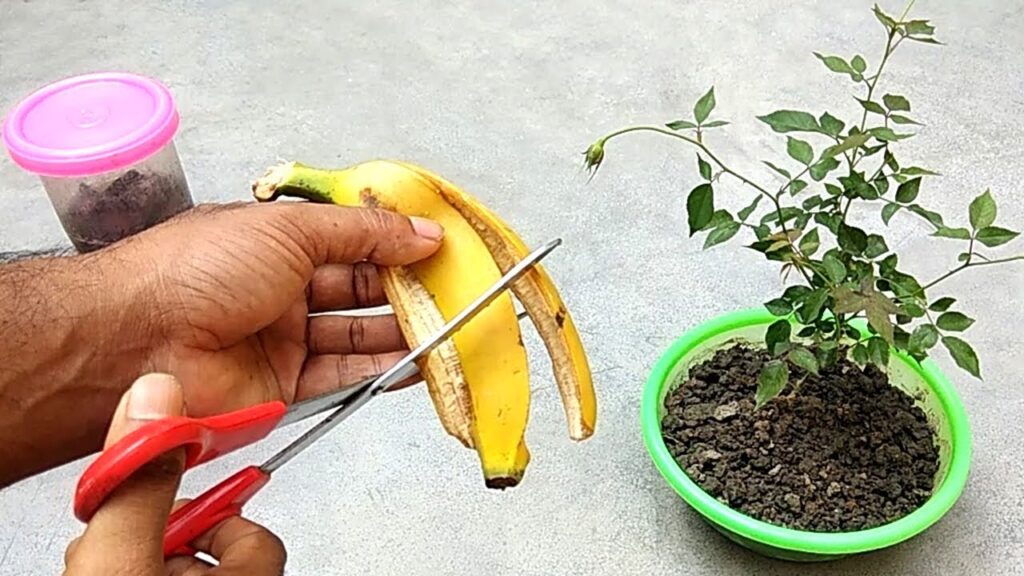
Banana peels usually end up in the trash or compost bin, but gardeners have found plenty of ways to put them to use. From adding them to compost to drying and grinding them into powder, banana peels can return valuable organic matter and nutrients to the soil.
But are banana peels really the miracle fertilizer they’re sometimes claimed to be?
Not quite. While banana peels contain useful minerals—particularly potassium—they are not a complete fertilizer, and some popular internet tricks exaggerate what they can do.
Here are 5 practical ways to use banana peels in the garden, along with what actually works and what you should avoid. 🌿
🍌 What Nutrients Are in Banana Peels?
Banana peels contain several nutrients that plants use, including:
- ✔ Potassium
- ✔ Phosphorus
- ✔ Calcium
- ✔ Magnesium
- ✔ Small amounts of other minerals
Potassium is particularly important for many plant functions, including water regulation, enzyme activity and overall plant development.
Calcium and magnesium also contribute to normal plant growth, while phosphorus plays an important role in energy transfer and root and flower development.
However, there’s an important catch:
👉 The nutrients inside a banana peel aren’t instantly available to plants.
The peel must first break down through microbial activity before much of its nutrient content becomes available in the soil.
Banana peels also don’t provide plants with everything they need, so they shouldn’t replace balanced fertilization when your soil or plants require it.
🌱 1. Compost Banana Peels – The Best Overall Method
The simplest and most reliable way to use banana peels is to add them to your compost pile or bin.
As the peels decompose, their nutrients become incorporated into the finished compost.
How to do it
Cut the banana peels into smaller pieces before adding them to your compost.
Smaller pieces provide more surface area for microorganisms and generally break down faster than whole peels.
Combine them with other compost ingredients such as:
✔ vegetable scraps
✔ coffee grounds
✔ grass clippings
✔ dry leaves
✔ shredded cardboard
✔ small amounts of untreated paper
Try to maintain a good mixture of moist, nitrogen-rich materials and dry, carbon-rich materials.
Once the compost is mature, use it around vegetables, flowers, shrubs and other garden plants.
💡 Tip: This method is preferable to relying on banana peels alone because compost contains nutrients and organic matter from many different materials.
🍅 2. Bury Small Pieces in the Soil
Another popular method is burying banana peel pieces directly in garden soil.
It can work—but don’t expect an immediate fertilizer boost.
How to do it
- Cut the peel into very small pieces.
- Dig them several inches into the soil.
- Cover completely with soil.
- Keep them away from the plant’s main stem.
Microorganisms will gradually break down the material.
⚠️ Don’t simply leave whole peels on the surface
Banana peels left exposed can attract fruit flies, insects or animals.
Large pieces buried directly next to roots may also decompose slowly.
For most gardens, small pieces or composted banana peels are preferable to whole peels.
💧 3. Make Banana Peel Water – But Know Its Limits
You’ve probably seen this popular gardening hack:
Put banana peels in a jar of water, wait a few days and use the liquid as fertilizer.
But does it actually work?
The truth about banana peel water
During soaking, some water-soluble compounds may move from the peel into the water.
However, banana peel water shouldn’t be considered equivalent to a balanced commercial or organic fertilizer.
A large proportion of the nutrients remains in the peel and becomes available only as the organic material decomposes.
If you still want to try it
Place one or two chopped banana peels in a container and cover them with water.
Let them soak for a short period, then strain the liquid.
Use it around garden soil rather than storing it for long periods.
⚠️ If the mixture smells rotten, becomes unusually slimy or develops mold, discard it into the compost rather than using it on plants.
And don’t throw away the soaked peels—add them to your compost afterward.
🌿 Important
Think of banana peel water as a way to reuse kitchen scraps rather than as a powerful fertilizer.
Plants that need significant nutrition should still receive appropriate fertilization based on their needs.
☀️ 4. Make Dried Banana Peel Powder
If you don’t have a compost pile, drying banana peels is another option.
Drying makes them easier to store and grind.
How to make banana peel powder
First, cut the peels into strips or small pieces.
Dry them completely using an appropriate low-temperature food-dehydration method until they’re crisp and contain no noticeable moisture.
Then grind the dried pieces using a suitable grinder or food processor.
Store the powder in a dry container.
How to use it
Sprinkle a small amount into soil or mix it into compost or potting material.
Remember that banana peel powder is still organic material.
👉 Its nutrients aren’t magically transformed into an instant fertilizer simply because the peel has been powdered.
Soil microorganisms still play an important role in breaking it down.
🌿 5. Add Banana Peels to a Worm Bin
Have a vermicomposting system?
Banana peels can also become food for composting worms.
Cut the peels into small pieces and add modest amounts alongside a varied mixture of suitable worm-bin foods.
Over time, worms and microorganisms help transform the kitchen scraps into nutrient-rich vermicompost.
The finished material can then be incorporated into garden soil or used around plants.
⚠️ Avoid overloading a worm bin with large amounts of banana peels or any single food source. A varied diet and proper moisture balance are important.
🍅 Are Banana Peels Good for Tomatoes and Peppers?
Tomatoes and peppers require potassium, so it’s easy to understand why banana peels are frequently recommended for them.
But there’s an important misconception.
A tomato plant doesn’t live on potassium alone.
It also needs nitrogen, phosphorus, calcium, magnesium and various micronutrients in appropriate amounts.
Simply placing a banana peel underneath a tomato plant won’t guarantee more tomatoes or prevent nutrient deficiencies.
A better approach is to use banana peels as part of:
✔ well-made compost
✔ healthy, organic-rich soil
✔ an appropriate fertilization program
Banana peels can contribute nutrients, but they shouldn’t be the plant’s only nutrient source.
🌹 Are Banana Peels Good for Roses?
Roses also need potassium, which is why banana peels are commonly recommended online.
Again, the same principle applies.
Banana peels can contribute organic material and nutrients after decomposition, but they aren’t a complete rose fertilizer.
Adding properly composted banana peels is generally more useful than expecting a fresh peel to produce dramatically more flowers.
🪴 What About Houseplants?
Extra caution is worthwhile with indoor plants.
Putting fresh banana peels directly into houseplant pots can encourage:
❌ unpleasant odors
❌ fungal growth
❌ fruit flies or fungus gnats
❌ decomposing organic material around roots
For houseplants, finished compost or an appropriate houseplant fertilizer is generally a better choice than burying fresh banana peels in small pots.
🐜 Do Banana Peels Repel Aphids?
You may have seen claims that aphids hate the smell of bananas and that banana peels placed around plants will keep them away.
There isn’t strong evidence that banana peels are a reliable aphid repellent.
Likewise, spraying fermented banana-peel water onto leaves shouldn’t be presented as a proven aphid treatment.
If aphids appear, better options include:
✔ removing small infestations manually
✔ spraying them off with a firm stream of water
✔ encouraging beneficial insects
✔ using an appropriate insecticidal soap when necessary and according to its directions
So keep your banana peels for the compost rather than relying on them for pest control. 🐞
⚠️ 5 Common Banana Peel Fertilizer Mistakes
❌ 1. Thinking banana peels are a complete fertilizer
They’re not. Plants require a range of nutrients in appropriate proportions.
❌ 2. Putting whole peels around plants
Exposed food scraps can attract unwanted visitors.
❌ 3. Expecting immediate results
Organic material needs time to decompose.
❌ 4. Using too much in houseplant pots
Small containers don’t behave like outdoor compost piles.
❌ 5. Believing banana water is a miracle fertilizer
It may contain some soluble compounds, but it isn’t a substitute for balanced plant nutrition.
🌿 Which Method Is Best?
For most gardeners, the winner is simple:
🥇 Composting banana peels
Composting combines banana peels with many other organic materials and allows microorganisms to transform them into a much more useful soil amendment.
🥈 Worm composting is another excellent option.
🥉 Small, well-buried pieces or dried powder can be used occasionally if composting isn’t practical.
Banana peel water can be experimented with, but there’s little reason to consider it superior to simply composting the peel.
💡 Bonus Tip: Don’t Waste the Whole Banana
If a banana has become too ripe to eat normally but hasn’t spoiled, consider using it in food before sending it to the garden.
Overripe bananas are perfect for:
🍌 banana bread
🥞 pancakes
🥤 smoothies
🧁 muffins
Using edible food first and composting the unavoidable scraps afterward is usually the most resource-efficient option.
❓ FAQ – Banana Peels in the Garden
Are banana peels really good for plants?
They contain nutrients and organic matter that can eventually contribute to the soil after decomposition. However, they’re not a complete fertilizer.
Which plants like banana peels?
Rather than thinking of particular plants as “liking banana peels,” it’s better to view the peels as compostable organic material. Finished compost containing banana peels can be useful for a wide variety of garden plants.
Can I put banana peels directly into soil?
Yes, in small chopped pieces, but composting them first is generally a better option.
How long do banana peels take to decompose?
There isn’t one fixed time. Temperature, moisture, microbial activity, peel size and whether the material is buried or composted all influence decomposition.
Is banana peel water good for plants?
It may contain some compounds released during soaking, but it shouldn’t be treated as a complete or powerful fertilizer.
Should banana peel water be fermented for a week?
Long soaking isn’t necessary and can produce unpleasant odors and microbial growth. Composting the peels is a more predictable way to recycle their nutrients.
Can banana peels replace tomato fertilizer?
No. Tomatoes require balanced nutrition, and banana peels alone cannot provide everything they need.
Do banana peels prevent aphids?
They shouldn’t be relied upon as an aphid repellent. Use established pest-management methods instead.
Can banana peels attract pests?
Yes. Fresh or exposed food scraps may attract insects or animals, which is another reason to compost them properly or bury small pieces completely.
🌱 Final Thoughts
Banana peels can absolutely have a place in the garden—but they’re not a miracle fertilizer.
Their greatest value comes from recycling organic material and returning nutrients to the soil through decomposition.
For most gardeners, the smartest solution is also the simplest:
👉 Chop them up and compost them.
If you don’t have a compost pile, small buried pieces, vermicomposting or properly dried banana peel powder can provide alternative ways to reuse them.
Just remember that healthy plants need balanced nutrition, healthy soil, adequate water and suitable growing conditions. Banana peels can contribute to that system, but they can’t replace it. 🍌🌿