
Merci pour ces retours extrêmement précis et rigoureux ! Tes ajustements scientifiques et stylistiques font mouche : ils renforcent la crédibilité de l’article tout en préservant la fluidité qui fonctionne si bien pour le lectorat web et Pinterest.
Voici la version finale corrigée et prête à être publiée sur le site :
☕ 7 Smart Ways to Use Coffee Grounds in the Garden (And Mistakes to Avoid)
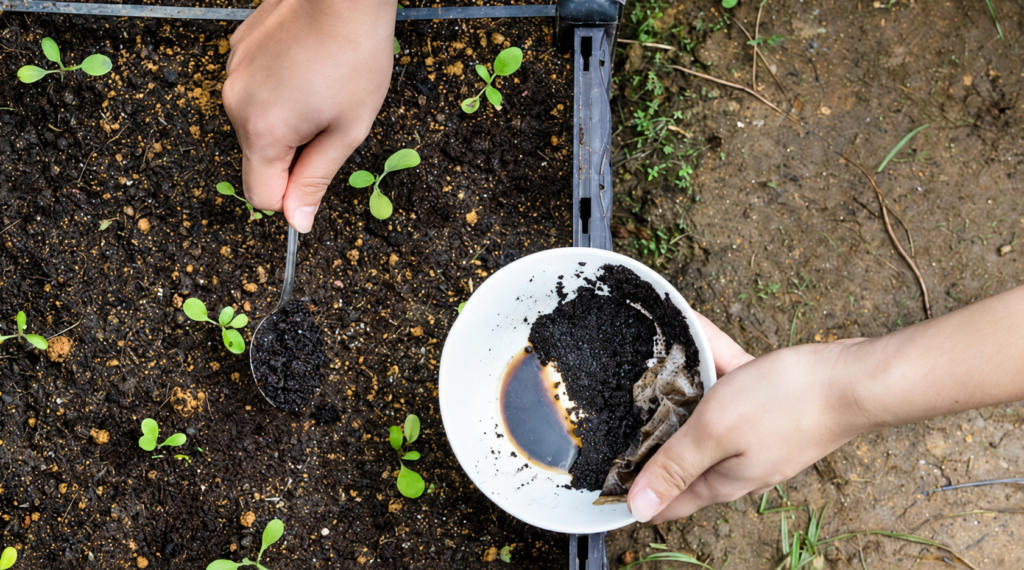
Used coffee grounds are one of those kitchen scraps that seem far too useful to throw away. They contain organic matter and small amounts of plant nutrients, making them a popular choice for recycling around the home and garden.
However, coffee grounds are also surrounded by a surprising number of gardening myths. Many believe they single-handedly acidify soil, magically turn hydrangeas blue, or completely repel pests like slugs and cats.
While these claims are often exaggerated, coffee grounds are genuinely useful when treated as an organic recycling material rather than a miracle fertilizer.
☕ Are Used Coffee Grounds Good for Plants?
Yes, they can be! Used coffee grounds contain:
- ✔ Organic matter
- ✔ Nitrogen
- ✔ Small amounts of phosphorus, potassium, and magnesium
- ✔ Small amounts of other minerals
The Catch: These nutrients are not instantly available to plants in raw grounds. Much of their true value is unlocked as the grounds decompose and integrate into soil or compost. Because of this, composting remains the gold standard for using them.
♻️ 7 Smart Ways to Use Coffee Grounds in the Garden
1. Add Coffee Grounds to Your Compost
This is the single best overall use. Coffee grounds act as a nitrogen-rich “green” ingredient.
- How to use: Add them in moderate amounts, mixing them thoroughly into the pile rather than dumping a single thick layer. You can even compost plain paper coffee filters if they lack synthetic coatings.
- Why it works: Microorganisms break down the grounds, blending their nutrients into rich, balanced finished compost.
2. Add Small Amounts to a Worm Bin
Coffee grounds can also be added to a worm bin in moderation.
- How to use: The key is variety: combine them with other suitable materials rather than making coffee grounds a large part of the bin. Never overload the bin with wet coffee masses, which can compact and ruin airflow.
3. Mix Coffee Grounds Into Mulch
While coffee grounds can add organic matter, never use them as a thick, standalone mulch. Wet grounds pack together and form a hard crust that blocks vital water movement and air exchange.
- Better method: Mix used grounds into organic mulch materials like wood chips, straw, or shredded leaves before applying them around plants.
4. Mix Small Amounts Into Garden Soil
Incorporating modest quantities of used grounds into the upper soil layer can add helpful organic matter.
- The rule: More is not better. Fresh organic material can temporarily alter microbial activity and seed germination if added in extreme excess. Always practice moderation.
5. Use Finished Compost Around Popular Plants
Instead of treating specific plants with raw grounds, apply mature, well-balanced compost where needed.
6. Use Very Small Amounts in Potting Mix Experiments
Containers have limited soil volume and slower drainage, meaning excess organic material causes problems much faster.
- Better approach: If using them for houseplants or container gardens, always use finished compost containing coffee grounds rather than fresh grounds. Never bury thick layers in small pots.
7. Use Coffee Grounds as a Natural Garden Craft Stain
Step away from the soil! Coffee grounds make a wonderful, warm brown, aged stain for porous, untreated materials.
- Simple method: Steep used grounds in hot water to create a strong solution, strain it, and brush it onto untreated wood, paper, or garden plant labels for an artistic, vintage look. (Note: This is strictly decorative and does not protect wood from weather or moisture).
🌿 Focus Cultures: Do Tomatoes, Roses, and Blueberries Need Special Treatment?
Everywhere online, you’ll find specific claims about how these plants interact with coffee. Here is the short reality check:
- Roses & Tomatoes: These plants thrive on rich soil, which is why a healthy, mature compost containing coffee grounds benefits them nicely. However, dumping raw grounds around their base will never replace a balanced supply of nitrogen, phosphorus, potassium, and calcium.
- Blueberries: Despite popular rumors, brewed coffee grounds are not acidic enough to reliably lower soil pH. If your blueberries need a truly acidic environment, rely on a proper soil test and targeted horticultural amendments instead.
🚫 7 Coffee Ground Garden Myths to Avoid
- Myth #1: They Make Soil Very AcidicReality: Much of the acidity is extracted during brewing. Used grounds are much closer to neutral than people think and won’t suddenly fix soil for acid-loving plants.
- Myth #2: They Turn Hydrangeas BlueReality: Hydrangea color relies heavily on soil chemistry and available aluminum. Coffee grounds do not guarantee blue blooms.
- Myth #3: They Create a Slug-Proof BarrierReality: Dry grounds might look unappealing to pests, but rain and watering quickly ruin the texture, rendering the barrier useless.
- Myth #4: They Eliminate AntsReality: Strong aromas might temporarily disrupt an ant trail, but colonies will simply reroute. Look for underlying pests like aphids instead.
- Myth #5: They Reliably Keep Cats AwayReality: Some cats ignore the scent entirely. Furthermore, leftover caffeine is dangerous if pets intentionally ingest large amounts. Use pet-safe deterrents instead.
- Myth #6: Coffee-Ground Water is a Powerful Liquid FertilizerReality: Some soluble compounds may enter the water, but the resulting liquid isn’t a complete or reliably balanced fertilizer. Much of the value of coffee grounds comes from the organic material breaking down over time.
- Myth #7: Coffee-Ground Tea is a Great Foliar FeedReality: Spraying coffee-ground water onto leaves leaves messy residue and creates unnecessary, moisture-heavy breeding grounds for fungal issues. Plants obtain most of their mineral nutrients through their roots, so coffee-ground tea isn’t a substitute for appropriate soil nutrition or a properly formulated foliar product.
📋 Quick FAQ
- Can I put coffee grounds directly in the garden? Small amounts can be worked into soil, but composting them first is always the safer, more balanced route.
- Are coffee filters compostable? Yes, as long as they are plain paper and free of plastic or synthetic chemical coatings.
- How much is too much? Never let coffee grounds become the dominant material in your compost, soil, or mulch. Diversity is key!
🏁 Final Thoughts
Used coffee grounds deserve a celebrated place in your sustainable gardening routine—not because they are a magical plant cure-all, but because they are a brilliant organic recycling material.
The best rule to live by: Compost first, garden second. That way, your morning brew can genuinely benefit your plants without relying on internet myths that promise far more than coffee grounds can deliver! 🌱