
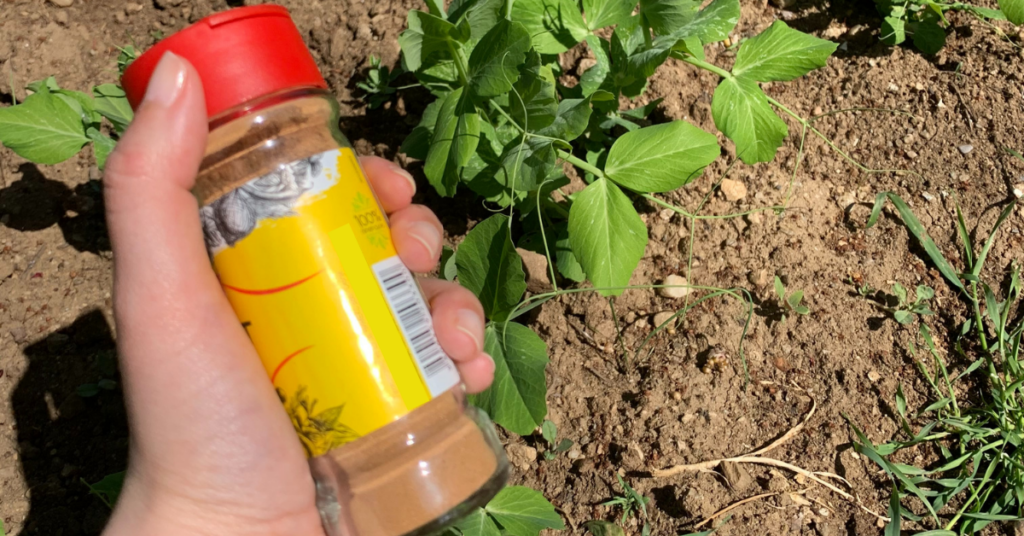
Cinnamon is probably already sitting in your kitchen cabinet—but could this familiar spice also be useful in the garden?
Gardeners have long experimented with cinnamon for everything from seedlings and plant cuttings to ants and moldy potting soil. And there is an interesting reason behind some of these ideas: cinnamon and some of its naturally occurring compounds, particularly cinnamaldehyde, have shown antimicrobial and antifungal activity under certain conditions.
But that doesn’t mean every viral cinnamon gardening hack actually works.
Cinnamon powder is not a fertilizer, rooting hormone, universal fungicide, or guaranteed pest repellent. Some popular claims confuse laboratory research involving concentrated cinnamon extracts or essential oils with what happens when ordinary ground cinnamon is sprinkled around a garden.
So, where can cinnamon actually be useful?
Here are 10 smart ways to experiment with cinnamon in and around your garden, along with the limitations you should know before reaching for the spice jar. 🌱
🧪 First: Why Is Cinnamon Interesting to Gardeners?
Cinnamon contains a variety of aromatic plant compounds. One of the best known is cinnamaldehyde, which gives cinnamon much of its characteristic smell and flavor.
Some cinnamon-derived compounds have demonstrated:
✔ antifungal activity
✔ antibacterial activity
✔ insect-related effects under certain experimental conditions
However, concentration and formulation matter enormously.
Ground cinnamon from your kitchen isn’t equivalent to a laboratory extract, essential oil, pesticide, or commercial fungicide.
That’s important to remember throughout this article.
🌱 1. Use Cinnamon Carefully Around Seedlings
One of the most popular gardening uses for cinnamon involves damping-off, a group of diseases that can cause young seedlings to collapse.
Affected seedlings may:
🌱 fail to emerge
🟤 develop thin or discolored stems
🥀 suddenly fall over
💀 die shortly after germination
Because cinnamon contains compounds with antifungal activity, some gardeners lightly dust the surface of seed-starting mix with ground cinnamon.
🌿 How gardeners use it
Apply only a very light dusting over the surface rather than creating a thick layer.
But don’t depend on cinnamon alone.
✅ The best defense against damping-off
Focus primarily on:
✔ clean containers
✔ fresh, well-draining seed-starting mix
✔ good air circulation
✔ appropriate temperatures
✔ avoiding overwatering
✔ not overcrowding seedlings
💡 Important: Damping-off can involve several different pathogens, so kitchen cinnamon shouldn’t be considered a guaranteed treatment.
✂️ 2. Use Cinnamon on Plant Cuttings—But Not as a Rooting Hormone
You may have seen this popular advice:
Dip a cutting into cinnamon instead of rooting hormone.
There’s an important problem with that claim.
❌ Cinnamon isn’t a true rooting hormone.
Commercial rooting products commonly contain plant-growth regulators such as IBA (indole-3-butyric acid) that encourage root formation.
Ordinary cinnamon powder doesn’t provide the same thing.
However, some gardeners still apply a tiny amount of cinnamon to the cut surface because of cinnamon’s antimicrobial properties.
🌱 How to try it
- Take a healthy cutting with clean pruning tools.
- Allow preparation according to the needs of that particular plant.
- Lightly dust the cut end with cinnamon if desired.
- Insert it into suitable propagation medium.
- Maintain the humidity, light, and temperature required by the species.
If you want to actively encourage rooting, use a proper rooting product when appropriate.
Think of cinnamon as an optional supplementary treatment—not a rooting hormone replacement.
🪴 3. Try a Light Dusting on Moldy Potting-Soil Surfaces
Have you ever noticed a thin white or fuzzy layer growing on top of indoor potting soil?
Surface fungal growth is often associated with conditions such as:
💧 persistently wet soil
🌬️ insufficient airflow
🌱 decomposing organic material
☀️ low evaporation
Because cinnamon has antifungal properties under certain conditions, some gardeners experiment with a very light surface dusting.
But here’s the important part:
🌿 Fix the cause first.
If mold repeatedly returns, adding more cinnamon isn’t the solution.
Instead:
✔ reduce unnecessary watering
✔ improve drainage
✔ increase appropriate airflow
✔ remove decomposing plant debris
✔ make sure the pot isn’t constantly saturated
Cinnamon may be an interesting supplementary measure, but better growing conditions matter much more.
🐜 4. Create a Temporary Cinnamon Barrier for Ants
Ants navigate partly using chemical trails.
Strong aromatic substances can sometimes disrupt their movement, which explains why gardeners often experiment with cinnamon around ant trails.
🐜 How to try it
Apply a thin line of ground cinnamon across a dry ant trail or entry point and observe whether the ants change their route.
This works best as an experiment around:
✔ patios
✔ potting areas
✔ container exteriors
✔ garden structures
⚠️ Don’t expect colony control
Cinnamon isn’t a reliable method for eliminating an ant colony.
Ants may:
➡️ find another route
➡️ cross the barrier eventually
➡️ return once wind or rain removes the powder
Also remember that ants themselves aren’t always garden enemies. Some species can be beneficial or simply harmless visitors.
🌿 5. Use Cinnamon Around Small Potting Areas Where Ants Travel
If ants repeatedly travel across a potting bench or around containers, a small amount of cinnamon can be tested as a temporary aromatic barrier.
Rather than mixing large quantities into the potting soil, place a thin line along the ants’ route outside the container.
This keeps the experiment targeted.
💡 But check for aphids too
If ants constantly climb a particular plant, inspect it carefully.
They may be attracted to honeydew produced by aphids, scale insects, or other sap-feeding pests.
In that case, dealing with the underlying pest may be far more effective than repeatedly applying cinnamon.
🌱 6. Experiment With Cinnamon Around Seed-Starting Containers
Cinnamon doesn’t have to be mixed throughout the growing medium to be part of your seed-starting routine.
If you’re experimenting with it, keep the application minimal and localized.
For example, after sowing seeds in fresh seed-starting mix, some gardeners use a very light surface dusting rather than incorporating large amounts into the soil.
🌿 More important than cinnamon
Your seedlings will benefit much more from:
✔ clean equipment
✔ adequate light after germination
✔ correct moisture
✔ appropriate temperature
✔ gentle airflow
Think of cinnamon as the optional extra, not the foundation of healthy seedlings.
🍄 7. Use Cinnamon as a Reason to Inspect Fungal Problems Early
This might sound unusual, but it’s one of the most useful lessons behind the cinnamon gardening trend.
If you notice what looks like fungal growth, don’t automatically sprinkle cinnamon everywhere.
Instead, ask:
Why did the fungus appear?
Check for:
💧 excessive watering
🌿 overcrowded plants
🌬️ poor airflow
🍂 dead plant material
☀️ inadequate growing conditions
Cinnamon may have antifungal compounds, but correcting the environment often provides a much more durable solution.
⚠️ Remember
Not every brown spot, white patch, or dying leaf is caused by a fungus.
Correct identification matters before treatment.
🪴 8. Use Cinnamon Carefully Around Houseplant Propagation Projects
Propagation is one area where cinnamon has become particularly popular online.
If you are dividing plants, taking cuttings, or propagating certain houseplants, you may encounter recommendations to dust cut surfaces with cinnamon.
A tiny amount may be experimented with because of cinnamon’s antimicrobial characteristics.
However, successful propagation depends far more on:
🌱 healthy plant material
✂️ clean cuts
🪴 appropriate propagation medium
💧 correct moisture
🌡️ temperature
☀️ light
🌬️ humidity and airflow
Cinnamon won’t rescue a cutting kept under unsuitable conditions.
🐛 9. Experiment With Cinnamon as an Aromatic Barrier—Not a Universal Pesticide
The strong aroma of cinnamon has inspired many claims about its ability to repel insects.
Research involving cinnamon extracts, essential oils, or individual compounds does suggest interesting biological activity against certain insects.
But this doesn’t mean sprinkling supermarket cinnamon around every plant creates an invisible pest shield.
If you want to experiment, keep it targeted—for example, around a small non-sensitive area where crawling insects are traveling.
🐞 For real pest problems
First identify the pest.
Then choose an appropriate strategy such as:
✔ hand removal
✔ water sprays for certain soft-bodied insects
✔ barriers
✔ row covers
✔ encouraging beneficial insects
✔ appropriately labeled controls when needed
There is no single natural ingredient that controls every garden pest.
🌷 10. Use Cinnamon as an Optional Extra When Planting Bulbs
Some gardeners lightly dust bulbs with cinnamon before planting, particularly when concerned about surface fungal contamination.
Again, this should be viewed as an optional gardening experiment, not guaranteed protection.
The most important factors for healthy bulbs remain:
✔ healthy, firm bulbs
✔ appropriate planting depth
✔ well-draining soil
✔ suitable planting season
✔ avoiding prolonged waterlogging
🐿️ What about squirrels?
This is where many online articles go too far.
Cinnamon’s strong smell might temporarily discourage some curious animals, but coating bulbs with cinnamon isn’t reliable squirrel protection.
A determined squirrel can simply ignore it.
For valuable bulb plantings, physical protection is much more dependable.
🚫 7 Popular Cinnamon Garden Myths You Should Know
Cinnamon is interesting—but it isn’t magic.
Here are some claims that deserve a closer look.
❌ Myth #1: Cinnamon Is a Natural Rooting Hormone
This is probably the biggest cinnamon gardening myth.
Cinnamon doesn’t contain the same rooting hormones found in commercial propagation products.
✅ Reality
Cinnamon may have antimicrobial properties, but:
antimicrobial activity ≠ stimulation of root development.
For difficult-to-root plants, use an appropriate rooting hormone and correct propagation technique.
🌺 Myth #2: Cinnamon Makes Soil More Acidic
Some articles recommend sprinkling cinnamon around:
🌺 azaleas
🫐 blueberries
🌿 rhododendrons
🌸 hydrangeas
to acidify their soil.
Don’t rely on this.
Cinnamon isn’t an appropriate or predictable soil-pH amendment.
✅ Better method
If an acid-loving plant isn’t thriving:
- Test the soil pH.
- Check the recommended range for the plant.
- Determine whether pH is actually the problem.
- Use an appropriate horticultural amendment if necessary.
Don’t alter soil chemistry blindly.
🦟 Myth #3: Cinnamon Around Plants Keeps Mosquitoes Away
This claim likely comes partly from research into cinnamon-derived compounds and essential oils.
But:
cinnamon powder sprinkled around plants ≠ reliable mosquito control.
🦟 The most important mosquito-control step
Remove or manage standing water where mosquitoes can breed.
Check:
💧 plant saucers
🪣 buckets
🛞 discarded containers
🌧️ clogged gutters
🪴 unused pots
🐦 neglected water containers
Reducing breeding sites can make a much bigger difference than sprinkling spices around the garden.
🛠️ Myth #4: Cinnamon Paste Sanitizes Garden Tools
A cinnamon-and-water paste shouldn’t be relied upon to disinfect pruning tools that may be carrying plant pathogens.
✅ Better approach
First remove dirt and plant residue.
If disease transmission is a concern, use a recognized sanitation method appropriate for the tool and pathogen.
Cinnamon belongs in the spice cabinet—not in your disease-control protocol.
🌱 Myth #5: Cinnamon Cures Lawn Fungus
You may find recipes suggesting:
cinnamon + sand → spread across lawn → fungal disease disappears.
That’s far too simplistic.
Brown patches in a lawn can have multiple causes, including fungal disease, irrigation problems, environmental stress, insects, or other issues.
🌿 Better approach
Identify the problem first.
For fungal lawn diseases, management may involve:
✔ correct watering
✔ appropriate fertilization
✔ improved airflow
✔ proper mowing practices
✔ reducing prolonged leaf wetness
✔ an appropriate treatment when necessary
🐿️ Myth #6: Cinnamon Will Stop Squirrels Digging Up Bulbs
It might discourage some animals temporarily because of its strong smell.
But it isn’t dependable.
Rain, irrigation, wind, and time quickly reduce the effect.
🌷 Better protection
For locations with persistent digging, physical barriers such as suitable mesh or other bulb-protection methods are generally more reliable.
🌱 Myth #7: More Cinnamon Means Better Protection
Definitely not.
A common mistake with homemade gardening treatments is assuming:
If a little might help, a lot must work better.
Plants and soil ecosystems are complex.
There’s rarely a good reason to cover an entire garden bed with thick layers of cinnamon.
Use only small, targeted amounts when experimenting.
🍃 Ground Cinnamon vs. Cinnamon Essential Oil
This distinction is extremely important.
Many scientific findings about cinnamon involve:
🧪 isolated compounds
💧 essential oils
🔬 laboratory extracts
📏 carefully controlled concentrations
That’s very different from ground cinnamon.
And cinnamon essential oil is highly concentrated.
Don’t assume that because an essential oil comes from a plant, it’s automatically safe to spray on another plant.
Concentrated oils can damage foliage and may pose additional handling risks.
For ordinary home gardening, don’t improvise concentrated cinnamon-oil pesticide recipes.
🌿 What Cinnamon Cannot Replace
Even if you enjoy experimenting with cinnamon, it cannot replace the fundamentals of good gardening.
🌱 For seedlings
Clean containers + correct moisture + airflow.
✂️ For propagation
Healthy cuttings + suitable conditions + proper rooting hormone when needed.
🍄 For fungal diseases
Correct identification + cultural management + appropriate treatment.
🐜 For ants
Determine why they’re present and whether control is actually necessary.
🦟 For mosquitoes
Reduce standing water.
🐿️ For squirrels
Use reliable physical protection.
🌺 For soil acidity
Test your soil and use proper amendments.
⚠️ 6 Cinnamon Mistakes to Avoid in the Garden
❌ 1. Mixing large quantities into garden soil
There’s little reason to do this routinely.
❌ 2. Calling cinnamon fertilizer
Cinnamon isn’t a balanced source of plant nutrition.
❌ 3. Using it instead of rooting hormone
These products serve different purposes.
❌ 4. Assuming it controls every fungus
Different diseases require different management.
❌ 5. Spraying homemade cinnamon essential-oil mixtures indiscriminately
Concentrated essential oils can damage plants.
❌ 6. Ignoring the underlying problem
If mold keeps returning, ants keep climbing the same plant, or seedlings repeatedly collapse, investigate why rather than simply adding more cinnamon.
🌱 5 Better Natural Solutions for Common Garden Problems
Cinnamon isn’t always the best answer.
For moldy potting soil: reduce excessive moisture and improve airflow.
For aphids: start with physical removal or a stream of water on sturdy plants.
For weeds: hand-pull, hoe, or use mulch.
For mosquitoes: eliminate standing water and breeding sites.
For healthier soil: use mature compost and appropriate organic matter.
Sometimes the least exciting gardening solution is also the most effective. 🌿
❓ FAQ – Using Cinnamon in the Garden
Is cinnamon good for plants?
Cinnamon contains biologically active compounds, but ordinary ground cinnamon isn’t a fertilizer or universal plant treatment. Small, targeted applications may be useful in certain situations.
Can I sprinkle cinnamon directly on plants?
A light, targeted application is very different from covering leaves and soil with large quantities. Avoid excessive use, particularly on delicate plants.
Does cinnamon prevent damping-off?
Cinnamon has antifungal properties under certain conditions, but it shouldn’t be relied upon as guaranteed protection against damping-off. Proper moisture, sanitation, drainage, and airflow are more important.
Is cinnamon a rooting hormone?
No. Cinnamon isn’t a true rooting hormone. Commercial rooting products typically contain plant-growth regulators designed specifically to promote root formation.
Does cinnamon kill fungus in soil?
Cinnamon-derived compounds can show antifungal activity, but ground cinnamon shouldn’t be considered a universal soil fungicide.
Does cinnamon repel ants?
Its strong aroma and powder barrier may temporarily disrupt the movement of some ants. It generally won’t eliminate an established colony.
Does cinnamon repel mosquitoes?
Don’t rely on ground cinnamon around plants for mosquito control. Eliminating standing water is much more important.
Can cinnamon acidify soil?
Cinnamon isn’t a reliable soil acidifier. Test your soil before attempting to change its pH.
Can cinnamon protect flower bulbs from squirrels?
It may temporarily discourage some animals, but physical protection is more reliable when squirrels regularly dig up bulbs.
Can I use cinnamon essential oil on plants?
Be cautious. Essential oils are highly concentrated and can damage plant tissue. Don’t assume that a homemade essential-oil spray is safe simply because its ingredients are natural.
Can cinnamon sanitize pruning shears?
Don’t rely on cinnamon for tool sanitation. Use an appropriate cleaning and sanitation method when preventing disease transmission is important.
🏁 Final Thoughts
Cinnamon is one of the most fascinating kitchen ingredients gardeners experiment with—but its real usefulness is more nuanced than many viral garden hacks suggest.
It can be interesting for small, targeted experiments around seedlings, propagation, surface mold, and temporary ant barriers, largely because cinnamon contains compounds with antimicrobial and aromatic properties.
But cinnamon isn’t:
❌ a rooting hormone
❌ a fertilizer
❌ a reliable soil acidifier
❌ a universal fungicide
❌ guaranteed mosquito protection
❌ guaranteed squirrel protection
❌ a substitute for proper tool sanitation
🌱 The best approach is simple: use cinnamon as an occasional garden helper, not as a miracle cure.
Good soil, appropriate watering, proper drainage, sufficient light, airflow, pest identification, and healthy growing practices will always do far more for your garden than anything found in the spice cabinet.