
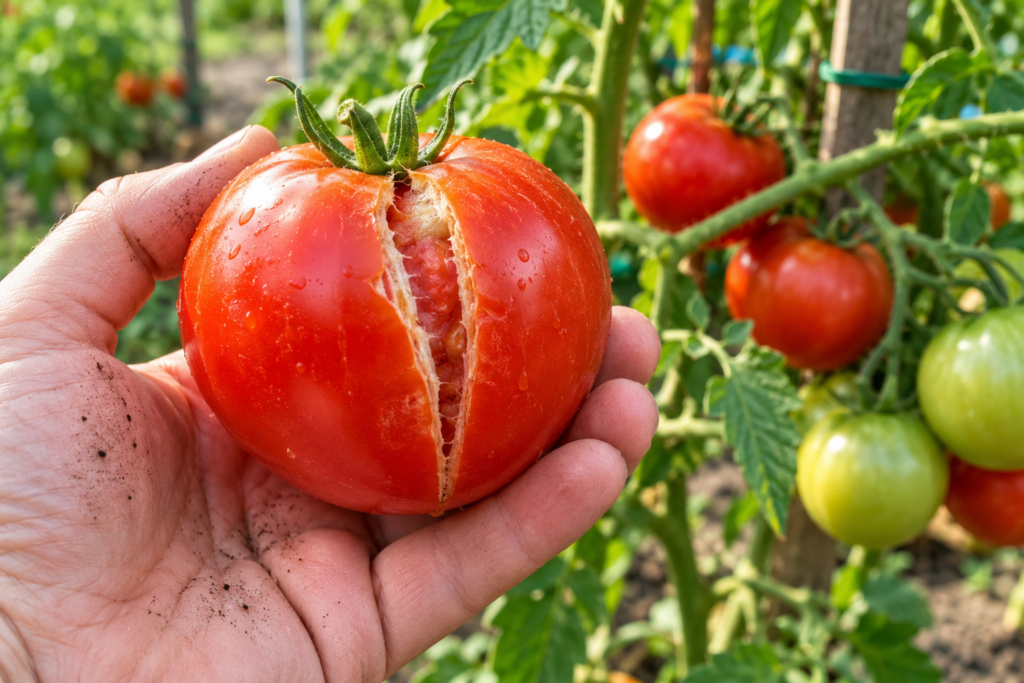
You wait all season for your tomatoes to ripen. They finally begin turning red, you head into the garden to harvest them—and suddenly you notice a large crack running down the side of an otherwise beautiful tomato.
It can be frustrating, but split tomatoes are extremely common, especially after periods of dry weather followed by heavy rain.
The good news is that cracking usually isn’t a mysterious disease. It is often connected to rapid changes in the amount of water available to the plant, combined with factors such as the tomato variety and stage of ripeness.
Once you understand why it happens, there are several practical things you can do to reduce the problem.
🍅 Why Do Tomatoes Split?
Tomato fruits contain a large amount of water. As they develop, both the inside of the fruit and its outer skin continue growing.
Problems can occur when the plant suddenly receives a large amount of water after the soil has been relatively dry.
The fruit may take up water and expand quickly. If the skin cannot stretch fast enough to accommodate that expansion, it can crack or split.
That’s why gardeners often discover cracked tomatoes shortly after a heavy summer rain.
A common scenario looks like this: Dry soil → sudden heavy rain or watering → rapid fruit expansion → cracked skin
Not every tomato will split under these conditions, however. Variety, fruit maturity, temperature and growing conditions can all influence susceptibility.
🔎 Two Common Types of Tomato Cracking
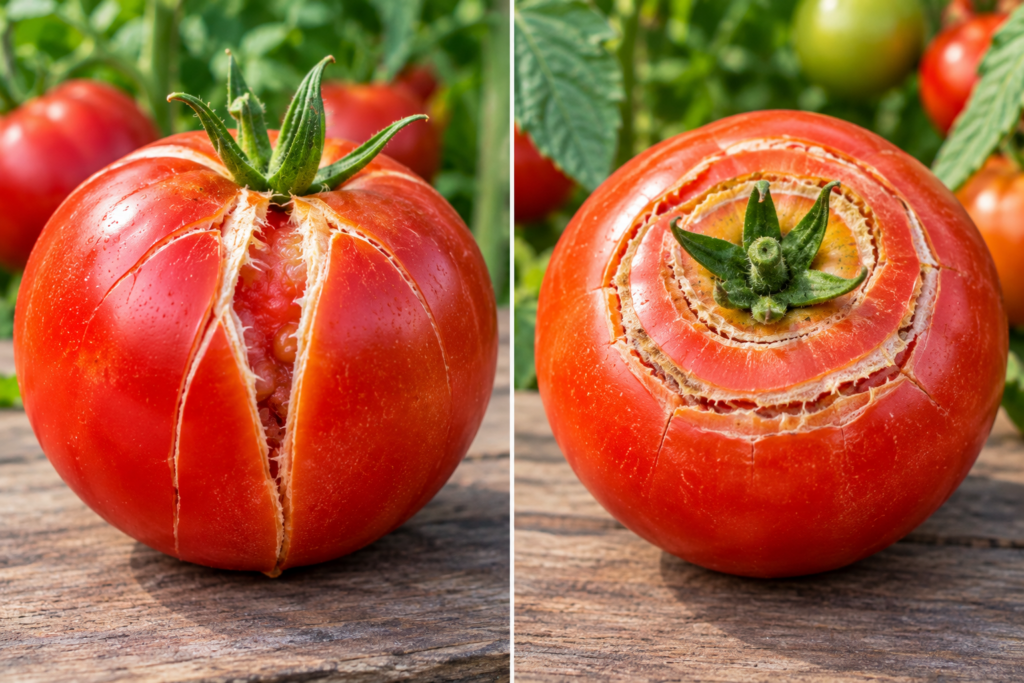
Not every crack looks the same. Tomatoes generally develop two recognizable cracking patterns.
1. Radial Cracking
- These cracks extend outward or downward from the stem area, sometimes creating a deep split along the side of the tomato.
- Radial cracks can expose the flesh inside the fruit, making the tomato more vulnerable to insects and microorganisms.
2. Concentric Cracking
- These cracks form circular or semicircular lines around the stem end of the tomato.
- They are especially noticeable on some large or heirloom varieties.
Small cracks can sometimes heal and form corky scar tissue as the tomato continues developing. Knowing the difference is useful because a deep, freshly opened crack deserves more attention than an old, shallow scar.
🌱 7 Ways to Reduce Tomato Splitting
There is no method that can guarantee that every tomato will remain perfectly smooth. Weather is impossible to control, but you can reduce the conditions that encourage cracking.
💧 1. Keep Soil Moisture as Consistent as Possible
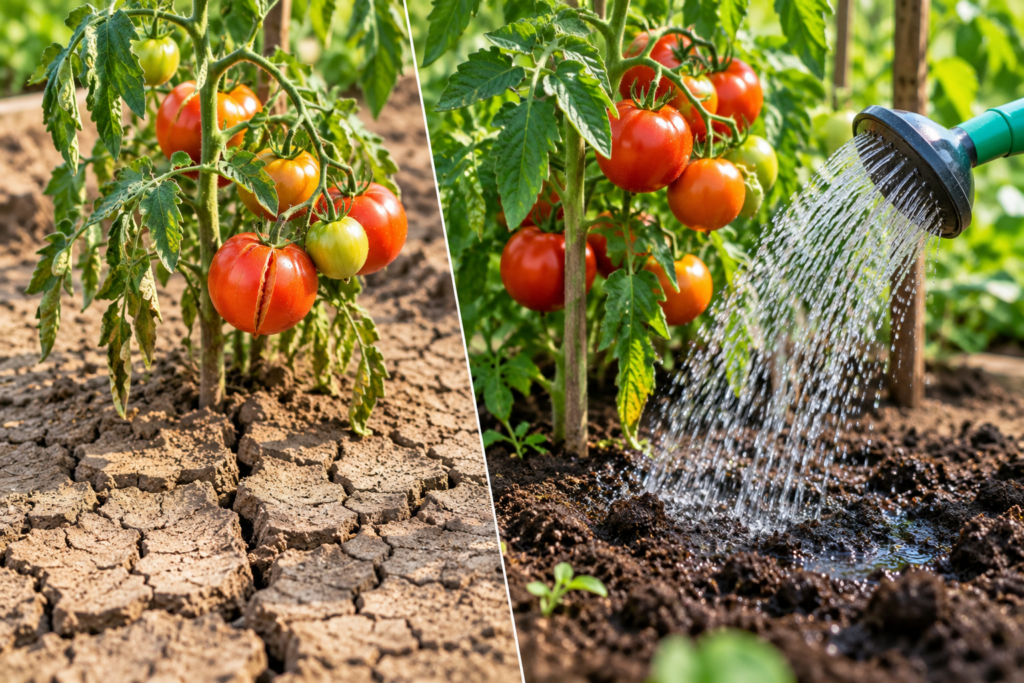
One of the most useful things you can do is avoid dramatic swings between extremely dry and very wet soil.
- Instead of allowing the soil to become bone-dry and then flooding it, aim for more consistent moisture.
- Water deeply enough to reach the root zone rather than repeatedly wetting only the soil surface.
- During hot or dry periods, check the soil regularly instead of relying on a rigid calendar.
- Container-grown tomatoes may require closer attention because pots can dry considerably faster than garden soil.
💡 A simple rule to remember: Consistency matters more than suddenly giving a thirsty tomato plant a huge amount of water.
🌾 2. Add Mulch Around Your Tomato Plants
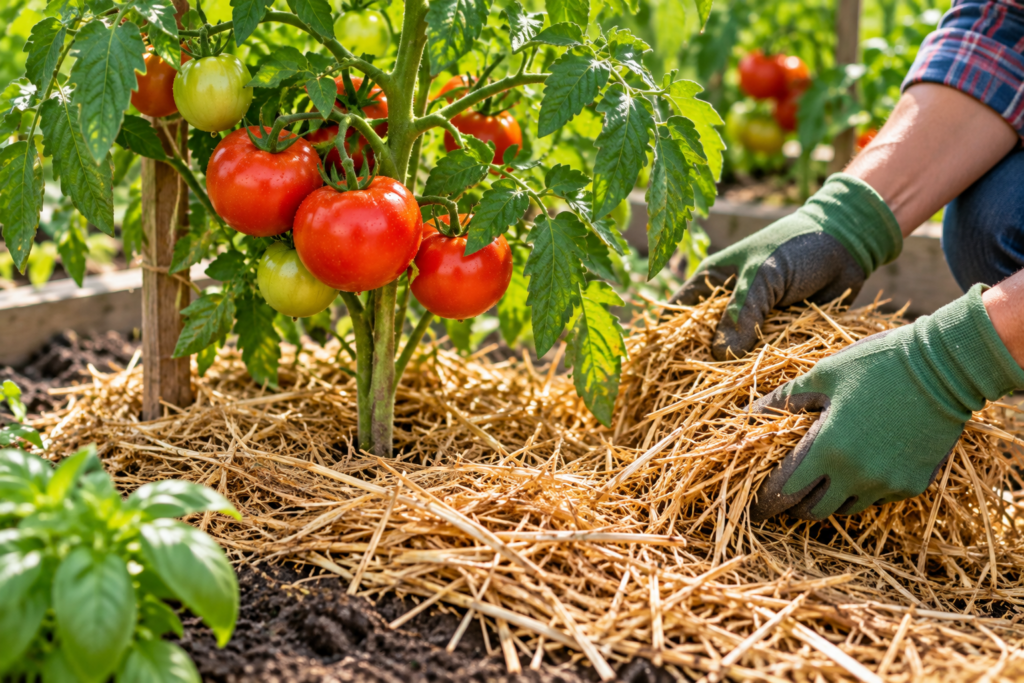
Mulch is particularly useful because it helps reduce rapid fluctuations in soil moisture. Organic materials such as straw, shredded leaves, untreated grass clippings used appropriately, or other suitable garden mulches can help slow evaporation from the soil.
- Spread mulch around the root zone while leaving a little space around the main stem.
- Mulch won’t prevent a huge rainstorm, but it can help keep the soil environment more stable between watering and rainfall.
- As a bonus, mulch can also suppress weeds.
🌧️ 3. Pay Attention to the Weather Forecast
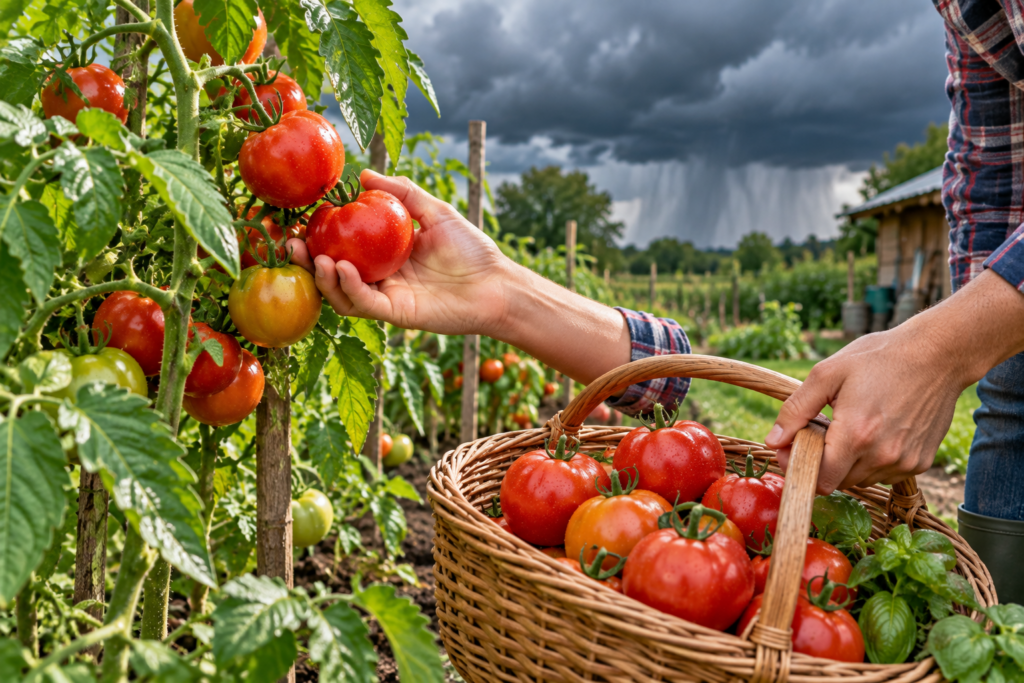
Imagine your garden has been dry for several days and the forecast suddenly predicts a major rainstorm. Your nearly ripe tomatoes may be especially vulnerable.
- If fruits have already reached a suitable stage of maturity, consider harvesting them before the storm and allowing them to finish ripening off the vine.
- Tomatoes do not necessarily have to become completely deep red on the plant before harvesting.
- This can be particularly useful when you know a dramatic change in weather is coming.
🪴 4. Make Sure Containers Drain Properly
Tomatoes need water, but their roots shouldn’t remain in waterlogged growing media.
- If you’re growing tomatoes in containers, make sure the pots have adequate drainage holes and use a suitable potting mix.
- Avoid trying to compensate for poor drainage simply by placing a layer of rocks in the bottom of the container.
- The important factors are an appropriate growing medium and unobstructed drainage holes that allow excess water to escape.
- For tomatoes planted directly in the garden, improving soil structure with suitable organic matter can help where drainage is poor.
🌿 5. Don’t Overdo Fertilizer
More fertilizer does not automatically mean better tomatoes.
- Excessive nitrogen can encourage vigorous leafy growth, while tomatoes also need balanced nutrition throughout flowering and fruit production.
- Follow the directions for the fertilizer you use and avoid repeatedly applying concentrated fertilizer in an attempt to force faster growth.
- The goal should be steady, healthy development, not maximum growth at any cost.
🍅 6. Harvest Ripe Tomatoes Regularly
The longer a ripe tomato remains outdoors, the longer it is exposed to changes in rainfall, temperature and moisture.
- During peak harvest season, check your plants frequently.
- If a tomato is already ripe—or sufficiently mature to finish ripening indoors—harvesting it can prevent it from sitting through the next major rainfall event.
- This is especially useful during periods of unstable summer weather.
🌱 7. Consider Crack-Resistant Varieties
Genetics matter. Some tomato varieties are naturally more susceptible to cracking than others. Certain large-fruited and heirloom tomatoes, for example, can develop cracks even when you’re taking good care of them.
- If cracking happens every year despite consistent watering and good growing conditions, consider trying varieties described by reputable seed suppliers as having good crack resistance.
- Don’t expect the word “resistant” to mean “impossible to crack.” Extreme weather can still damage fruit.
⚠️ The Biggest Watering Mistake
One particularly troublesome pattern is: Letting tomato plants become very dry → giving them a huge amount of water → letting them dry out again.
The problem isn’t simply that tomatoes receive “too much water.” It’s often the rapid change in water availability. This distinction is important.
Reducing watering dramatically because tomatoes are cracking can actually make the situation worse if the plants then experience another sudden downpour. Aim for consistency rather than alternating between drought and saturation.
🍅 Can You Eat a Split Tomato?
Sometimes—but examine it carefully.
A tomato with a small, fresh crack that you have just harvested may still be usable if the fruit otherwise appears sound. A tomato with a small, very recent crack may still be usable if the fruit is otherwise firm and shows no signs of spoilage. Harvest it promptly and inspect it carefully. If the crack is deep, contaminated, moldy, leaking, unusually soft, or has an off odor, discard the fruit..
However, cracking damages the fruit’s protective skin. Once the interior is exposed, microorganisms and insects have an easier entry point.
Discard a tomato if you notice:
- Mold
- Rotting or extensively soft tissue
- An unpleasant or unusual odor
- Significant insect damage inside the crack
- Suspicious discoloration or deterioration
When you’re uncertain about the safety of a badly damaged tomato, throwing it away is the safer choice. And don’t expect cracked tomatoes to store as well as undamaged fruit. If a freshly cracked tomato is otherwise sound, use it promptly.
🟢 What About Small Healed Cracks?
Not every line on a tomato means the fruit has just burst open. Some tomatoes develop shallow cracks that later heal and become corky or scar-like.
This is particularly common around the shoulders of certain large tomatoes. A healed superficial crack is different from a fresh, deep opening exposing moist tissue. Always inspect the individual fruit rather than judging it solely by appearance from a distance.
❌ Common Myths About Cracked Tomatoes
- “A cracked tomato plant has a disease.” Not necessarily. Cracking itself is a physiological fruit disorder, not automatically an infectious disease.
- “Cracking means I’m watering too much.” That’s an oversimplification. Sudden changes in water availability are often more important than simply labeling the problem “too much water.”
- “I should stop watering when tomatoes start ripening.” Not as a general rule. Allowing plants to become severely dry can set up exactly the dry-to-wet fluctuation that encourages cracking when rain finally arrives.
- “Adding extra fertilizer will strengthen the tomato skin.” There is no simple fertilizer trick that guarantees crack-free tomatoes. Good overall nutrition matters, but water management and variety are major factors.
🌦️ What Should You Do After Heavy Rain?
You can’t control the weather, so don’t panic after a summer storm.
- Once conditions allow, inspect tomatoes that are approaching maturity.
- Harvest fruits that have developed fresh cracks and check them carefully.
- Also harvest suitable ripe or nearly ripe tomatoes rather than leaving them unnecessarily exposed to another round of heavy rain.
- Most importantly, don’t respond by allowing the soil to become extremely dry afterward. Return to a sensible, consistent watering routine based on actual soil conditions.
🌱 A Simple Routine for Crack-Prone Tomatoes
You don’t need complicated garden tricks. Focus on a few fundamentals:
- Check soil moisture
- Water consistently
- Mulch the root zone
- Maintain good drainage
- Watch approaching storms
- Harvest mature fruit regularly
If you’re already doing these things and your tomatoes still crack frequently, the variety itself may be particularly susceptible. Trying a different cultivar the following season can sometimes make a noticeable difference.
💡 Final Thoughts
Seeing a beautiful tomato split just before harvest is disappointing, but it doesn’t necessarily mean you’ve done something terribly wrong. Tomatoes are living fruits responding to their environment, and a sudden summer downpour can change growing conditions very quickly.
The most effective strategy is not a viral ingredient or homemade spray. It’s consistent growing conditions.
Keep soil moisture reasonably stable, use mulch, ensure proper drainage, avoid excessive fertilization, harvest mature tomatoes regularly and pay attention when heavy rain is approaching. You may not eliminate every crack, but you can greatly improve your chances of harvesting healthy tomatoes before they split.
❓ Frequently Asked Questions
Why did my tomatoes split after it rained?
A heavy rainfall following relatively dry conditions can suddenly increase the amount of water available to the plant. Rapid fruit expansion can put pressure on the skin and cause cracking.
Should I remove cracked tomatoes from the plant?
Freshly and deeply cracked tomatoes are generally worth harvesting promptly because damaged fruit is more vulnerable to deterioration. Inspect each fruit carefully before using it.
Does mulch prevent tomatoes from cracking?
Mulch cannot guarantee crack-free fruit, but it can help moderate fluctuations in soil moisture, which is one of the most useful preventive measures.
Are heirloom tomatoes more likely to crack?
Some heirloom and large-fruited varieties are particularly prone to cracking, although susceptibility varies by cultivar and growing conditions.
Can green tomatoes split?
Yes. Tomatoes can crack before they are fully ripe, particularly when growing conditions change rapidly.
Can a split tomato heal itself?
Small superficial cracks can sometimes develop dry, corky scar tissue as the fruit continues growing. A deep fresh split exposing the interior is different and should be monitored or harvested promptly.
Should I water tomatoes every day to prevent cracking?
Not necessarily. The appropriate frequency depends on temperature, rainfall, soil, container size and plant conditions. The goal is consistent soil moisture, not following the same watering schedule regardless of conditions.