
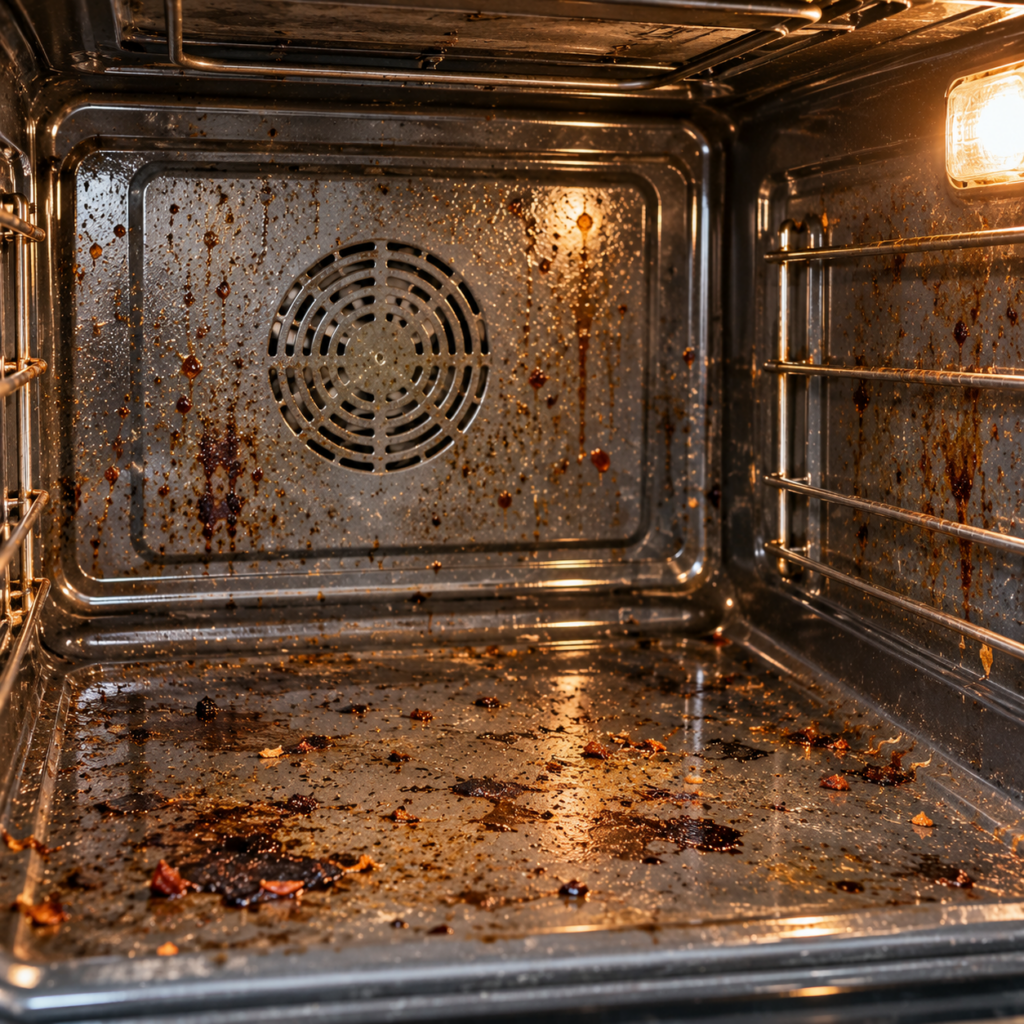
Cleaning an oven is one of those household jobs that’s easy to postpone. Grease splatters, baked-on food and sticky residue can gradually build up until a quick wipe no longer seems enough.
That’s probably why the bowl-of-water oven cleaning trick has become so popular online.
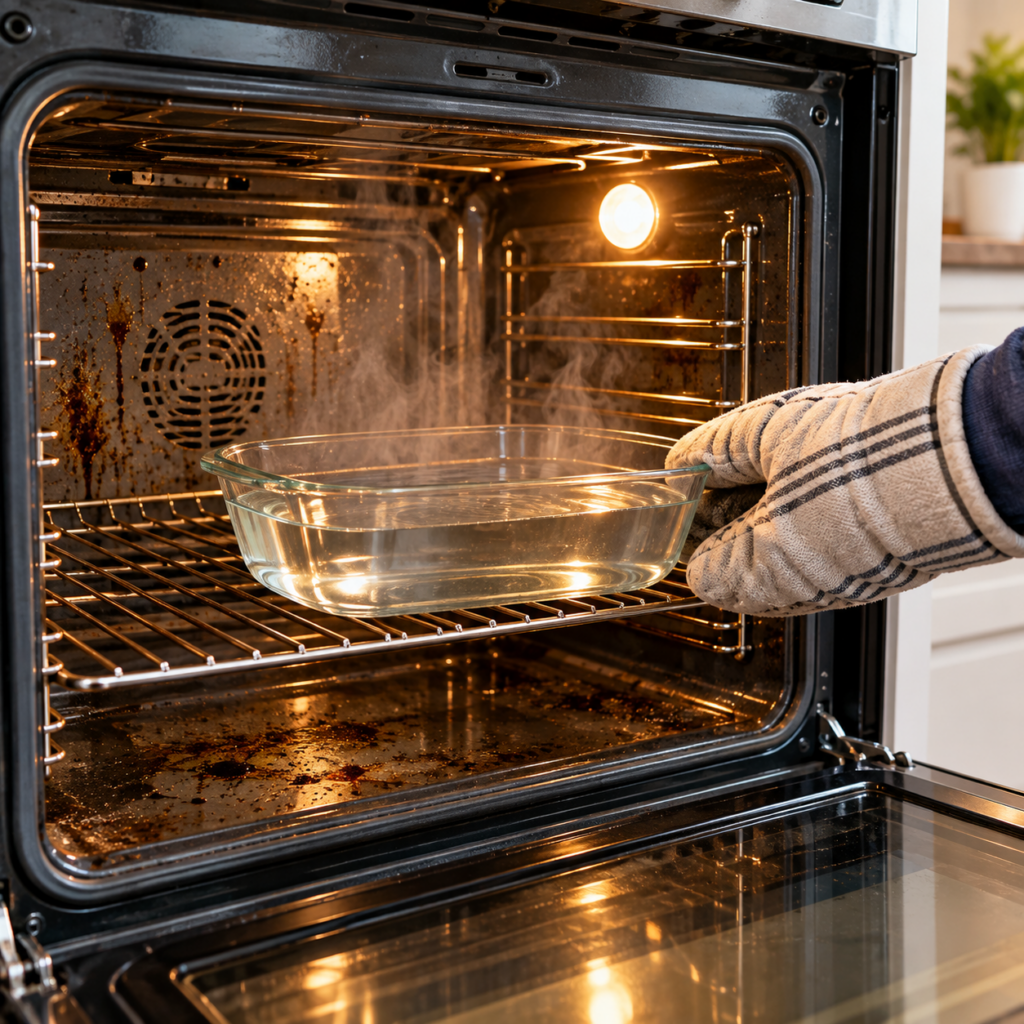
The idea sounds almost too easy: put an oven-safe dish of water inside the oven, heat it until steam develops, then wipe away the softened grime.
But does it really work?
Yes—but with an important limitation.
Steam can help soften certain food residues and loosen light to moderate grime, making the oven easier to wipe clean. What it cannot reliably do is magically dissolve years of heavily carbonized grease.
Here’s how to use the idea sensibly, what to avoid, and when you’ll need something stronger.
💨 Does Steam Really Clean an Oven?
Steam cleaning works primarily through heat and moisture.
When water is heated, the resulting moisture can help soften dried food splatters and some greasy residue on compatible oven surfaces.
Afterward, those softened deposits may be easier to remove with a damp cloth or non-abrasive sponge.
That makes steam particularly useful for routine maintenance and relatively fresh messes.
But there’s an important distinction:
- Steam can loosen grime. It doesn’t necessarily dissolve every type of baked-on residue.
- Thick black carbon deposits that have accumulated through repeated cooking cycles may require additional cleaning.
🧽 What You’ll Need
Keep it simple.
- Water
- An oven-safe baking dish or pan
- A soft microfiber cloth or non-abrasive sponge
- Mild dish soap, if needed afterward
- A manufacturer-approved non-scratching scraper, optional
- Protective oven mitts
You may see viral versions adding vinegar, lemon juice or other ingredients. We’ll get to those later. For the basic technique, however, water is the important ingredient.
⚠️ Before You Start: Check Your Oven
This is the step many viral cleaning posts skip.
Not every oven should be cleaned in exactly the same way.
Some modern ovens have a dedicated Steam Clean function. If yours does, use the amount of water, temperature, rack position and cycle specified by the manufacturer.
Other ovens may have special enamel coatings, catalytic liners, exposed heating elements or components that require particular cleaning methods.
So before putting a pan of water into an oven specifically for cleaning, check the manufacturer’s instructions for your model. If your manual advises against the technique, don’t use it.
🔥 How to Use Steam to Make Oven Cleaning Easier
If your oven manufacturer permits this type of cleaning, here’s a practical approach:
Step 1: Remove Loose Debris
Start with a cool oven. Remove crumbs, loose pieces of food and other debris from the bottom. This prevents you from simply turning loose crumbs into a soggy mess.
Step 2: Check the Oven Racks
Some racks can remain inside during certain manufacturer-approved steam-cleaning cycles, while others should be removed. Don’t assume. If you’re using a manual steam method rather than a built-in cycle, removing the racks can also make the interior easier to wipe afterward.
Step 3: Add Water to an Oven-Safe Dish
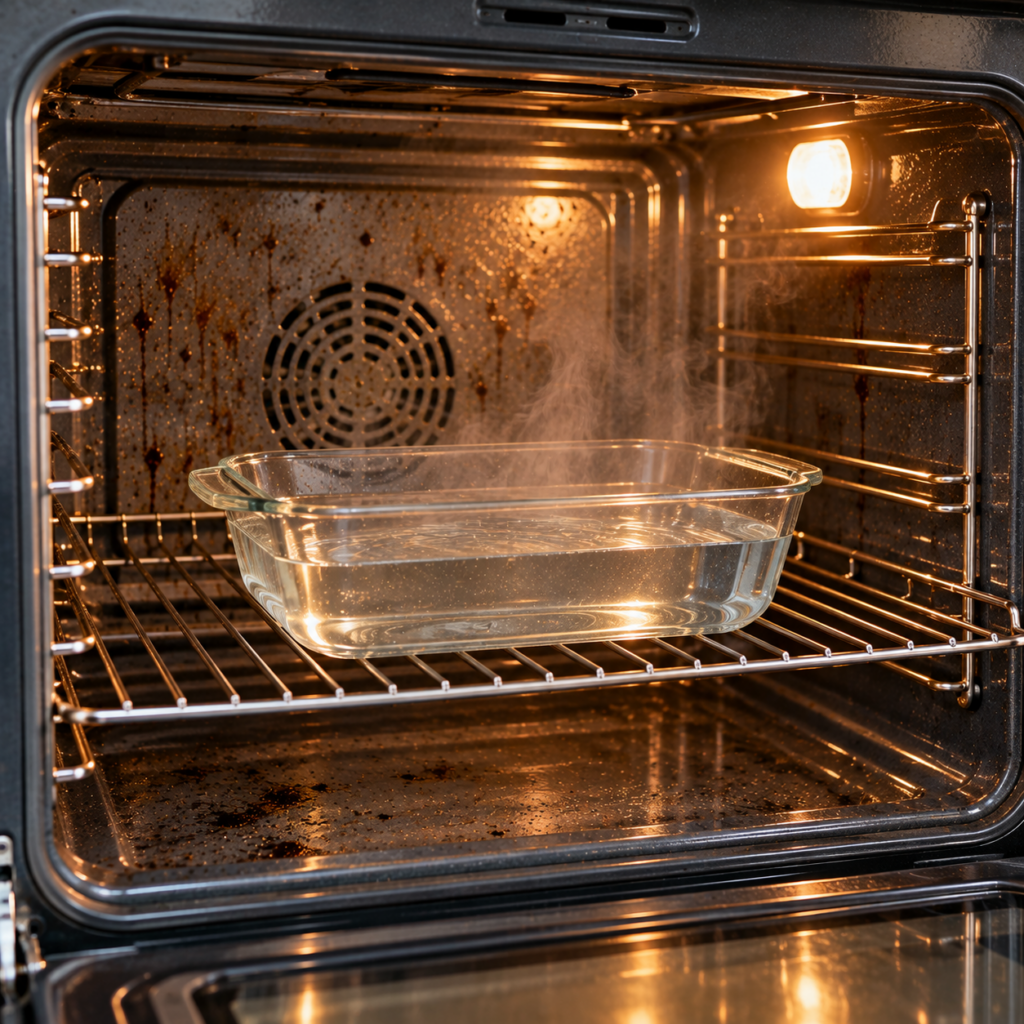
Pour water into a sturdy dish that is specifically designed for oven use. Don’t fill it to the rim. You want enough water to produce moisture without creating an unnecessary spill risk when moving the dish. Place it securely where recommended by your oven manufacturer.
Step 4: Heat According to Your Oven’s Instructions
This is where I would not blindly copy the viral “400°F for 30 minutes” formula. Ovens vary considerably.
- If your appliance has a Steam Clean setting, follow that program.
- If your manufacturer specifically permits a manual water-steaming method, use the recommended temperature and duration.
- The goal is simply to create a warm, humid environment that can help soften residue—not to subject the oven to the highest possible temperature.
Step 5: Let the Moisture Work
As the water heats, moisture builds inside the oven. It can help soften:
- Recent food splatters
- Sugary spills
- Light greasy residue
- Dried sauce
- Everyday cooking grime
The heavier and more carbonized the deposit, however, the less dramatic the result is likely to be.
Step 6: Turn Off the Oven and Let It Cool
This is important. Don’t immediately reach into a very hot, steamy oven. Hot steam, oven surfaces and hot water can cause burns. Turn the oven off and wait until the interior is cool enough to clean safely while the loosened residue is still relatively easy to wipe. Use oven mitts when handling the hot dish.
Step 7: Wipe the Interior
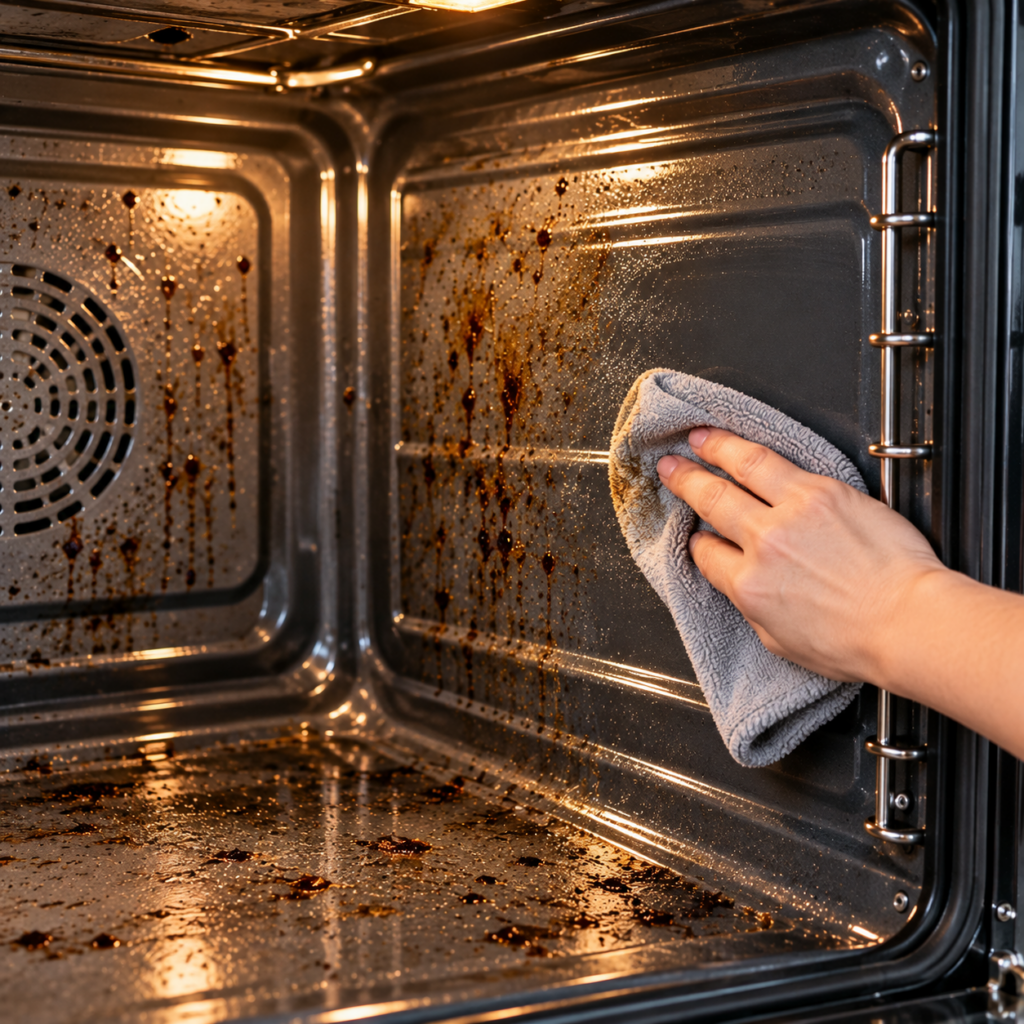
Use a soft damp cloth or non-abrasive sponge to wipe compatible surfaces. You may be surprised by how much residue comes away after being exposed to heat and moisture. For remaining greasy areas, a small amount of mild dish soap on a damp cloth may help—provided your oven manufacturer allows it. Avoid flooding seams, vents, heating elements, electrical components or openings with water.
Step 8: Deal With Stubborn Spots Separately
If a black patch doesn’t disappear after steaming, don’t assume you did something wrong. Some heavily baked-on residue simply needs more than steam. Use the cleaning method recommended for your oven’s interior surface. If a scraper is permitted, use only an appropriate non-scratching tool and work gently. Never attack the oven lining with knives, metal scouring pads or other aggressive tools unless the manufacturer specifically states that they’re safe.
🍶 Should You Add Vinegar to the Water?
This is one of the most common versions of the viral hack. You’ll often see instructions such as: “Add a cup of vinegar for extra cleaning power.”
I wouldn’t make that a standard recommendation.
White vinegar can be useful for cleaning certain compatible household surfaces, but you don’t need vinegar to create steam. The water is doing the essential job here.
More importantly, oven materials and finishes vary. An acidic cleaner isn’t automatically appropriate for every interior coating or component. So if you’re unsure, use plain water and follow the appliance manufacturer’s cleaning recommendations.
🍋 What About Adding Lemon?
Adding a few lemon slices to water is another popular variation.
It can give the warm moisture a pleasant citrus aroma, but don’t expect a few slices of lemon to suddenly transform steam into a powerful oven degreaser.
If your oven’s instructions permit the method, lemon can be considered mainly an optional scent addition, not the secret ingredient responsible for cleaning. Again, plain water is enough for the steam itself.
✨ What Steam Cleaning Does Well
This technique makes the most sense when the oven isn’t extremely dirty. It can be particularly useful for:
- Fresh splatters: Recent food residue is generally easier to soften than material that has been repeatedly baked onto the surface.
- Light grease: Steam may help loosen the film so it can be wiped away more easily.
- Regular maintenance: Using appropriate cleaning methods before grime becomes heavily carbonized can make future oven cleaning much easier.
- Softening before wiping: This is arguably the biggest benefit. Instead of viewing steam as the entire cleaning process, think of it as a pre-treatment that can make the wiping stage easier.
❌ What Steam Probably Won’t Remove by Itself
This is where some viral cleaning posts become misleading. Steam isn’t guaranteed to remove:
- Thick carbonized deposits
- Years of burned-on grease
- Severe staining
- Residue repeatedly exposed to high temperatures
- Every mark on every type of oven surface
If your oven hasn’t been cleaned in a very long time, don’t expect one bowl of steaming water to make it look brand new. You may need another cleaning method specifically approved by your oven manufacturer.
🧼 Can You Use Dish Soap After Steaming?
Often, a little mild dish soap can be useful for compatible removable parts or surfaces—but again, your oven manual should have the final say.
For greasy areas that remain after steaming, try a small amount on a damp cloth rather than pouring soap or water directly into the oven. Then remove cleaning residue as instructed by the manufacturer.
More soap isn’t necessarily better. You don’t want detergent residue remaining inside the cooking cavity.
🧽 What About Baking Soda?
Baking soda is another enormously popular oven-cleaning ingredient.
A mild baking-soda paste can help with some grime, but it shouldn’t automatically be applied to every oven interior. Certain modern ovens use special coatings or self-cleaning surfaces that manufacturers specifically tell owners not to scrub with abrasive products.
So before covering the interior with baking soda, check your manual. This rule applies to almost every viral oven hack: The cleaning method needs to match the surface.
🚫 7 Steam-Cleaning Mistakes to Avoid
- Assuming 400°F / 200°C Is Right for Every Oven: There isn’t one universal steam-cleaning temperature for every appliance. Use the manufacturer’s instructions whenever available.
- Opening a Very Hot Oven and Immediately Reaching Inside: Steam and hot water can cause serious burns. Let the appliance cool to a safe working temperature first.
- Using Too Much Water: More water doesn’t automatically mean better cleaning. It increases the risk of spills and makes handling the dish more difficult.
- Pouring Water Directly Onto a Hot Oven Surface: Avoid thermal shock. Never pour cold water directly onto hot oven glass or other hot surfaces in an attempt to create instant steam.
- Soaking Electrical Components: Don’t deliberately saturate heating elements, fans, vents, controls, seals or electrical components. Steam cleaning isn’t the same thing as washing the inside of the oven with a hose.
- Scraping With the Wrong Tool: Once grime softens, it’s tempting to attack stubborn patches aggressively. Don’t. Metal tools and abrasive pads can scratch or damage certain oven surfaces.
- Expecting Steam to Remove Everything: This is perhaps the biggest mistake. If the residue has become heavily carbonized, another appropriate cleaning method may be necessary.
🧽 What About the Oven Racks?
Oven racks often require slightly different treatment. If your manufacturer recommends removing them, wash them separately once they’re cool.
Warm water and mild dish soap can be sufficient for ordinary grease and food residue. For stubborn buildup, follow the rack-cleaning instructions supplied with your oven. Avoid automatically soaking specialty racks or telescopic runners unless the manufacturer says it’s safe; some components have coatings or lubricated mechanisms that require special care.
🪟 Be Especially Careful With the Oven Door
The glass oven door is another area where aggressive cleaning can cause problems.
- Never pour cold water onto hot glass.
- Avoid abrasive tools unless they’re explicitly approved for the surface.
- And be careful around the edges of the door, seals and vents. Liquid can sometimes enter areas that aren’t designed to be saturated.
🧹 The Easiest Way to Keep an Oven Cleaner
The best oven-cleaning trick isn’t really a trick. It’s not allowing residue to build up for months.
When the oven is completely cool, deal with spills and splatters reasonably soon after they happen. The longer grease and food residue remain in the oven—and the more times they’re heated—the more difficult they can become to remove. A few minutes of routine maintenance can save a much bigger cleaning job later.
🧪 Is Steam Cleaning Really “Chemical-Free”?
You’ll often see this method described as “chemical-free.” In everyday language, people generally mean without commercial oven cleaner. Scientifically, of course, water itself is a chemical substance.
A more accurate way to describe the method would be: “A water-based method that may reduce the need for stronger commercial cleaners when dealing with light grime.” That’s less dramatic than the viral claim—but much more accurate.
🌿 Can Steam Cleaning Reduce the Need for Stronger Cleaners?
Using primarily water can reduce your use of disposable cleaning products and stronger cleaners for routine maintenance.
The practical advantage is simple: for light grime, you may be able to clean effectively with water, a reusable cloth and relatively little additional cleaner, without needing heavy chemical interventions.
🤔 Steam Clean vs. Self-Clean: They’re Not the Same
These two functions are easy to confuse:
- Steam cleaning: Uses moisture and relatively moderate conditions to help soften residue so it can be wiped away.
- High-temperature self-cleaning: Some ovens have a pyrolytic self-cleaning cycle that reaches very high temperatures to break food residue down into ash.
These are completely different processes. If your oven has either function, follow its dedicated instructions rather than improvising your own cycle.
⏱️ When Should You Steam Clean Your Oven?
There’s no need to follow an arbitrary schedule like “every two weeks.” Clean according to how you use your oven.
If you frequently roast fatty foods or cook dishes that bubble over, you’ll probably need to clean more often. If your oven remains relatively clean, there’s little reason to run a cleaning process simply because a certain number of days has passed.
A better rule is: Clean spills early, and deep-clean when buildup begins to develop.
❓ Frequently Asked Questions
- Does putting a bowl of water in the oven really help clean it?It can. Heating water can create moisture that helps soften certain dried food residues and light grime, making them easier to wipe away afterward. It isn’t a guaranteed solution for heavily carbonized deposits.
- How long should I leave water in the oven?There isn’t one universal time for every oven. If your appliance has a Steam Clean cycle, use the manufacturer’s specified duration. For any manual method, first confirm that your oven manufacturer permits it and follow its guidance.
- Should I use boiling water?Not necessarily. There’s no need to carry a dangerously full container of boiling water across the kitchen simply to start the process. Use the method recommended by your appliance manufacturer.
- Is vinegar necessary?No. Plain water can provide the steam. Vinegar shouldn’t be treated as an essential ingredient or as universally compatible with every oven surface.
- Can I add lemon slices?If the manufacturer’s instructions permit the method, a few lemon slices may provide a pleasant aroma. Don’t rely on them to remove heavy grease.
- Will steam remove burned-on grease?It may soften some residue, but heavily burned or carbonized grease may remain. Use an appropriate manufacturer-approved cleaning method for stubborn buildup.
- Can I steam clean an oven with a heating element?Because oven designs vary, follow the cleaning instructions for your particular appliance. Avoid deliberately getting electrical components or heating elements excessively wet.
- Can I leave the racks inside?Only if your oven manufacturer permits it. Some racks can remain inside during certain cleaning processes; others should be removed.
- Can I use a metal scraper afterward?Don’t assume it’s safe. Use only tools approved for your oven’s particular surface. A soft cloth or non-abrasive sponge is the safer starting point.
- Is steam cleaning safe around children and pets?Using water avoids some of the exposure concerns associated with stronger cleaning products, but the process itself still involves very hot surfaces, hot water and steam. Keep children and pets away from the oven while it’s hot and during cleaning.
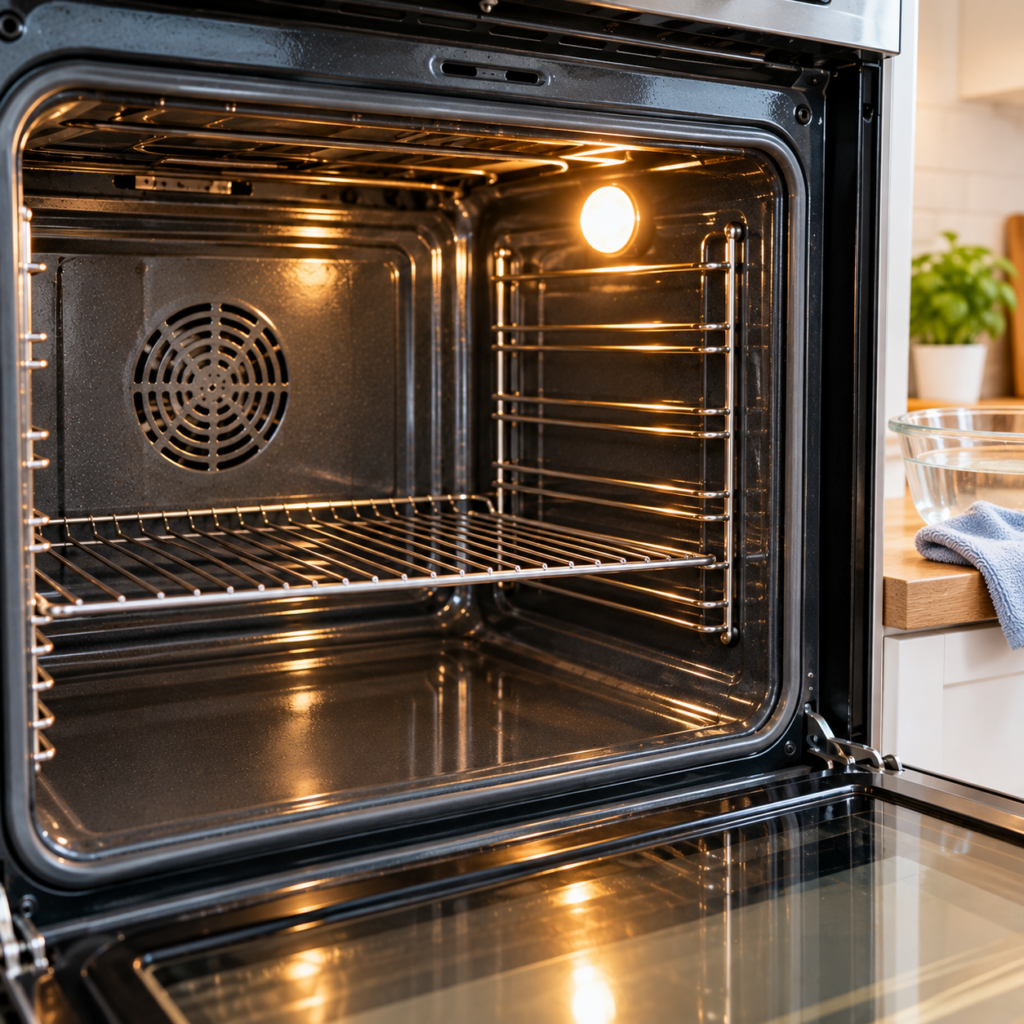
🔥 Final Takeaway
So, does the viral oven steam-cleaning hack actually work?
Yes—but not quite in the magical way social media sometimes suggests.
Steam can be genuinely useful for softening light to moderate food residue and making an oven easier to wipe clean. It’s particularly helpful as part of regular maintenance before grime becomes heavily carbonized.
But you don’t need a cup of vinegar, you shouldn’t assume 400°F / 200°C for 20–30 minutes is appropriate for every appliance, and you shouldn’t expect steam to erase years of baked-on grease.
The smartest approach is simple:
Check your oven manual → remove loose debris → use steam only if appropriate for your appliance → allow it to cool safely → wipe softened residue → treat stubborn areas with a manufacturer-approved method.
Sometimes the best cleaning hacks aren’t the ones that promise miracles. They’re the ones that make an unpleasant job a little easier without creating a new problem.