
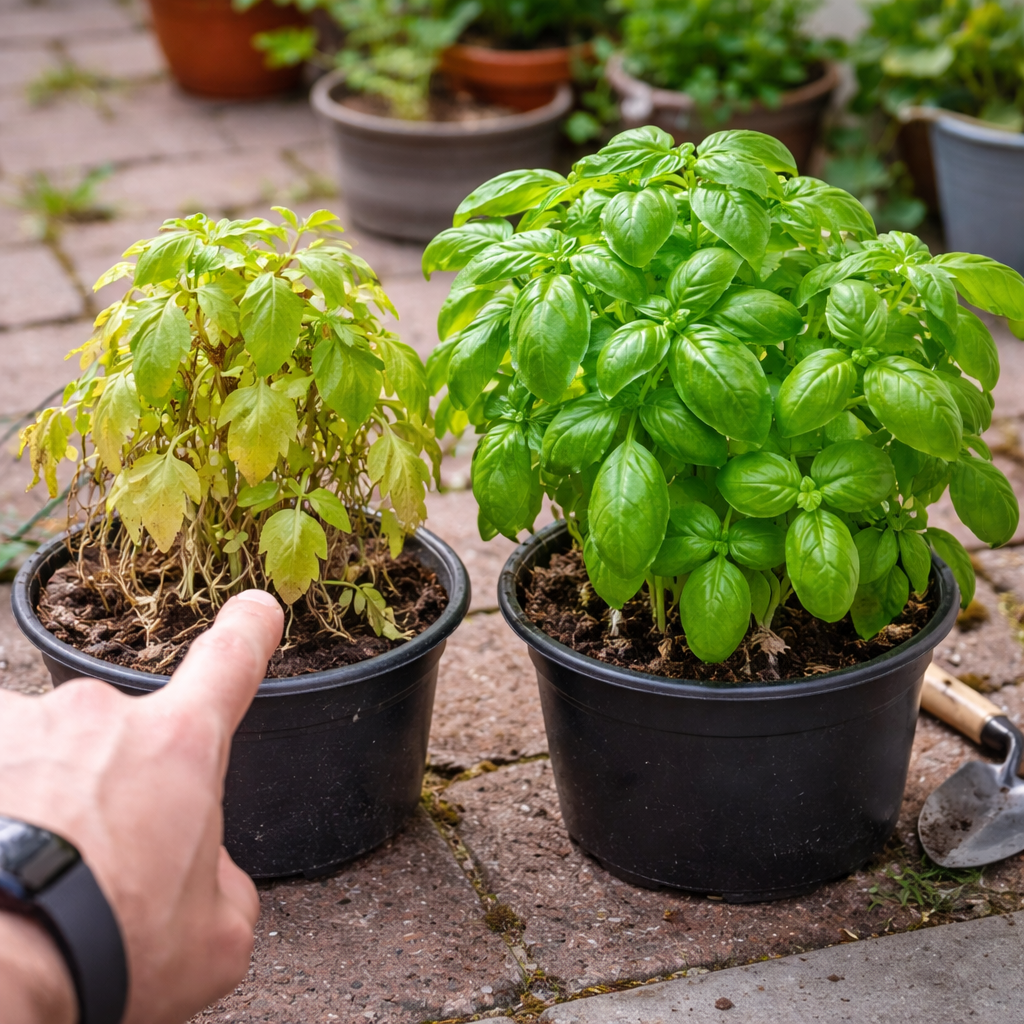
Fresh basil is one of the most useful herbs to have in the kitchen. 🌱 Its fragrant leaves are perfect for pasta, salads, pesto, pizza, sauces, and countless Mediterranean-inspired dishes.
But there is one frustrating problem: supermarket basil often looks beautiful when you buy it, then starts drooping, yellowing, or dying within days.
The good news? This doesn’t necessarily mean you have a “black thumb.” Supermarket basil is commonly sold with many young plants crowded together in one small pot, and keeping that dense cluster healthy can be challenging.
The most useful trick is surprisingly simple:
👉 Divide the crowded basil and repot it into several pots.
Combined with proper watering, plenty of light, regular harvesting, and sensible feeding, this can help you enjoy fresh basil for weeks or even months.
Here’s how to do it correctly. 🌿
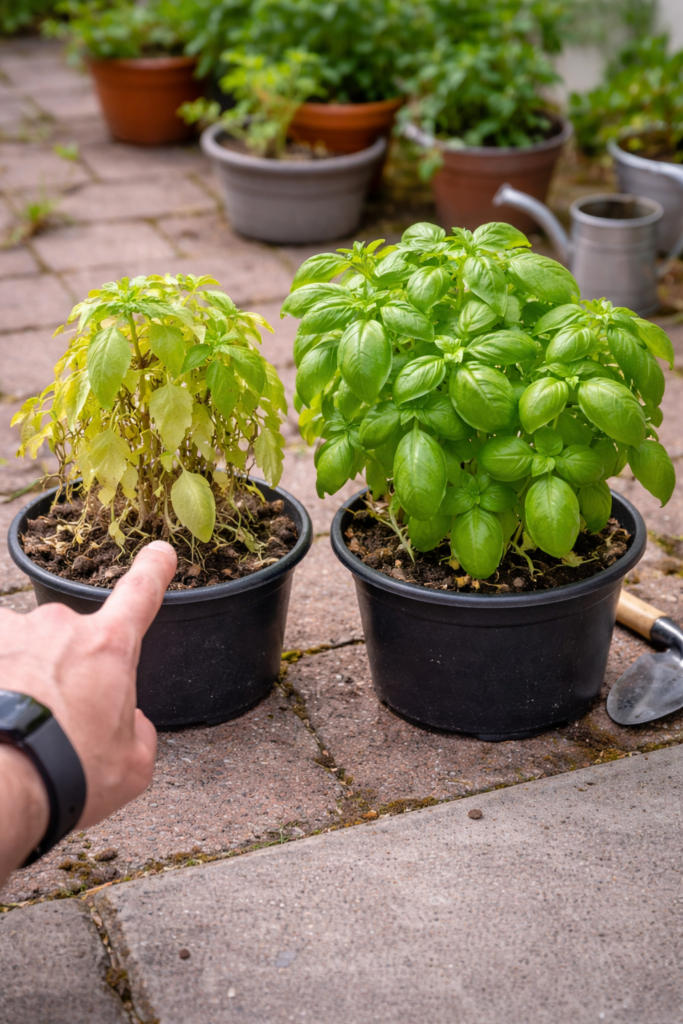
🌱 Why Does Supermarket Basil Die So Quickly?
Look closely at a typical supermarket basil pot and you’ll often discover that what appears to be one large plant is actually many individual seedlings growing extremely close together.
This creates intense competition for:
- water,
- nutrients,
- root space,
- light,
- and airflow.
The small amount of potting mix can also dry out surprisingly quickly, especially on warm, sunny days.
That’s why simply putting your new basil on the kitchen windowsill and watering occasionally doesn’t always work.
🪴 The Most Important Trick: Divide and Repot Your Basil
If you want supermarket basil to last longer, repotting is one of the best places to start.
Here’s how:
- Gently remove the entire root ball from its original pot.
- Carefully loosen the roots with your fingers.
- Divide the crowded clump into approximately 3–4 smaller groups.
- Plant each group in its own pot with drainage holes.
- Add fresh potting mix around the roots.
- Water thoroughly.
- Allow excess water to drain completely.
Don’t worry if you can’t separate every individual seedling. The goal isn’t to untangle every root perfectly.
You simply want to give the plants more room to develop.
💡 Tip: Be gentle. Supermarket basil often has delicate roots, so forcing heavily tangled plants apart can cause unnecessary damage.
💧 How to Water Basil Correctly
Watering is probably where most basil problems begin.
Basil prefers soil that remains slightly and consistently moist, but its roots shouldn’t sit in stagnant water.
❌ Too much water can contribute to:
- yellowing leaves,
- weak roots,
- root problems,
- fungal issues.
❌ Too little water can cause:
- drooping leaves,
- dry soil,
- wilting,
- stressed growth.
✅ A better approach
Check the soil regularly.
When the surface has begun to dry slightly, water thoroughly and allow the excess water to escape through the drainage holes.
During hot weather, basil may need watering more frequently than you expect.
Don’t follow a rigid schedule such as “water every three days.” Check the plant and soil instead.
💦 Should You Water Basil From the Bottom?
Bottom watering can be useful, especially with smaller pots.
Place the pot in a shallow container of water for approximately 5–10 minutes, allowing moisture to move upward through the drainage holes.
Then remove the pot and let it drain completely.
This can help hydrate dry potting mix evenly.
However, don’t leave basil standing in water indefinitely. Bottom watering doesn’t automatically prevent overwatering if the pot remains submerged for too long.
☀️ Basil Needs Plenty of Light
Basil loves light and warmth.
A dark kitchen corner may look attractive, but it usually isn’t the best place for long-term growth.
Choose a very bright location, such as a sunny windowsill, while paying attention to extreme heat behind glass.
During warm weather, basil can also grow beautifully outdoors on a balcony, patio, or in the garden.
🌡️ What about temperature?
Basil is a warm-season herb and is sensitive to cold.
A comfortable indoor temperature around 20–25°C (68–77°F) generally suits it well.
Temperatures around or below 10–12°C (50–54°F) can significantly stress basil, so protect the plant from cold nights and chilly drafts.
🔄 Should You Rotate the Pot?
If light reaches the plant mainly from one direction, rotating the pot occasionally can encourage more even growth.
There’s no need to follow an exact “every two days” rule.
Simply turn the pot from time to time if you notice the stems leaning strongly toward the window.
🌱 What Is the Best Soil for Basil?
Basil does best in a fertile but well-draining potting mix.
The most important thing is not a precise homemade percentage but a good balance between moisture retention and drainage.
A quality multipurpose potting mix can work well. If it seems very dense, adding some perlite can improve aeration and drainage.
Always use a container with drainage holes.
A beautiful decorative pot without drainage can quickly become problematic if water accumulates around the roots.
✂️ The Right Way to Harvest Basil
Here’s another important secret to keeping basil productive:
Don’t simply remove individual large leaves every time you need basil.
Instead, harvest sections of stem.
Look for a point where two leaves or side shoots emerge from the stem and cut just above that node.
This encourages the remaining side shoots to continue developing, creating a bushier plant.
🌿 Simple rule:
Cut above a leaf node rather than stripping the stem bare.
Avoid removing too much of a small plant at once. Regular, moderate harvesting is better than occasionally cutting away most of the plant.
🌸 Should You Remove Basil Flowers?
If your goal is to keep harvesting lots of tender leaves, it’s usually helpful to pinch off developing flower spikes.
Once basil begins flowering, more of its energy shifts toward reproduction and seed production.
Flowering doesn’t suddenly make the leaves unusable, but the plant’s growth pattern changes and the leaves may become somewhat different in texture or flavor.
👉 For continued leaf production, remove flower buds when they appear.
If you’d like to collect seeds or provide flowers for pollinators outdoors, you can naturally allow some stems to bloom instead. 🐝
🌿 How Should You Fertilize Potted Basil?
Basil growing in a container has access to a limited amount of soil, so nutrients eventually become depleted.
During active growth, a lightly diluted liquid fertilizer suitable for herbs or edible plants can be used periodically according to the manufacturer’s directions.
A modest feeding approximately every few weeks may be sufficient depending on the product, pot size, soil, and growth rate.
⚠️ More fertilizer isn’t better
Overfertilizing can damage roots and isn’t necessary for healthy basil.
The goal is steady, balanced growth, not forcing the plant to grow as quickly as possible.
☕ What About Coffee Grounds?
Coffee grounds are frequently promoted online as a miracle fertilizer for basil.
The reality is more nuanced.
Used coffee grounds contain organic matter and some nutrients, but sprinkling large amounts directly into a small basil pot isn’t a substitute for balanced plant nutrition.
Too much material sitting on the surface can also affect moisture and the physical condition of the potting mix.
If you already compost coffee grounds, adding them to your compost system is generally a more sensible approach than repeatedly covering a small herb pot with them.
🍌 Does Banana-Peel Water Help Basil?
Another popular internet trick is soaking banana peels in water and then using the liquid on plants.
Banana peels contain nutrients, but simply soaking them in water for 24 hours doesn’t magically create a complete, balanced fertilizer.
Basil is grown primarily for its leafy growth and needs appropriate overall nutrition.
Therefore, banana-peel water shouldn’t be presented as the secret to keeping basil alive.
For predictable results, proper soil and a suitable fertilizer are easier to manage.
♻️ Natural Alternatives for Feeding Basil
If you’d prefer a more natural approach, consider incorporating a small amount of mature compost or worm castings into an appropriate potting mix.
The key word is moderation.
Kitchen scraps shouldn’t simply be buried in a small indoor basil pot. Decomposition can create odors and attract unwanted insects while making moisture levels more difficult to control.
🌿 Harvest Regularly – But Watch the Plant
You’ve probably seen recommendations telling you to harvest basil every 5–7 days.
There’s no need for such a strict schedule.
How quickly basil grows depends on:
- light,
- temperature,
- variety,
- pot size,
- nutrition,
- and season.
Instead, harvest when the stems are healthy and large enough to cut above a node.
A rapidly growing summer plant can naturally be harvested more frequently than basil growing slowly indoors during darker months.
🚨 Why Are My Basil Leaves Turning Yellow?
Yellow leaves can have several causes, so don’t automatically reach for fertilizer.
Possible reasons include:
💧 Excess moisture
Check whether water is collecting at the bottom of the container.
🌱 Crowded roots
If you’re still using the original supermarket pot, the plants may simply need more room.
☀️ Insufficient light
Weak, pale, elongated growth can be associated with poor lighting conditions.
🌿 Nutrient depletion
A plant that has been growing in the same small amount of soil for a long time may eventually benefit from appropriate feeding or fresh potting mix.
🌡️ Cold stress
Basil dislikes low temperatures and cold drafts.
Look at the plant’s overall growing conditions before deciding on a solution.
😔 Why Is My Basil Drooping?
A drooping basil plant doesn’t always mean the same thing.
The soil may be too dry, but excessive moisture and root problems can also result in an unhealthy-looking plant.
Before watering automatically, touch the soil.
If it’s dry, watering may be exactly what the plant needs.
If it’s already very wet, adding even more water could make matters worse.
❌ 8 Common Basil Mistakes to Avoid
1. Leaving supermarket basil overcrowded forever
Give those densely packed plants more root space.
2. Using a pot without drainage
Excess water needs somewhere to escape.
3. Keeping the soil constantly waterlogged
Moist is good; swampy isn’t.
4. Letting the pot dry completely again and again
Basil doesn’t appreciate repeated drought stress.
5. Keeping basil in a dark corner
It needs plenty of light for strong growth.
6. Picking only random individual leaves
Strategic stem cutting encourages bushier growth.
7. Allowing every flower spike to mature
Remove flowers if maximizing leaf production is your priority.
8. Relying on kitchen-scrap “miracle fertilizers”
Good growing conditions matter far more than viral hacks.
🪴 Can Supermarket Basil Really Last for Months?
Potentially, yes.
With good conditions, basil can remain productive for a surprisingly long period.
However, “keep basil alive forever” is a myth.
Its longevity depends on variety, environmental conditions, season, flowering, pests, disease, and the plant’s natural life cycle.
A more realistic goal is to keep your basil healthy and productive for as long as conditions allow.
And compared with a crowded supermarket pot that collapses after a week, several months of fresh harvests can feel like a huge success. 🌿
❓ Frequently Asked Questions
Why does supermarket basil die so quickly?
Supermarket basil is often sold with many young plants crowded into a relatively small container. Combined with inconsistent watering, insufficient light, limited root space, or temperature stress, this can make it difficult to maintain.
Should I repot supermarket basil immediately?
If the pot is extremely crowded, dividing and repotting it can give the plants more room. Handle the roots carefully and keep the newly divided plants appropriately watered while they adjust.
Can basil grow back after cutting?
Yes. Cutting stems above healthy leaf nodes encourages side shoots to continue growing and can produce a bushier plant.
How often should I water basil?
There isn’t one universal schedule. Check the soil frequently and water when the surface begins to dry slightly, while avoiding prolonged waterlogging.
Does basil like full sun?
Basil generally appreciates abundant light, but plants grown indoors may need gradual adjustment before exposure to intense outdoor sun. Extreme heat can also dry small containers rapidly.
Should I remove basil flowers?
If your priority is continued leaf production, removing flower buds is useful. If you want seeds or flowers for pollinators, allow some stems to bloom.
Are coffee grounds good for basil?
They aren’t a miracle fertilizer. Small amounts can be composted, but repeatedly adding large quantities directly to a small pot isn’t necessary for healthy basil.
Is banana-peel water a good basil fertilizer?
It shouldn’t be considered a complete fertilizer. Proper potting soil and balanced nutrition provide more predictable results.
What’s the best way to make basil bushier?
Provide plenty of light and regularly harvest stems just above leaf nodes. This encourages branching from the nodes below the cut.
🌿 The Bottom Line: Don’t Throw Out Your Basil Yet
If your supermarket basil always seems to die within days, don’t start with coffee grounds, banana peels, or another viral “miracle” ingredient.
Start with the basics:
🌱 Divide overcrowded plants.
🪴 Give the roots more space.
💧 Keep the soil evenly moist without waterlogging.
☀️ Provide plenty of light and warmth.
✂️ Harvest stems correctly.
🌸 Pinch flowers if you want continued leaf production.
🌿 Feed moderately when necessary.
The real trick isn’t one secret ingredient. It’s giving basil the conditions it needs to keep producing new growth.
Do that, and the little supermarket herb you expected to last a week may keep supplying your kitchen with fresh, fragrant basil for months. 🌿💚