
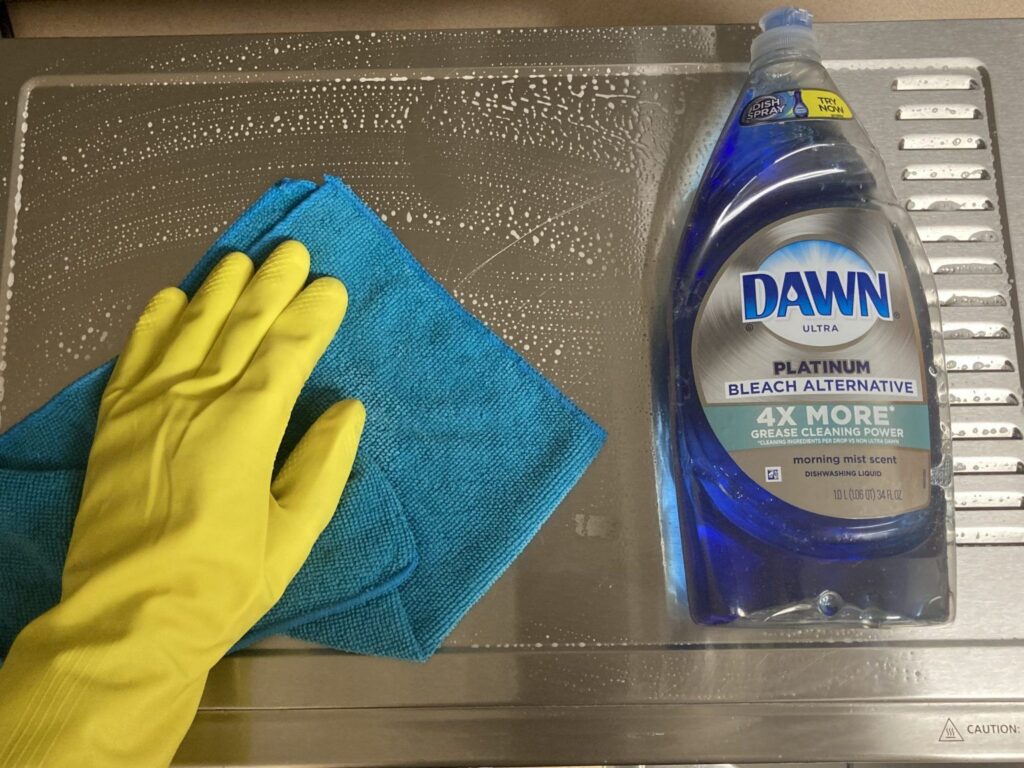
Dawn dish soap is best known for washing dishes, but its ability to cut through grease makes it surprisingly useful for many other cleaning jobs around the home.
From greasy clothing stains and kitchen cabinets to stainless steel appliances and stubborn labels, a small amount of dish soap can often replace a more specialized cleaner.
However, not every viral Dawn hack you see online is a good idea. Some mixtures are ineffective, can damage surfaces, and one common combination—vinegar and chlorine bleach—can be dangerous.
Here are 10 practical Dawn dish soap hacks, with simple instructions, safer alternatives, and important mistakes to avoid.
🧼 Why Is Dawn Dish Soap So Useful for Cleaning?
Dishwashing liquid contains surfactants designed to loosen grease and help oil mix with water so it can be rinsed away.
That’s why it can be particularly useful against:
✔ cooking grease
✔ oily fingerprints
✔ food residue
✔ greasy clothing stains
✔ soap and body-oil buildup
✔ sticky residue
But remember: more soap doesn’t mean better cleaning. In many household applications, just a few drops are enough.
👕 1. Pre-Treat Grease Stains on Clothes
Dropped oily salad dressing on your shirt? Splattered cooking oil on your clothes?
Dish soap can be particularly useful for fresh grease stains.
What you need
- Dawn dish soap
- clean cloth or soft brush
- water
How to use it
- Blot away excess oil without rubbing it deeper into the fabric.
- Apply a small drop of dish soap directly to the stain.
- Gently work it into the fabric.
- Let it sit for around 5–10 minutes.
- Rinse.
- Wash according to the garment’s care label.
💡 Important tip
Check the stain before putting the garment in the dryer. Heat can make some remaining stains much harder to remove.
⚠️ Always test delicate or colored fabrics in an inconspicuous area first.
🍳 2. Degrease Kitchen Cabinets
Cooking oils can gradually leave a sticky film on cabinets, especially around the stove.
You don’t necessarily need an aggressive degreaser.
Simple cabinet cleaner
Add a few drops of Dawn to a bowl of warm water.
Dip a microfiber cloth into the solution and wring it out well.
Gently wipe greasy areas, then follow with a clean damp cloth and dry the surface.
⚠️ Be careful with
❌ unfinished wood
❌ damaged veneer
❌ delicate painted surfaces
❌ moisture-sensitive finishes
Test a hidden area first and avoid soaking cabinet seams.
✨ 3. Remove Fingerprints From Stainless Steel
Stainless steel refrigerators, ovens and microwaves attract fingerprints incredibly quickly.
Because fingerprints contain oils from our skin, diluted dish soap is a simple solution.
Easy method
Mix a few drops of Dawn into warm water.
Dampen a microfiber cloth and wipe the stainless steel, preferably following the direction of the grain.
Then:
✔ wipe with a clean damp cloth
✔ dry with a fresh microfiber cloth
✨ Drying immediately helps prevent water spots and streaks.
Avoid abrasive scrubbers that could scratch the finish.
🛁 4. Clean a Greasy Bathtub or Shower
Bathtubs and showers collect a mixture of:
🧴 body oils
🧼 soap residue
💧 grime
🫧 product buildup
Dish soap can help loosen the oily component.
Simple method
- Add a small amount of Dawn to a damp non-scratch sponge.
- Work it over compatible surfaces.
- Allow it to sit briefly on greasy areas.
- Gently scrub.
- Rinse thoroughly with clean water.
🚨 Watch your footing
Dish soap makes tubs and shower floors extremely slippery.
Rinse everything thoroughly before stepping into the area.
🏷️ 5. Remove Stubborn Labels From Jars
Want to reuse an attractive glass jar, only to discover that the label refuses to come off?
Try dish soap before reaching for stronger solvents.
How to do it
Fill a sink or bowl with warm water and add several drops of Dawn.
Soak the jar for around 10–20 minutes, provided the material can safely be soaked.
Then peel away the label and gently scrub the remaining adhesive.
For stubborn glue
A tiny amount of cooking oil can help loosen some adhesive residues.
Afterward, wash the oily surface again with dish soap.
♻️ It’s a great way to prepare jars for reuse.
🍽️ 6. Degrease Kitchen Backsplashes
The area behind a stove can gradually develop an almost invisible film of cooking grease.
Dish soap is made for exactly this kind of oily residue.
Quick cleaning solution
Mix:
- warm water
- a few drops of Dawn
Use a soft cloth or non-abrasive sponge to wipe the backsplash.
Then rinse with a clean damp cloth and dry.
⚠️ Surface warning
Before cleaning natural stone, unsealed surfaces, or specialty tiles, check the manufacturer’s recommendations.
🪟 7. Clean Greasy Window and Glass Marks
Kitchen windows and glass surfaces can collect greasy fingerprints and cooking residue that plain water doesn’t easily remove.
Method
Add just a tiny amount of dish soap to warm water.
Clean the glass with a microfiber cloth or suitable window-cleaning tool, then remove the solution and dry the glass.
The secret
Use very little soap.
Too much can leave a film and create streaks.
🪑 8. Clean Outdoor Plastic Furniture
Outdoor tables and chairs quickly collect:
🌧️ dirt
🌳 pollen
🦜 bird residue
🍂 dust
🖐️ greasy fingerprints
For washable plastic furniture, mild dish soap is often enough.
Simple cleaning method
Mix a small amount of Dawn with warm water.
Wash with a soft sponge or cloth, rinse thoroughly, and allow the furniture to dry.
For stubborn dirt, repeat rather than immediately reaching for a much harsher chemical.
🧽 9. Spot-Clean Some Carpet Stains – Carefully
Dish soap can sometimes help with greasy carpet spots, but this is an area where less is definitely more.
One viral recipe recommends mixing:
1 cup dish soap + 2 cups hydrogen peroxide
I would not recommend this mixture.
One cup of dish soap is excessive and can leave a difficult-to-remove sticky residue. Hydrogen peroxide can also lighten certain carpet dyes.
A safer starting approach
- Blot up as much of the spill as possible.
- Check the carpet manufacturer’s cleaning instructions.
- Test any cleaner on an inconspicuous area.
- For compatible washable carpet, use only a very small amount of diluted dish soap.
- Blot rather than aggressively scrub.
- Remove the soap residue with clean water.
- Blot dry.
⚠️ For wool, silk, antique, specialty, or expensive carpets, use a cleaner specifically recommended for that material.
🧊 10. Make a Flexible Freezer Pack
Here’s one of the more unusual uses.
Dish soap can remain somewhat flexible when chilled or frozen, making it useful for a homemade cold pack.
What you need
- sturdy freezer-safe zip bag
- dish soap
- second freezer bag
- towel
How to make it
- Partially fill the first bag with dish soap.
- Remove excess air.
- Seal it carefully.
- Put it inside a second sealed bag to reduce the risk of leakage.
- Store it in the freezer.
When needed, wrap the pack in a cloth before placing it against the skin.
⚠️ Important
Don’t place a very cold pack directly against bare skin for prolonged periods.
And if the bag leaks, discard it.
🚫 5 Dawn Dish Soap Hacks You Should Avoid
Dish soap is versatile, but it isn’t a universal cleaner.
Some popular internet combinations deserve special caution.
☠️ 1. NEVER Mix Vinegar and Chlorine Bleach
This is the most important warning in this article.
Some stain-removal recipes recommend using bleach and vinegar together.
❌ Never do this.
Acidic products such as vinegar can react with chlorine bleach and release toxic chlorine gas.
Never mix chlorine bleach with:
❌ vinegar
❌ acidic cleaners
❌ ammonia
❌ other household cleaners unless the product label explicitly says it is safe
If bleach is necessary, use it only according to its label instructions.
🌿 2. Don’t Spray Dawn + Vinegar Over Your Garden Plants
A popular recipe combines:
- Dawn
- vinegar
- warm water
and recommends spraying it over plant leaves and roots.
❌ Don’t do this.
Vinegar contains acetic acid and can damage living plant tissue.
It doesn’t distinguish between a weed and the tomato plant you want to protect.
If insects are attacking your plants, identify the pest first.
For appropriate pests, a commercial insecticidal soap labeled for use on plants is a much more predictable choice than an improvised vinegar-and-dish-soap mixture.
🚗 3. Don’t Routinely Wash Your Car With Dish Soap
Dawn’s strong grease-cutting ability sounds ideal for cars.
But routine washing with dish detergent isn’t the best choice because it may interfere with waxes and protective products applied to the paint.
🚘 For normal washing, choose a dedicated automotive shampoo compatible with your vehicle’s finish and protection.
🐕 4. Don’t Use Dish Soap as Your Dog’s Regular Shampoo
You may have seen Dawn used to clean animals in special circumstances.
That doesn’t make it an ideal everyday pet shampoo.
Repeated washing with a strong degreasing detergent may strip oils from the skin and coat.
🐶 For routine baths, use a properly formulated dog shampoo.
If an animal has been exposed to a hazardous substance, seek appropriate veterinary or poison-control guidance rather than improvising with household cleaners.
🐜 5. Don’t Treat Dawn as a Universal Insect Repellent
Another viral trick suggests mixing dish soap with hydrogen peroxide and spraying it wherever insects appear.
There’s no reason to treat this as a universal household insect repellent.
Instead:
✔ identify the insect
✔ remove food and water sources
✔ seal cracks and entry points
✔ use screens where appropriate
✔ choose a targeted treatment if necessary
For garden pests, use products specifically intended and labeled for plants.
⚠️ Dawn + Hydrogen Peroxide: Should You Mix Them?
You’ll find numerous cleaning recipes online combining dish soap and hydrogen peroxide.
The biggest issue isn’t that every combination is automatically dangerous. Rather, the mixture isn’t appropriate for every material, and peroxide can lighten or discolor some fabrics and surfaces.
If hydrogen peroxide is appropriate for a specific cleaning task:
✔ follow the product instructions
✔ test the material first
✔ make only what you need
✔ don’t combine it with additional cleaning chemicals
For routine cleaning, starting with dish soap and water is often sufficient.
🧴 How Much Dish Soap Do You Actually Need?
This is another area where viral cleaning recipes frequently go wrong.
For many household jobs, you only need a few drops.
Using huge quantities can actually make cleaning harder because you then have to remove all that detergent residue.
A good principle is:
🫧 Start with the smallest effective amount and add more only if necessary.
This is particularly important for carpets, upholstery, floors, and other surfaces that are difficult to rinse.
❌ Common Dish Soap Cleaning Mistakes
Avoid these common errors:
❌ mixing multiple cleaners because “more powerful” sounds better
❌ combining vinegar and chlorine bleach
❌ using huge quantities of detergent
❌ aggressively scrubbing delicate surfaces
❌ using dish soap routinely as car shampoo
❌ treating it as regular pet shampoo
❌ spraying homemade soap-and-vinegar mixtures on plants
❌ failing to rinse slippery floors, tubs, or showers
❌ skipping a spot test on fabrics and finished surfaces
Simple cleaning solutions are often both safer and more effective.
🧼 Dawn vs. Regular Dish Soap: Do You Really Need Dawn?
Not necessarily.
Many of these tricks work because of the grease-cutting surfactants found in hand dishwashing liquids, rather than because of one specific brand.
Dawn is particularly well known for degreasing, but a suitable quality dish soap may perform similarly for many basic household jobs.
So if Dawn isn’t available where you live, you don’t necessarily need to hunt it down.
Check the product label and choose a detergent appropriate for the surface you’re cleaning.
❓ FAQ – Dawn Dish Soap Hacks
Can Dawn remove grease stains from clothing?
It can be useful as a pre-treatment for many washable fabrics because dish soap is designed to break up grease. Use a small amount, test delicate fabrics first, and follow the garment’s care instructions.
Can I mix Dawn and vinegar?
For some compatible household surfaces, dish soap and diluted vinegar are used in homemade cleaners. However, vinegar isn’t appropriate for every surface. Never assume a homemade mixture is universally safe.
Can I mix vinegar and bleach?
No. Never mix chlorine bleach with vinegar or other acids. The reaction can release toxic chlorine gas.
Can I clean stainless steel with Dawn?
Yes. A small amount diluted in warm water can remove oily fingerprints. Rinse away residue and dry with a microfiber cloth.
Can I wash my car with Dawn?
It isn’t recommended as a routine car shampoo. Use an automotive wash designed to clean without unnecessarily interfering with waxes or protective coatings.
Can Dawn remove carpet stains?
A tiny amount of diluted dish soap may help with certain greasy spots on compatible carpets. Avoid excessive soap, check the manufacturer’s instructions, and always spot-test first.
Can I spray Dawn on plants?
Don’t assume household dish soap is interchangeable with insecticidal soap. Homemade concentrations can injure plants. A product specifically labeled for plant pest control is safer and more predictable.
Can I clean my bathtub with Dawn?
Yes, on compatible surfaces. It can be particularly helpful for body oils and greasy residue. Rinse extremely well because soap makes the surface slippery.
Can Dawn remove labels from glass jars?
Warm water and dish soap can soften many paper labels and adhesives, making them easier to remove.
Is Dawn safe for dogs?
It should not be considered a replacement for a properly formulated dog shampoo for routine bathing.
🏁 Final Thoughts
Dawn dish soap doesn’t need dozens of complicated ingredients to be useful.
Its greatest strength is simple: it cuts grease extremely well.
That makes it particularly handy for:
👕 greasy clothing stains
🍳 kitchen cabinets
✨ stainless steel
🛁 bathtubs and showers
🏷️ stubborn labels
🍽️ greasy backsplashes
🪟 oily fingerprints on glass
🪑 washable outdoor furniture
The most important rule is equally simple:
Don’t turn a useful dish soap into a risky chemistry experiment by mixing several household cleaners together.
Use small amounts, check the surface first, rinse when necessary, and never mix vinegar with chlorine bleach. 🫧✨