
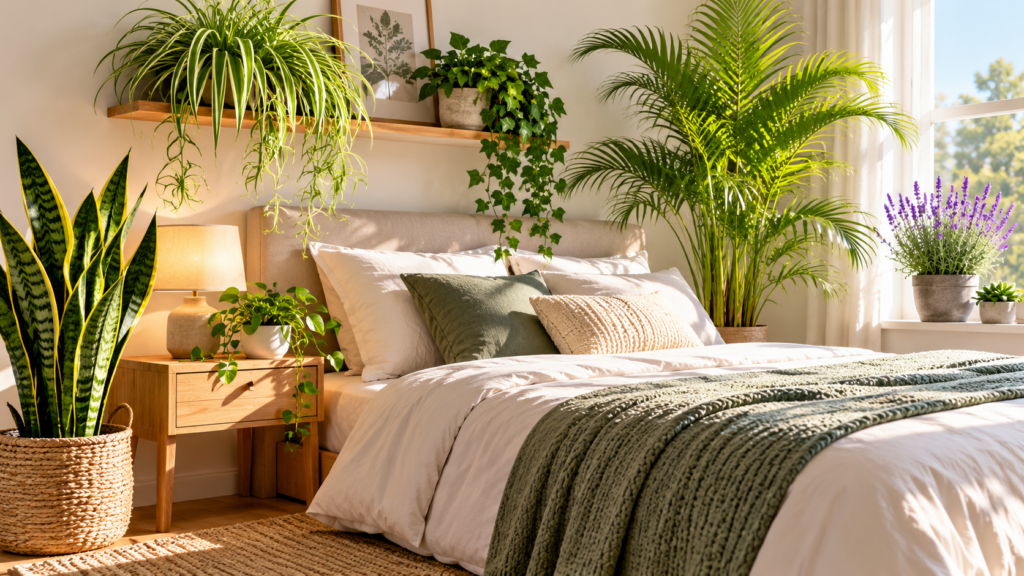
Adding plants to your bedroom is one of the easiest ways to make the space feel calmer, fresher and more inviting. 🪴 Whether you prefer lush trailing leaves, architectural greenery or the gentle fragrance of lavender, the right plant can completely change the atmosphere of a room.
You’ve probably also heard that certain houseplants can “purify the air,” produce oxygen while you sleep or even improve your health.
There is some science behind these claims—but the reality is more nuanced.
Laboratory studies have shown that plants can absorb certain airborne compounds under controlled conditions. However, a few houseplants in a normal bedroom won’t replace ventilation or an air purifier.
That doesn’t mean bedroom plants aren’t worthwhile. They can add greenery, create a relaxing environment and make your bedroom a much more pleasant place to spend time.
Here are 6 beautiful bedroom plants worth considering, along with their real benefits, care requirements and a few myths you should know about. 🌱
🕷️ 1. Spider Plant – Easy, Beautiful & Beginner-Friendly
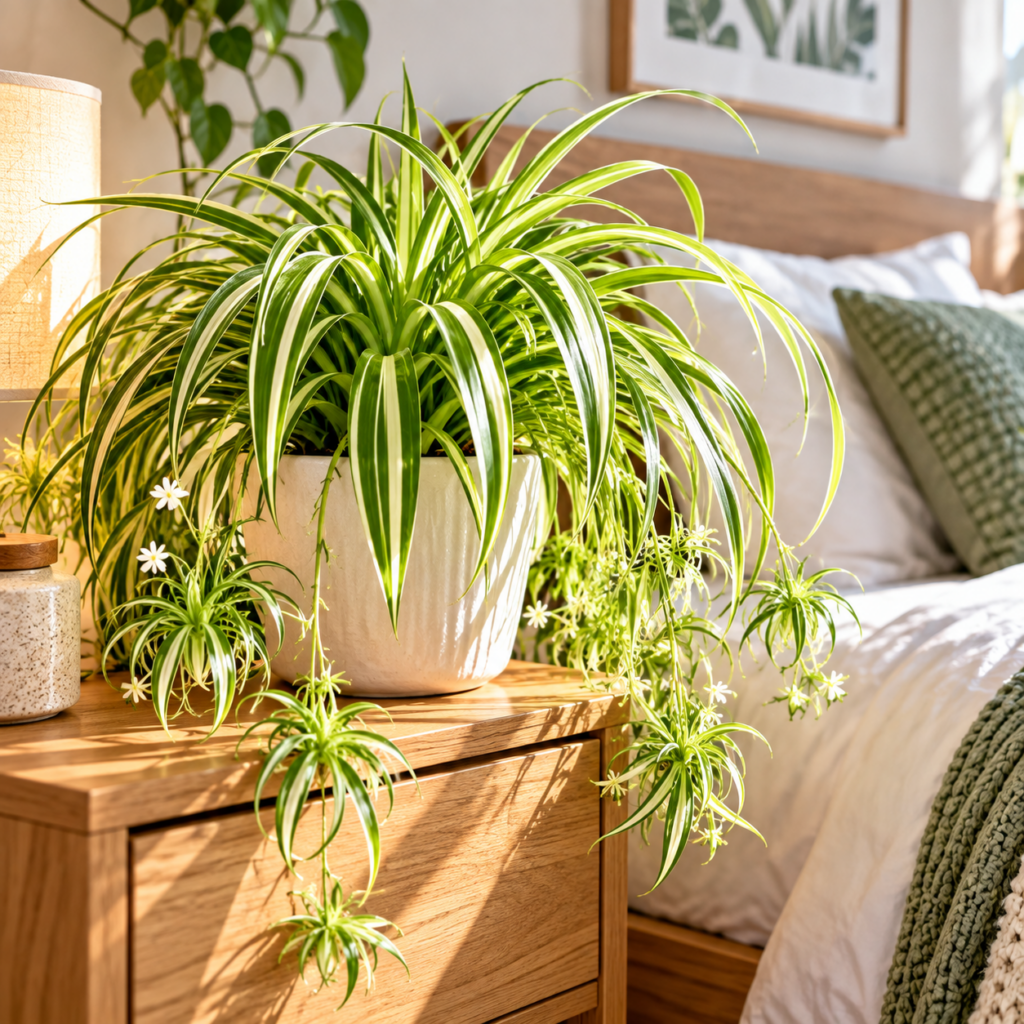
The spider plant (Chlorophytum comosum) is one of the easiest houseplants to recognize.
Its long, arching green leaves often feature white or cream stripes, while mature plants produce small plantlets that hang gracefully from the mother plant.
🌿 Why it’s great for bedrooms
Spider plants are:
✔ easy to maintain
✔ fast-growing
✔ attractive in hanging baskets
✔ suitable for beginners
✔ adaptable to different indoor environments
They can look especially beautiful on a shelf or hanging near a bedroom window.
💨 Does a spider plant really purify the air?
Spider plants became famous after laboratory experiments showed that houseplants could absorb certain volatile organic compounds.
However, those experiments were conducted under controlled conditions.
In a normal bedroom, one or two spider plants won’t remove pollutants quickly enough to replace fresh-air ventilation or proper filtration.
Think of their air-cleaning ability as an interesting biological characteristic rather than a substitute for an air purifier.
☀️ Care
Light: Bright, indirect light is ideal, although it tolerates lower light.
Water: Water when the upper layer of soil begins to dry.
Difficulty: ⭐ Easy
💡 Bonus: Spider plants are generally considered one of the more pet-friendly houseplant choices.
💜 2. Lavender – A Beautiful Choice for a Sunny Bedroom
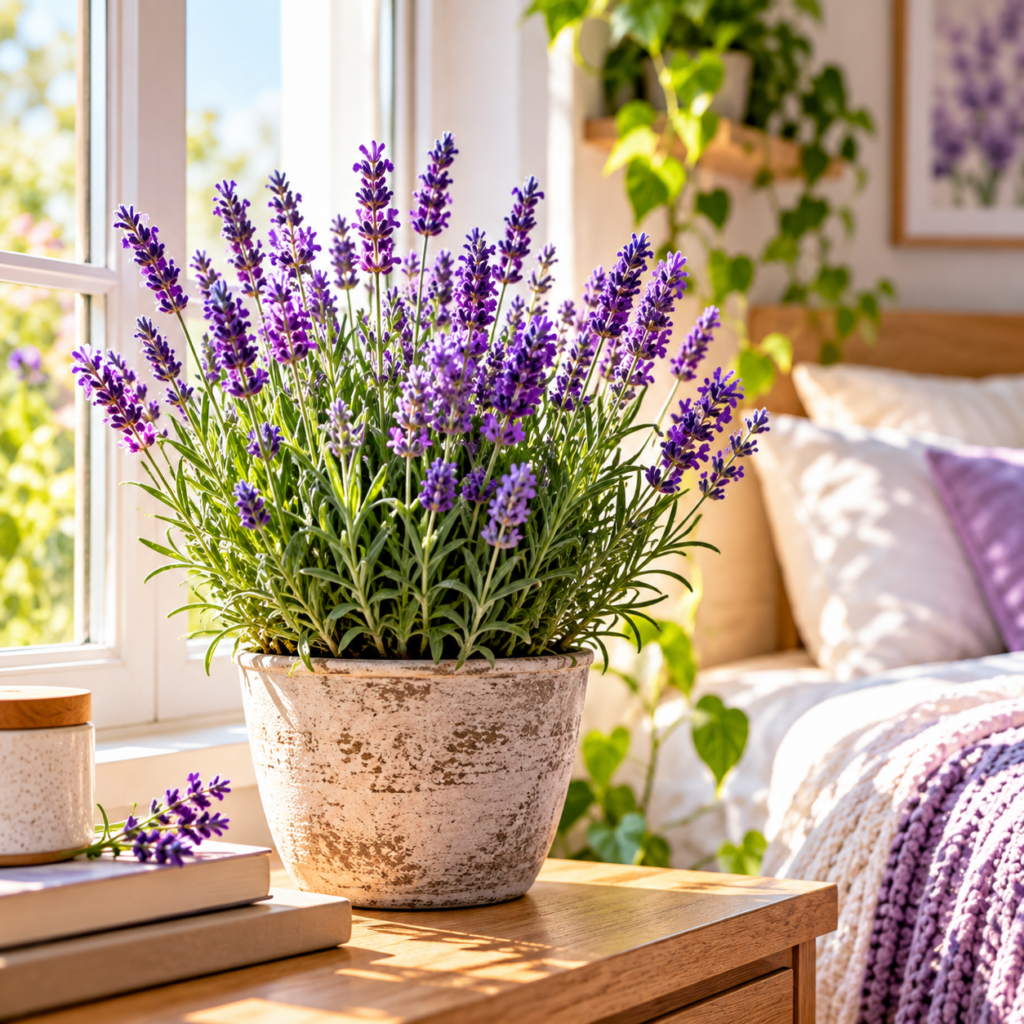
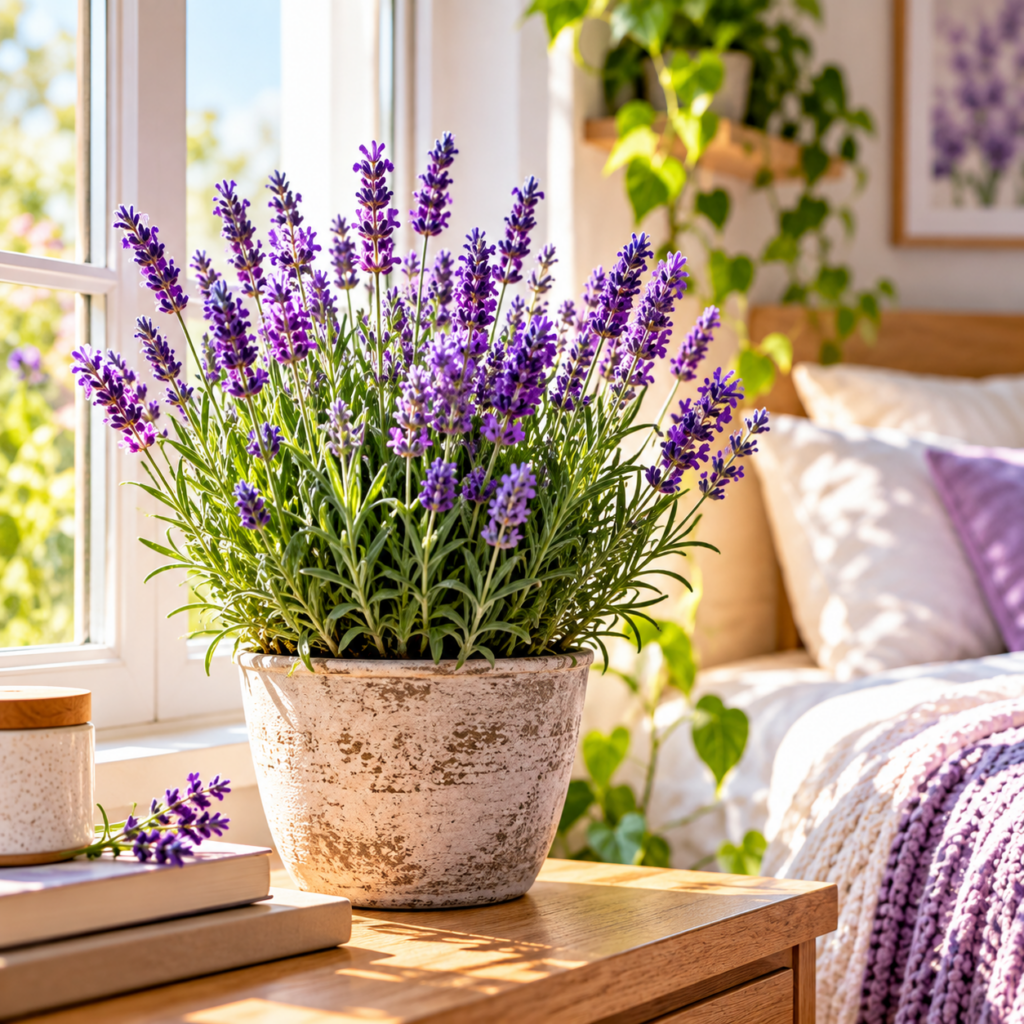
Lavender (Lavandula) is famous for its purple flowers and distinctive fragrance.
Its scent is strongly associated with relaxation, making lavender particularly appealing for bedrooms.
😴 Can lavender help you sleep?
Research into lavender aroma suggests that its fragrance may promote relaxation and may support sleep quality in some situations.
However, this doesn’t mean simply putting a lavender plant beside your bed will cure insomnia or anxiety.
A more realistic benefit is that its natural fragrance can contribute to a calm and relaxing bedtime atmosphere.
☀️ There’s one catch
Lavender loves sunlight.
It isn’t an ideal plant for a dark bedroom.
For the best results, place it near a very bright, sunny window and make sure the soil drains well.
🌿 Care
Light: Plenty of direct sunlight.
Water: Allow the soil to dry somewhat between waterings.
Difficulty: ⭐⭐⭐ Moderate indoors
💡 Tip: If your bedroom receives very little sunlight, choose a snake plant or spider plant instead.
🌵 3. Aloe Vera – A Sunny Bedroom Favorite
Aloe vera is instantly recognizable by its thick, fleshy leaves.
Besides its attractive appearance, aloe belongs to a group of plants that use CAM photosynthesis.
🌙 Does aloe vera produce oxygen at night?
Aloe vera differs from many plants because it can take in carbon dioxide at night as part of its CAM metabolism.
This has led to countless online claims that aloe vera dramatically increases bedroom oxygen while you sleep.
The biological mechanism is real—but the practical effect of one small aloe plant on the oxygen concentration of an entire bedroom is very small.
So enjoy aloe for its appearance and interesting biology rather than expecting it to function as a nighttime oxygen machine.
☀️ Care
Light: Bright light; some direct sunlight is usually appreciated.
Water: Water deeply but infrequently and allow the soil to dry between waterings.
Difficulty: ⭐ Easy
⚠️ Pet note: Keep aloe vera away from pets that may chew on the leaves.
🌿 4. English Ivy – Beautiful Trailing Greenery
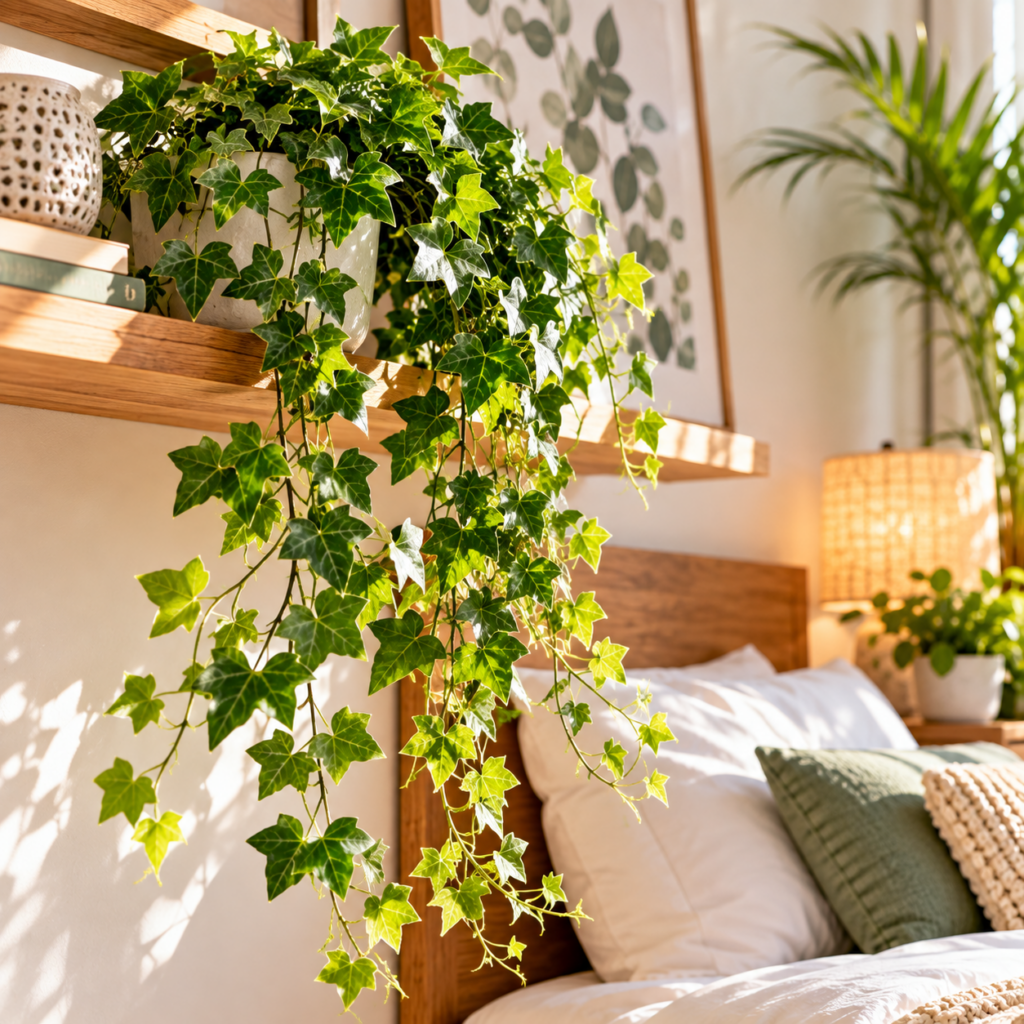
English ivy (Hedera helix) creates a completely different bedroom look.
Its cascading vines work beautifully on:
- ✔ shelves
- ✔ high furniture
- ✔ hanging baskets
- ✔ plant stands
It can instantly give a room a lush, botanical feel.
💨 Does English ivy help asthma or breathing problems?
This is where an important myth needs correcting.
You may encounter claims online saying that keeping English ivy in your bedroom can treat asthma, bronchitis or other respiratory conditions.
A decorative English ivy plant shouldn’t be considered a treatment for respiratory disease.
Some standardized medicinal ivy-leaf extracts have been investigated or used in certain cough preparations. That’s very different from simply having the living plant in your bedroom.
🦠 What about mold?
Laboratory experiments are also sometimes used to claim that English ivy removes enormous percentages of airborne mold.
Those results shouldn’t be interpreted as proof that an ivy plant can control a mold problem in your home.
If you have visible mold, address the moisture source, ventilation and mold itself rather than relying on plants.
🌿 Care
Light: Bright, indirect light.
Water: Keep moderately moist but avoid constantly waterlogged soil.
Difficulty: ⭐⭐ Easy to moderate
⚠️ Important: English ivy can be harmful if eaten and should be kept away from pets and small children.
🐍 5. Snake Plant – One of the Easiest Bedroom Plants
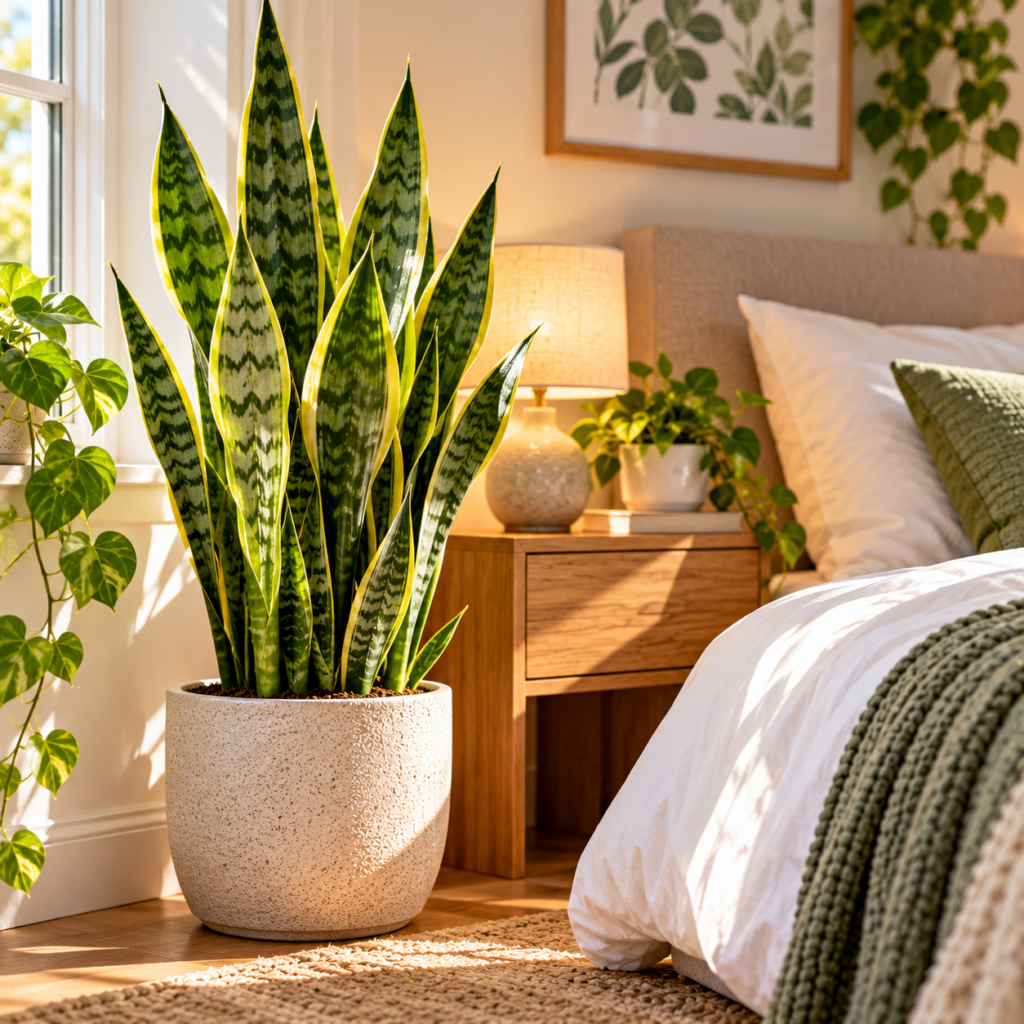
The snake plant—often called mother-in-law’s tongue—is an excellent choice if you’re someone who occasionally forgets to water your plants.
Its tall, upright leaves provide a clean architectural appearance that works particularly well in modern bedrooms.
🌙 What makes snake plants interesting?
Like aloe vera, snake plants use CAM photosynthesis.
They can take in carbon dioxide during the night, which is why they’ve become famous as “bedroom oxygen plants.”
Again, the science behind CAM metabolism is real, but a few snake plants won’t significantly transform the oxygen level of your bedroom.
💨 Does it remove toxins?
Controlled experiments have demonstrated that certain plants can interact with airborne volatile organic compounds.
But real homes have much larger volumes of air and constant air exchange.
For improving actual indoor air quality, focus first on:
- ✔ regular ventilation
- ✔ controlling moisture
- ✔ eliminating pollution sources
- ✔ maintaining heating and ventilation systems
- ✔ using appropriate air filtration when necessary
Then enjoy your snake plant for what it does exceptionally well: looking beautiful while requiring very little care.
🌿 Care
Light: Tolerates low light but grows better with bright, indirect light.
Water: Let the soil dry well between waterings.
Difficulty: ⭐ Very easy
⚠️ Pet note: Keep it out of reach of pets that might chew it.
🌴 6. Areca Palm – For a Lush Bedroom Look
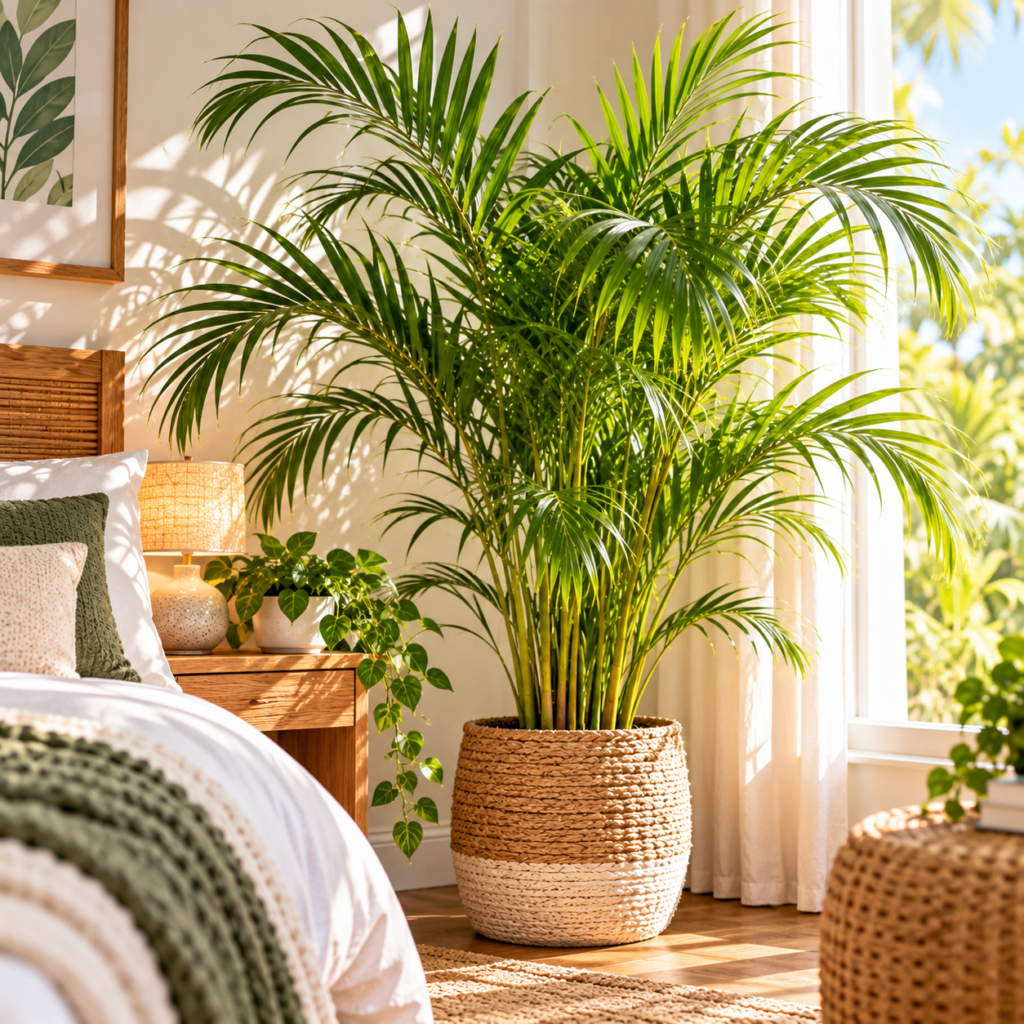
If you want your bedroom to feel like a miniature indoor retreat, consider an areca palm (Dypsis lutescens).
Its soft, feathery fronds add height and texture without the heavy appearance of some larger houseplants.
💧 What about humidity?
Plants release some water vapor through transpiration, and a collection of actively growing plants can contribute a little moisture to their immediate surroundings.
However, don’t expect one areca palm to act like a powerful humidifier.
If your bedroom air is extremely dry, a proper humidifier and humidity monitor provide much greater control.
🌿 Care
Light: Bright, indirect light.
Water: Keep moderately moist but never permanently soggy.
Difficulty: ⭐⭐ Moderate
💡 Keep it away from very hot radiators and extremely dry drafts.
🌬️ Do Bedroom Plants Really Purify the Air?
This deserves a clear answer.
Yes—in laboratory conditions.
Plants are biologically capable of interacting with gases and certain airborne compounds.
But not enough to replace ventilation in a typical home.
The famous “air-purifying plants” idea largely comes from controlled experiments that don’t perfectly represent normal bedrooms.
Real rooms have:
- doors
- windows
- ventilation
- furniture
- much larger volumes of air
- continuous air exchange
You would generally need an impractically large number of plants to reproduce the pollutant-removal rates people sometimes assume from laboratory experiments.
🌿 Keep houseplants because you enjoy them—not because you expect them to function like mechanical air purifiers.
😴 Can Plants Help Create a More Relaxing Bedroom?
This is a much better reason to add greenery.
Plants can make a bedroom feel:
- 🌿 more connected to nature
- 🧘 calmer and more inviting
- 🏡 warmer and more comfortable
- ✨ visually appealing
Caring for plants can also become an enjoyable daily routine.
And unlike exaggerated claims about “detoxifying” an entire room, these benefits don’t require pretending that a houseplant is a medical device.
💧 Can Bedroom Plants Increase Humidity?
Plants naturally release water vapor through transpiration.
Several plants grouped together may have some effect on their immediate environment, but the effect varies enormously depending on:
- plant size
- species
- temperature
- watering
- room size
- ventilation
- existing humidity
If dry air is a serious concern, measure humidity with a hygrometer rather than relying on plants alone.
🪴 Which Bedroom Plant Is Best for You?
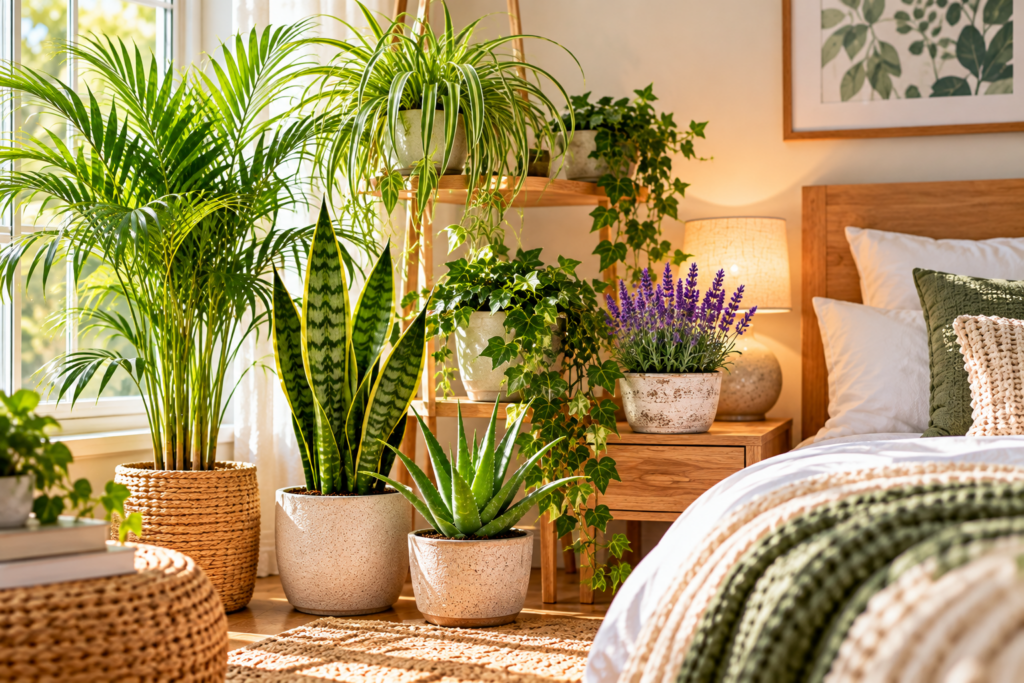
If you’re a beginner, start with:
👉 Spider plant or snake plant.
If your bedroom has lots of sunshine:
👉 Lavender or aloe vera.
If you want a trailing decorative plant:
👉 English ivy.
If you want a lush tropical look:
👉 Areca palm.
If you frequently forget watering:
👉 Snake plant.
If you have pets:
👉 Research the specific plant carefully before bringing it home. Spider plants are generally a more pet-friendly choice than aloe vera, English ivy or snake plants.
⚠️ 5 Bedroom Plant Mistakes to Avoid
❌ 1. Overwatering
This is one of the most common causes of houseplant problems.
Don’t automatically water plants every day. Check the soil and the individual plant’s requirements first.
❌ 2. Choosing a plant based only on appearance
A sun-loving lavender plant won’t thrive indefinitely in a dark corner.
Choose plants according to the light available in your bedroom.
❌ 3. Believing plants replace ventilation
Open windows or use your home’s ventilation system appropriately. Plants are decoration and living organisms—not ventilation equipment.
❌ 4. Ignoring pets
Some popular houseplants can cause problems if cats or dogs chew them.
Check toxicity before placing plants where pets can reach them.
❌ 5. Ignoring moldy soil
Constantly wet potting soil can encourage fungal growth and fungus gnats.
Good drainage and appropriate watering are essential.
🌱 Tips for Keeping Bedroom Plants Healthy
A beautiful plant contributes far more to your bedroom than a struggling one.
For healthier indoor plants:
- ✔ Match the plant to available light.
- ✔ Use pots with proper drainage.
- ✔ Avoid leaving roots permanently submerged in water.
- ✔ Remove dead or damaged leaves.
- ✔ Check occasionally for pests.
- ✔ Clean dusty leaves when appropriate.
- ✔ Rotate plants periodically for balanced growth.
- ✔ Reduce watering when growth slows.
❓ FAQ – Bedroom Plants
What is the best plant for a bedroom?
There’s no single best plant for everyone. Snake plants and spider plants are excellent low-maintenance options, while lavender works well in very sunny rooms.
Which plants release oxygen at night?
Plants using CAM metabolism, including snake plants and aloe vera, exchange gases differently from many other plants. However, the effect of a few plants on the overall oxygen concentration of a bedroom is tiny.
Can bedroom plants improve air quality?
Plants can interact with airborne compounds under certain conditions, but ordinary houseplants shouldn’t replace ventilation or air filtration.
What’s the easiest bedroom plant to keep alive?
Snake plants are among the easiest because they tolerate infrequent watering and a range of indoor light conditions.
Is lavender good for the bedroom?
It can be, particularly if you enjoy its fragrance and have a sunny window. Lavender aroma is associated with relaxation, but a potted lavender plant shouldn’t be considered a treatment for insomnia or anxiety.
Are bedroom plants safe for pets?
It depends on the species. Always check individual plant safety if you have cats, dogs or other animals that may chew leaves.
Can plants cause mold in the bedroom?
Plants themselves aren’t automatically a mold problem, but constantly damp potting soil and poor ventilation can encourage fungal growth. Avoid overwatering and provide suitable airflow.
🌿 Final Thoughts
Bedroom plants don’t need miracle health claims to be worthwhile.
A beautiful spider plant cascading from a shelf, a snake plant beside your dresser or lavender growing near a sunny window can make your bedroom feel greener, calmer and more welcoming.
The key is choosing a plant that suits your room’s light, temperature and your ability to care for it.
- 🌱 For beginners: Spider plant or snake plant
- ☀️ For sunny bedrooms: Aloe vera or lavender
- 🌿 For decorative foliage: English ivy
- 🌴 For a tropical atmosphere: Areca palm
Enjoy plants for their beauty, their connection to nature and the atmosphere they create—and keep good ventilation, humidity control and proper filtration as your primary tools for maintaining healthy indoor air.