

Think you need a sprawling backyard orchard or naturally acidic garden soil to harvest bowls of sweet, homegrown blueberries? Think again! Growing blueberries in containers is one of the easiest, most practical ways to enjoy fresh berries—even on a sunny patio, deck, balcony, or driveway where native yard soil is too alkaline or heavy clay.
In fact, container gardening gives you greater control over soil acidity, drainage, and winter protection—three key factors that determine whether blueberry bushes thrive or struggle (though soil pH still shifts gradually with your water and fertilizer choices). In this complete guide, you will learn how to match a blueberry variety to your winter climate, choose the right pot size, mix and test an acidic potting blend, water and feed smartly, and avoid the most common container mistakes.
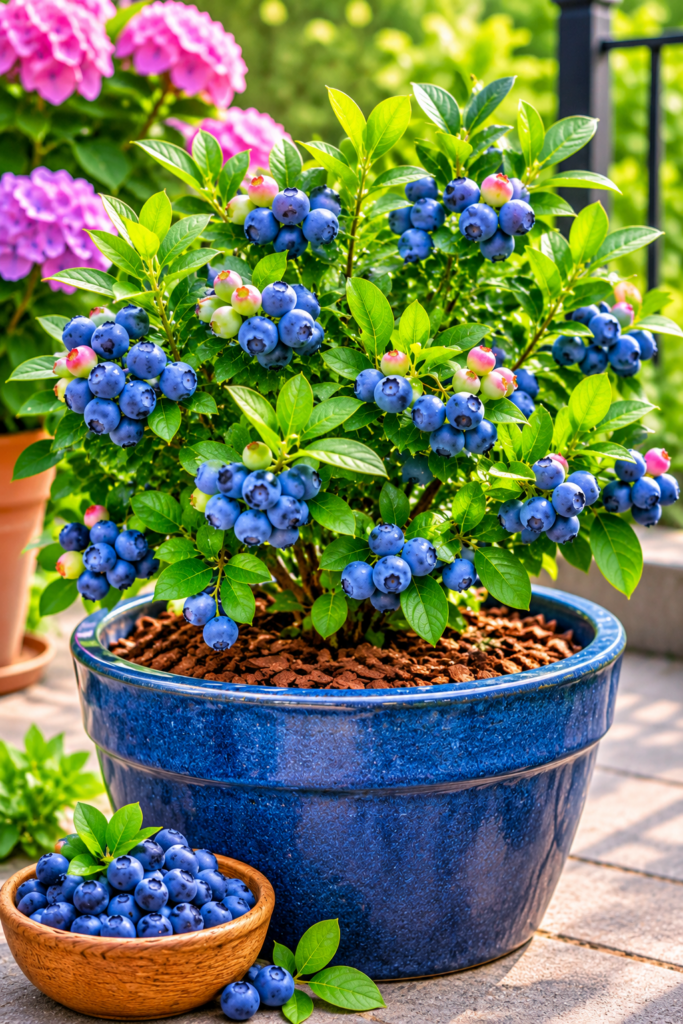
💡 Why Growing Blueberries in Pots Works Better Than You Think
Unlike most garden fruit trees and shrubs that prefer neutral soil, blueberries belong to the heath family (Ericaceae) and generally prefer acidic soil (around pH 4.5 to 5.5 for many varieties) along with shallow, fibrous roots that dislike waterlogged clay.
- Greater pH control: Amending an entire alkaline backyard bed takes years of effort. In a pot, you can start with a tailored acidic potting mix and monitor it much more easily.
- Superior drainage: Blueberries have delicate, shallow roots that suffocate quickly in soggy ground, whereas a well-draining container keeps roots oxygenated.
- Mobility & sun tracking: Pots can be shifted to catch 6 to 8 hours of full sun, moved closer to the house during late spring frosts, or sheltered during extreme winter freezes.
- Ornamental beauty: Beyond summer fruit, blueberry bushes deliver white bell-shaped spring blossoms and vibrant crimson-orange autumn foliage.
❄️ The Secret to Bigger Blueberry Harvests: Choose a Variety That Matches Your Winter Climate
Before buying a plant, check one decisive factor many beginners overlook: winter chill hours (the cumulative number of hours between roughly 32°F and 45°F / 0°C and 7°C that a bush needs during dormancy to break buds and flower properly in spring).
- Cold-Winter Climates (High-Chill Varieties): Northern Highbush and Half-High cultivars (such as Northsky, Northblue, or Top Hat) generally need 800 to 1,000+ chill hours. If planted in a mild-winter region, they may leaf out poorly or produce very few flowers.
- Mild-Winter Climates (Low-Chill Varieties): Southern Highbush and Rabbiteye cultivars (such as Sunshine Blue, Sharpblue, or Pink Lemonade) are bred for mild winters and often require only 150 to 500 chill hours. Planting low-chill varieties in regions with late spring freezes can cause them to bloom too early, risking frost damage to the blossoms.
🌿 Step 1: Choose the Best Compact Blueberry Varieties for Containers
While standard highbush varieties can reach 6 to 8 feet tall, compact and dwarf cultivars stay manageable in pots while producing full-sized berries:
- Sunshine Blue (Southern Highbush – Low Chill): Compact (3–4 ft), self-fertile, tolerates slightly higher soil pH than many varieties, and thrives in mild-to-moderate winter regions.
- Top Hat (Dwarf – High Chill): Reaches only 2 to 3 feet tall—ideal for small balconies, patio planters, and colder climates.
- Peach Sorbet or Jelly Bean (Bushel and Berry® series): Bred specifically for patio containers, staying around 2 to 3 feet tall with striking multi-seasonal foliage (check the plant tag for exact chill ratings).
- Northsky or Northblue (Half-High – High Chill): Cold-hardy compact shrubs (2–3 ft) well suited to northern winters in insulated containers.
- Pink Lemonade (Rabbiteye/Hybrid – Low-to-Moderate Chill): Produces unique bright pink berries with sweet flavor (best paired with a compatible Rabbiteye pollinator).
Pro Tip on Pollination: Even when a variety is labeled self-fertile, planting two different compatible varieties that bloom at the same time often improves berry size and overall harvest yield.
🪴 Step 2: Pick the Right Container Size & Material
Blueberry roots grow wide and shallow rather than ultra-deep, so container width and drainage matter enormously:
- Minimum Pot Size: Start young 1- to 2-year-old plants in at least a 15- to 18-inch wide pot (roughly 10 to 15 gallons), stepping up to a 20- to 24-inch container (15 to 20 gallons) as the bush matures.
- Drainage Holes: Ensure multiple unobstructed drainage holes at the bottom—never let pots sit in standing saucers of water.
- Best Materials:
- Glazed ceramic, thick resin, or half-barrel planters: Retain moisture evenly during hot summer weeks and insulate roots better than thin plastic.
- Fabric grow bags: Provide excellent root aeration and prevent root circling, though they dry out faster in peak summer heat and need closer watering attention.
- Unglazed terracotta: Breathable, but dries out very fast in warm climates—line the inside or water more frequently if using clay pots.
🌱 Step 3: Mix and Test an Acidic Potting Soil (pH 4.5–5.5)
Standard bagged potting mix usually sits around pH 6.0 to 6.5, which can make it harder for blueberry roots to absorb iron and other micronutrients.
Starting Container Potting Mix Recipe:
- 50% Pine bark fines (aged pine bark mulch/soil conditioner for structure, acidity, and air pockets)
- 30% Sphagnum peat moss (provides strong acidity and moisture retention—note that standard coco coir is usually closer to neutral and not naturally acidic enough on its own)
- 20% Coarse perlite or pumice (for fast, reliable drainage)
Important Soil Testing Tip: Because bark and peat batches vary, check the final pH of your moistened mix with a reliable soil pH meter or test strips before planting. If you need to lower pH further using elemental garden sulfur, always follow the exact dosage on the product label based on your container volume and measured pH rather than guessing.
Avoid: Do not add standard garden topsoil, mushroom compost, or wood ash—all of these raise pH and make the mix too alkaline or heavy for potted blueberries.
💧 Step 4: Watering, Feeding & Mulching for Plump Berries
1. Consistent Moisture (Clean Rainwater Is a Great Option)
- Container blueberries need evenly moist soil—never bone-dry, never swampy. Check the top 1 to 2 inches of soil daily in summer.
- Watch your tap water: Hard tap water contains dissolved calcium and carbonates that gradually push container soil pH upward over a single season. Collecting and storing clean rainwater in a covered barrel helps preserve soil acidity without introducing extra minerals.
2. Mulch the Surface
- Apply a 2-inch layer of pine bark nuggets or pine needles on top of the potting mix. This keeps shallow roots cool, reduces evaporation, and gently supports acidity as it breaks down.
3. Fertilize Lightly With Acid-Forming Nutrients
- Feed in early spring as buds swell and again 4 to 6 weeks later using an organic fertilizer formulated for acid-loving plants (azaleas, rhododendrons, and blueberries).
- Avoid high-nitrate lawn fertilizers or heavy doses of fresh manure, which can burn sensitive blueberry roots.
❄️ Step 5: Pruning & Overwintering Container Blueberries
- Pruning (Late Winter): For the first 1 to 2 years, pinching off flowers helps young plants direct energy into root and branch development. From year 3 onward, prune out dead, weak, or low-sprawling twigs in late winter to improve airflow and fruit quality.
- Winter Protection: Roots in above-ground pots are much more exposed to freezing temperatures than roots in the ground. In cold climates, move pots against a sheltered house wall, group them together, wrap containers in burlap or bubble wrap, or place them in an unheated garage once fully dormant—making sure the soil never dries out completely over winter.
⚠️ Common Mistakes to Avoid
- Ignoring chill hours when buying plants: Picking a high-chill northern variety for a mild-winter patio (or vice versa) can lead to weak blooming and disappointing fruit set.
- Using regular potting soil without testing pH: Skipping acidic components like pine bark and sphagnum peat moss quickly leads to nutrient lockout and sluggish growth.
- Letting the pot dry out during fruit swell: Inconsistent watering while berries are sizing up leads to small, tough fruit or premature berry drop.
- Skipping bird netting: Once berries turn from green to pink and deep blue, birds will spot them within hours—drape lightweight mesh netting over a simple frame as soon as berries begin blushing.
❓ Frequently Asked Questions (FAQ)
1. How long does it take for potted blueberries to produce fruit?
Most 2-year-old nursery plants can set a few berries right away, though pinching blossoms in year one helps build a stronger root system. Depending on the plant’s starting age, variety, chill hours, and care conditions, you can typically expect more substantial harvests starting around year 2 or year 3.
2. Why are my blueberry leaves turning yellow with green veins?
That classic pattern is iron chlorosis. While an elevated soil pH (above 5.5) is a very common culprit, waterlogged soil, poor drainage, or damaged roots can also prevent the plant from taking up iron properly. Check both your container drainage and soil pH before applying an acidifying amendment or chelated iron.
3. Do container blueberries need full sun?
Yes! For the sweetest berries and best yields, give potted blueberries 6 to 8 hours of direct sunlight daily. In extremely hot climates, light afternoon shade helps prevent leaf scorch and rapid pot drying.
4. How often should I repot a blueberry bush?
Every 2 to 3 years in late winter while dormant, either step up to a slightly larger container or gently prune the outer root edges and refresh the mix with fresh acidic pine-bark and peat potting blend.
🏁 Final Takeaway: Better Harvests Start With the Right Match
You don’t need acreage or naturally acidic backyard soil to grow sweet, homegrown berries. By choosing a compact variety matched to your winter chill hours, mixing and testing a well-draining acidic potting blend, and keeping moisture steady, a single patio planter can reward you with fresh blueberries every summer.
Which blueberry variety suits your climate—or do you already have potted berries thriving on your patio or balcony? Share your tips in the comments! 💬🫐