

Imagine stepping onto your patio and seeing a beautiful cactus covered with colorful fruits in shades of yellow, orange, red, and purple. It sounds like something from a tropical garden, but the plant behind this impressive display is actually a prickly pear cactus.
Also known as Opuntia, prickly pear is a fascinating plant that combines ornamental beauty with the possibility of producing edible fruit. Its flat, paddle-shaped stems, unusual flowers, and colorful fruits make it an attractive choice for gardeners looking for something different.
But can you really grow a prickly pear cactus in a pot? And more importantly, can a container-grown cactus produce delicious fruit?
Yes, prickly pear cactus can grow and produce fruit in containers, provided you choose a suitable variety and give the plant enough sunlight, root space, drainage, and time to mature.
However, the spectacular photographs circulating online sometimes create unrealistic expectations. A small cactus in a pot will not necessarily produce dozens of fruits, and some images may exaggerate what gardeners can realistically achieve.
In this complete guide, you’ll discover how to grow prickly pear cactus in pots, choose the right container, encourage healthy flowering, prevent common problems, and harvest fruit safely.
🌵 Prickly Pear Cactus Care at a Glance
If you are looking for quick growing conditions, here is a summary of the key requirements for container-grown prickly pear cactus:
- Sunlight: Around 6+ hours of direct outdoor sunlight daily for most fruit-bearing species.
- Soil: Loose, well-draining cactus or succulent potting mix.
- Watering: Water thoroughly only when the growing medium has dried out sufficiently.
- Container: Broad, stable pot with functional drainage holes.
- Temperature: Depends on species; smaller containers can be moved to a sheltered location, while large, heavy pots may require protection in place during severe frost.
- Fruit Production: Requires a fruit-producing cultivar, plant maturity, adequate root volume, and optimal light.
🌵 What Is a Prickly Pear Cactus?
Prickly pear cactus belongs to the genus Opuntia, a group of cacti native primarily to the Americas.
These plants are recognizable by their flat, fleshy stems, commonly called pads or paddles. The pads store water, allowing the cactus to survive periods of drought.
Depending on the species, prickly pear plants can produce attractive flowers followed by oval or pear-shaped fruits.
The fruits are commonly known as:
- Prickly pears
- Cactus pears
- Tuna fruit
- Indian figs
- Cactus fruit
Fruit colors vary depending on the species, cultivar, and stage of ripeness. A single plant may display different shades as its fruits mature, but not every variety produces the full range of colors.
Are Prickly Pear Fruits Edible?
The fruits of many cultivated prickly pear species are edible. They contain juicy flesh, numerous small seeds, and a flavor that can range from mildly sweet to pleasantly fruity.
Important: Never eat fruit from an unidentified cactus. Confirm the species and its suitability for consumption before harvesting.
Prickly pear fruits also have tiny, easily detached spines called glochids. These can penetrate the skin and cause considerable irritation. Always handle the fruit with appropriate tools and remove the glochids completely before eating.
🌱 Can You Really Grow Prickly Pear Cactus in a Pot?
Absolutely.
Prickly pear cactus can adapt well to container growing, especially when the chosen species remains relatively compact. Growing it in a pot offers several advantages:
- You Can Manage the Soil More Easily: Prickly pear needs excellent drainage. A container allows you to choose a suitable cactus potting mix rather than relying on heavy garden soil.
- You Can Provide Winter Protection: Smaller containers can be moved to a sheltered location, while large, heavy pots may require protection in place if severe frost threatens frost-sensitive species.
- It Works in Small Outdoor Spaces: A sunny patio, courtyard, terrace, or balcony may provide enough room for a compact prickly pear cactus. However, large specimens can become extremely heavy and unstable.
- It Can Become an Attractive Ornamental Plant: Even before producing fruit, prickly pear cactus has distinctive architectural foliage. Its unusual shape can add character to a sunny outdoor space.
- You May Eventually Harvest Your Own Fruit: With the right growing conditions and a mature, fruit-producing plant, container cultivation can provide a modest home harvest.
Important Note: Fruit production is not guaranteed. Some plants may grow well for years without producing a significant crop.
☀️ 1. Choose the Right Prickly Pear Variety
One of the most important decisions is selecting a suitable species or cultivar. Not all prickly pear cacti behave the same way. Some remain relatively compact, while others eventually become large shrubs or tree-like plants.
- Opuntia ficus-indica: This is one of the best-known cultivated prickly pear species. It is widely grown for its edible fruits and pads. However, mature plants can become very large, so long-term container growing requires careful management, larger pots, and sufficient space.
- Opuntia humifusa: This species is known for its tolerance of relatively cold conditions. It can be useful in gardens where winter temperatures are lower, although its growing habit and fruit characteristics differ from those of commercial fruit varieties.
- Other Compact Opuntia Species: Certain smaller Opuntia species can be attractive container plants. However, not every ornamental species is suitable for producing desirable edible fruit.
Best Advice: If harvesting fruit is your main goal, buy a correctly identified, fruit-producing cultivar from a reputable nursery. Ask whether the variety is suitable for container growing and what mature size to expect.
🪴 2. Choose a Large, Stable Pot With Drainage Holes

The container plays a major role in the health of your cactus. Prickly pear roots need oxygen as well as moisture. When excess water remains trapped around the roots, problems can develop.
What Size Pot Should You Use?
For a small rooted plant, choose a pot only moderately larger than its existing root system. For an established cactus, a larger container may be necessary:
- Small rooted cutting: Choose a container approximately 15–20 cm wide.
- Young established cactus: Choose a container approximately 25–35 cm wide.
- Larger container-grown plant: Choose a container approximately 40–60 cm wide or more, depending on root size and stability.
These are general guidelines, not fixed requirements. The correct container depends on the species, plant size, root development, and growing conditions.
Which Pot Material Is Best?
- Terracotta pots: Porous and often useful where soil dries slowly. They can be heavy and may crack in freezing weather.
- Plastic pots: Lightweight and affordable, but they may become unstable as the cactus grows.
- Large ceramic pots: Attractive and potentially stable, provided they have proper drainage.
The Most Important Rule
Always choose a container with drainage holes. A decorative pot without an outlet can trap water and damage the roots. For tall plants, select a broad, stable container that resists tipping.
🌵 3. Prepare the Best Soil for Prickly Pear Cactus

Prickly pear cactus generally prefers a well-draining growing medium. Ordinary garden soil can become compacted inside containers, particularly when it contains a high proportion of clay. This can slow drainage and increase the risk of root problems.
Recommended Potting Mix
A commercially prepared cactus and succulent potting mix is a convenient starting point. If necessary, drainage and aeration can be improved with suitable mineral amendments, such as pumice, perlite, or coarse sand.
The exact mixture should suit your climate and watering conditions.
Should You Add Compost?
A small amount of mature compost may be appropriate in some mixes, but excessive organic matter can retain too much moisture. Avoid using a rich, water-retentive potting mix designed for moisture-loving houseplants without adjusting its drainage characteristics.
A Common Mistake: Some gardeners place a thick layer of stones at the bottom of the pot, believing this will prevent root rot. However, stones do not replace functional drainage holes or a suitable potting medium. The entire root zone needs appropriate aeration and drainage.
🌞 4. Give Your Prickly Pear Plenty of Sunlight
Sunlight is one of the most important factors affecting cactus growth and flowering. Most fruit-producing prickly pear cacti perform best in a sunny outdoor location.
How Much Sun Does Prickly Pear Need?
For many cultivated species, approximately six or more hours of direct sunlight daily is a useful target.
However, newly rooted cuttings and plants moved from shade may need gradual acclimation. Sudden exposure to intense sunlight can cause scorching.
Best Locations
Suitable locations may include:
- A sunny patio
- A south-facing outdoor area in the Northern Hemisphere
- A bright courtyard
- A sunny garden terrace
- A balcony with appropriate space and structural support
What Happens Without Enough Light?
A cactus receiving insufficient sunlight may develop:
- Weak or elongated growth
- Thin or misshapen pads
- Reduced vigor
- Fewer flowers
- Limited fruit production
If your cactus grows but never flowers, insufficient light may be one contributing factor.
💧 5. Water Correctly: Avoid the Biggest Cactus Mistake
One of the most common mistakes in cactus care is overwatering. Prickly pear cactus stores water in its fleshy pads, allowing it to tolerate dry periods. However, this does not mean a container-grown cactus never needs water.
How Often Should You Water?
There is no universal watering schedule. Water requirements depend on:
- Temperature
- Sun exposure
- Container size
- Potting mix
- Plant maturity
- Wind
- Seasonal growth
The Best Watering Method
Check the potting mix before watering. When it has dried sufficiently, water thoroughly until excess moisture drains from the bottom. Then allow the medium to dry appropriately before watering again. Avoid leaving the pot standing in a saucer filled with water.
- Summer Watering: During active growth in warm weather, a container-grown cactus may need more frequent watering than a cactus growing directly in the ground. Small pots dry faster than large ones.
- Winter Watering: During cooler periods, growth often slows. Reduce watering accordingly, especially when temperatures are low.
Signs of Overwatering
Watch for:
- Soft or mushy pads
- Darkened tissue near the base
- Persistent wetness in the pot
- Unpleasant odors
- Sudden collapse of stems
These symptoms may indicate serious root or stem problems. If the cactus becomes soft and rotten, stop watering and inspect the affected areas.
🌱 6. Grow Prickly Pear From a Cutting
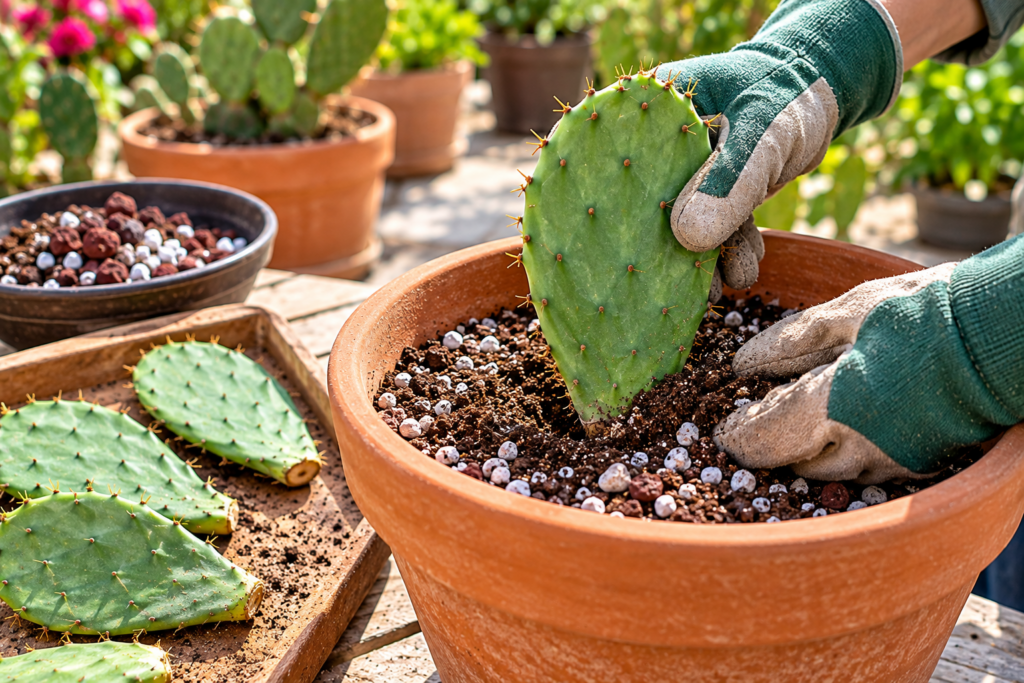
One of the easiest ways to propagate many prickly pear species is by using a healthy pad cutting. This method can be more practical than starting from seed.
Materials Needed
- A healthy, mature cactus pad
- Thick protective gloves
- Long-handled tongs
- A clean cutting tool
- A suitable container
- Well-draining cactus potting mix
Step-by-Step Propagation
- Select a Healthy Pad: Choose a firm, undamaged pad from a healthy, correctly identified plant. Avoid pads showing signs of rot, disease, or severe pest infestation.
- Remove the Pad Carefully: Use a clean tool to detach the pad at an appropriate joint. Avoid touching the surface directly because even apparently spineless varieties may have irritating glochids.
- Allow the Cut Surface to Dry: Place the cutting in a dry, shaded, well-ventilated location. Allow the cut surface to form a protective callus before planting. This may take several days or longer, depending on the cutting and conditions.
- Plant the Cutting: Insert the callused end shallowly into a suitable cactus potting mix. Support the pad so it remains upright without burying too much tissue.
- Water Conservatively: Avoid saturating an unrooted cutting. Keep the medium relatively dry initially, then introduce careful watering as roots develop.
- Wait for Root Development: Rooting time varies with temperature, species, and growing conditions. Avoid repeatedly pulling the cutting out of the soil to check for roots.
Important: A newly rooted cutting may need considerable time to mature before flowering or producing fruit.
🌸 7. How to Encourage Prickly Pear Cactus to Flower
Prickly pear flowers are often one of the plant’s most beautiful features. Depending on the species, they may appear in shades of yellow, orange, pink, or red. However, healthy vegetative growth does not automatically guarantee flowering.
- Provide Adequate Sunlight: Strong light is important for many flowering Opuntia species. Plants grown in deep shade are less likely to flower well.
- Allow the Plant to Mature: Young plants may not flower until they reach an appropriate developmental stage. A mature rooted cutting may flower sooner than a seed-grown plant, but the timing varies.
- Avoid Excessive Nitrogen: Too much nitrogen can encourage vegetative growth at the expense of balanced plant development. Use fertilizer conservatively.
- Respect Seasonal Conditions: Some prickly pear species respond to seasonal temperature and daylight patterns. Their flowering behavior depends on genetics and local climate.
- Avoid Frequent Disturbance: Repeated repotting, unstable containers, and damaged roots can stress the plant. A stable growing environment supports healthier development.

🍐 8. How to Help Your Prickly Pear Produce More Fruit
If your main goal is harvesting cactus pears, focus on overall plant health rather than searching for a miracle fertilizer.
- Start With a Fruit-Producing Variety: A suitable cultivar is fundamental. Some ornamental prickly pears are not selected for large or abundant edible fruits.
- Provide Strong Sunlight: Adequate sunlight supports flowering and fruit development.
- Maintain Healthy Roots: Poor drainage and root rot can weaken the plant and reduce its ability to support flowers and fruits.
- Water During Active Growth: Although prickly pear tolerates drought, prolonged water stress can limit growth and fruit development. Provide appropriate irrigation without keeping the soil constantly wet.
- Avoid Overfertilizing: More fertilizer does not automatically mean more fruit. Excessive feeding may damage roots or promote excessive pad growth.
- Support Pollination: Pollination requirements vary among Opuntia species and cultivars. Some can set fruit without another plant, while others benefit from or require compatible pollen. If flowering occurs without fruit set, investigate the pollination needs of your particular variety.
- Protect the Plant From Severe Stress: Strong winds, freezing temperatures, heat extremes, and pest damage can affect flowering and fruit production.
- Be Patient: Fruit production generally improves as a suitable plant reaches maturity and develops enough healthy growth.
Remember: A cactus covered with dozens of colorful fruits in a relatively small pot is not a realistic harvest guarantee.
🌿 9. Should You Fertilize Prickly Pear Cactus?
Prickly pear cactus is not generally a heavy feeder. However, container-grown plants have access to a limited volume of growing medium. Over time, nutrients may become depleted.
- When Might Fertilizer Help? Consider feeding when the plant is actively growing, the potting mix has been used for an extended period, or growth appears weak and nutrient deficiency is suspected.
- What Fertilizer Should You Use? Choose a fertilizer suitable for cacti or container-grown plants. Follow the manufacturer’s instructions and avoid excessive applications.
- Natural Alternatives: Mature compost can provide nutrients when used appropriately, but it should not make the potting mix excessively water-retentive. Avoid unverified internet remedies involving large amounts of sugar, salt, or kitchen waste. These materials do not reliably improve cactus fruit production and may harm the growing medium.
✂️ 10. Should You Prune Your Prickly Pear Cactus?
Pruning may help control the size and shape of a container-grown prickly pear. It can also remove damaged or diseased pads. However, unnecessary pruning may reduce the number of mature pads available to produce flowers.
- When to Prune: Prune when the plant is healthy and conditions favor healing. Avoid major pruning during periods of severe cold or prolonged wet weather.
- How to Prune Safely:
- Wear thick gloves and protective clothing.
- Use long-handled tools where practical.
- Select the pad or branch that needs removal.
- Cut cleanly at an appropriate joint.
- Avoid damaging healthy surrounding tissue.
- Allow cut surfaces to dry and heal.
⚠️ Important Safety Warning: Prickly pear glochids are extremely irritating. They can remain embedded in skin and may be difficult to remove. Keep the cactus away from areas where children or pets may accidentally brush against it.
🐛 11. Watch for Common Prickly Pear Pests and Diseases
Although prickly pear cactus is relatively resilient, it is not immune to problems:
- Cochineal Insects: Some Opuntia species are attacked by cochineal scale insects. They may appear as white, cottony patches on the pads. Heavy infestations can weaken the plant.
- Mealybugs and Other Scale Insects: These pests feed on plant tissues and may cause reduced vigor.
- Root Rot: Root rot is often associated with excessive moisture, poor drainage, or unsuitable growing conditions.
- Stem Rot: Soft, discolored areas may indicate tissue damage or infection.
What Should You Do?
Inspect the plant regularly. For minor insect infestations, carefully remove affected material when practical and use a treatment appropriate for the identified pest and plant.
If you intend to eat the fruit, use only products specifically permitted for edible crops and follow their label instructions. Avoid spraying strong homemade mixtures onto the cactus without checking their safety.
❄️ 12. Protect Your Prickly Pear Cactus During Winter
Winter care depends heavily on the species. Some prickly pear cacti tolerate substantial cold, while others are damaged by frost.
- Mild Winter Climates: In areas with relatively mild winters, suitable varieties may remain outdoors year-round. Reduce watering when growth slows.
- Cold Winter Climates: Frost-sensitive plants may need protection. Smaller containers can be moved to a sheltered location, while large, heavy pots may require protection in place.
- Can You Keep Prickly Pear Indoors? Yes, temporarily or longer-term in suitable conditions. However, the plant still needs sufficient light. A dim room is not ideal for healthy cactus growth.
- Avoid Sudden Temperature Changes: Gradually acclimate plants when moving them between indoor and outdoor conditions.
🍓 When and How to Harvest Prickly Pear Fruit

Harvesting prickly pear fruit can be rewarding, but it requires care. The fruits may be covered with tiny glochids that are difficult to see.
When Is Prickly Pear Ready to Harvest?
Ripeness indicators vary by species and cultivar. Possible signs include:
- Development of the variety’s mature fruit color
- A fuller fruit shape
- Appropriate firmness
- Easier separation from the plant
Do not assume that every green fruit is unripe or that every red fruit is ready.
How to Harvest Safely
Use suitable protective gloves and long-handled tongs. Detach ripe fruits carefully without crushing them. Place them in a container that can be cleaned thoroughly. Avoid handling freshly harvested fruit with bare hands.
How to Remove the Spines
Use a reliable method appropriate for the fruit variety. Glochids must be removed completely before handling the edible flesh. One practical approach is to hold the fruit securely with tongs, remove the skin carefully using suitable tools, and avoid touching contaminated surfaces. Do not rely on simply rinsing the fruit with water.
How Can You Eat Prickly Pear?
Once safely prepared, the fruit can be enjoyed in several ways:
- Fresh fruit
- Smoothies
- Fruit salads
- Homemade juice
- Jams
- Desserts
- Sauces
The pulp contains numerous hard seeds, which some people choose to remove or strain out.
❌ 10 Common Mistakes When Growing Prickly Pear in Pots
Even experienced gardeners can make mistakes with container-grown cacti:
- Mistake 1: Choosing a Pot Without Drainage — Better approach: Use a container with functional drainage holes.
- Mistake 2: Watering Too Frequently — Better approach: Allow the growing medium to dry appropriately between waterings.
- Mistake 3: Using Heavy Garden Soil — Better approach: Choose a well-draining cactus potting mix.
- Mistake 4: Growing the Cactus in Deep Shade — Better approach: Provide adequate sunlight, with gradual acclimation.
- Mistake 5: Using an Unstable Container — Better approach: Select a broad, appropriately weighted pot that can support mature growth.
- Mistake 6: Expecting Fruit Immediately — Better approach: Allow the plant sufficient time to mature.
- Mistake 7: Applying Too Much Fertilizer — Better approach: Feed conservatively and only when appropriate.
- Mistake 8: Ignoring Glochids — Better approach: Always use protective equipment and appropriate handling tools.
- Mistake 9: Choosing the Wrong Variety — Better approach: Select a correctly identified cultivar suited to your climate and intended use.
- Mistake 10: Believing Every Spectacular Online Photograph — Better approach: Set realistic expectations based on the species, container size, plant maturity, and local growing conditions.
🪴 Prickly Pear in Pots vs. Growing in the Ground
Which growing method is better for your situation?
Growing in Pots
- Space required: Suitable for compact spaces like balconies, patios, or terraces.
- Soil control: Easier to manage soil composition with a custom cactus mix.
- Drainage: Easier to manage through proper pot selection and potting soil.
- Watering: Requires closer monitoring since small pots dry out faster.
- Root space: Naturally limited by the container size.
- Winter protection: Smaller containers can be moved to a sheltered location, while large, heavy pots may require protection in place.
- Mature size: Moderated by root volume, though larger pots still allow significant growth.
- Fruit production: Possible, but yield depends heavily on container volume.
Growing in the Ground
- Space required: Usually needs a larger garden area.
- Soil control: Dependent on native soil conditions and garden drainage.
- Drainage: Dependent on local soil site conditions and topography.
- Watering: Often less frequent once deep roots are established.
- Root space: Potentially extensive and unrestricted.
- Winter protection: Difficult to protect large established plants from severe cold.
- Mature size: Can reach its full natural shrub or tree-like height.
- Fruit production: Potentially greater yield under suitable climate conditions.
🌎 Can You Grow Prickly Pear Cactus in Different Climates?
Prickly pear cactus can be grown in many regions, but species selection matters:
- Hot, Dry Climates: Many cultivated prickly pears perform well in sunny, relatively dry environments. However, newly planted and container-grown specimens still need appropriate watering.
- Mediterranean Climates: Suitable varieties may thrive where summers are warm and winters are relatively mild.
- Humid Climates: Good drainage, airflow, and careful watering become especially important.
- Cold Climates: Choose a cold-hardy species or grow a frost-sensitive variety in a movable container.
- Rainy Regions: Protect the plant from prolonged waterlogging. A well-draining potting mix and suitable container are essential.
💰 How Much Does It Cost to Grow Prickly Pear in a Pot?
The cost depends on whether you begin with a cutting or purchase an established plant.
Basic Supplies
You may need:
- A healthy cactus cutting or nursery plant
- A suitable container
- Cactus potting mix
- Protective gloves
- Long-handled tongs
- Optional fertilizer
- Appropriate pruning tools
How to Save Money
Starting from a healthy cutting can reduce the initial cost. However, purchasing a correctly identified, established fruit-producing plant may be preferable if your priority is eventual fruit production. Do not compromise on container stability or safe handling equipment simply to reduce expenses.
❓ Frequently Asked Questions (FAQ)
Can prickly pear cactus grow in a pot?
Yes. Many prickly pear species can grow in containers when provided with suitable soil, drainage, sunlight, and adequate root space.
How long does it take for prickly pear cactus to produce fruit?
The time varies considerably depending on the species, cultivar, propagation method, maturity, and growing conditions. A mature rooted cutting may fruit sooner than a seed-grown plant, but there is no guaranteed timetable.
Does prickly pear cactus need full sun?
Most cultivated fruit-producing varieties prefer plenty of direct sunlight (at least 6 hours daily). Newly moved or rooted plants should be acclimated gradually.
How often should I water prickly pear cactus?
Water according to the dryness of the growing medium, seasonal conditions, and plant needs rather than following a fixed schedule. Always allow the soil to dry out between waterings.
What is the best soil for prickly pear cactus?
A well-draining cactus or succulent potting mix is usually a good choice. Additional mineral amendments (such as pumice or perlite) may help improve drainage when needed.
Can I grow prickly pear cactus indoors?
Yes, provided the plant receives sufficient light from a sunny window or grow lights. However, fruit production may be limited in ordinary indoor conditions.
Why is my prickly pear cactus not flowering?
Possible reasons include insufficient sunlight, immaturity, improper soil nutrients (too much nitrogen), or species-specific seasonal temperature requirements.
Do I need two prickly pear plants to get fruit?
It depends on the species and cultivar. Some are self-fertile and set fruit with their own pollen, while others benefit from or require cross-pollination with a compatible plant.
Can prickly pear survive winter outdoors?
Some species like Opuntia humifusa are cold-hardy, while tropical cultivars like Opuntia ficus-indica are sensitive to freezing temperatures. Choose a species appropriate for your local climate.
Can prickly pear cactus grow from a single pad?
Yes. Many species propagate reliably from healthy pad cuttings that have been allowed to callus before planting.
Is prickly pear fruit safe to eat?
Fruit from correctly identified edible varieties can be consumed after safe preparation and complete removal of all glochids (tiny spines).
Why are my cactus pads turning yellow?
Yellowing can result from several causes, including overwatering, nutrient deficiencies, excessive intense heat stress, or root rot. Inspect the root zone and watering habits.
Can I grow prickly pear on a balcony?
Yes, if the balcony receives direct sunlight and can safely support the combined weight of the container, wet soil, and mature plant. Ensure pots are secured against wind.
Can a small prickly pear cactus produce dozens of fruits?
A mature, healthy plant may produce several fruits, but an exceptionally heavy harvest from a small container should not be considered typical or guaranteed.
🌵 Final Thoughts: Grow a Beautiful Prickly Pear Cactus at Home
Growing prickly pear cactus in a pot can be a rewarding gardening project, even if you have limited outdoor space. With its unusual paddle-shaped stems, attractive flowers, and colorful fruits, this remarkable plant can become a striking feature on a sunny patio or terrace.
However, successful cultivation requires more than placing a cactus in a decorative container. The most important factors are choosing the right variety, providing excellent drainage, ensuring adequate sunlight, watering carefully, and allowing the plant time to mature.
If you hope to harvest prickly pear fruit, begin with a correctly identified edible cultivar and maintain realistic expectations. A container-grown cactus may eventually reward you with beautiful flowers and delicious fruits, but the size of the harvest will depend on the plant and its growing conditions.
And remember: you don’t need a cactus covered with dozens of colorful fruits to enjoy the beauty of this fascinating plant. Sometimes, watching a single healthy cactus grow and produce its first flower is already a wonderful gardening achievement.
Have you ever tried growing prickly pear cactus in a pot? Share your experience and favorite growing tips in the comments!