
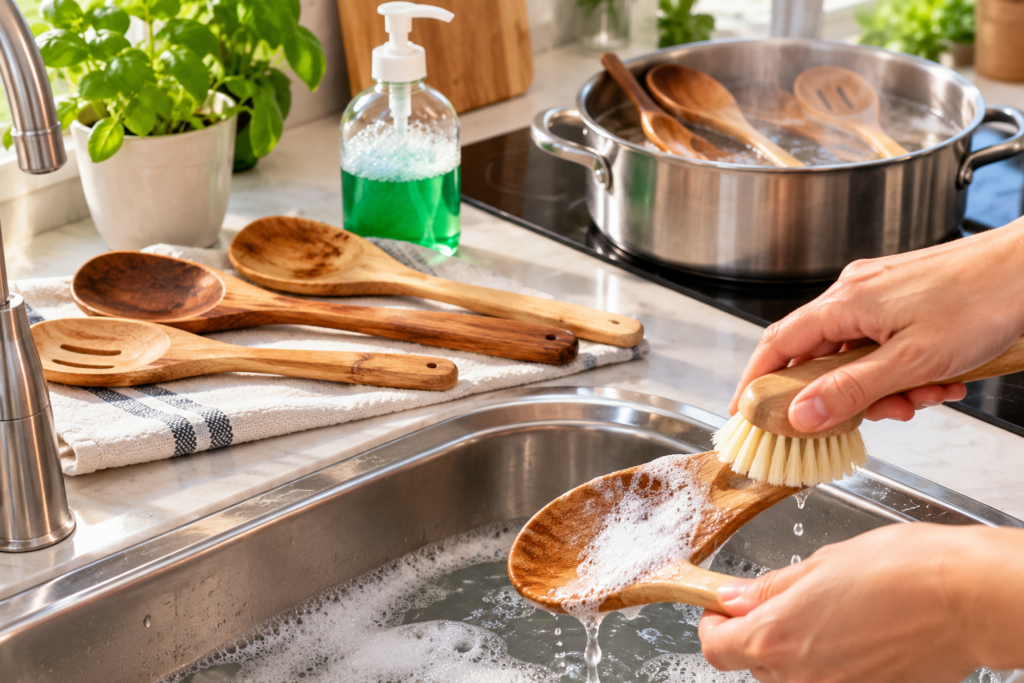
Wooden spoons are some of the hardest-working tools in the kitchen.
They stir sauces, soups, curries, pasta and everything in between. But after months of use, you may notice something less appealing: lingering odors, dark stains, greasy buildup or a rough, dry surface.
That’s when a popular cleaning trick starts to look tempting: Put the wooden spoons in boiling water—sometimes with vinegar—and watch what comes out.
It certainly looks dramatic. But I wouldn’t make boiling or soaking wooden utensils part of my regular cleaning routine.
Instead, I use a much simpler approach: clean according to the actual problem.
Here’s what to do.
🫧 Method 1: For Everyday Cleaning — Hot Water + Dish Soap
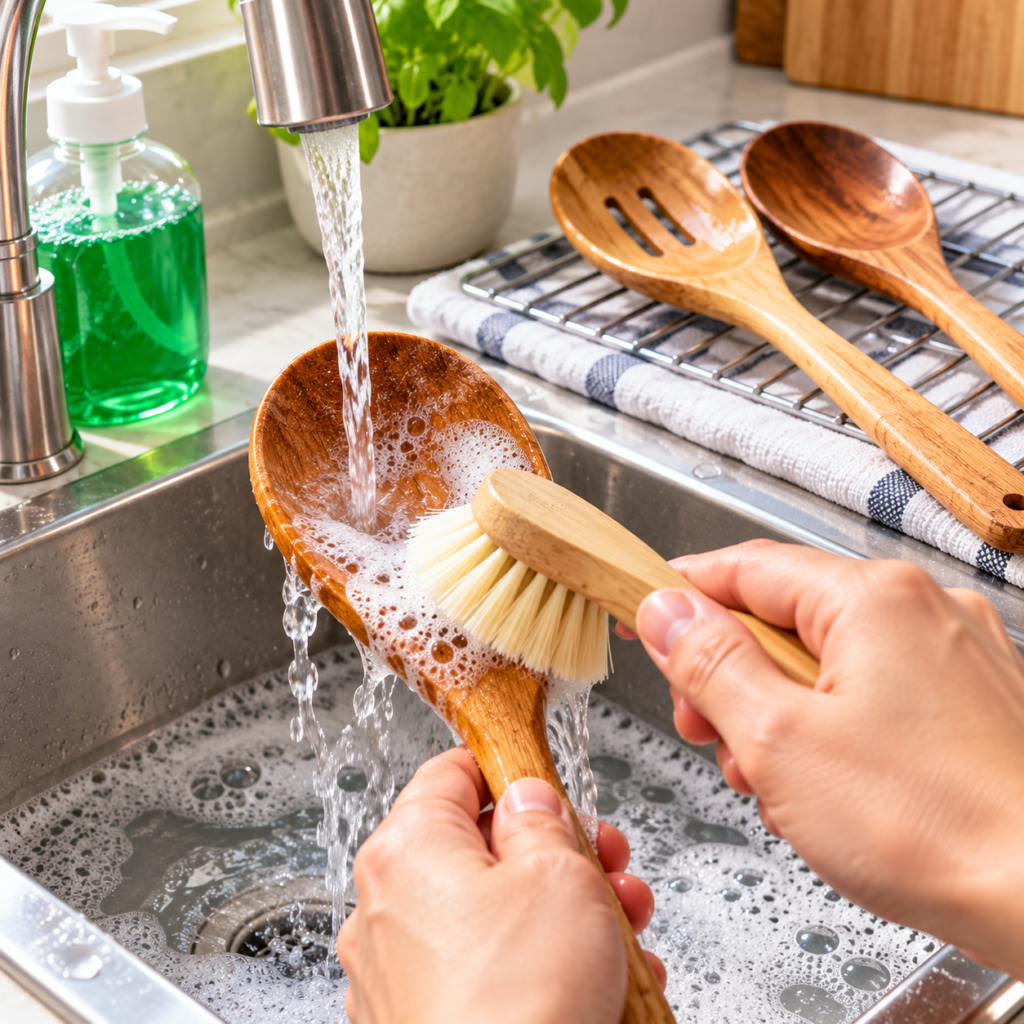
Most wooden spoons don’t need a special homemade treatment after every use.
For normal cooking residue:
- Rinse the spoon soon after using it.
- Wash it with hot water and dish soap.
- Scrub the bowl, handle and any grooves with a dish brush or sponge.
- Rinse thoroughly.
- Wipe away excess water.
- Leave it somewhere with good airflow until completely dry.
This is also consistent with USDA food-safety guidance, which recommends washing kitchen utensils with hot, soapy water.
The important part: don’t leave it soaking
It’s tempting to drop dirty wooden spoons into a sink full of water and deal with them later. I wouldn’t. Wash them, rinse them and get them drying rather than leaving the wood sitting in water unnecessarily.
👃 Method 2: For Lingering Odors — Try Baking Soda
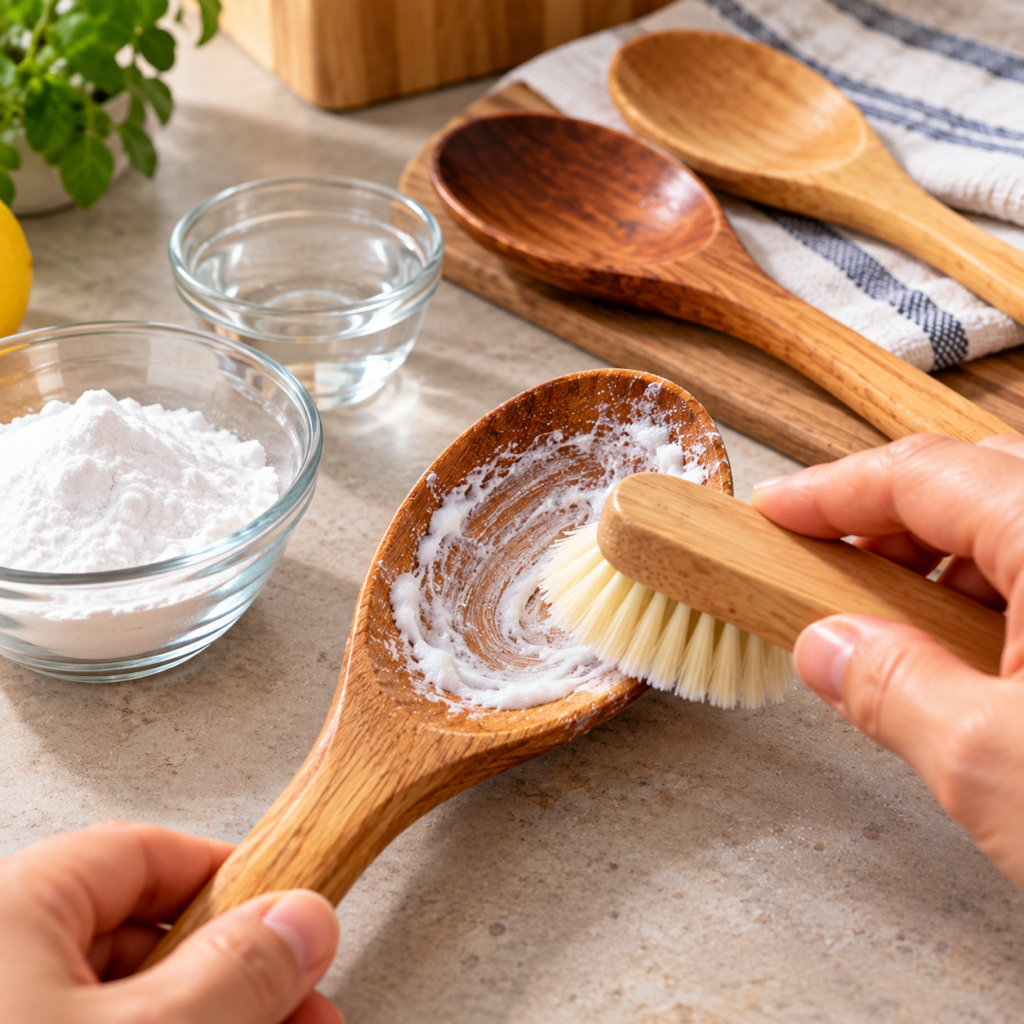
Sometimes a wooden spoon looks perfectly clean but still smells like yesterday’s dinner. Garlic, onions and strongly seasoned foods can be particularly noticeable.
This is where baking soda can be useful.
Try this:
- Put a small amount of baking soda in a bowl and add just enough water to form a loose paste.
- Spread it over the spoon and gently scrub the problem areas.
- Then: Rinse well → wash normally if needed → dry completely.
Baking soda is useful as a mild abrasive cleaner and can help with odors. Utah State University Extension specifically notes its odor-neutralizing and gentle cleaning properties.
You don’t need to bury the spoon under baking soda or leave it soaking overnight. Start gently.
🍋 Method 3: For Stubborn Food Odors — Lemon as an Occasional Treatment
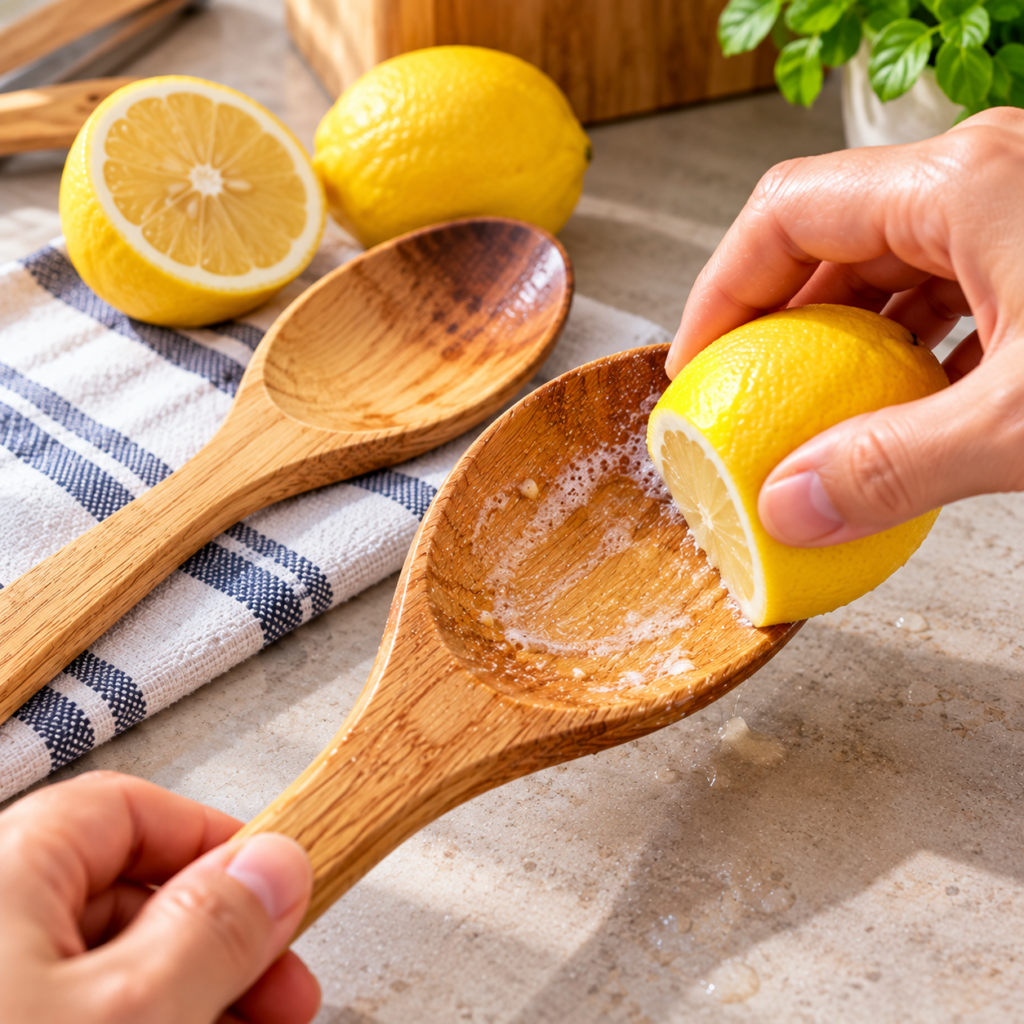
Another simple option for stubborn smells is lemon.
- Cut a lemon and lightly rub the cut surface over the wooden spoon.
- Pay particular attention to the bowl of the spoon, where food odors tend to linger.
- Then rinse it thoroughly and let it dry completely.
I consider this an occasional treatment, not something every wooden spoon needs after every meal. And don’t leave the spoon soaking in lemon juice. The goal is a quick targeted treatment.
🧽 Method 4: For Greasy Buildup — Don’t Reach for Vinegar First
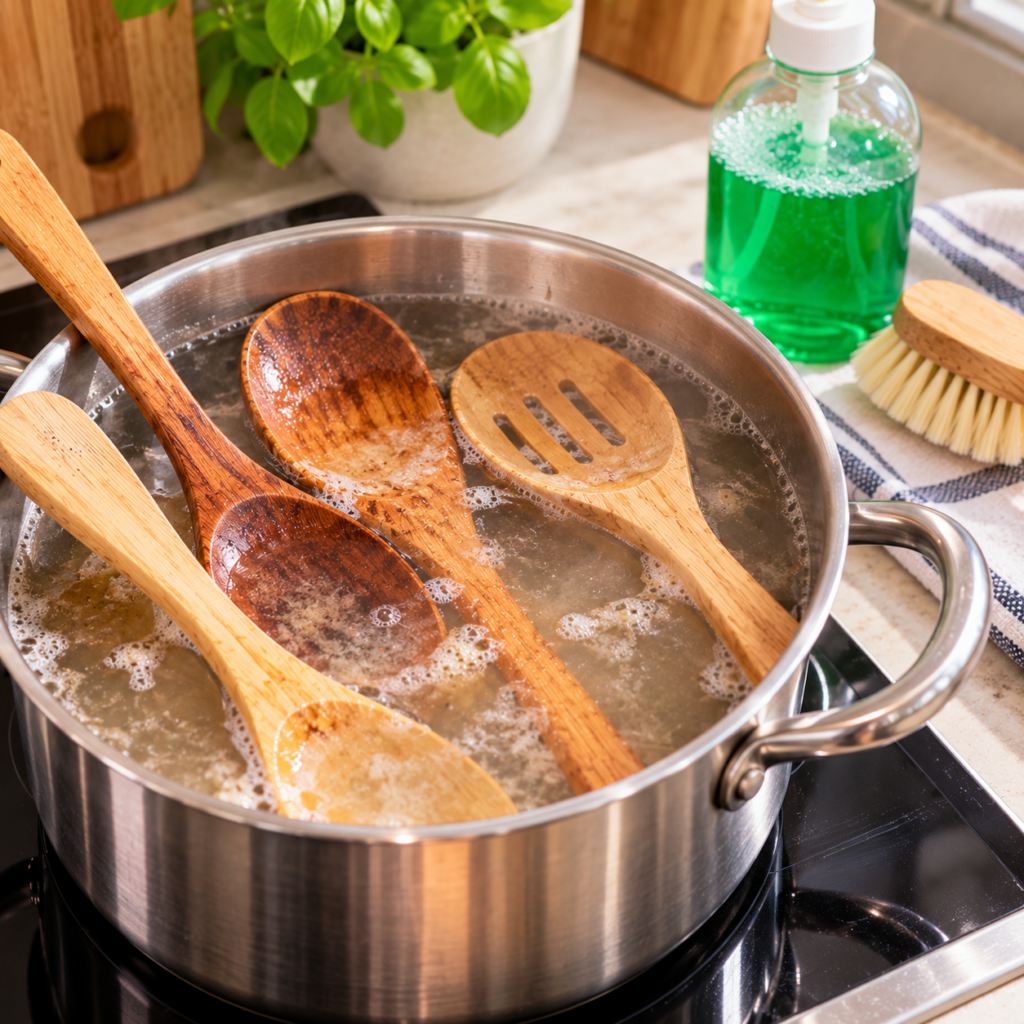
If a spoon feels greasy or sticky, I’d return to the basics before trying another household ingredient.
Use: Hot water + dish soap + a dish brush.
- Scrub along the grain and around the edges of the spoon.
- If necessary, wash it a second time.
Dish detergent is specifically intended to remove food and grease from food-contact equipment, and proper rinsing removes the loosened residue and detergent afterward.
This is an important distinction: Baking soda and lemon are useful occasional helpers. Dish soap remains your main cleaner.
🥄 Method 5: For Dark Marks and Stains — Clean Before You Scrub Aggressively
A wooden spoon will naturally change appearance with use. Tomato sauce, spices and other strongly colored foods can leave marks.
- Start by washing the spoon normally.
- If discoloration remains, try the baking-soda paste and gentle scrubbing.
- Then rinse and dry it.
Don’t aggressively scrape away the surface just because the spoon isn’t returning to its original color. A stain doesn’t automatically mean the spoon is dirty.
🚫 What About Boiling Wooden Spoons?
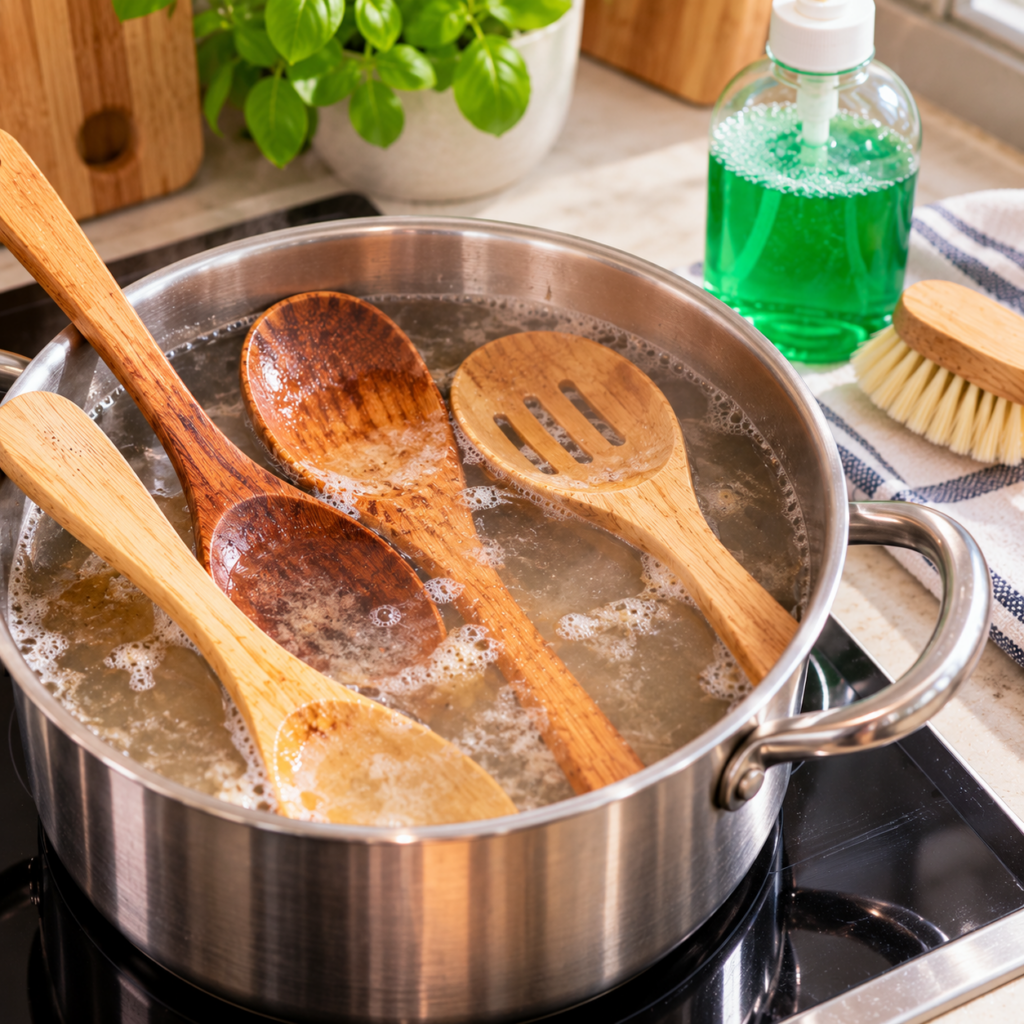
This is the viral trick you’ve probably seen:
Wooden spoons → pot of boiling water → cloudy or discolored water.
It creates an impressive before-and-after moment. But dirty-looking water isn’t proof that boiling your wooden utensils should become your normal cleaning method.
Wood is porous, and official food-safety guidance recognizes that wooden food-contact surfaces require appropriate cleaning and maintenance. For routine care, I see little reason to boil a spoon when ordinary washing can do the job. Wash it rather than cook it.
🍶 And What About Vinegar?
White vinegar has plenty of legitimate household uses. But I wouldn’t automatically pour vinegar into boiling water every time wooden spoons need cleaning.
- If your goal is simply removing ordinary food and grease, dish soap already has a clear job to do.
- If you’re dealing with odor, you can try a targeted baking-soda or lemon treatment.
Most importantly, don’t confuse cleaning with sanitizing. Cleaning removes food, grease and debris; sanitizing is a separate process intended to reduce microorganisms to an appropriate level. So I wouldn’t tell readers that vinegar naturally disinfects a wooden spoon—that’s too broad a promise for a kitchen utensil that comes into contact with food.
⚠️ What If the Spoon Touched Raw Meat or Eggs?
This is one situation where I wouldn’t rely on a Pinterest-style lemon or baking-soda trick.
Cross-contamination from raw animal foods is a genuine food-safety issue. USDA guidance calls for utensils and food-contact surfaces to be washed with hot, soapy water after contact with raw meat, poultry, seafood or eggs.
So after stirring or handling something raw: Wash thoroughly with hot soapy water → rinse → dry completely.
Don’t substitute a sprinkle of baking soda or a rub of lemon for proper washing.
🌬️ The Step People Forget: Dry the Spoon Properly
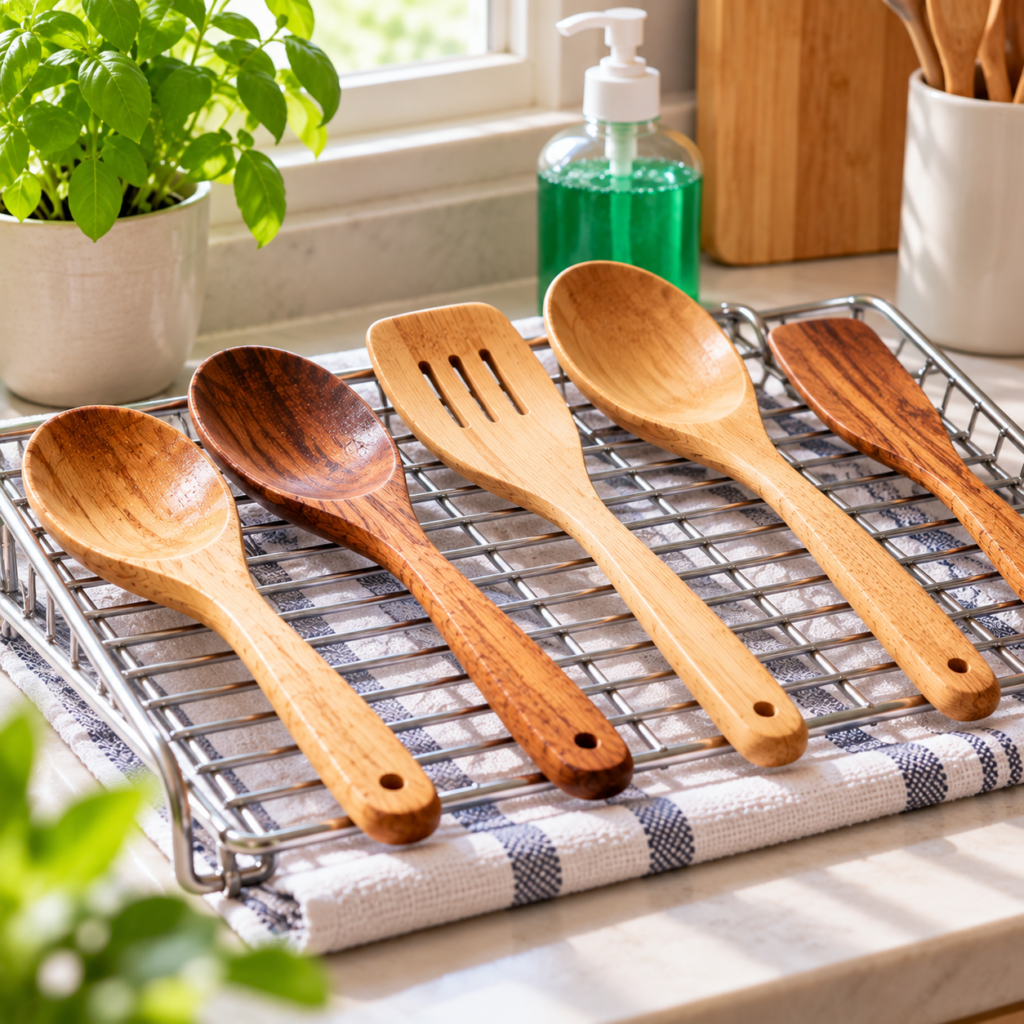
You can clean a wooden spoon beautifully and then undermine the whole process by leaving it wet.
After washing: Rinse → towel off excess water → allow plenty of airflow → store only when completely dry.
Don’t immediately put a damp wooden spoon into a closed drawer. This step costs nothing and requires no special ingredient.
🔍 When Should You Replace a Wooden Spoon?
Not every old wooden spoon needs to go. Small changes in color and appearance are normal. But inspect yours occasionally, paying particular attention to:
- Deep cracks
- Splits
- Large rough areas
- Deep grooves that are difficult to clean
- Structural damage
USDA guidance for wooden cutting surfaces similarly recommends replacing them when wear creates grooves that become difficult to clean. The same practical principle makes sense for a badly damaged wooden utensil: If you can’t clean it properly anymore, don’t keep trying to rescue it with increasingly aggressive DIY treatments.
🏠 My Simple Wooden-Spoon Routine
I wouldn’t complicate this:
- After normal cooking: Hot water + dish soap → rinse → dry.
- Lingering odor: Baking-soda paste → gentle scrub → rinse → dry.
- Occasional stubborn food smell: Quick lemon rub → rinse → dry.
- Greasy buildup: Dish soap + thorough brushing → rinse → dry.
- After contact with raw animal foods: Proper hot, soapy washing → thorough rinse → dry.
- Deeply cracked or difficult-to-clean spoon: Replace it.
That’s really all you need.
❓ Quick FAQ
- Should I boil my wooden spoons every week?I wouldn’t. Routine cleaning with hot, soapy water is simpler and avoids unnecessarily soaking the wood.
- Can I clean wooden spoons with baking soda?Yes, I like it as an occasional treatment for odors and some stubborn surface residue. Follow it with a thorough rinse.
- Can I use lemon?For an occasional targeted odor treatment, yes. Don’t leave the spoon soaking in lemon juice.
- Should I use vinegar every time?No. Ordinary food and grease are better handled with proper dishwashing.
- Can I put a wet wooden spoon straight into a drawer?I’d wait until it’s completely dry.
- Does a stained spoon automatically need replacing?No. Appearance alone isn’t the deciding factor; physical deterioration that creates areas you can’t clean effectively is more concerning.
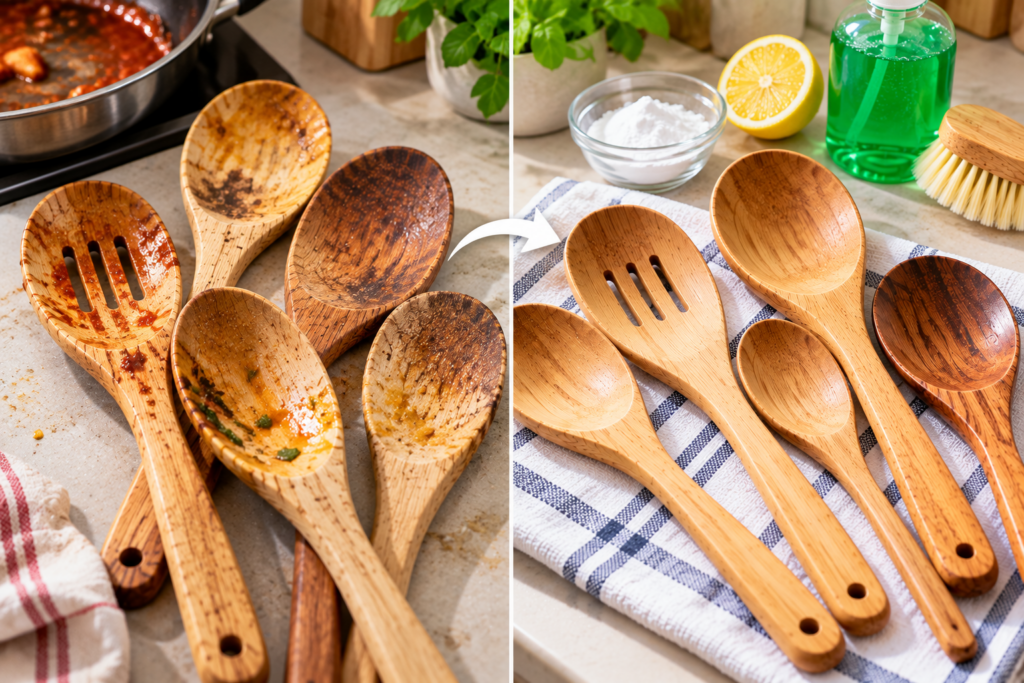
✨ Final Thoughts
The surprising thing about caring for wooden spoons is that you really don’t need an elaborate cleaning recipe.
The routine I’d use is:
Wash properly → target odors only when necessary → rinse thoroughly → dry completely.
Baking soda can be useful for odors. Lemon can be an occasional helper. But neither needs to replace ordinary dishwashing. And rather than routinely boiling wooden spoons in vinegar, save yourself the extra step.
Sometimes the best kitchen trick is knowing when you don’t need a trick at all.