

Three everyday ingredients. One small bowl. And a cleaning trick that keeps appearing on Pinterest, Facebook, and household blogs.
The recipe sounds almost too simple: mix Dawn dish soap, baking soda, and hydrogen peroxide into a thick paste, then use it to tackle stubborn stains, greasy surfaces, and dirty grout.
Some people even describe it as a miracle cleaner that can replace almost every bottle under the kitchen sink.
But here’s the interesting part: the real secret isn’t just knowing how to mix these three ingredients. It’s knowing where to use them — and where not to.
A paste that helps brighten a stained ceramic sink may be completely unsuitable for polished stone, delicate fabrics, or painted kitchen cabinets.
And while this homemade cleaner can be useful, it isn’t automatically stronger, safer, or more effective than a product designed for a specific cleaning task.
So before you spread this popular mixture around your home, here’s what you should know.
🧪 Why Are People Mixing These Three Ingredients?
The appeal is easy to understand.
Most households already have baking soda and dish soap. Hydrogen peroxide is also widely available in pharmacies and supermarkets.
Each ingredient contributes something different.
1. Dawn Dish Soap — The Grease Fighter
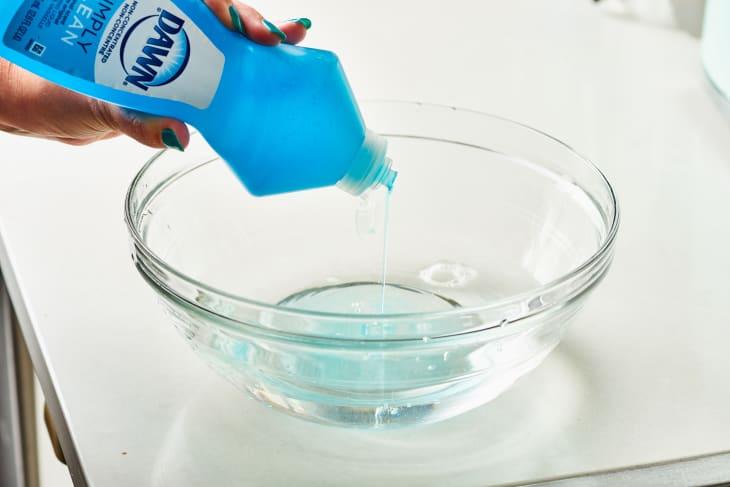
Dish soap contains surfactants that help loosen oils and greasy residue so they can be rinsed away with water.
2. Baking Soda — The Gentle Scrubbing Ingredient
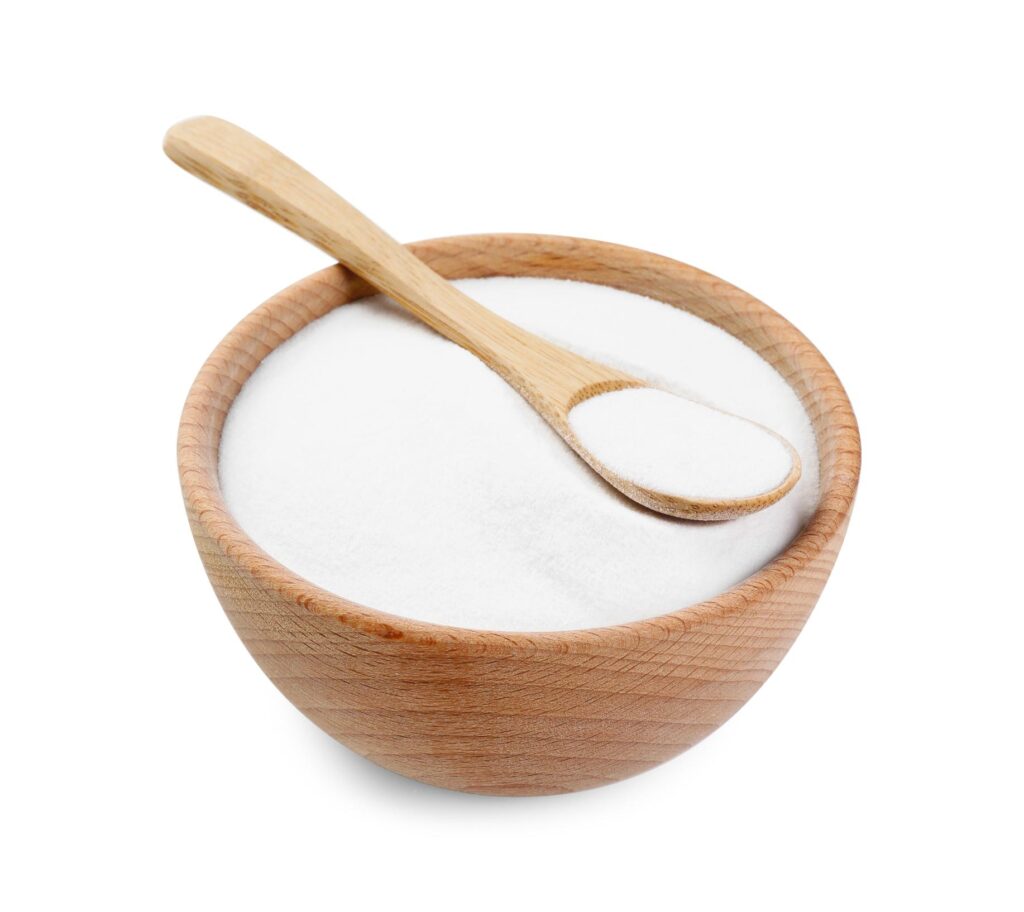
Baking soda provides mild abrasive action, helping remove certain stuck-on deposits. It can also help with some odors.
3. Hydrogen Peroxide — The Stain-Lightening Ingredient
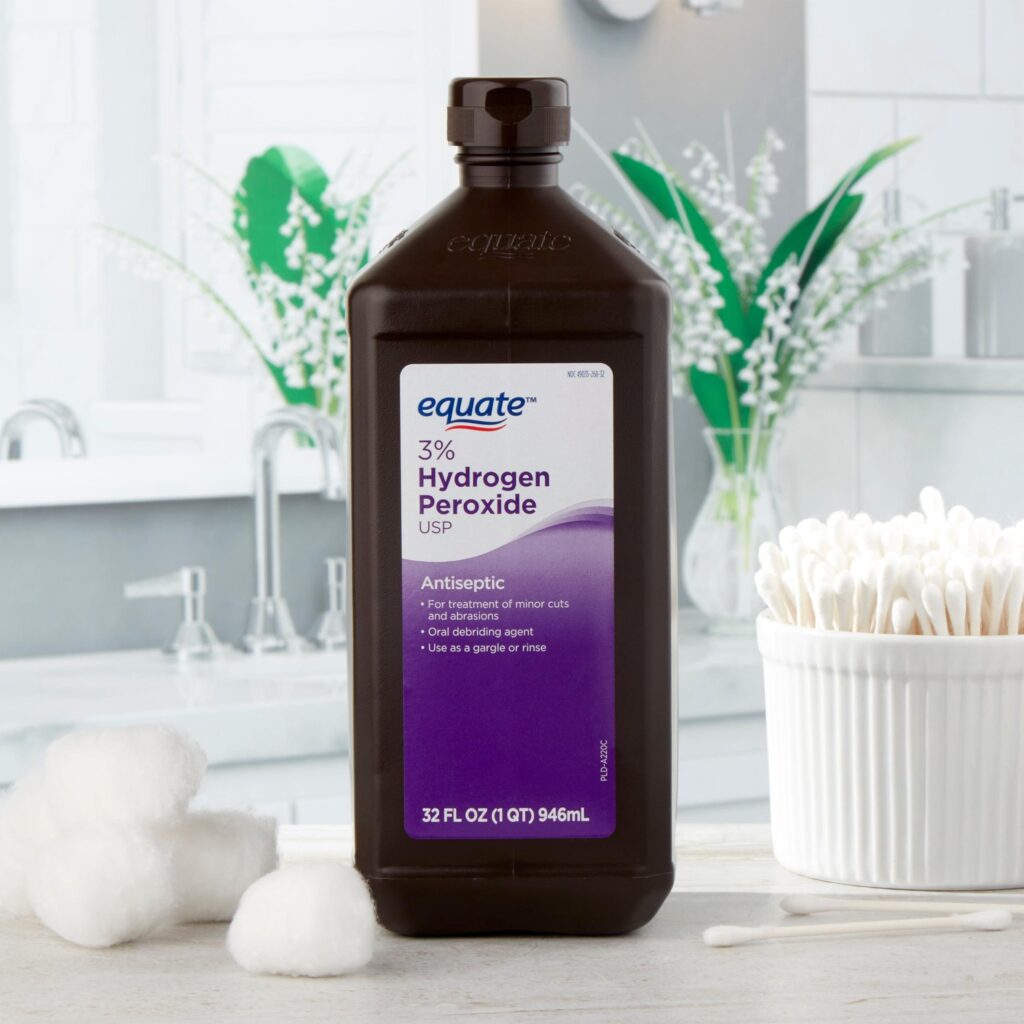
Household hydrogen peroxide at 3% is an oxidizing agent that may help lighten certain organic stains and discoloration.
When combined, the soap helps remove greasy material, baking soda adds scrubbing power, and peroxide may contribute stain-lightening action.
However, the combination does not create a scientifically proven universal cleaner. In alkaline mixtures, hydrogen peroxide can also decompose more quickly.
That’s why this paste should be prepared fresh rather than stored.
🥣 The Simple Three-Ingredient Cleaning Paste
DIY Cleaning Paste Recipe
2 tbsp
Baking soda
1 tbsp
3% hydrogen peroxide
1 tsp
Dawn dish soap
Instructions
- Add the baking soda to a small, open bowl.
- Pour in the 3% hydrogen peroxide.
- Add the dish soap and mix gently.
- Stir until a spreadable paste forms.
- Use immediately on a compatible surface.
Never store the mixture in a sealed bottle or container. Do not combine it with bleach, vinegar, ammonia, or other cleaning products. Discard unused paste safely after cleaning.
Use only ordinary household hydrogen peroxide at 3%, not concentrated industrial or hair-developer formulations.
Wear gloves if you have sensitive skin, and test the paste on a small hidden area before treating a larger surface.
✨ 8 Cleaning Jobs Where This Mixture May Actually Help
Not every cleaning task requires all three ingredients. But on compatible surfaces, this paste may be useful for several common household problems.
1. Brightening a Stained Ceramic Bathroom Sink
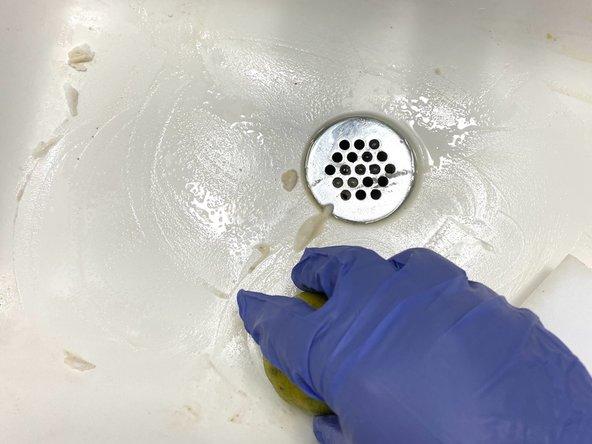
Bathroom sinks collect toothpaste residue, soap deposits, and everyday grime.
On durable, uncoated ceramic surfaces, the paste may help remove superficial discoloration.
How to use it:
Apply a small amount to a damp, non-scratch sponge. Gently rub the stained area, then rinse thoroughly and dry with a clean cloth.
Avoid aggressive scrubbing, especially on decorative or coated finishes.
Why it may work: Baking soda helps loosen surface deposits, while peroxide may lighten certain stains.
2. Removing Soap Residue From Shower Surfaces
Soap scum forms when soap residues combine with minerals from hard water.
It can leave a dull film on shower walls, tubs, and glass doors.
The dish soap and baking soda in this mixture may help loosen greasy soap residue on suitable surfaces.
Apply a small amount, gently scrub, and rinse thoroughly.
Important: This paste is not a reliable solution for hard-water mineral scale. Heavy limescale usually requires a compatible descaling product.
Avoid using the abrasive paste on acrylic, coated glass, or delicate shower finishes unless the manufacturer approves it.
3. Cleaning Certain Stained Tile Grout Lines
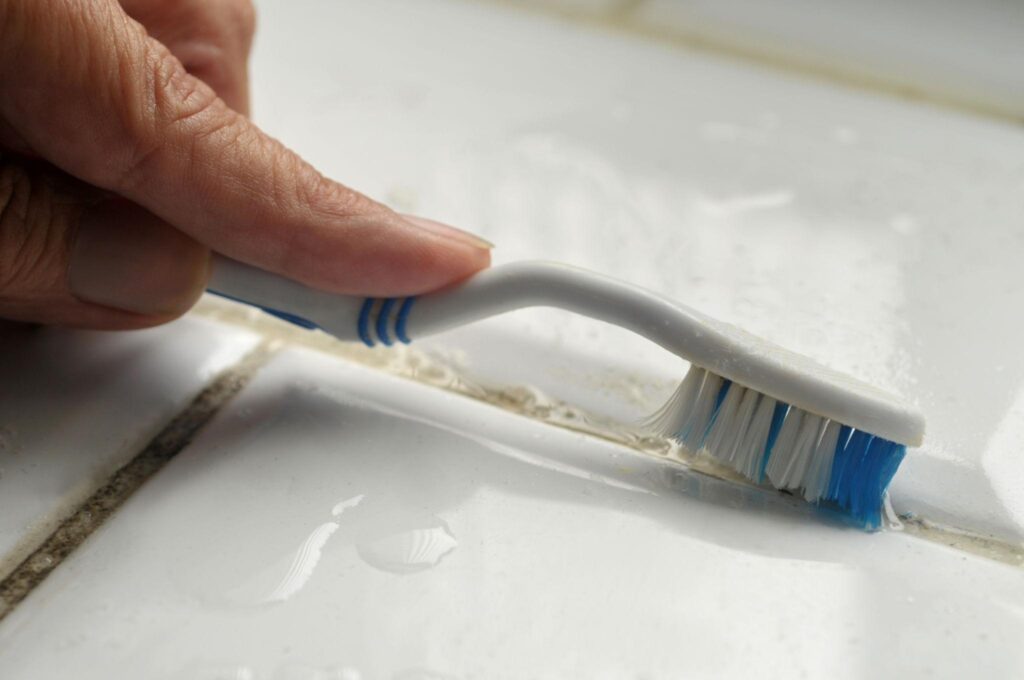
Grout lines can become discolored by dirt, soap residue, and everyday use.
On compatible, intact grout, a small amount of cleaning paste may help lift superficial staining.
Use a soft toothbrush and light pressure.
Rinse well afterward and allow the area to dry.
Do not use this method on damaged grout or natural-stone installations without checking compatibility.
Remember: Brightening a stained grout line is not the same as eliminating mold growing beneath tiles or inside walls.
4. Tackling Greasy Residue on Compatible Metal Surfaces
Some uncoated stainless-steel surfaces can tolerate gentle cleaning with mild products.
If the appliance manufacturer allows it, a small amount of paste may help remove certain greasy marks.
Apply with a soft cloth, rub gently in the direction of the grain, and rinse completely.
Avoid decorative finishes, brushed coatings with special care requirements, and areas containing electrical controls.
For ordinary grease, diluted dish soap alone is often sufficient.
5. Pre-Treating Certain Stains on White Laundry
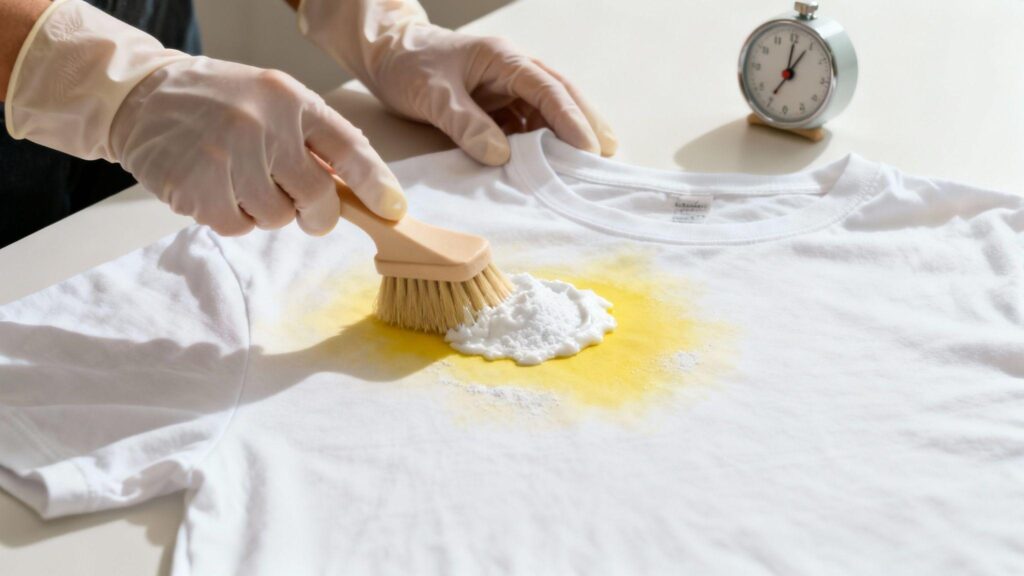
This is one of the more interesting potential uses of the mixture.
Dish soap can help loosen oily stains, while hydrogen peroxide may lighten some organic discoloration.
For washable white cotton or other fabrics whose care instructions permit peroxide-based stain treatment, a small spot application may be useful.
How to use it safely:
Test on an inconspicuous area first. Apply a little paste, gently work it into the stain, and rinse thoroughly after a short contact period before laundering according to the garment label.
Do not use it on wool, silk, leather, delicate fabrics, or materials that may discolor.
Never put a heavily soapy, unrinsed paste directly into a washing machine.
6. Cleaning Selected White Sneaker Components
White sneakers can develop dirt marks around their rubber soles and edges.
On compatible white rubber components, a small amount of paste may help lift surface grime.
Use a soft toothbrush and scrub gently.
Wipe away the residue with a damp cloth.
Avoid applying peroxide to colored fabrics, suede, leather, glued decorations, or delicate synthetic materials.
For many sneakers, plain mild soap and water are a safer first choice.
7. Removing Light Residue From Oven-Door Glass
Oven glass can accumulate greasy splatters and food residue.
On a cool, manufacturer-approved glass surface, a small amount of paste may help loosen certain deposits.
Apply gently with a non-scratch sponge and remove all residue with a damp cloth.
Avoid seals, vents, coated glass, and self-cleaning surfaces.
For heavily baked-on grease, a product specifically approved for the appliance may work better.
8. Cleaning Durable Ceramic Tiles
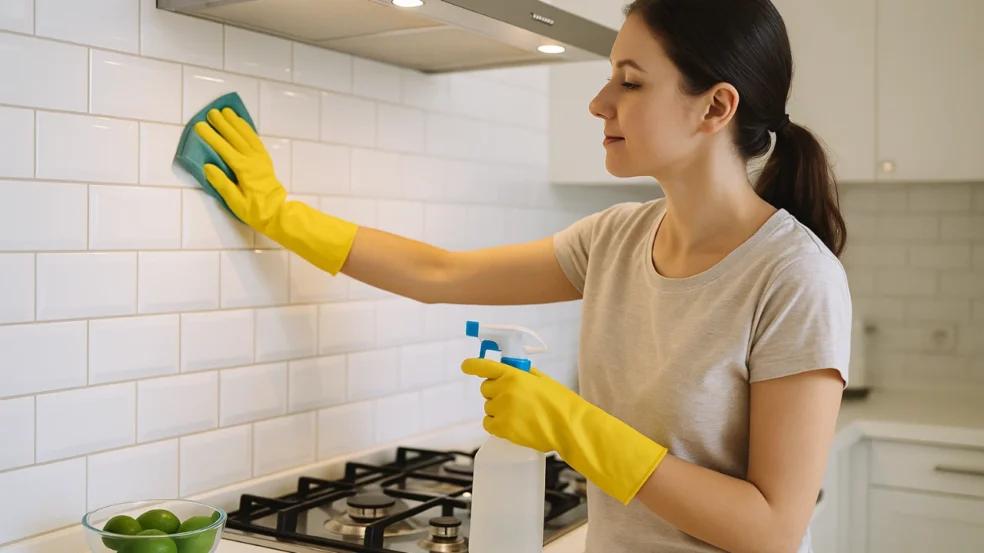
Glazed ceramic tiles can collect grease, fingerprints, and food splatters.
A little paste may help with stubborn surface residue if the tile finish tolerates gentle abrasion.
Apply sparingly, scrub lightly, rinse, and dry.
For routine maintenance, dish soap diluted in water is usually enough.
🚫 6 Places You Should Never Use This Paste Without Checking Compatibility
This is where many viral cleaning articles leave out important information.
A mixture that works on one surface may damage another.
| Surface | Why it can be problematic | Better first option |
|---|---|---|
| Marble and natural stone | Abrasion or finish damage | Stone-safe cleaner |
| Painted kitchen cabinets | Possible discoloration and finish wear | Diluted mild dish soap |
| Wood furniture | Moisture and finish damage | Wood-compatible cleaner |
| Aluminum cookware | Possible surface alteration | Manufacturer-approved detergent |
| Nonstick pans | Abrasive damage to coating | Soft sponge and mild soap |
| Colored or delicate fabrics | Bleaching and fiber damage | Fabric-specific stain remover |
Why Painted Kitchen Cabinets Are a Special Concern
Greasy kitchen cabinets are a popular subject for DIY cleaning videos.
But baking soda can be abrasive, and hydrogen peroxide can alter certain finishes.
For painted, laminated, or varnished cabinets, begin with a soft microfiber cloth and a small amount of diluted dish soap, provided the manufacturer permits it.
There’s no need to use a stronger mixture if a gentler method already works.
🧽 What This Cleaning Paste Cannot Do
A good cleaning guide should explain not only what works, but also what doesn’t.
It Won’t Reliably Remove Heavy Limescale
Baking soda is alkaline, while many mineral deposits respond better to suitable acidic descalers.
Choose a product appropriate for the surface.
It Won’t Replace a Proper Disinfectant
Hydrogen peroxide can have antimicrobial activity under certain conditions.
But this homemade mixture has not been validated as a disinfectant with a defined concentration, contact time, and tested performance.
Do not rely on it to sanitize food-contact surfaces or eliminate pathogens.
It Won’t Repair Damaged Surfaces
If grout is cracked, a countertop finish is worn, or a sink has permanent discoloration, cleaning alone may not solve the problem.
It Won’t Remove Every Stain
Rust, mineral deposits, dyes, grease, and protein-based stains behave differently.
No single homemade cleaner is ideal for all of them.
🌿 6 Simpler Cleaning Alternatives That May Work Better
Sometimes the most effective cleaning trick is using fewer ingredients.
1. Dish Soap and Warm Water for Grease
For everyday greasy fingerprints, kitchen splatters, and washable surfaces, mild dish soap diluted in warm water is often enough.
It is usually a better starting point than an abrasive paste.
2. Baking Soda and Water for Gentle Scrubbing
A small baking soda paste may help remove some stuck-on residue from durable, compatible surfaces.
Use gentle pressure and rinse thoroughly.
3. A Suitable Descaler for Hard-Water Deposits
Mineral scale needs a different approach from greasy soap residue.
Choose a descaler approved for the specific material.
Avoid acidic products on marble, limestone, and other acid-sensitive stones.
4. Laundry Detergent for Everyday Fabric Stains
For most washable garments, a good liquid laundry detergent is an appropriate first treatment.
Follow the garment’s care label.
5. Plain Soap and Water for Kitchen Cabinets
For many cabinet finishes, gentle cleaning is preferable to aggressive stain removal.
Always check the manufacturer’s care instructions.
6. Proper Cleaning and Sanitizing for Cutting Boards
Wash cutting boards with hot, soapy water after use and follow food-safety guidance for sanitizing when needed.
Replace boards that develop deep grooves that are difficult to clean.
Do not treat the homemade peroxide paste as a validated food-contact sanitizer.
💰 Is This Homemade Cleaner Really Cheaper?
The ingredients are commonly available, but that doesn’t automatically mean the mixture is always the least expensive option.
The cost depends on local prices, the amount used, and whether the task actually requires all three ingredients.
For light grease, using dish soap alone may be cheaper and easier.
For stubborn fabric stains, a targeted laundry product may save time and prevent damage.
The best way to save money isn’t necessarily to mix more ingredients — it’s to choose the simplest effective cleaner for each job.
⚠️ Important Safety Rules Before You Start
Even ordinary household cleaning products deserve careful handling.
- Use only 3% household hydrogen peroxide.
- Prepare small quantities immediately before use.
- Never store the mixture in a sealed container.
- Never combine it with chlorine bleach, vinegar, ammonia, or additional cleaners.
- Keep the ingredients away from children and pets.
- Avoid splashing the mixture into your eyes.
- Wear gloves if your skin is sensitive.
- Test surfaces and fabrics before cleaning.
- Rinse away all residue after use.
Hydrogen peroxide can cause irritation and discoloration, while abrasive scrubbing can damage some finishes.
If the surface manufacturer’s instructions prohibit peroxide or abrasive cleaners, follow those instructions instead.
❓ Frequently Asked Questions
1. Can Dawn, baking soda, and hydrogen peroxide really remove stains?
They may help with certain stains on compatible materials, particularly where grease removal, mild abrasion, or oxidation is useful. Results vary by stain and surface.
2. Is this mixture safe for all bathroom surfaces?
No. Acrylic, natural stone, decorative coatings, and some specialty finishes may be damaged.
3. Can I use it on colored clothes?
Hydrogen peroxide may cause discoloration. Avoid using the mixture unless the garment’s care instructions permit the treatment and a hidden-area test is successful.
4. Can I store the leftover paste?
No. Prepare only what you need and do not store it in a sealed container.
5. Does the mixture kill mold?
Do not rely on it for mold remediation. Mold problems require moisture control and appropriate cleaning or professional treatment depending on the extent.
6. Does it remove hard-water stains?
Not reliably. Mineral deposits generally require a compatible descaling method.
7. Can I use it on kitchen cabinets?
It’s better to start with a gentler cleaner. Painted, varnished, or delicate finishes may be damaged by peroxide or abrasion.
8. Is baking soda safe for glass?
Baking soda can act as an abrasive. Avoid using it on coated, delicate, or easily scratched glass unless the manufacturer approves it.
9. Can I substitute another dish soap for Dawn?
Many dish soaps contain surfactants that help remove grease. Their formulations differ, so performance and compatibility may vary.
10. Can I use stronger hydrogen peroxide?
No. This guide concerns ordinary 3% household hydrogen peroxide. Higher concentrations present greater risks.
11. Why does the mixture sometimes bubble?
Hydrogen peroxide can decompose and release oxygen gas. Bubbling does not prove that a surface has been disinfected or that the cleaner is working better.
12. Can I add vinegar to make it stronger?
No. Do not add vinegar or other cleaning chemicals to this mixture.
13. Does this paste remove rust?
It is not a reliable rust remover. Use a rust-removal product suitable for the affected material.
14. Can I use it on white shoes?
It may help on certain compatible white rubber components, but it can damage other shoe materials. Test carefully.
15. What’s the biggest mistake people make with this cleaning trick?
Assuming that because it helps on one surface, it must be suitable for every surface in the house.
🏁 Final Thoughts: The Real Secret Behind This Viral Cleaning Trick
Mixing Dawn, baking soda, and hydrogen peroxide can create a useful cleaning paste for certain household jobs.
But the most important lesson isn’t the recipe itself.
It’s understanding that different cleaning problems need different solutions.
Grease responds well to surfactants. Some stains can be lightened through oxidation. Stuck-on residue may require gentle mechanical cleaning.
And delicate surfaces often need a much milder approach.
Before trying any viral cleaning hack, consider the material you’re cleaning, the type of stain, and whether a simpler method would work just as well.
That small decision can save you money, prevent damage, and make cleaning much easier.
💬 Have you ever tried a homemade cleaning paste? Which household stain gives you the most trouble? Share your experience in the comments!
📌 Save this guide on Pinterest so you’ll know when this popular three-ingredient cleaner is worth trying — and when it’s better to skip it.