
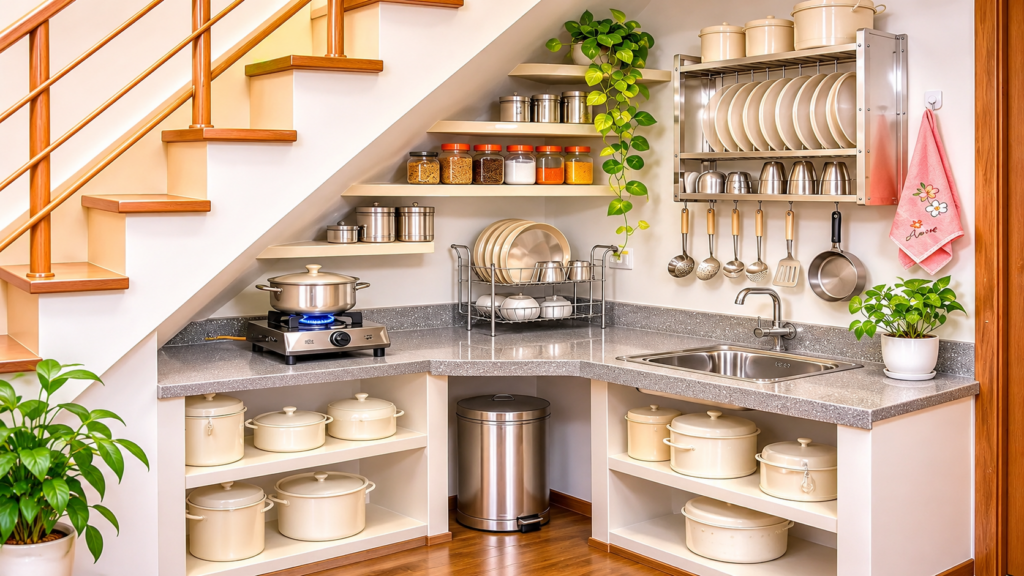
That sloped, awkward space under a staircase is one of the most overlooked areas in a home—yet with the right layout, it can become a compact, high-functioning under-stairs kitchen or beverage & prep station. Whether you live in a small apartment, a split-level home, or simply want extra counter space and storage without adding square footage, smart vertical and open-shelf design can turn wasted angle space into everyday utility.
In this guide, we break down how to plan an under-stairs kitchen layout for maximum storage and comfort, which materials hold up best near cooking and dishwashing zones, and how to avoid the most common clearance and moisture mistakes.

💡 Why Under-Stairs Kitchens Work So Well (and Where to Be Careful)
Staircases create an angled ceiling that feels tight if you pack it with bulky overhead cabinets. Flipping the strategy—using open corner shelves, wall-mounted dish racks, and open base shelving—keeps the nook feeling airy while putting daily essentials right at arm’s reach.
Key Advantages:
- Zero wasted footprint: Turns dead triangular space into active prep, storage, or sink/cooktop space.
- Ergonomic reach zones: Spices, jars, canisters, and hanging utensils sit right where you use them.
- Budget-friendly customization: Open shelving and modular racks cost significantly less than custom enclosed cabinetry.
Important Real-World Constraints:
- Headroom & posture: Sloped ceilings mean you need to place taller items or active standing zones where ceiling height allows comfortable movement without bumping your head.
- Moisture, steam & splatters: Cooking and sink zones generate heat, steam, and grease—surfaces near stoves and sinks need easy-to-wipe finishes and protection from moisture.
📐 Smart Layout Zones for a Compact Under-Stairs Setup
A well-organized under-stairs kitchen works best when each sub-zone has a clear job so nothing feels cluttered:
1. Angled Corner & Wall Shelves (Dry Goods & Daily Staples)
- Floating or corner shelves tucked along the slope are ideal for spice jars, dry pantry canisters, and small potted greenery that soften hard edges.
- Keep heavier items lower and lighter, frequently grabbed jars within easy reach.
2. Wall-Mounted Dish Rack & Utensil Rail
- Mounting a stainless steel dish rack above the counter frees up precious countertop real estate while letting washed plates drip-dry neatly.
- A hanging rail with S-hooks keeps ladles, spatulas, skimmers, and small pans organized and visible instead of buried in deep drawers.
3. Open Under-Counter Base Shelving & Bin Zone
- Instead of dark deep cabinets where items get lost in the back, open base shelves make bulky canisters, storage bins, and small appliances easy to grab.
- Dedicate a tucked-away spot under the counter for a covered trash or recycling bin so waste stays out of sight during meal prep.
4. Compact Countertop (Prep, Sink or Single/Dual Burner)
- A durable solid-surface, quartz, or laminate countertop gives you a landing spot for chopping, plating, or setting down hot pots.
- If including a small sink or portable/built-in burner, plan waterproofing, splash protection, and ventilation carefully before installation.
🛠️ Materials & Practical Tips That Make It Last
Choosing the right finishes makes the difference between a cute Pinterest idea and a setup that stays clean a year from now:
- Easy-clean splash zones: Use moisture-resistant wall paint or tile/backsplash panels behind sinks and cooking areas so grease and water droplets wipe off cleanly.
- Flooring that handles spills: Durable, water-resistant flooring (such as sealed wood, luxury vinyl, or tile) handles occasional drips and foot traffic much better than untreated surfaces.
- Lighting under angled ceilings: Shadows build up fast under stairs. Adding under-shelf or puck LED lights brightens your prep counter and highlights your storage shelves.
- Measure the slope first: Always measure height at the front edge of the counter and at the back wall so tall canisters or dish racks don’t block movement or hit the underside of the stairs.
⚠️ Common Mistakes to Avoid
- Overstuffing every inch of the slope: Leaving a little breathing room on shelves keeps the nook looking intentional rather than crowded.
- Ignoring heat and steam near the underside of the stairs: Keep open flames and heavy steam safely distanced from heat-sensitive finishes, and ventilate the space well.
- Forgetting utility access: If you add plumbing or electrical outlets for lighting or appliances, make sure shut-off valves and connections remain accessible.
❓ Frequently Asked Questions (FAQ)
1. Can you really put a mini kitchen or prep area under the stairs?
Yes—many homeowners use under-stairs nooks as compact kitchens, coffee/breakfast bars, dishwashing/prep stations, or pantry overflow zones, provided ceiling height, ventilation, and local building/safety rules allow it.
2. Are open shelves better than closed cabinets under stairs?
Open shelves often work best in tight, angled spaces because they don’t require swing clearance for doors and visually open up the corner. Closed storage or lidded canisters work great for items you want protected from dust or kitchen grease.
3. How do I stop cooking grease from coating open shelves?
Keep heavy frying and high-splatter cooking away from open display shelves when possible, wipe shelves regularly with a mild degreaser, and store items you rarely use inside lidded canisters or bins.
4. How can I make a small under-stairs kitchen look bigger and brighter?
Stick to a light, cohesive color palette (like warm whites or light wood tones), use open shelving, add task lighting, and keep countertops mostly clear except for daily essentials.
🏁 Final Takeaway: Smart Storage Beats More Square Footage
You don’t need a massive renovation to get more function out of your home—sometimes you just need to rethink an awkward corner. By combining angled corner shelves, a wall-mounted dish rack, organized open base storage, and good lighting, an under-stairs space can become one of the most practical spots in your house.
How would you use an under-stairs nook—as a mini prep kitchen, coffee station, or extra pantry storage? Share your ideas in the comments! 💬🏡