
Peace lily leaf tips turning brown? Discover 7 common care mistakes that make brown tips worse, plus simple ways to protect healthy new leaves.
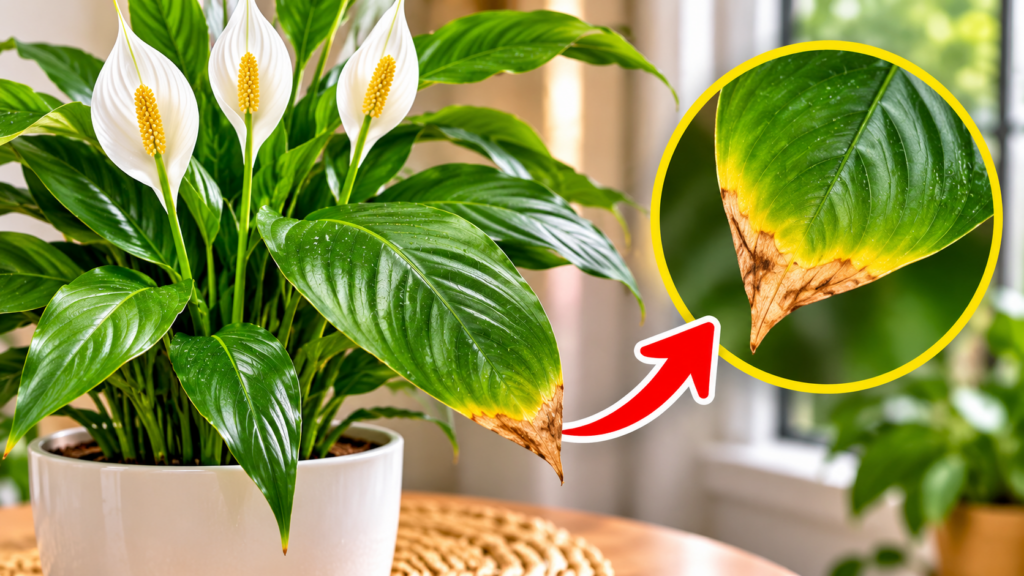
You notice a tiny brown spot at the tip of your peace lily’s beautiful green leaf. At first, it seems harmless. But a few days later, the tip looks dry and crispy. Soon, another leaf starts developing the same problem.
Your first instinct might be to water the plant more, mist its leaves, or give it a little extra fertilizer.
But what if the things you’re doing to help your peace lily are actually making its brown tips worse?
The good news is that brown leaf tips don’t necessarily mean your peace lily is dying. In many cases, they’re a sign of environmental stress that you can correct.
The trick is knowing what to stop doing—and what actually helps.
First, Can Brown Peace Lily Tips Turn Green Again?
Let’s clear up one of the biggest misconceptions.
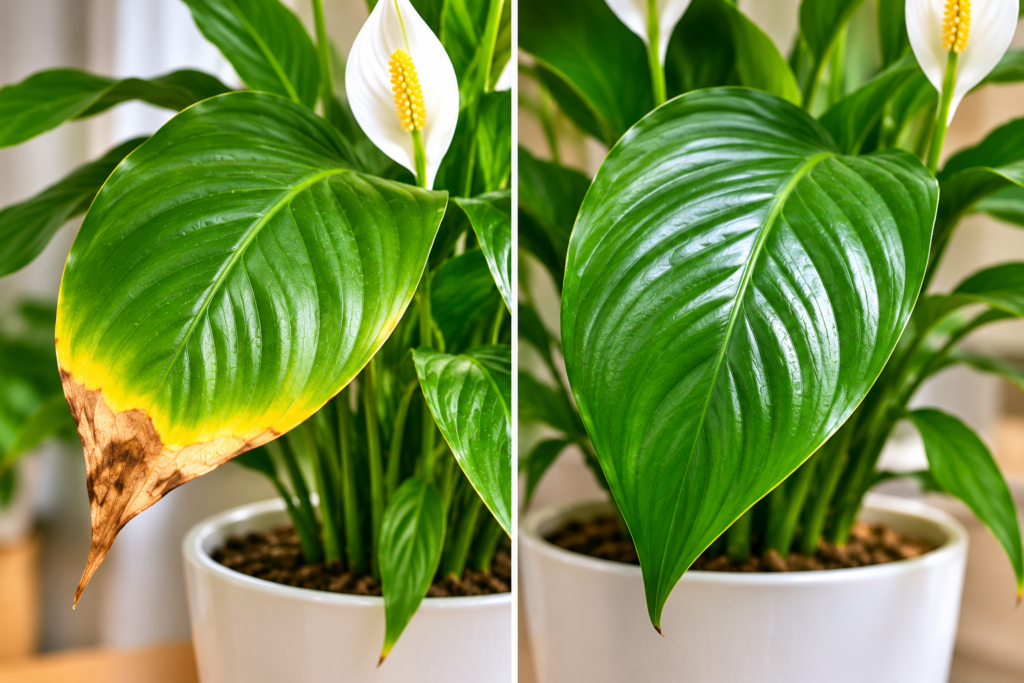
No. Once a leaf tip turns brown and the tissue dies, it cannot become green again.
That doesn’t mean your plant can’t recover.
A healthy recovery looks like this:
- Existing brown tips stop spreading.
- New leaves emerge without damaged edges.
- The plant maintains firm, healthy foliage.
- New growth gradually replaces older, damaged leaves.
You can carefully trim a brown tip for appearance, but trimming alone won’t fix the underlying cause.
The real goal is to prevent new damage.
Mistake #1: Watering More Every Time You See a Brown Tip

This is one of the easiest mistakes to make.
Brown, crispy leaf tips look dry, so adding more water seems logical. Unfortunately, both underwatering and overwatering can contribute to brown leaves.
When the soil remains waterlogged, roots struggle to get enough oxygen. Damaged roots may then have difficulty supplying water to the foliage, even though the potting mix is wet.
What to do instead
Before watering, check the soil.
Insert a finger about an inch into the potting mix.
- If the surface is dry but the soil below is still slightly moist, you may be able to wait.
- If the upper layer is dry and the pot feels noticeably lighter, it’s usually time to water.
- If the soil is consistently soggy, check the drainage and roots.
When you water, moisten the root ball thoroughly and allow excess water to drain away.
Remember: Your peace lily needs consistent moisture, not constantly saturated soil.
Mistake #2: Using More Fertilizer to “Repair” Brown Leaves
A struggling plant may look like it needs extra nutrients.
But adding fertilizer without checking the growing conditions can make the problem worse.
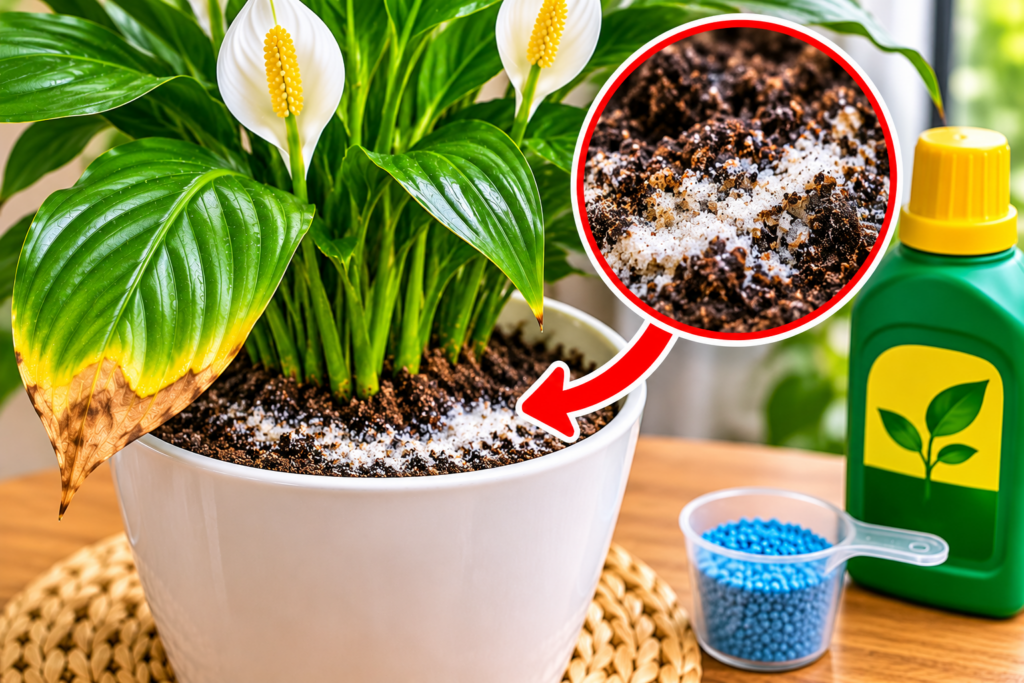
Excess fertilizer leaves soluble salts in the potting mix. As these salts accumulate, they can interfere with water uptake and contribute to scorched leaf tips.
What to do instead
If you suspect fertilizer buildup:
- Pause fertilizing temporarily.
- Check that the pot has drainage holes.
- If the roots are healthy and drainage is good, flush the potting mix with clean water and let it drain completely.
- Resume feeding only when the plant is growing normally.
Use a balanced houseplant fertilizer at the recommended concentration, or a weaker dilution if appropriate for the product and growing conditions.
Peace lilies generally need modest feeding, especially when growth slows during winter.
More fertilizer does not automatically mean more flowers or healthier leaves.
Mistake #3: Assuming All Tap Water Is Harmless
Peace lilies can be sensitive to mineral and salt accumulation.
Depending on your local water supply, dissolved minerals or fluoride may contribute to tip damage, particularly over time.
However, not every brown tip is caused by tap water.
What to do instead
If watering and humidity are already appropriate but new brown tips continue to appear, consider testing a different water source.
Options include:
- Collected rainwater from a clean, suitable source
- Distilled water
- Water treated with a filtration system designed to remove the relevant dissolved substances
Letting tap water stand overnight may reduce free chlorine, but it does not reliably remove fluoride, chloramine, or dissolved mineral salts.
Avoid changing several care habits simultaneously. Otherwise, you won’t know which adjustment helped.
Mistake #4: Misting the Leaves and Expecting a Permanent Fix

Peace lilies come from humid tropical environments, so it’s understandable to think that spraying the leaves every morning will solve dry tips.
Unfortunately, misting usually increases moisture around the foliage for only a short time.
It doesn’t provide stable humidity throughout the day.
What to do instead
If your home is particularly dry:
- Keep the plant away from heating vents and strong air-conditioning drafts.
- Group compatible houseplants together.
- Consider using a room humidifier when indoor humidity is consistently low.
- Monitor humidity with a simple hygrometer.
Aim for a comfortable, moderate indoor humidity level rather than creating constantly wet foliage.
A pebble tray may offer a small local benefit, but it usually won’t dramatically increase room humidity.
Consistency matters more than occasional spraying.
Mistake #5: Moving the Plant Into Direct Sunlight

When a peace lily looks unhealthy, moving it closer to a sunny window may seem like a good way to help it recover.
But direct, intense sunlight can scorch the foliage.
Sun damage often appears as pale, yellowish, or brown patches, especially on leaves facing the window.
This differs from the small, crispy tips commonly associated with moisture stress or salt buildup.
What to do instead
Place your peace lily where it receives bright, indirect light.
Good locations may include:
- Near an east-facing window with gentle morning light
- A short distance from a bright window
- Behind a sheer curtain that filters intense sunlight
Avoid suddenly moving a shade-grown plant into strong afternoon sun.
A peace lily can tolerate lower light, but adequate indirect light supports stronger growth and flowering.
Mistake #6: Ignoring the Pot and Drainage Holes
Sometimes the problem isn’t how often you water.
It’s where the water goes afterward.
A decorative container without drainage can trap water around the roots. Heavy, compacted potting mix may also remain wet for too long.
Over time, this creates conditions that favor root damage.
What to do instead
Check these three things:
1. Drainage holes: The growing pot should allow excess water to escape.
2. Potting mix: Use a suitable indoor plant mix that retains some moisture while allowing air to reach the roots.
3. Standing water: Empty excess water from saucers or decorative outer pots after watering.
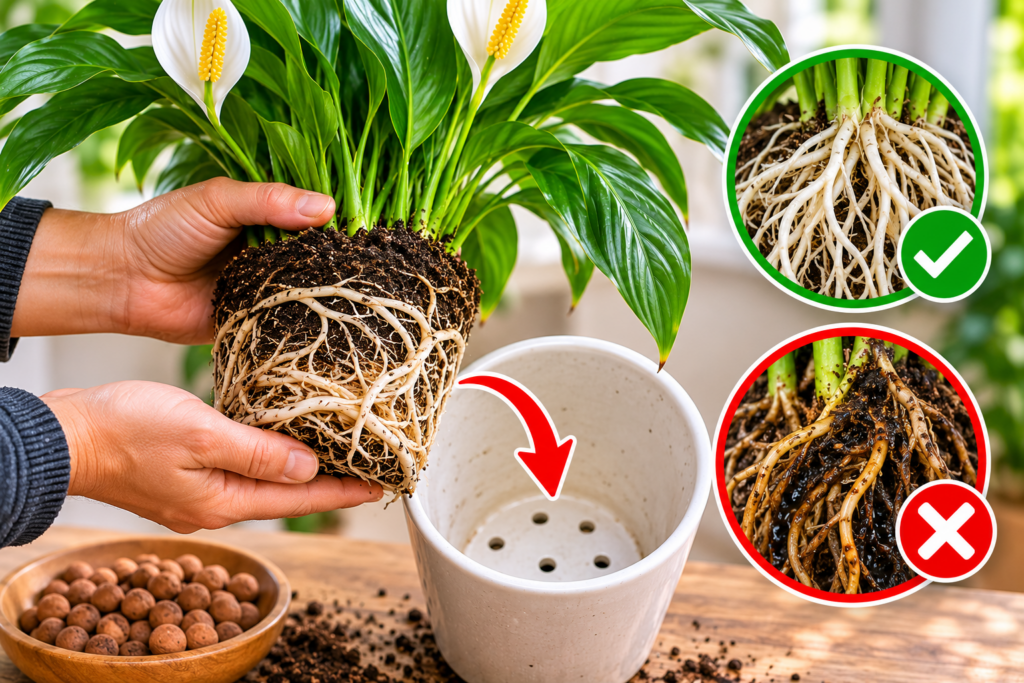
If the plant is drooping despite wet soil, develops rapidly yellowing leaves, or has a sour-smelling potting mix, inspect the roots.
Healthy roots are generally firm. Dark, mushy roots can indicate rot.
If significant root damage is present, removing affected roots and repotting in fresh, well-draining mix may be necessary.
Mistake #7: Cutting Every Damaged Leaf Off Immediately
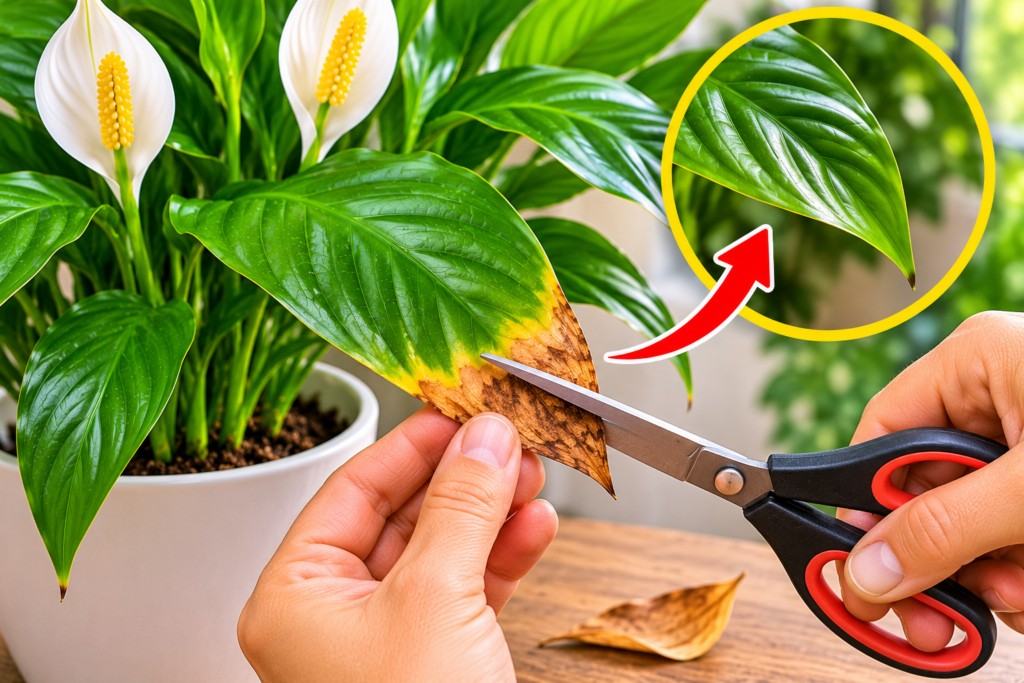
Brown tips aren’t attractive, especially on a plant known for its glossy green leaves.
But removing every imperfect leaf can leave your peace lily with too little healthy foliage.
Even a leaf with a brown tip can still photosynthesize through its green tissue.
What to do instead
For small brown tips:
- Use clean, sharp scissors.
- Trim only the dead brown tissue if you prefer a neater appearance.
- Avoid cutting unnecessarily into healthy green areas.
For leaves that are almost entirely dead, remove them near the base with clean pruning tools.
Don’t remove large amounts of healthy foliage simply because the tips look imperfect.
And remember: trimming improves appearance, but it doesn’t treat the original problem.
Brown Tips vs. Brown Patches: What Is Your Peace Lily Telling You?
Not all brown leaf damage has the same cause.
| What you notice | Possible causes | What to check first |
|---|---|---|
| Small, crispy brown tips | Inconsistent moisture, low humidity, salt buildup | Soil moisture, water quality, fertilizer |
| Brown edges on several leaves | Dry air, water stress, accumulated salts | Humidity and watering habits |
| Large, pale-brown patches | Excessive direct sunlight | Window exposure |
| Yellow leaves followed by soft brown areas | Overwatering or root problems | Drainage and root condition |
| One older lower leaf gradually browning | Normal leaf aging | Whether new growth remains healthy |
These are clues, not definitive diagnoses. Several problems can occur at the same time.
The Simple 7-Day Peace Lily Care Reset
If you’re unsure where to begin, use this gentle one-week checklist.
Day 1: Check the soil
Feel the potting mix and check whether water can drain freely.
Water only if needed.
Day 2: Review the location
Make sure the plant receives bright, indirect light and isn’t exposed to hot or cold drafts.
Day 3: Look for fertilizer buildup
Check whether you’ve been feeding frequently or using a stronger fertilizer solution than recommended.
Pause feeding if excess salts seem possible.
Day 4: Check the humidity
If the room is very dry, consider a humidifier or a less exposed location.
Day 5: Inspect the foliage
Look for pests, sun damage, spreading yellowing, or soft areas.
Day 6: Make only necessary adjustments
Avoid repotting, pruning, fertilizing, and changing watering routines all at once unless an urgent root problem requires intervention.
Day 7: Record what has changed
Take a photograph and compare the plant’s condition with Day 1.
Important: Seven days may be enough to stabilize care, but it is usually too soon to judge whether new leaves will emerge without brown tips. That can take several weeks.
5 Habits That Help Prevent Brown Tips Long-Term
The best approach isn’t a miracle ingredient or a complicated plant-care routine.
It’s getting the basics right.
- Water according to soil moisture, not a rigid calendar.
- Provide bright, indirect light and avoid harsh afternoon sun.
- Use a pot with drainage holes and an appropriate potting mix.
- Fertilize moderately, particularly during active growth.
- Keep conditions consistent, avoiding sudden changes in temperature, moisture, or light.
Healthy peace lilies don’t need constant attention. They need a stable environment.
Frequently Asked Questions
Should I cut the brown tips off my peace lily?
You can trim dead brown tips with clean scissors for appearance. Leave as much healthy green tissue intact as possible. Trimming won’t prevent new brown tips unless you correct the cause.
Can a peace lily recover from brown leaf tips?
Yes. If the roots and growing conditions are healthy, the plant can continue producing new leaves. Existing dead tissue will remain brown.
How often should I water a peace lily?
There is no universal schedule. Check the soil regularly and water when the upper layer has dried sufficiently, without allowing the entire root ball to remain bone-dry for long periods.
Does a peace lily need distilled water?
Not necessarily. Many peace lilies grow well with ordinary tap water. If your water is very hard or contains substances that contribute to leaf-tip damage, distilled or suitably filtered water may help.
Do coffee grounds or banana peels fix brown peace lily tips?
There is no reliable evidence that adding these kitchen scraps directly to the potting mix repairs brown leaf tips. They can also encourage mold, pests, or unwanted changes in the growing medium. Address watering, drainage, light, and fertilizer first.
Why are my peace lily tips brown even though the soil is wet?
Possible causes include waterlogged soil, root damage, salt buildup, or low humidity. Check drainage and root health before adding more water.
How long does it take for a peace lily to recover?
That depends on the cause and the severity of the damage. Some plants stabilize quickly after their care improves, but healthy new growth may take several weeks or longer.
Final Thoughts: Stop Treating the Brown Tips and Start Fixing the Cause
Brown tips on a peace lily are frustrating, but they’re often manageable.
The biggest mistake is reacting too quickly—adding more water, more fertilizer, or more treatments without understanding what the plant needs.
Instead, start with the basics: soil moisture, drainage, light, humidity, and fertilizer use.
The brown tips you already see won’t turn green again. But the next leaves your peace lily grows can look much healthier.
And that’s the kind of recovery worth aiming for.