

Frying eggs without oil—and somehow preventing them from sticking to the pan? An unusual culinary hack has been making waves: a tiny pinch of flour is all it takes, so the claim goes, to keep eggs from sticking and let them slide right onto your plate.
While it sounds surprising, the theory is simple: the flour is supposed to form a micro-layer between the egg white and the pan surface. But does this trick actually work? Or does the secret to a great fried egg lie elsewhere?
In this comprehensive guide, we explore how to test the flour trick, its limitations, and three reliable alternatives for cooking eggs with little to no added fat.
1. The Flour Trick: Why Do People Put Flour in a Pan?
Normally, we use butter or oil to prevent fried eggs from sticking to the bottom of the pan. Especially in stainless steel cookware, egg whites easily bond to the metal and tear when lifted.
With this unconventional household hack, the traditional method changes: instead of fat, a dusting of flour is added to the pan. The idea is that the fine flour particles reduce direct contact between the egg and the metal.
However, theory and practice differ significantly. Flour does not possess the lubrication properties of oil; it can brown, stick, or burn under heat. Therefore, it is not a scientifically proven substitute for a non-stick coating. Still, you can test it with a tiny amount.
2. Frying an Egg with Flour: Step-by-Step Instructions
If you want to try this method, you only need a few basic kitchen items:
What You Need
- 1 fresh egg
- 1 small pinch of wheat flour
- 1 clean, dry pan
- Paper towels
- A spatula
- Salt and pepper to taste
Step 1: Prepare the Cold Pan
Place a clean and completely dry pan on the stove without turning on the heat yet. Add a very small pinch of flour. Important: Use very little flour, as a thick layer will ruin the cooking result.
Step 2: Distribute the Flour with a Barely Visible Dusting
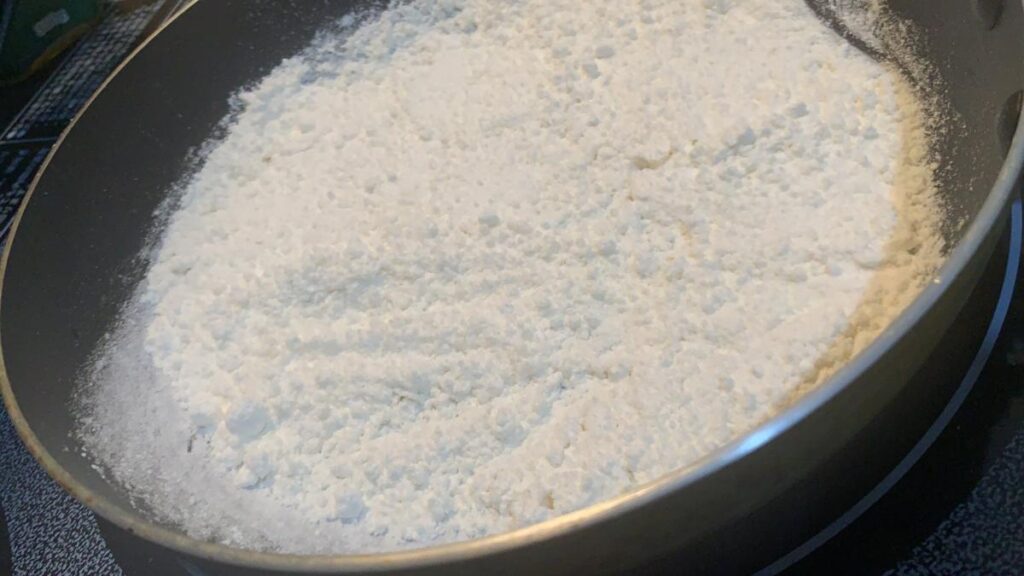
Carefully spread the flour across the bottom of the pan. Then, use a dry paper towel to wipe away almost all of it, leaving behind only a barely visible dusting with no visible clumps.
Step 3: Warm the Pan Slowly
Heat the pan on low to medium-low heat. Avoid high heat, as flour browns quickly and develops an unpleasant taste. Once warmed, you are ready for the egg.
Step 4: Add the Egg Carefully
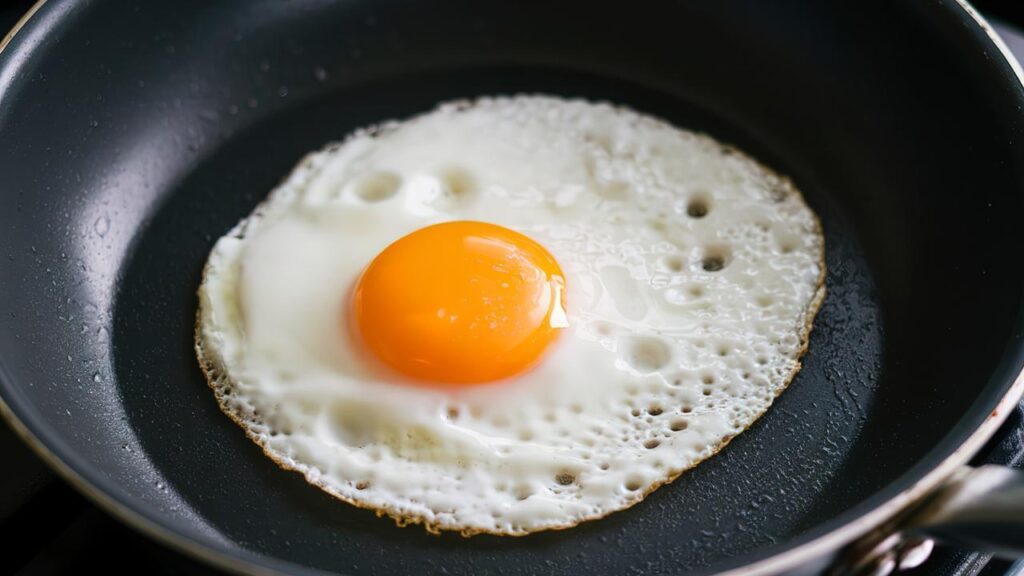
Crack the egg into a small bowl first, then gently slide it into the pan. Let it cook on low heat until the white is fully set. Do not try to move it right away, as fresh egg whites stick easily at first.
Step 5: Check and Serve
Slide a spatula gently under the edge of the egg. If it releases easily, transfer it to a plate. If it sticks, do not force it.
Does the Flour Method Actually Work?
Sometimes—but not reliably. On a well-coated non-stick pan, an egg will likely succeed, but it is hard to tell if the flour helped. On stainless steel or damaged coatings, the flour itself can burn and stick.
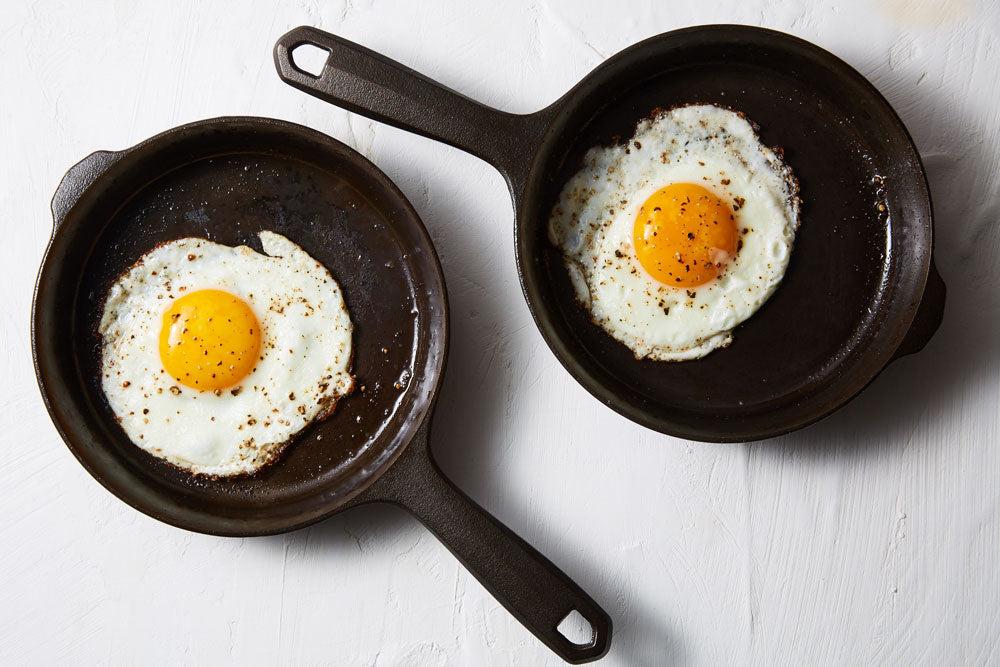
Our Verdict: An interesting kitchen experiment, but not a reliable method you should count on daily.
💡 Does Flour Actually Make a Difference? Try This Simple Sequential Test
Curious if the flour trick genuinely changes anything, but want to see for yourself without wasting food? You can easily test it right in your own kitchen!
- How to run the home experiment: Rather than dividing a single pan (which can create uneven heat zones), perform two successive cooking tests in the same pan. Wash, dry, and let the pan return to a comparable low temperature between tests, and use eggs of a similar size.
- The setup: Cook your first egg with a barely visible dusting of flour. Clean the pan thoroughly, let it cool back down, and cook your second egg completely dry with no flour at all.
- What to observe: Compare how each egg sets, whether the flour causes browning on the bottom faster, and how easily each egg releases when nudged with a spatula.
Keep in mind: This is a casual kitchen test rather than a strict scientific study, but it’s a fun and revealing way to evaluate whether the flour adds any real advantage to your cooking routine!
3. Alternative 1: Fried Eggs with a Teaspoon of Water and a Lid
If you want to cook a fried egg without oil, you can harness a simple physical effect: steam. Heat evaporates water, helping cook the egg white from above without needing to flip it.
What You Need
- 1–2 eggs
- 1 teaspoon of water
- A well-maintained non-stick pan (remember that a proper non-stick surface remains essential for preventing sticking)
- A matching lid
- Salt and pepper
Step-by-Step Instructions
- Warm the Pan: Warm your non-stick pan on low heat. Avoid heavy preheating of an empty coated pan.
- Add the Egg: Crack the egg gently into the pan.
- Add Water: Pour about a teaspoon of water next to the egg—not directly onto the yolk.
- Cover Immediately: Place the lid securely on the pan.
- Steam Cook: Let it cook for roughly two to four minutes until the white sets.
- Serve: Lift the egg out carefully with a spatula.
Why it works: Steam transfers heat to the top of the egg, cooking the white while the bottom stays gentle. Best for: People who prefer a tender white and a soft yolk without crispy edges.
4. Alternative 2: The Right Non-Stick Pan & Low Temperature
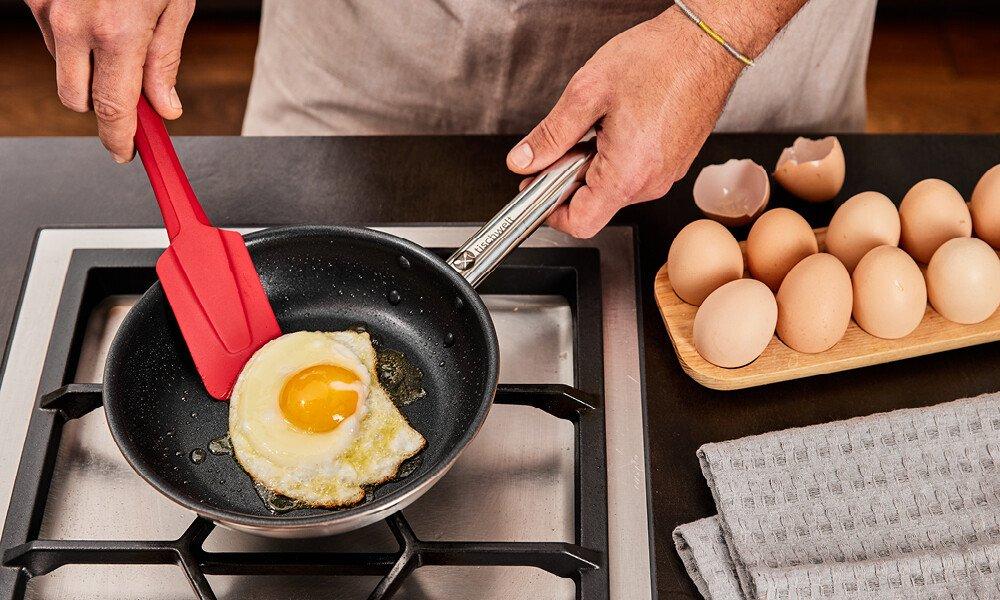
Sometimes the best culinary solution is the simplest one. If your eggs constantly stick, the culprit is usually the pan or too much heat.
How to Do It Right
- Choose the Right Pan: Use a clean non-stick pan with an intact coating. Replace the pan if the coating is peeling, flaking, or significantly damaged.
- Keep the Heat Low: Set your stove to low or medium-low. High heat dries out the white and browns the bottom too fast.
- Add the Egg Gently: Crack into a bowl first for controlled placement.
- Cook Patiently: Let it sit undisturbed for a few minutes until set.
- Use the Right Utensil: Use silicone or wooden spatulas to protect the surface.
The Big Advantage: With a healthy non-stick pan, you often don’t need any extra ingredients at all—neither flour nor oil!
5. Alternative 3: Poaching Eggs in Water (Fat-Free)
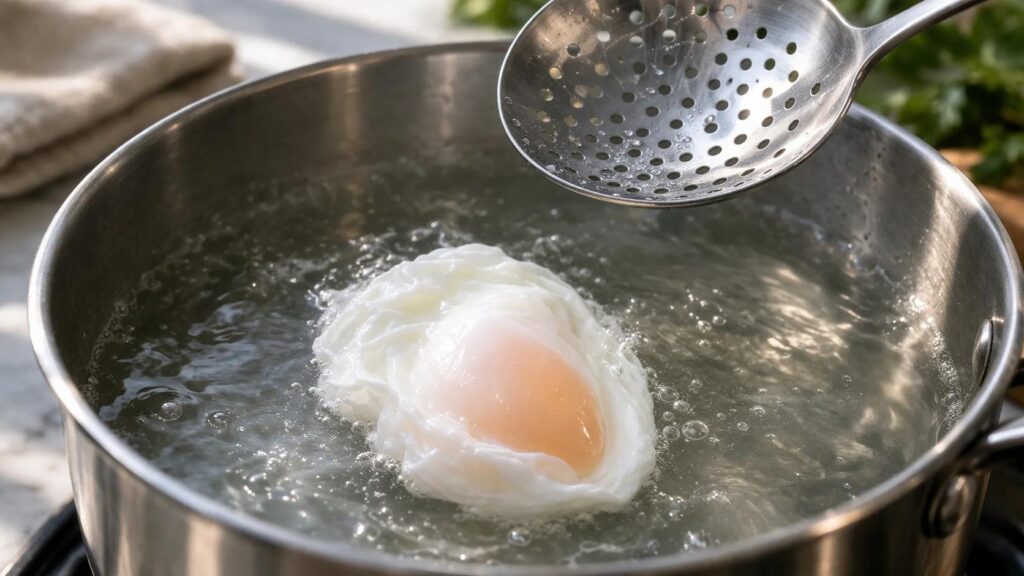
Want to skip oil, butter, and sticky pans entirely? Poaching is a dependable oil-free alternative where eggs are cooked out of their shells directly in hot water.
What You Need
- 1 very fresh egg
- A small pot of water
- A small bowl and slotted spoon
- Optional: a splash of vinegar
Step-by-Step Instructions
- Heat Water: Fill a pot with 5 to 7 cm of water and bring it to a gentle simmer (tiny bubbles only; heavy boiling tears the white apart).
- Prepare Egg: Crack the egg into a small bowl. Fresh eggs hold their shape better.
- Slide In: Lower the bowl close to the water surface and slip the egg in.
- Simmer: Let it poach for 3 to 4 minutes depending on your preferred firmness.
- Drain & Serve: Lift it out with a slotted spoon, let excess water drip off, and serve.
Best for: Anyone wanting fat-free eggs without crispy edges. Note: Runny yolks mean the egg is undercooked; fully cooked eggs are safer for vulnerable groups.
6. Comparison Table: Which Method Is Best?
| Method | Extra Oil Needed? | Reliability | Final Result |
|---|---|---|---|
| Flour in the Pan | No | Unproven / Low | Classic fried egg, potential flour residue |
| Water and Lid | No | Good with proper pan | Tender, steamed fried egg |
| Non-Stick & Low Heat | No | Very good (intact coating) | Classic fried egg |
| Poaching in Water | No | Very good with right technique | Tender poached egg |
7. Five Common Mistakes That Cause Eggs to Stick
- The Pan Is Too Hot: Excessive heat can cause the egg white to cook unevenly, brown too quickly, and become harder to release from some pan surfaces. Fix: Stick to low or medium-low heat.
- Damaged Non-Stick Coating: Worn-out pans lose their release properties. Fix: Inspect your pan and replace it if the coating is peeling, flaking, or significantly damaged.
- Moving the Egg Too Soon: Disturbing raw egg white tears it apart. Fix: Wait until it fully sets.
- Using Too Much Flour: A heavy layer burns or gums up. Fix: Keep it to a barely visible dusting if testing.
- Wrong Pan Material: Stainless steel and cast iron behave differently than non-stick surfaces.
8. Frequently Asked Questions (FAQ)
Can you really fry eggs with flour instead of oil?
You can try, but success is not guaranteed. Flour does not form a dependable non-stick layer, and results depend heavily on your pan and heat control.
Why use only a pinch of flour?
A thick layer of flour will brown, burn, or stick firmly to the bottom of the pan.
Does the flour trick work in a stainless steel pan?
Not reliably. Stainless steel causes egg whites to stick aggressively, and a dusting of flour will not reliably prevent this.
Is a fried egg without oil lower in calories?
Yes, if you skip cooking fats entirely. On average, a large egg contains approximately 70–80 kcal, while a teaspoon of oil adds roughly 40 kcal. The exact caloric savings will vary depending on the specific size of the egg and the amount of oil you would have normally used.
Is the flour trick suitable for people with gluten intolerance?
No, standard wheat flour contains gluten. Celiac patients should avoid this trick and stick to water-based or coated-pan methods.
🏁 Conclusion
A pinch of flour in the pan instead of oil sounds like an astonishing discovery, which easily explains why the idea is so surprising and catches people’s attention.
However, not every unexpected kitchen hack holds up in everyday cooking. The flour method is interesting, but not reliably proven.
If you want to make fried eggs without oil, you are much better off using a well-maintained non-stick pan on low heat, optionally aided by a splash of water and a lid. Or, skip the frying surface entirely and try poaching!
Have you tried the flour trick—or do you swear by another method to make your fried eggs turn out perfectly? Let us know in the comments!