
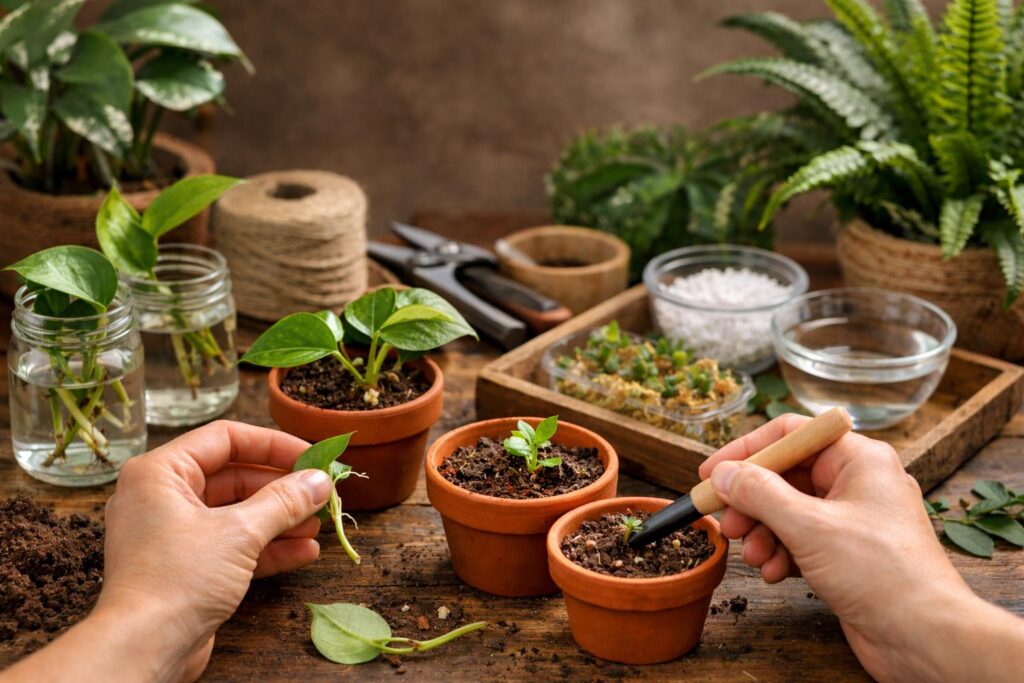
Can you really grow a whole new houseplant from a single leaf? Sometimes, yes! But there’s an important detail that many plant propagation guides overlook: not every leaf cutting can develop into a complete new plant.
Some houseplants can produce roots and new shoots from a single leaf. Others need a leaf attached to a stem node, while certain plants are much easier to multiply using plantlets or division.
Understanding the difference can save you weeks of waiting for a cutting that will never grow into a new plant.
In this guide, you’ll discover 20 popular houseplants and the propagation method that actually suits each one, plus practical tips to prevent rotting, encourage healthy roots, and recognize when your cutting is ready for its own pot.
🌿 The One Thing Most Leaf Propagation Guides Don’t Explain
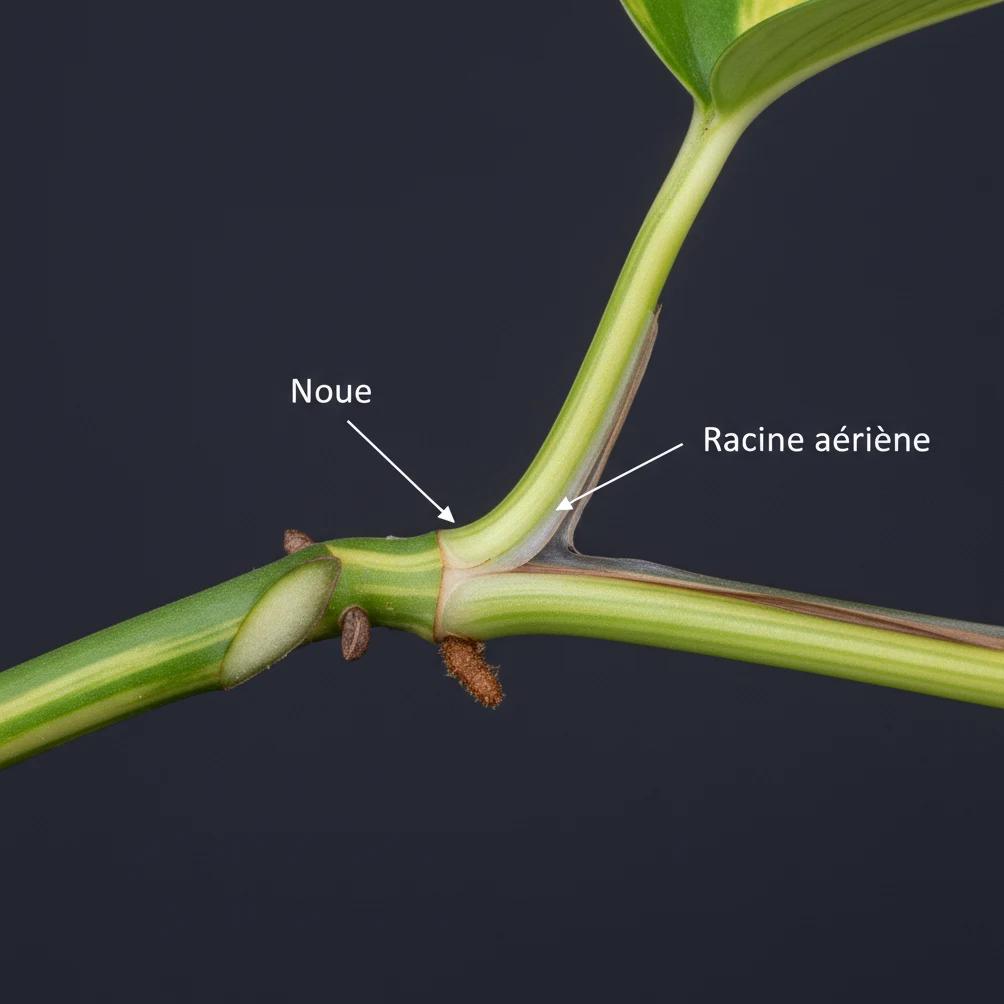
Before placing a leaf in water or soil, it’s important to understand how new plants develop.
A cutting generally needs the ability to produce both roots and new shoots.
Some plants have the remarkable ability to regenerate a complete plant from leaf tissue. Others need a growing point, such as a stem node or an existing plantlet.
That’s why a cutting can sometimes grow healthy roots without ever producing another leaf.
The golden rule: Roots alone don’t always mean successful propagation. A new growing point is what makes the difference.
🌱 20 Houseplants You Can Propagate — And the Method That Works Best
Group 1: Plants That Can Grow From a Single Leaf
These are some of the most fascinating houseplants to propagate because a leaf, or even part of one, can potentially develop into a new plant.
1. Snake Plant (Dracaena trifasciata)
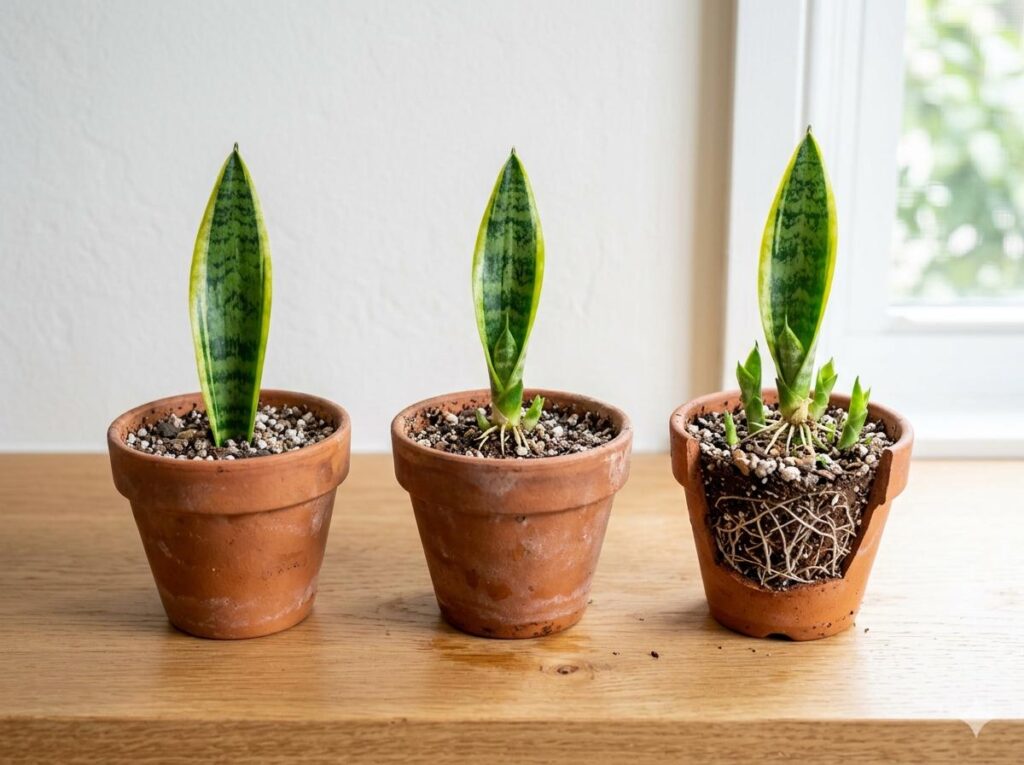
<escape>Best method: Leaf sections in soil or water.</escape>
Snake plants are among the easiest houseplants to experiment with.
How to propagate:
- Select a healthy, mature leaf.
- Cut it into sections approximately 3–4 inches long.
- Keep track of which end originally pointed toward the roots.
- Allow the cut surfaces to dry briefly.
- Place the bottom end of each section into a well-draining propagation mix.
- Keep the mix lightly moist, never waterlogged.
Roots may appear before new shoots, and visible growth can take several months.
Important: Variegated snake plants propagated from leaf cuttings may lose their original yellow-edged pattern. Division is preferable if you want to preserve the variegation.
2. African Violet (Streptocarpus ionanthus)
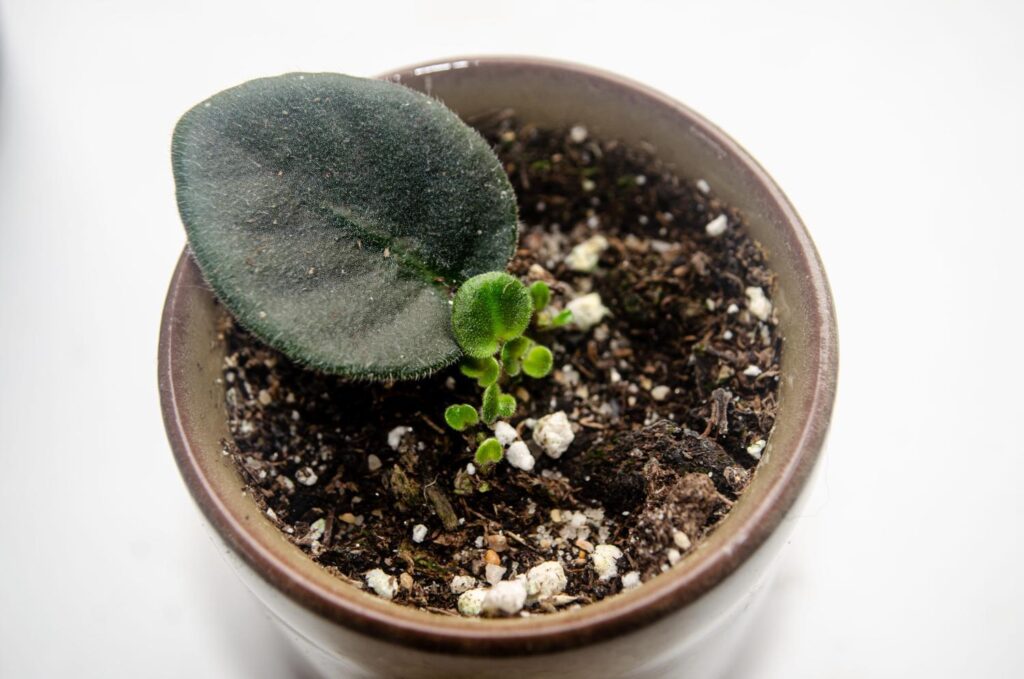
Best method: Leaf with petiole.
African violets are excellent examples of plants that can regenerate new plantlets from a leaf cutting.
How to propagate:
- Choose a healthy leaf from the middle of the plant.
- Cut its petiole to approximately 1–1.5 inches.
- Insert the petiole into a moist, airy propagation medium.
- Keep the container in bright, indirect light.
- Maintain gentle humidity without soaking the soil.
Tiny plantlets may eventually appear near the base of the cutting.
Extra tip: Avoid placing the propagation container in direct afternoon sunlight.
3. Begonia Rex (Begonia rex Cultorum Group)
Best method: Leaf sections or a whole leaf with veins in contact with the medium.
Rex begonias can produce new plantlets from leaf tissue, making them particularly interesting for indoor gardeners.
How to propagate:
- Select a healthy leaf.
- Cut the leaf into sections, ensuring each includes a major vein.
- Place the sections against a moist, airy propagation medium.
- Maintain high humidity with some ventilation.
- Provide bright, indirect light.
New growth may develop along the veins.
Extra tip: Excess moisture and poor ventilation can cause leaf sections to rot.
4. Peperomia (Peperomia caperata)
Best method: Leaf with petiole.
Many peperomias can be propagated using a healthy leaf and a short petiole.
How to propagate:
- Cut a mature, undamaged leaf with its petiole.
- Insert the petiole into a light propagation mix.
- Keep the medium slightly moist.
- Place it in bright, indirect light.
- Wait for small plantlets to develop near the cutting.
Important: Propagation methods vary between Peperomia species, and not all varieties respond equally well to leaf cuttings.
5. Echeveria (Echeveria spp.)
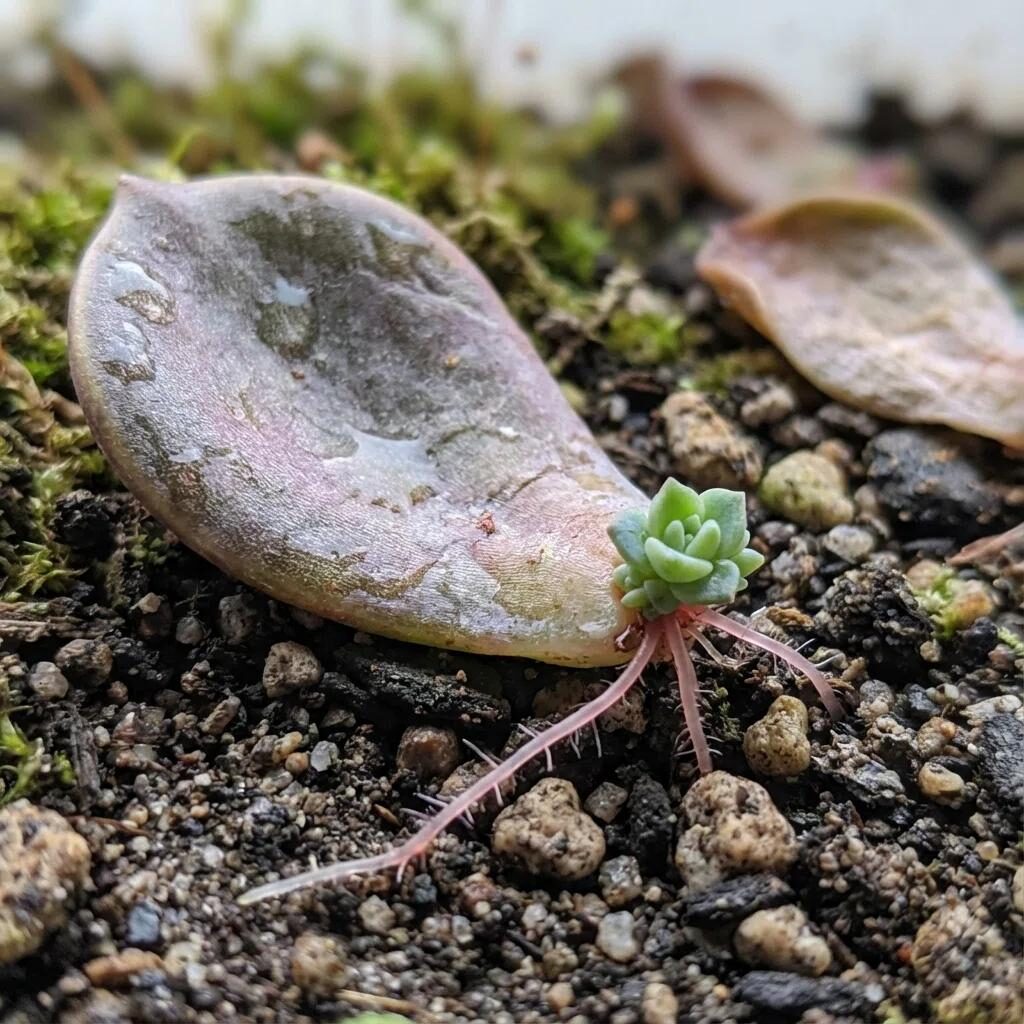
Best method: Whole leaf laid on succulent soil.
Echeverias are popular for their ability to produce tiny rosettes from individual leaves.
How to propagate:
- Gently twist a healthy lower leaf from the rosette.
- Make sure the base of the leaf remains intact.
- Allow the detached leaf to dry and callus.
- Place it on top of a well-draining succulent mix.
- Keep it in bright, indirect light.
- Add moisture sparingly once roots begin to develop, avoiding prolonged wetness.
A miniature rosette may eventually appear at the base.
Extra tip: Leaves that tear at the base are less likely to succeed.
6. Jade Plant (Crassula ovata)
Best method: Whole leaf on well-draining soil.
Jade plants can grow from individual leaves, although stem cuttings are often faster.
How to propagate:
- Remove a healthy, mature leaf with its base intact.
- Allow the cut surface to callus.
- Place the leaf on a dry, gritty potting mix.
- Provide bright, indirect light.
- Water very sparingly as roots develop.
Extra tip: Patience is essential. A leaf may develop roots long before a visible baby plant appears.
7. Burro’s Tail (Sedum morganianum)
Best method: Individual leaves on succulent soil.
This trailing succulent often drops leaves when handled, but healthy fallen leaves can sometimes become new plants.
How to propagate:
- Collect intact, healthy leaves.
- Let any damaged attachment points dry.
- Arrange the leaves on a gritty propagation mix.
- Keep them in bright, indirect light.
- Avoid heavy watering.
Tiny roots and shoots may appear over time.
Extra tip: Handle the leaves gently, as their powdery protective coating rubs off easily.
8. Christmas Cactus (Schlumbergera spp.)
Best method: Stem segments, not true leaves.
Christmas cactus is frequently included in lists of plants propagated from leaves, but the flat green sections are actually modified stems.
How to propagate:
- Remove a healthy cutting containing 2–3 connected stem segments.
- Allow the cut end to dry briefly.
- Insert the bottom segment into a well-draining potting mix.
- Keep the medium lightly moist.
- Provide bright, indirect light.
Why this matters: The plant can propagate easily, but describing its segments as ordinary leaves is botanically inaccurate.
🍃 Group 2: Plants That Need a Stem Node
These plants may develop roots from a cutting, but a complete new plant normally requires a stem node containing a growing point.
9. Pothos (Epipremnum aureum)
Best method: Stem cutting with at least one node.
- Cut a healthy vine just below a node.
- Keep at least one leaf attached.
- Place the node in water or moist propagation mix.
- Keep the cutting in bright, indirect light.
- Pot it once a healthy root system develops.
Common mistake: Placing only a detached pothos leaf in water. It may remain green for a while, but it normally won’t grow into a new vine without a node.
10. Monstera (Monstera deliciosa)
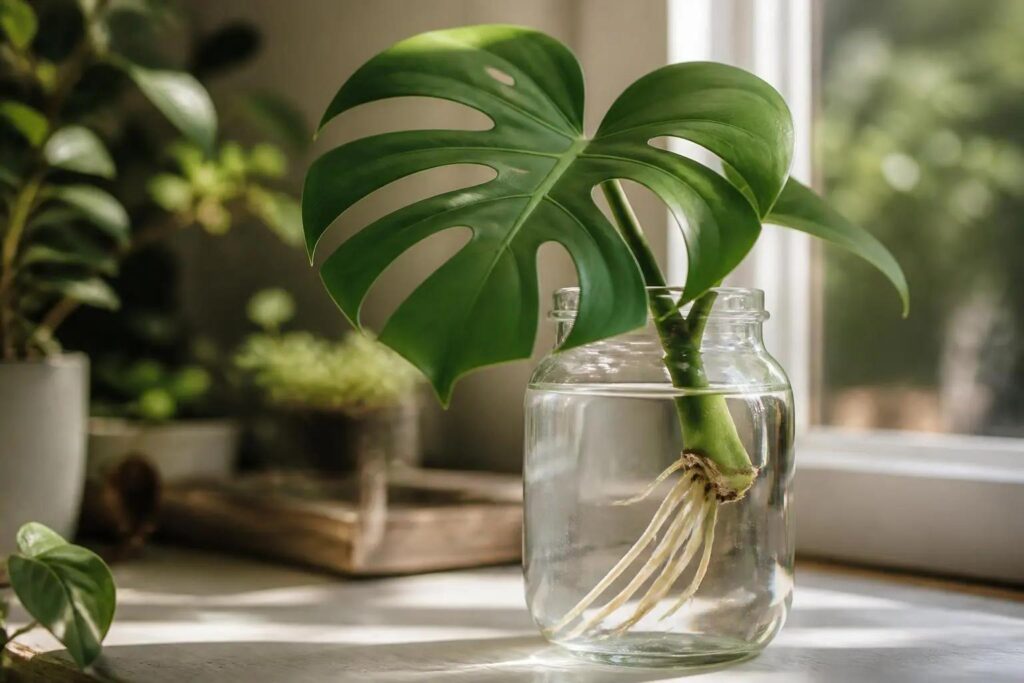
Best method: Stem cutting containing a node.
Monstera leaves can look impressive in water, but a detached leaf without a node cannot normally produce a new Monstera vine.
How to propagate:
- Identify a healthy stem node.
- Cut below the node using clean tools.
- Include an aerial root when available.
- Place the node in water or an airy rooting medium.
- Wait for a healthy root system before potting.
Extra tip: An aerial root is helpful, but it doesn’t replace the need for a viable node.
11. Heartleaf Philodendron (Philodendron hederaceum)
Best method: Stem cutting with a node.
- Choose a healthy vine.
- Cut below a node.
- Remove any leaves that would sit below the waterline.
- Place the node in water or a moist rooting medium.
- Transfer to potting mix when sufficiently rooted.
Extra tip: Several rooted cuttings planted together can create a fuller-looking pot.
12. Tradescantia (Tradescantia zebrina)
Best method: Short stem cuttings.
Tradescantia is a fast-growing trailing plant that generally roots readily from its stem nodes.
How to propagate:
- Cut a healthy stem into sections with nodes.
- Remove lower leaves if necessary.
- Place the nodes in water or moist potting mix.
- Keep the cuttings in bright, indirect light.
- Pinch back new growth later to encourage a bushier plant.
Extra tip: Rooting several cuttings together can produce a fuller plant more quickly.
13. Hoya (Hoya carnosa)
Best method: Stem cutting with at least one node.
A detached Hoya leaf may develop roots and survive for a long time without producing a new vine.
How to propagate:
- Take a healthy stem cutting with one or more nodes.
- Leave one or two leaves attached.
- Place the node in a suitable airy rooting medium.
- Maintain moderate warmth and humidity.
- Wait for new roots and shoot development.
The surprising fact: A rooted Hoya leaf without a node can remain alive for years without growing into a complete vine.
14. Rubber Plant (Ficus elastica)
Best method: Stem cutting with a node or air layering.
A rubber plant leaf can sometimes develop roots, but it normally needs a piece of stem with a viable bud to produce a new shoot.
How to propagate:
- Select a healthy stem section containing a node.
- Use clean pruning tools.
- Allow the milky latex sap to stop flowing.
- Root the cutting in a suitable medium.
- Keep it warm and in bright, indirect light.
Safety note: The latex sap can irritate skin and is harmful if ingested by pets.
🌿 Group 3: Plants That Are Easier to Multiply by Division or Plantlets
These plants are often featured in propagation collections, but separating existing growth is usually more reliable than trying to root an isolated leaf.
15. Spider Plant (Chlorophytum comosum)
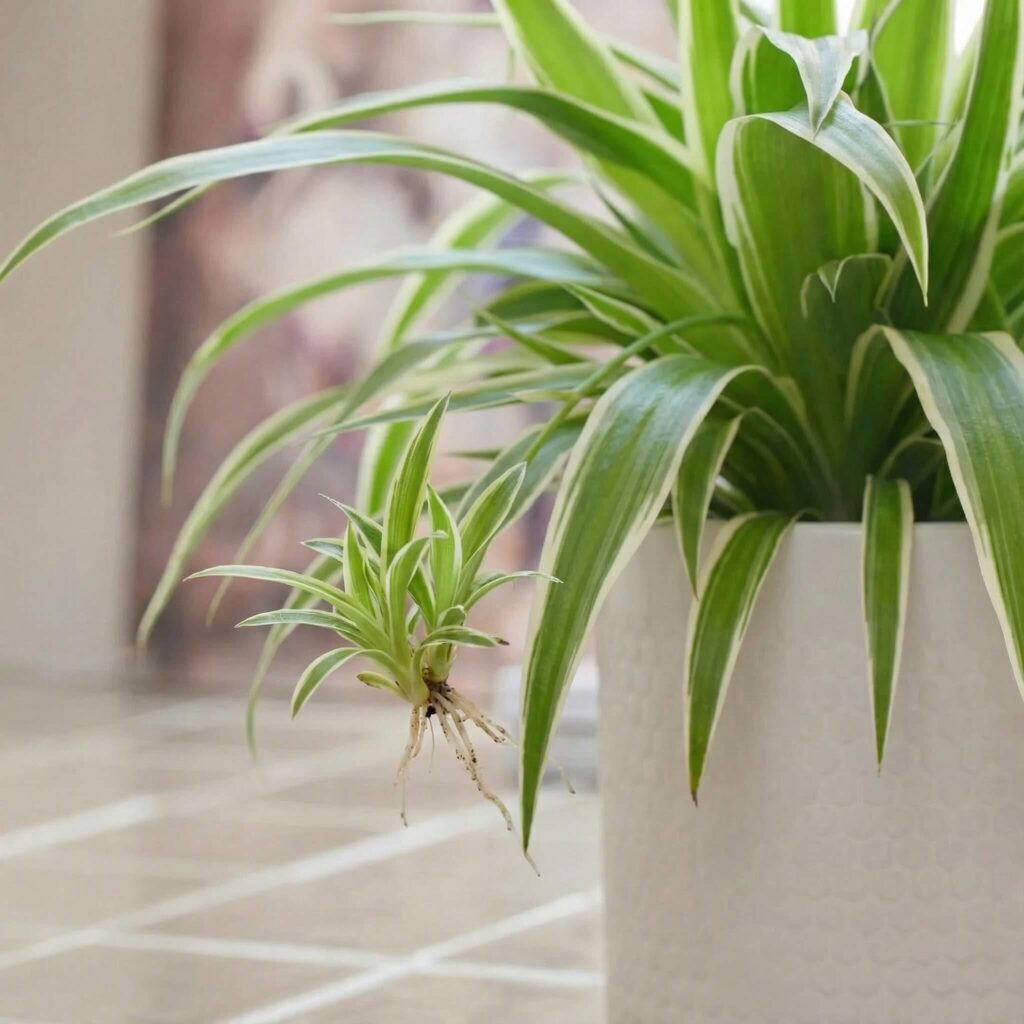
Best method: Baby plantlets.
Mature spider plants often produce long runners carrying miniature plants.
How to propagate:
- Find a healthy baby plant with visible root beginnings.
- Place it in a small pot of moist potting mix while still attached, if possible.
- Allow roots to establish.
- Cut the runner connecting it to the parent plant.
- Care for it as a young spider plant.
Extra tip: Spider plantlets are usually easier to establish than detached leaves.
16. Aloe Vera (Aloe vera)
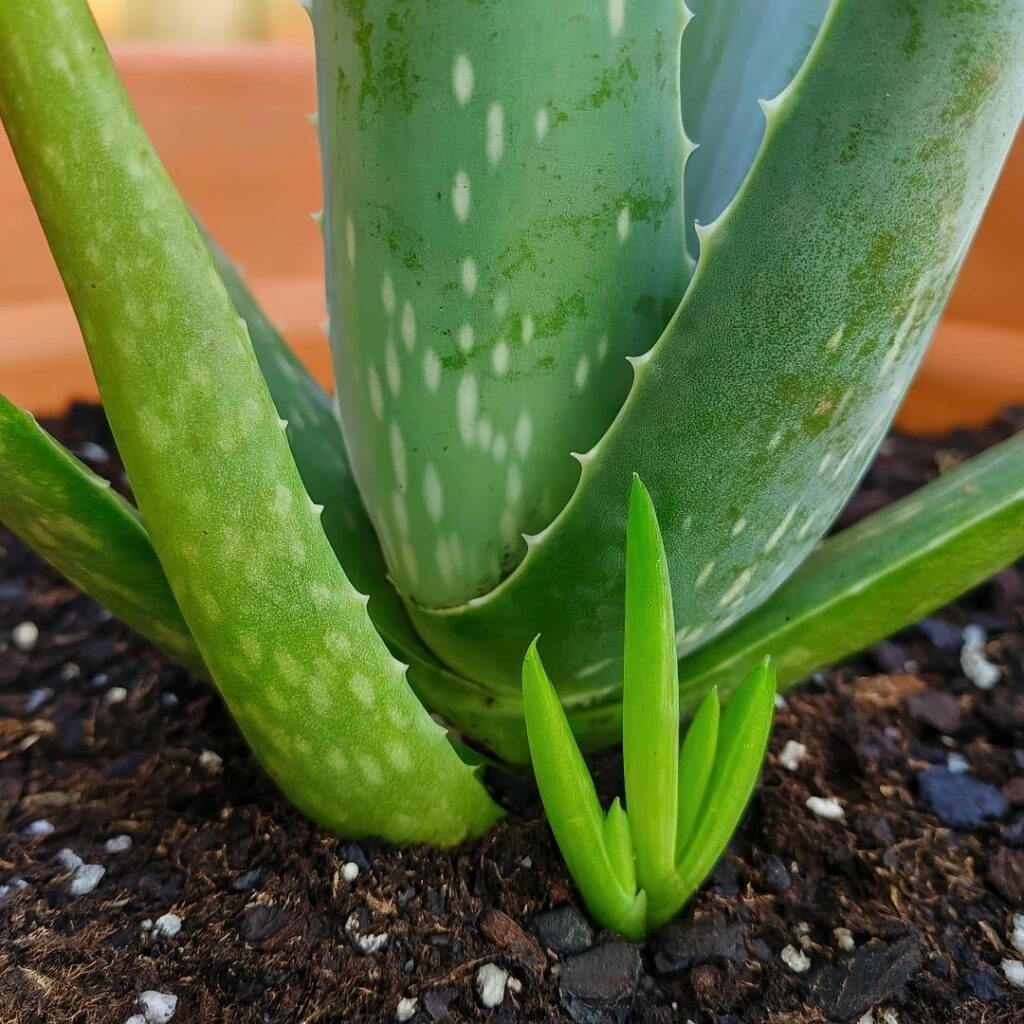
Best method: Offsets, also called pups.
Although some online guides recommend propagating aloe from leaves, detached aloe leaves often rot rather than develop into complete plants.
How to propagate:
- Look for small offsets growing beside the parent plant.
- Remove the plant from its pot.
- Separate an offset with roots when possible.
- Let damaged areas dry briefly.
- Repot into a well-draining succulent mix.
Extra tip: Avoid watering heavily immediately after separating offsets.
17. Peace Lily (Spathiphyllum spp.)
Best method: Division.
Peace lilies form clumps that can be separated into smaller plants.
How to propagate:
- Remove a mature plant from its pot.
- Gently loosen the root ball.
- Identify natural clumps with leaves and roots.
- Separate them carefully.
- Repot each division into fresh potting mix.
Extra tip: Keep newly divided plants out of harsh direct sunlight while they recover.
18. ZZ Plant (Zamioculcas zamiifolia)
Best method: Division, although leaf cuttings can also work.
ZZ plants are unusual because individual leaflets can eventually produce small underground storage structures and new shoots.
However, this process is often extremely slow.
How to propagate from a leaflet:
- Remove a healthy leaflet with its base intact.
- Insert the base into a well-draining rooting medium.
- Keep the medium barely moist.
- Provide warm temperatures and indirect light.
- Be patient: visible new shoots can take many months or longer.
Extra tip: Division is much faster when you want another established ZZ plant.
19. Chinese Money Plant (Pilea peperomioides)
Best method: Offsets or stem cuttings with a growing point.
Chinese money plants frequently produce baby plants around their base.
How to propagate:
- Locate a healthy offset.
- Wait until it has developed a few leaves.
- Separate it carefully, keeping roots when possible.
- Plant it in a small container with drainage.
- Keep the potting mix lightly moist while it establishes.
Important: A detached leaf with only its petiole is not a reliable way to produce a complete new Pilea plant.
20. Bird’s Nest Fern (Asplenium nidus)
Best method: Spores rather than leaf cuttings.
Bird’s nest ferns are sometimes included in general houseplant propagation lists, but they cannot normally be multiplied by placing a detached frond in water.
Ferns reproduce through spores, and the process is more complicated than ordinary leaf propagation.
How propagation works:
- Mature fronds may produce spores on their undersides.
- Spores can be collected when ripe.
- They require a suitable, clean, moist growing environment.
- A separate early growth stage develops before young ferns appear.
- New plants are transplanted only after becoming established.
Extra tip: For beginners, purchasing a young fern is much easier than growing one from spores.
💧 Water or Soil: Which Propagation Method Is Better?
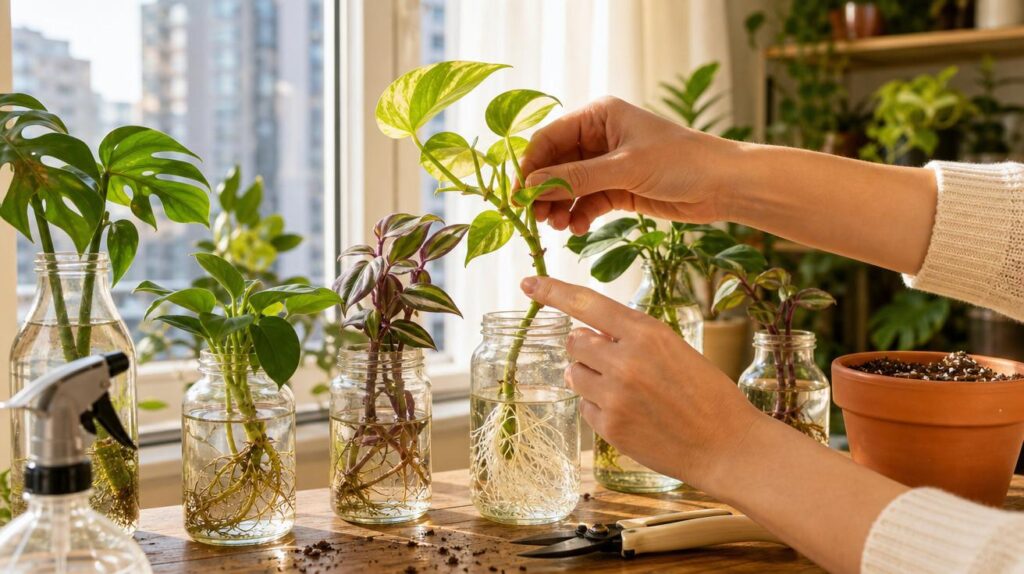
One of the most common questions is whether cuttings should be rooted in water or soil.
The answer depends on the plant.
Water Propagation
Water propagation is popular because you can observe root development.
Best suited to: Many pothos, philodendron, Tradescantia, and Monstera stem cuttings.
Advantages:
- Easy to monitor roots.
- Simple setup.
- Helps beginners understand root development.
Limitations:
- Some cuttings may rot if submerged incorrectly.
- Water-grown roots may need time to adapt to potting mix.
- Not suitable for every plant.
Soil Propagation
A light, airy propagation medium is often preferable for succulents, African violets, and many begonias.
Advantages:
- Roots develop directly in a growing medium.
- Less need to transfer from water later.
- Useful for plants that dislike prolonged wetness.
Limitations:
- Root development is less visible.
- Overwatering can cause rot.
- Moisture requirements differ between species.
My practical recommendation: Use water for suitable tropical stem cuttings and an airy propagation mix for most succulent leaf cuttings.
❌ 7 Propagation Mistakes That Can Ruin Your Cuttings
1. Taking a Leaf Without a Node
For pothos, Monstera, philodendron, and Hoya, a detached leaf without a viable node generally cannot become a complete new plant.
2. Overwatering Succulent Leaves
Succulent leaves store moisture. Constantly wet soil can encourage rot before roots and shoots develop.
3. Using Unclean Scissors
Dirty tools can transfer pathogens between plants.
Clean your tools before taking cuttings.
4. Putting Cuttings in Strong Direct Sunlight
Fresh cuttings often lack enough roots to replace lost water.
Bright, indirect light is usually a safer starting point.
5. Choosing Damaged or Diseased Leaves
Healthy propagation material has a better chance of establishing.
Avoid leaves with obvious disease, extensive damage, or signs of pest infestation.
6. Planting Too Deeply
Burying too much leaf tissue can increase the risk of rot.
Follow the appropriate planting depth for the species.
7. Giving Up Too Soon
Some plants root quickly, while others take months to produce visible growth.
Snake plants and ZZ plants are particularly good examples of slow propagation.
🌡️ The Best Conditions for Successful Propagation
Most common tropical houseplant cuttings benefit from stable indoor conditions.
Light: Bright, indirect light.
Temperature: Generally around 68–77°F (20–25°C) for many tropical species.
Humidity: Moderate humidity for common stem cuttings; higher humidity may help African violet and begonia leaf cuttings when balanced with ventilation.
Growing medium: Light, well-draining, and suited to the plant.
Watering: Moist but not waterlogged for many tropical cuttings; much drier conditions for succulent leaves.
Container: A small pot with drainage holes.
These are general starting points, not universal requirements. Always adjust care to the plant species.
🌱 How Do You Know a Cutting Has Successfully Propagated?
A cutting that remains green is not necessarily growing.
Look for signs such as:
- Healthy root development.
- New leaves or shoots.
- Small plantlets forming near the base of a leaf.
- Increasing resistance when gently checked in soil.
- Continued healthy growth after transplanting.
The most important sign is new shoot growth.
A rooted leaf that never develops a shoot may remain alive without becoming a complete plant.
🪴 When Should You Transfer Cuttings to Their Own Pots?
For water-rooted tropical stem cuttings, transplanting is often practical once several healthy roots have developed, commonly around 1–2 inches (2.5–5 cm) long.
For leaf-propagated succulents, wait until the new plantlet has roots and enough growth to handle carefully.
For African violets and begonias, allow baby plants to develop several leaves before separating them from the original cutting.
Avoid oversized pots. A small container with drainage makes moisture easier to manage.
❓ Frequently Asked Questions
Can every houseplant grow from a single leaf?
No. Some plants can regenerate complete new plants from leaf tissue, while others require a stem node, an offset, division, or spores.
Which plants are easiest to propagate from leaves?
African violets, many Echeveria varieties, jade plants, certain begonias, and snake plants are good options.
Why does my cutting have roots but no new leaves?
It may lack a viable growing point, or it may simply be a slow-growing species. A rooted Hoya or Monstera leaf without a node generally won’t produce a new vine.
Can I propagate Monstera from a single leaf?
Only when the cutting includes a viable stem node. A detached leaf alone is not sufficient.
Can snake plants grow from leaf sections?
Yes. Snake plants can develop new plants from properly oriented leaf sections, although the process may take months.
Is water propagation better than soil propagation?
Neither method is universally better. Water works well for many tropical stem cuttings, while soil or an airy rooting medium is often preferable for succulent leaves.
How long does leaf propagation take?
It varies widely. Some plants develop roots in a few weeks, while others take several months or longer to produce new shoots.
Do cuttings need rooting hormone?
Not always. Many popular houseplants propagate successfully without it. Rooting hormone can help in certain situations but isn’t a substitute for suitable propagation material and conditions.
Can I propagate plants in winter?
Yes, but rooting may be slower when light levels and indoor temperatures are lower. Spring and summer are often easier for many houseplants.
Why are my leaf cuttings turning black?
Blackening may indicate rot, often associated with excessive moisture, poor drainage, or damaged tissue. Remove affected material and adjust the growing conditions.
✨ Final Thoughts: The Secret Isn’t the Leaf — It’s the Growing Point
Growing new plants from cuttings is one of the most rewarding ways to expand your indoor garden.
But the biggest secret to successful propagation is knowing which part of the plant can actually produce new growth.
Some plants, such as African violets and Echeveria, can regenerate from individual leaves. Others, including pothos and Monstera, need a stem node. And plants like spider plants and aloe vera are usually easier to multiply from existing baby plants.
Once you understand these differences, propagation becomes much less mysterious.
Before placing another leaf in water, ask one simple question: Does this cutting have what it needs to grow an entirely new plant?
That small detail could save you weeks of frustration—and help you grow a thriving collection of houseplants.