
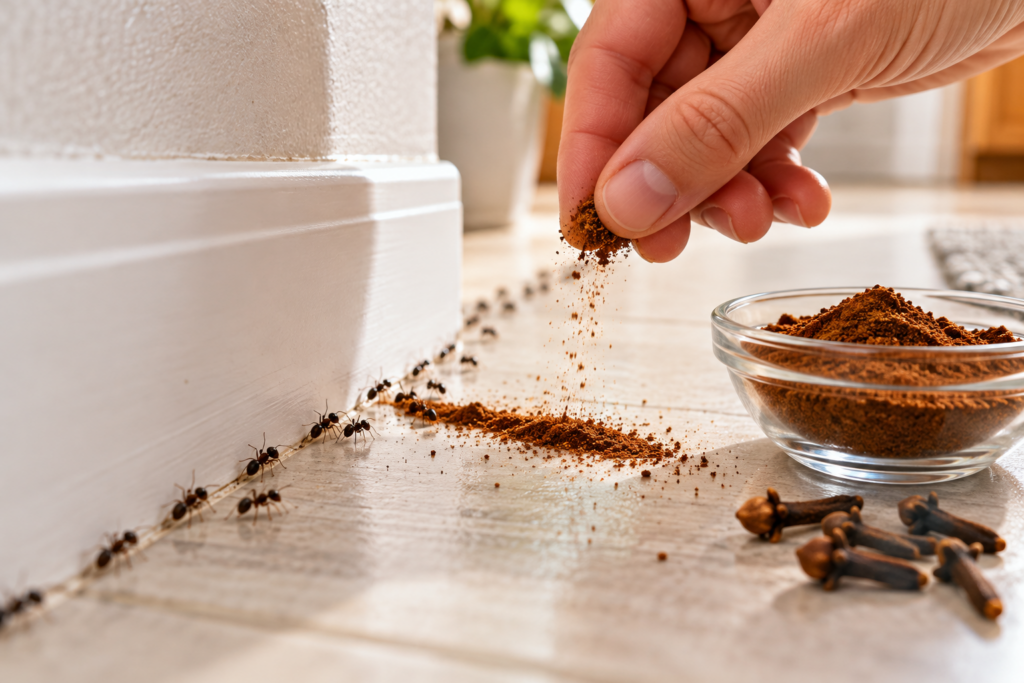
I kept noticing the same little trail of ants appearing in my kitchen.
They weren’t everywhere, but every time I cleaned the area, a few hours later they seemed to be back—following almost exactly the same route.
Instead of immediately reaching for an insect spray, I decided to try something already sitting in my spice cabinet:
ground cloves.
The idea is surprisingly simple. Rather than scattering cloves throughout the entire house, you use a small amount strategically around the places where ants are traveling or entering.
And there’s actually a reason this trick is interesting: clove powder and compounds naturally found in cloves, particularly eugenol, have demonstrated repellent activity against red imported fire ants in research. That doesn’t guarantee the same result with every household ant species, but it gives the trick more substance than simply saying “ants hate strong smells.” PubMed
The most important part, however, is where and how you use it.
Quick tip: Don’t sprinkle cloves randomly around the room. Find the ant trail first, follow it toward the entry point, and concentrate your efforts there.
🌿 Why Ground Cloves?
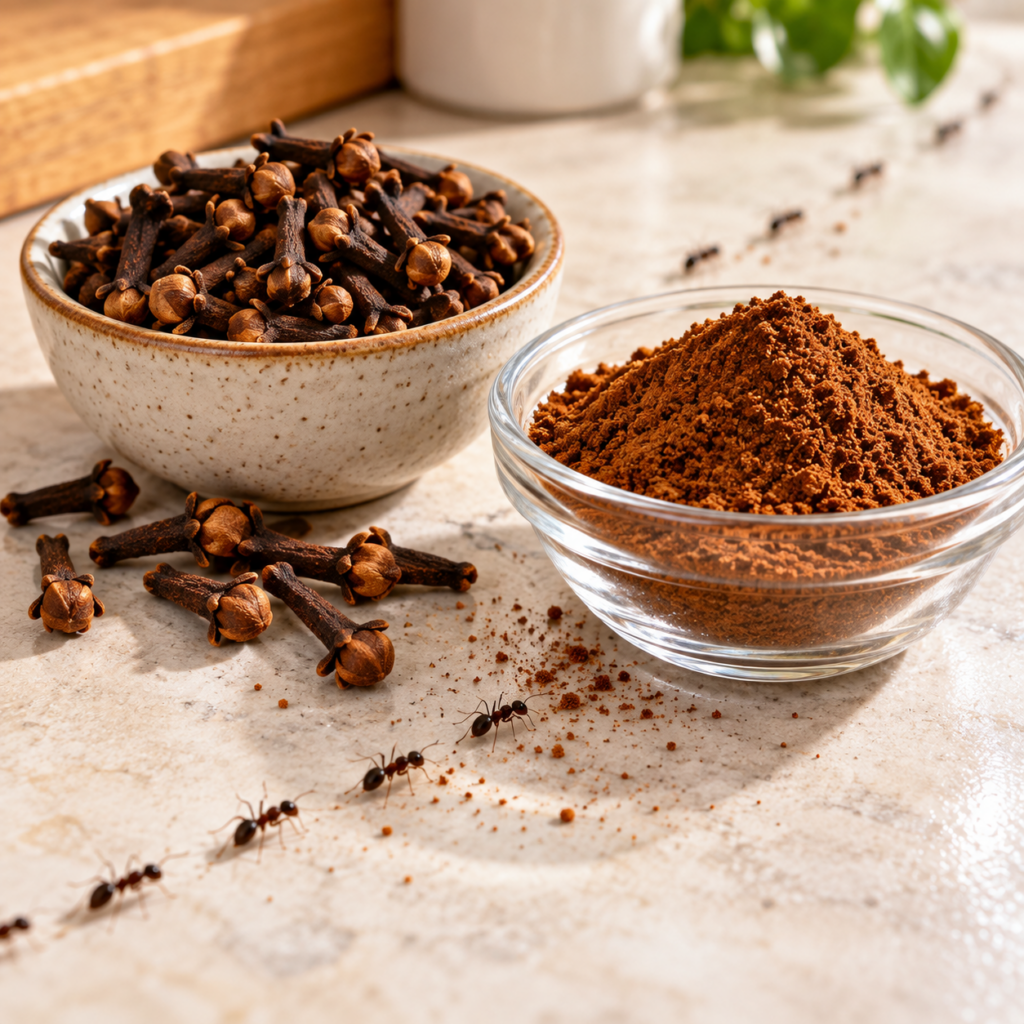
Cloves have an unmistakably strong, spicy aroma.
They contain several aromatic compounds, including eugenol, which has been studied for insect-repellent properties. In one laboratory study involving red imported fire ants, clove powder showed very strong repellency under the conditions tested. PubMed
But you don’t need to make a complicated homemade spray to try this idea.
No vinegar.
No baking soda.
No dish soap.
For this particular trick, start with plain ground cloves.
💡 Best Places to Try This Trick
Focus on places where you can actually see ants traveling:
- Along an established ant trail
- Near small cracks and crevices
- Around door entry points
- Around window frames
- Along baseboards
- Near pipe openings
- Behind cabinets where ants appear
Keep the powder away from food itself and from areas accessible to children or pets.
🐜 Tip 1: Sprinkle Ground Cloves Along the Ant Trail
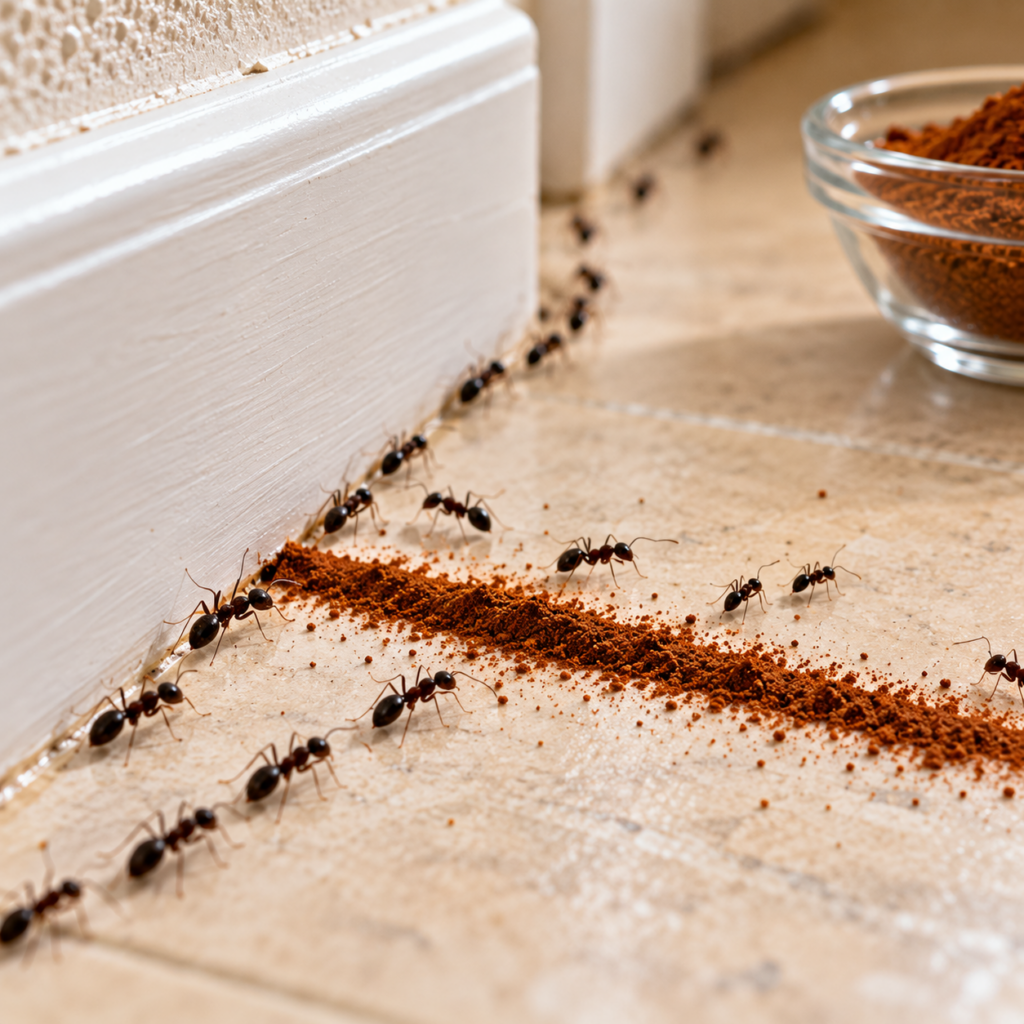
Before doing anything, watch the ants.
It may be tempting to wipe them away immediately, but spend a minute observing where they’re going.
Ant trails can reveal both what is attracting them and where they’re entering your home. Pest-management guidance likewise recommends following trails to locate food sources and entry points. UC IPM
Once you’ve identified the route, sprinkle a thin line of ground cloves across or immediately beside a small section of the trail.
You don’t need a mountain of spice.
Then wait and watch.
What might happen?
The ants may:
- Stop when they reach the cloves
- Turn around
- Move around the powder
- Abandon that particular route
- Find another route
If they simply walk around your clove barrier, don’t keep making the pile bigger.
Instead, follow them.
They may show you another entrance you hadn’t noticed.
🚪 Tip 2: Put Ground Cloves Near Entry Points
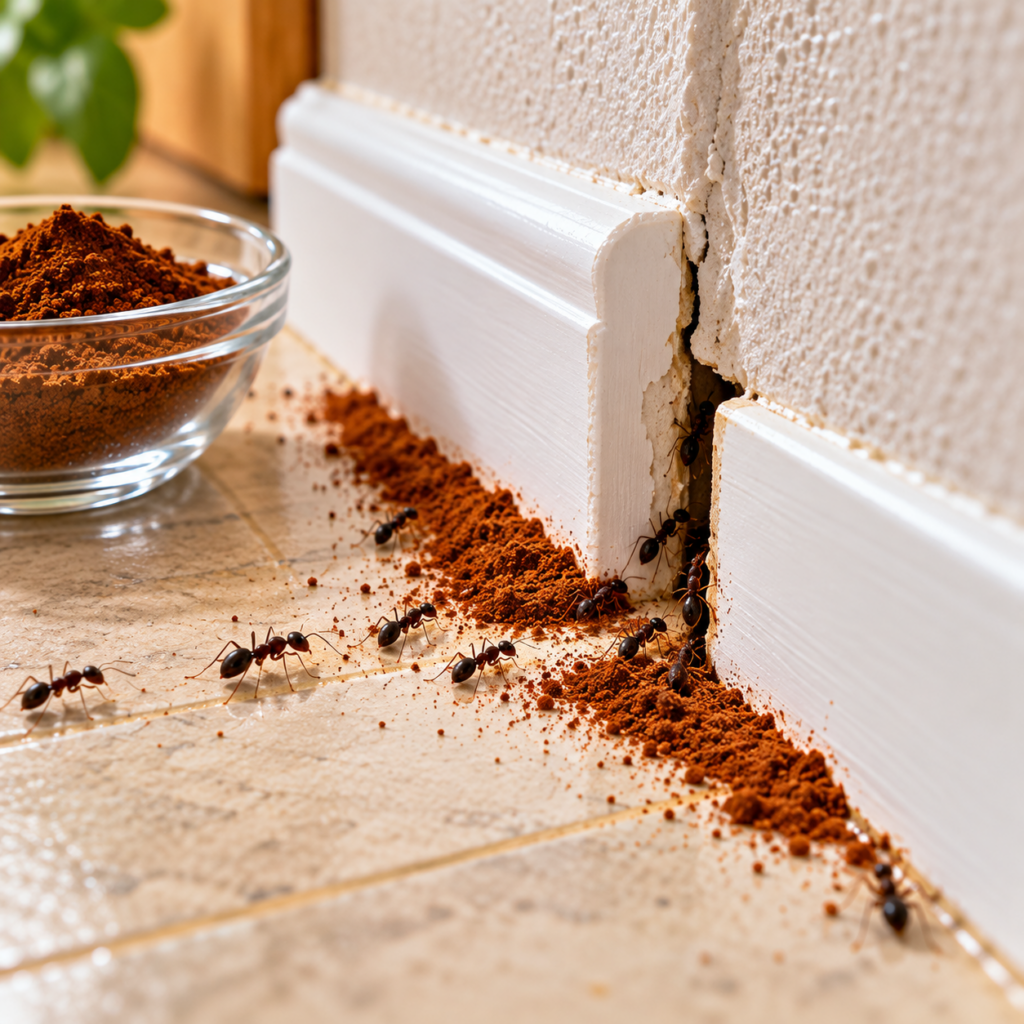
This is probably the most useful application of the entire trick.
Follow the ants backward.
Look carefully around:
Doors → windows → baseboards → wall cracks → pipes → cabinets.
Ants commonly enter buildings through small gaps around foundations, doors, windows, pipes and utility penetrations.
Once you’ve located a suspected entrance, sprinkle a small amount of ground cloves nearby.
Then observe the area.
If the ants begin avoiding that entrance, you’ve gained something more valuable than simply making the visible ants disappear:
You’ve identified one of their access points.
And that leads to the real solution.
🔧 The next step
When appropriate, seal the crack or gap.
Think of it this way:
Ground cloves = temporary deterrent
Sealing the entrance = longer-term prevention
🪟 Tip 3: Try Ground Cloves Around Problem Windows
Windows are another useful place to investigate.
If ants repeatedly appear on the windowsill, don’t immediately sprinkle cloves everywhere.
First clean the sill thoroughly.
Then inspect:
- Corners of the window frame
- Tiny cracks
- Gaps around the sill
- Areas where the frame meets the wall
If you’ve found the likely route, place a narrow line of ground cloves near that spot.
Then check again later.
If the ants disappear from the windowsill but suddenly appear somewhere nearby, they’ve probably found another route.
Follow the new trail rather than adding more and more spice.
🗑️ Tip 4: Use It Strategically Around the Trash Area
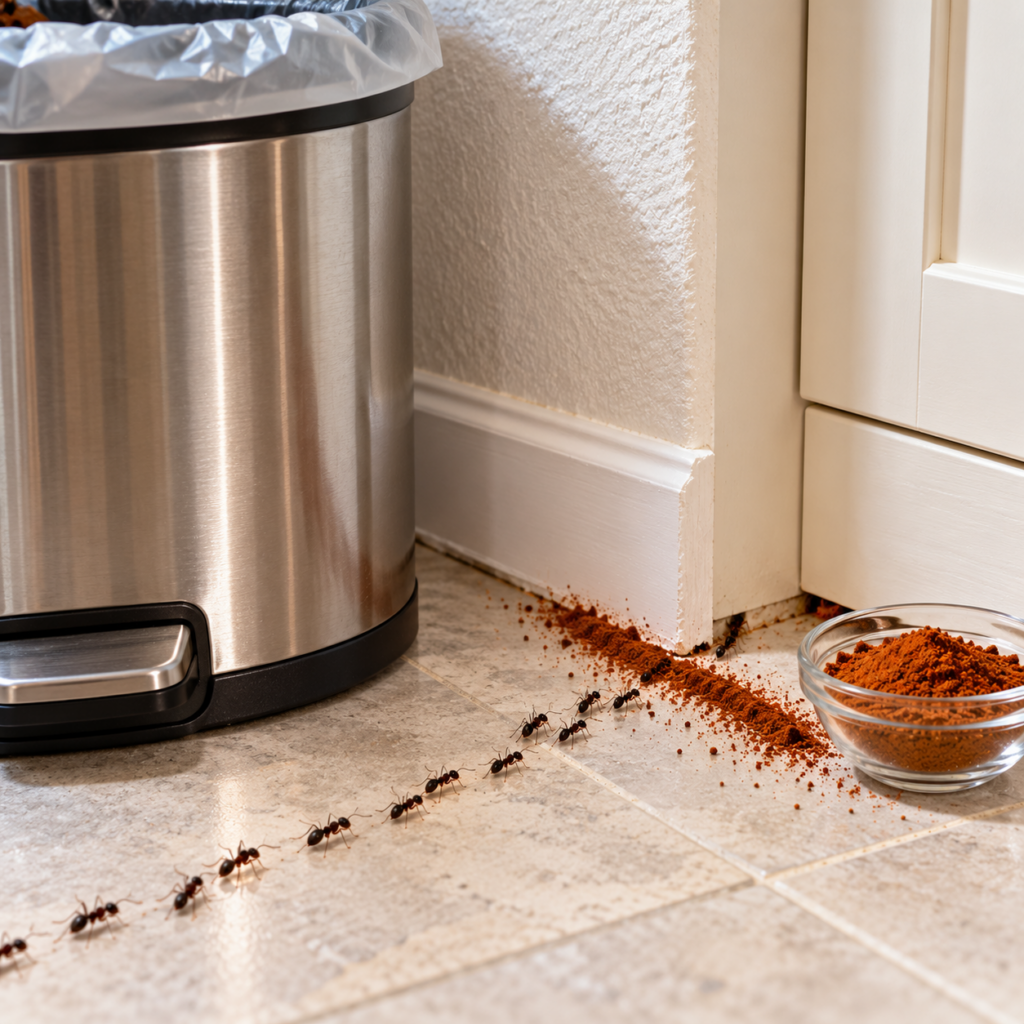
If ants keep appearing near your trash can, there’s something you should do before reaching for the cloves.
Clean.
Even tiny amounts of food residue can keep attracting ants.
My approach would be:
Empty the bin → wash the bin → clean underneath it → remove sticky spills → replace the liner.
Then watch where the ants approach from.
If they’re entering through a nearby crack or gap, that’s where the ground cloves make more sense.
Sprinkle a little near the route or entry point, not inside the garbage.
Removing the food source remains the most important part. Pest-management guidance emphasizes sanitation and removing accessible food as central steps in controlling indoor ants.
🥣 Tip 5: Use It Carefully Around Pantry Areas
Seeing ants around your pantry can be especially frustrating.
But don’t sprinkle cloves directly into your flour, sugar, cereal or other foods.
Instead, empty the affected shelf and inspect it carefully.
Clean away:
- Sugar crystals
- Flour dust
- Cookie crumbs
- Syrup or honey residue
- Other food spills
Then move vulnerable foods into tightly sealed containers.
If you discover ants entering through a crack behind or beside the cupboard, you can try placing ground cloves near that entry point, away from the food itself.
Sealed food storage is far more important than covering pantry shelves with spices.
🐾 Tip 6: Check Around Pet Food
A forgotten pet bowl can quickly become an ant attraction.
If ants appear around pet food, don’t sprinkle cloves into the food or create a powder barrier your pet needs to cross.
Instead:
Remove leftover food → wash the bowl → clean the floor → follow the ants.
If you discover they’re entering through a crack or another inaccessible location away from your pet, that’s a more sensible place to experiment with ground cloves.
Keep the spice where pets cannot lick, eat or play with it.
🧹 Tip 7: Clean the Trail Before Trying Again
Here’s a step that’s easy to overlook.
Ants use chemical trails to help other workers return to food sources. Cleaning established trails can therefore be useful as part of ant management. UC IPM recommends wiping trails with soapy water or another suitable cleaner while also removing the food source.
So if you’ve already identified where the ants are entering:
- Remove the food source.
- Clean the trail.
- Dry the area.
- Place a little ground clove powder near the suspected entry point.
- Monitor the area.
This is much better than continually sprinkling fresh cloves over an old, dirty ant trail.
🔍 Tip 8: Follow the Ants if They Change Routes
This is where the trick becomes genuinely useful.
Imagine you put ground cloves near a crack underneath a cabinet.
The ants disappear.
But the following morning, you see them beside the window.
That doesn’t necessarily mean the cloves “stopped working.”
The ants may simply have found another route.
Follow the new trail.
You may discover a second crack or gap that needs attention.
This is why I think of ground cloves primarily as a possible temporary deterrent, not a guaranteed way to eliminate an ant colony.
🏠 My Simple Ground-Clove Method
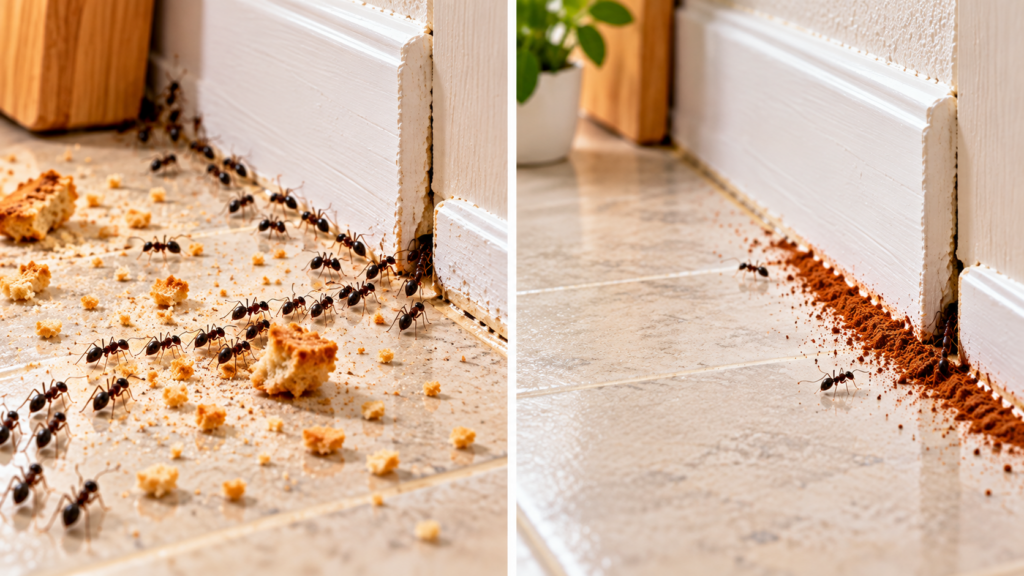
If I noticed ants in the kitchen again, this is exactly how I’d approach it:
Step 1 — Find the trail
Watch where the ants are traveling.
↓
Step 2 — Find what they’re after
Look for crumbs, sugar, grease, pet food or water.
↓
Step 3 — Remove the attraction
Clean the area and secure food.
↓
Step 4 — Follow the ants backward
Look for their entry point.
↓
Step 5 — Sprinkle a thin line of ground cloves
Concentrate it around the problem route rather than covering the room.
↓
Step 6 — Observe
See whether the ants avoid the area or simply change direction.
↓
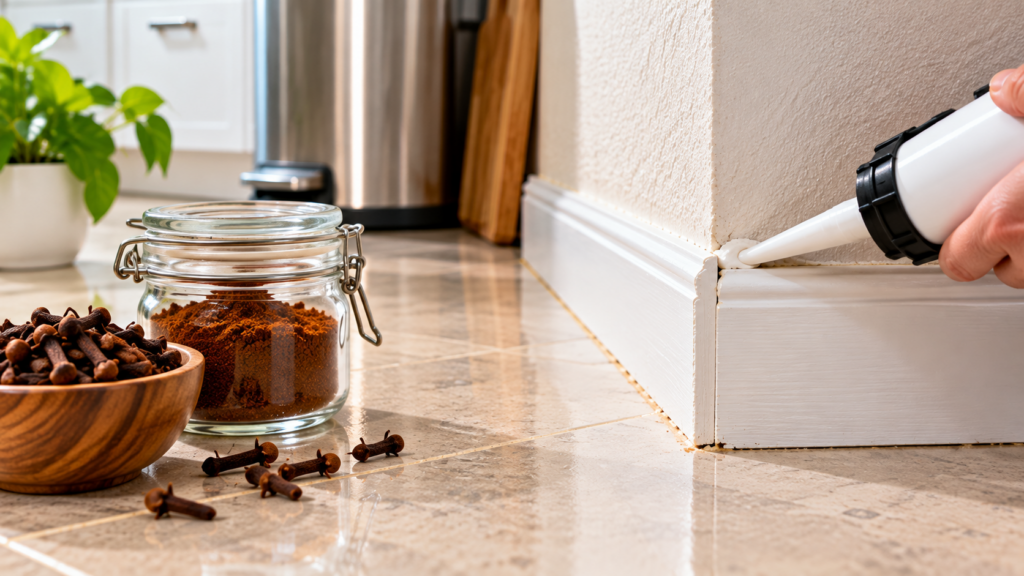
Step 7 — Seal the entrance
If you’ve located an appropriate crack or gap, close it.
This combines the clove trick with the practical ant-control measures recommended by pest-management specialists: remove food and water, locate entry points and seal openings.
🌿 Should You Mix Ground Cloves With Anything?
For this trick, I wouldn’t start by mixing them with anything.
You may encounter recipes containing:
❌ Ground cloves + vinegar
❌ Ground cloves + baking soda
❌ Ground cloves + dish soap
❌ Ground cloves + lemon juice
But adding extra ingredients isn’t necessary to test whether the cloves themselves affect the ants.
In fact, keeping the experiment simple has an advantage:
If the ants avoid the treated area, you know the ground cloves were the variable you changed.
The research that makes this trick interesting also tested clove powder itself, rather than requiring a viral four-ingredient kitchen mixture. PubMed
⚠️ One Important Mistake: Don’t Put Cloves Next to Ant Bait
Suppose the cloves aren’t enough and you decide to use commercial ant bait.
Don’t surround that bait with a strongly aromatic repellent.
The entire purpose of many ant baits is to encourage worker ants to approach the bait, feed on it and potentially carry material back toward the colony.
Putting something intended to repel ants directly beside the bait works against that goal.
If you’re using a pesticide or ant bait, follow its label directions rather than combining it with homemade treatments.
🐜 What If the Ants Keep Coming Back?
At this point, don’t just keep adding more cloves.
Repeated ant activity usually means you still have one or more underlying problems:
- Accessible food
- Water or excess moisture
- An unsealed entrance
- A nearby nest or colony
Check underneath sinks for leaks.
Inspect around doors and windows.
Clean behind appliances.
Keep sweet foods and pet food sealed.
And look carefully for structural gaps.
Ant-management guidance consistently emphasizes these measures because simply killing or repelling visible worker ants doesn’t necessarily eliminate the colony.
For a persistent or substantial infestation, identifying the ant species and choosing an appropriate control method becomes more important than continuing to experiment with kitchen spices.
❓ Quick FAQ
Can I use whole cloves instead?
You can experiment with them, but ground cloves have more exposed surface area and are much easier to apply as a narrow line around a specific problem area.
How much ground clove should I use?
There’s no established household dosage that works for every ant species. Start with a thin visible line, rather than a large pile.
Where is the best place to put ground cloves?
The best places to try are along an active trail or near a suspected entry point—especially around cracks, windows, doors, baseboards and pipe openings.
Should I put cloves all over my kitchen?
No. Targeting the ant route makes much more sense than covering the room with spice.
Can I mix ground cloves with dish soap?
You don’t need to for this particular trick. If you’re testing cloves as a deterrent, start with the ground spice alone.
Can I put ground cloves around food?
Keep the treatment separate from food itself. Clean pantry shelves and store vulnerable foods in sealed containers instead.
Will ground cloves kill ants?
Research involving red imported fire ants found strong repellency and mortality from clove powder under controlled experimental conditions. That doesn’t establish a universal household treatment for every ant species.
Will this eliminate the colony?
Don’t count on it.
Even if the ants stop crossing the treated area, the colony may remain active elsewhere.
How often should I replace the ground cloves?
There isn’t a validated household replacement schedule. If you’re experimenting with the method, remove and replace powder that becomes damp, dirty or loses its strong aroma rather than continually piling fresh spice on top.
✨ Final Thoughts
The best way to use ground cloves against ants isn’t to walk around your house sprinkling spice everywhere.
Use them strategically.
Find the ants.
Follow their trail.
Remove the food or water attracting them.
Clean the area.
Then place a small amount of ground cloves near the route or entry point and observe what happens.
If they avoid the area, that’s useful.
But the next step matters even more:
Find and seal the entrance whenever possible.
Ground cloves have shown genuine repellent activity against red imported fire ants in controlled research, so there is an interesting basis behind this household tip. But species and real-world conditions vary, so it’s better to think of cloves as a possible temporary deterrent rather than a guaranteed ant-colony treatment.
And perhaps the nicest part of this trick?
You don’t need a complicated mixture at all.
Sometimes the simplest experiment—ground cloves, the right location, and a little observation—is enough to help you figure out where the ants are coming from and what to do next.