
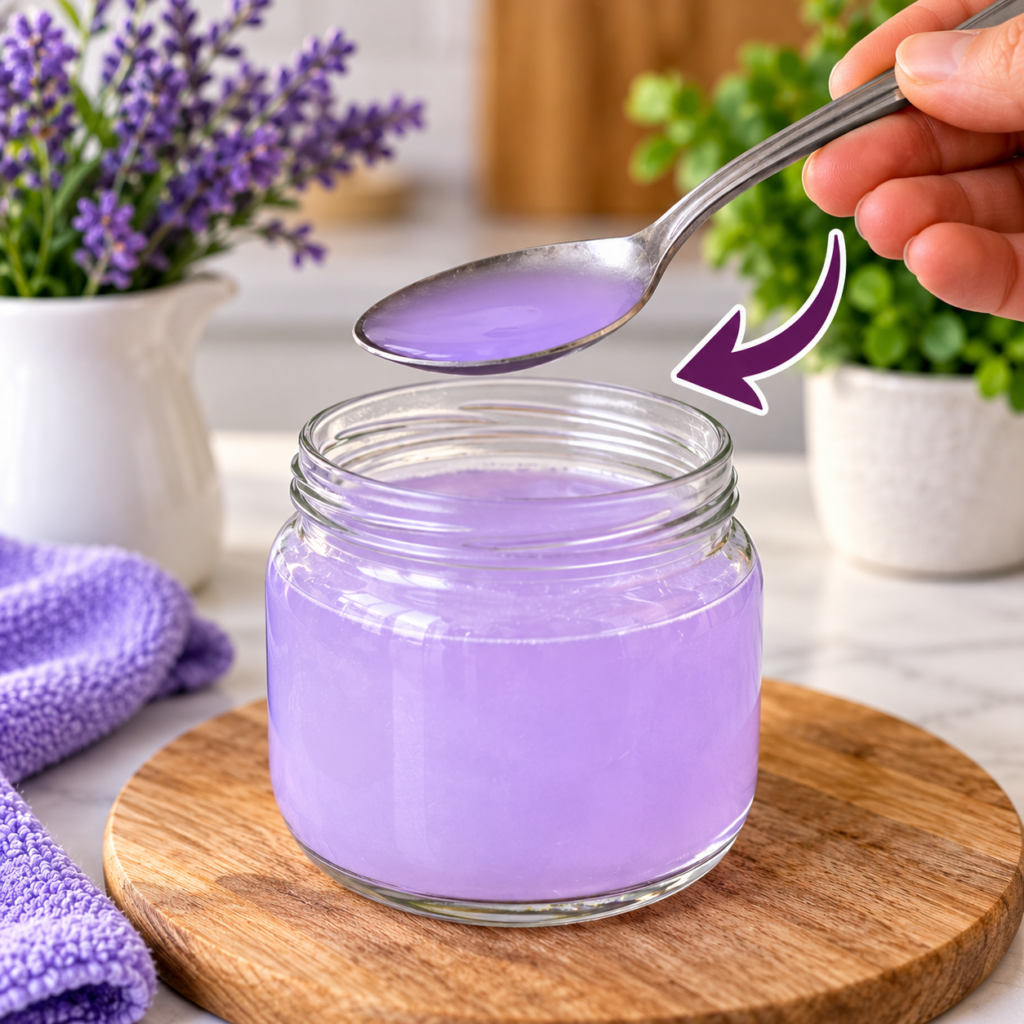
A home that smells fresh and pleasant can instantly feel more comfortable and inviting. While commercial air fresheners are convenient, you can also make a simple DIY room spray with a few inexpensive household ingredients.
One popular combination uses water, baking soda, and fabric softener. But what does this mixture actually do?
The answer is fairly simple: fabric softener provides most of the fragrance, while baking soda may help neutralize certain odor-causing compounds. This homemade spray can freshen a room temporarily, but it should not be considered an air purifier, disinfectant, or substitute for proper cleaning.
Here’s how to use the idea more safely and effectively.
🧴 What You’ll Need
For a small batch, prepare:
- 350 ml (about 1½ cups) of lukewarm water
- 1 tablespoon baking soda
- 2 tablespoons fabric softener
- A clean spray bottle
- A small bowl or measuring jug
- A spoon
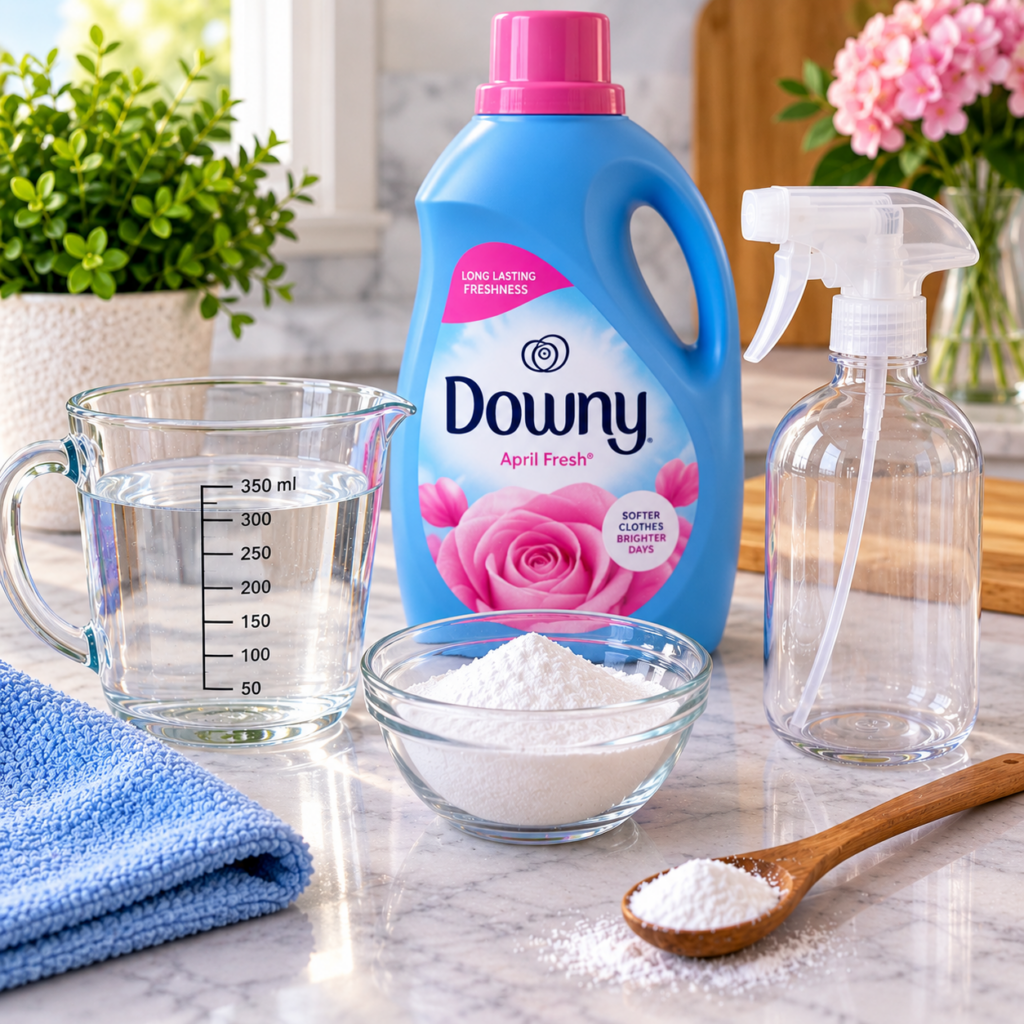
You don’t need a large amount of fabric softener. A lightly scented mixture is generally preferable to heavily perfuming the room.
🧪 What Does Each Ingredient Actually Do?
Understanding the ingredients helps avoid some of the exaggerated claims surrounding this viral household trick.
- 💧 Water: Acts primarily as the carrier. It dilutes the other ingredients and allows the mixture to be dispersed from the spray bottle.
- 🥄 Baking Soda: Baking soda, or sodium bicarbonate, can react with and neutralize some odor-producing compounds, particularly acidic ones. However, it shouldn’t be treated as a universal odor absorber capable of removing every smell from the air. If your home has a persistent unpleasant odor, finding and eliminating its source will generally be much more effective than trying to cover it with fragrance.
- 🌸 Fabric Softener: This is where most of the noticeable fragrance comes from. Fabric softeners contain fragrances designed to remain noticeable on laundry, so adding a small amount to water can create a strongly scented solution. But remember: fabric softener is a laundry product, not an air-cleaning product. The fragrance can make a room smell fresher without actually making the air cleaner.
✨ How to Make the DIY Room Spray
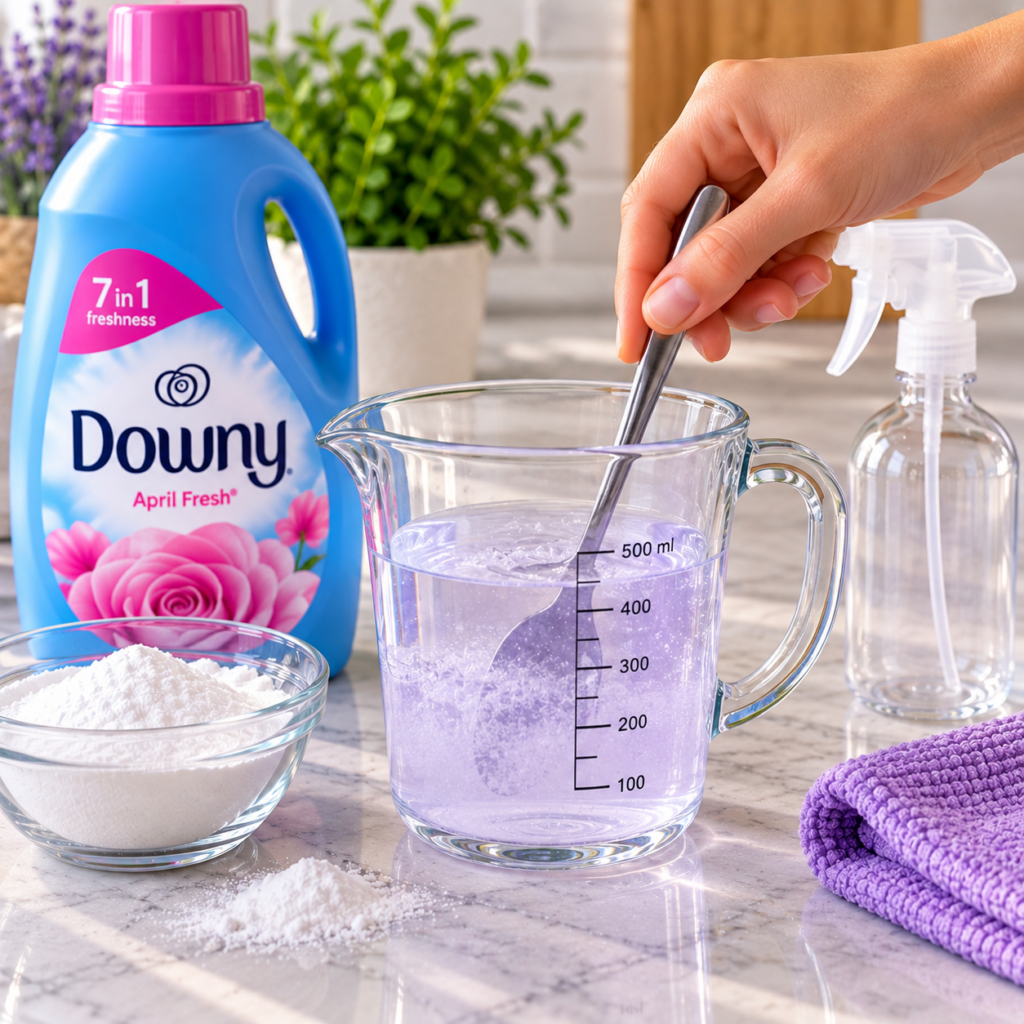
The preparation is very simple:
- Pour 350 ml of lukewarm water into a clean bowl or measuring jug.
- Add 1 tablespoon of baking soda and stir thoroughly.
- Once dispersed, add approximately 2 tablespoons of fabric softener and mix gently.
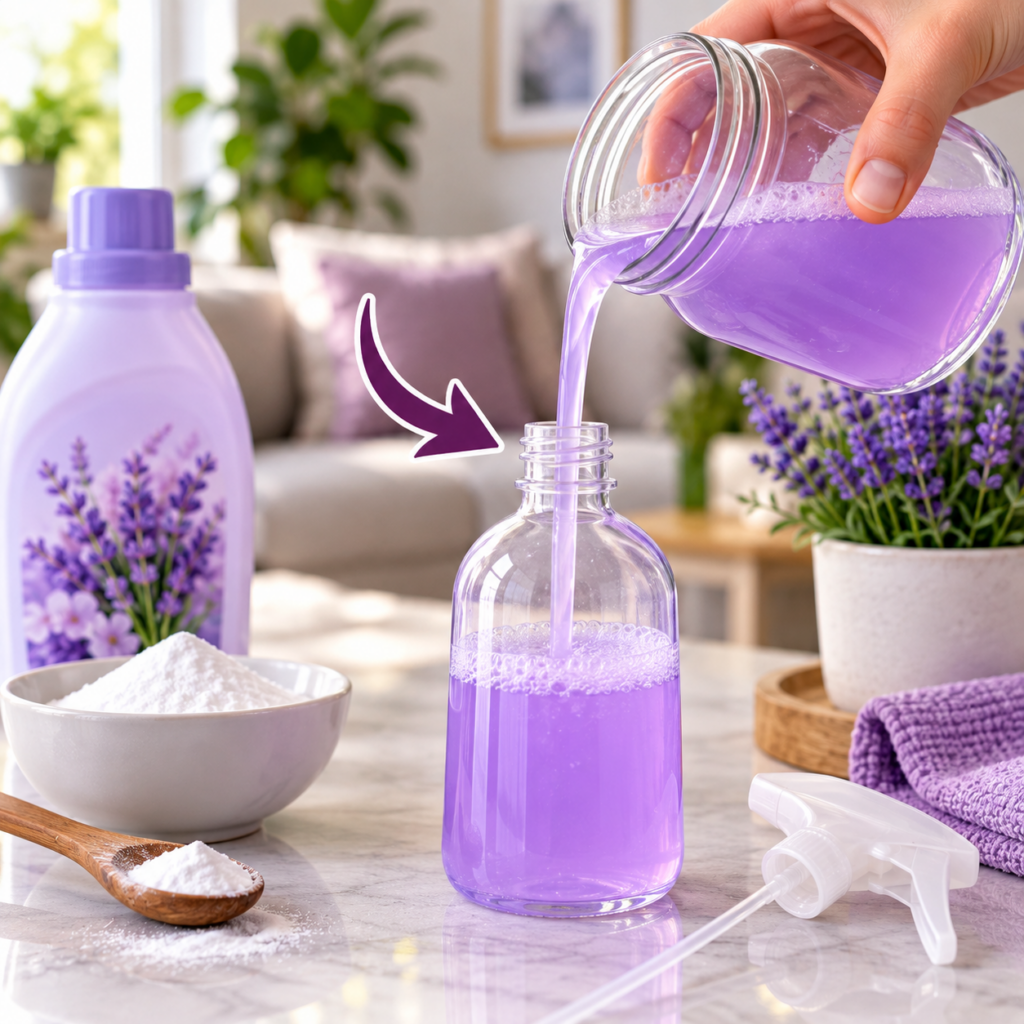
- Transfer the mixture to a clean spray bottle.
- Before each use, gently shake the bottle.
🏡 How to Use It
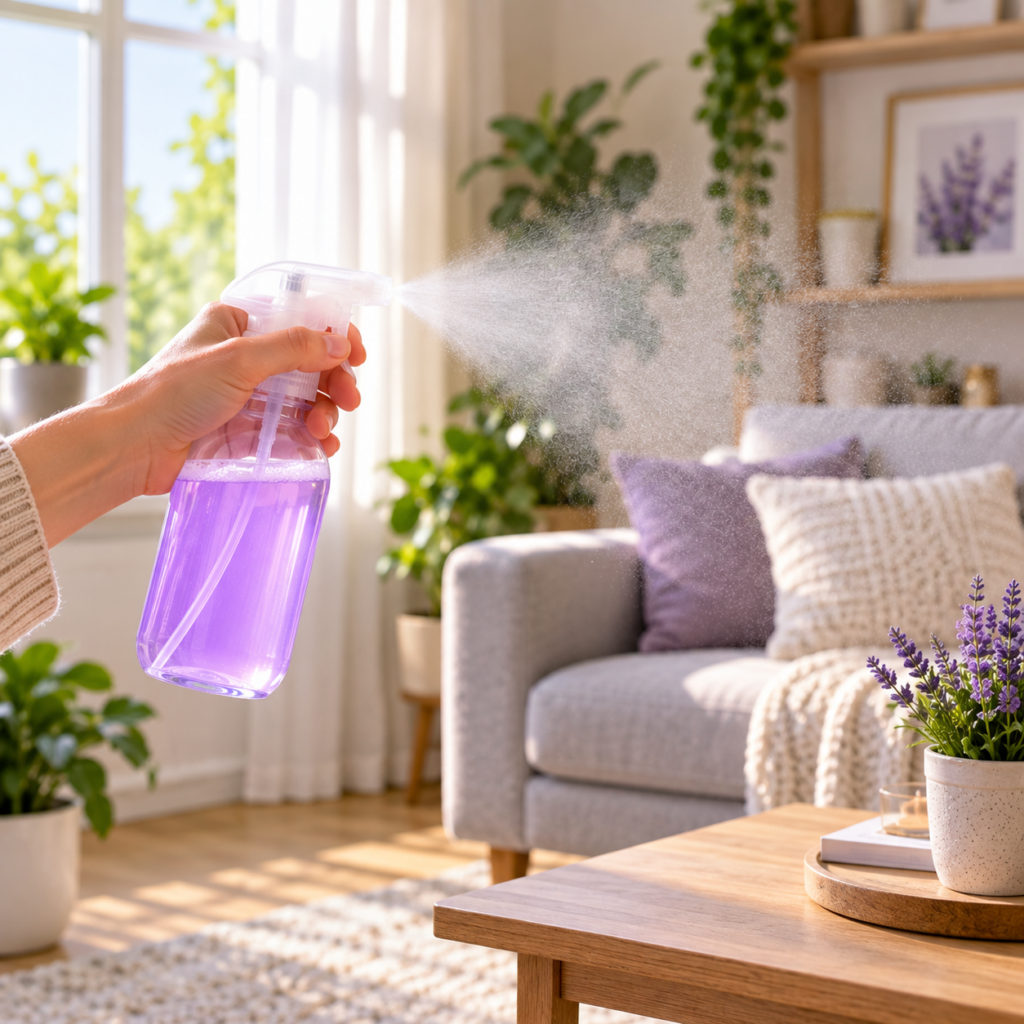
- Use only a light mist rather than saturating the room. A few sprays may be enough to create a noticeable fragrance.
- Be more careful when using the mixture around household surfaces and textiles. Fabric softener can leave residues, and materials such as upholstery, curtains, and carpets can have very different care requirements.
- Don’t automatically spray it directly onto furniture, curtains, carpets, painted surfaces, or natural wood.
- If you want to use it on a washable textile, first check the manufacturer’s care instructions and test a tiny hidden area.
⚠️ 6 Important Mistakes to Avoid
Although the recipe is simple, there are a few sensible precautions:
- Don’t confuse fragrance with cleanliness. A pleasant scent doesn’t mean bacteria, mold, or dirt have disappeared.
- Don’t soak fabrics or furniture. Fabric softener can leave residue or marks on some materials.
- Don’t spray near food or food-preparation surfaces.
- Avoid spraying toward people’s or pets’ faces.
- Use fragrances sparingly, particularly around anyone sensitive to scented products.
- Don’t combine the mixture with random household cleaners. Adding more ingredients doesn’t necessarily make it work better.
If a room develops a persistent musty or unusual odor, investigate the underlying cause rather than repeatedly masking it.
🌬️ What This Homemade Spray Can — and Cannot — Do
Used sensibly, the mixture can provide a temporary pleasant fragrance and may help with some mild everyday odors.
What it cannot do is equally important:
- It does not disinfect your home.
- It does not remove mold.
- It does not purify indoor air.
- It does not replace cleaning and ventilation.
Think of it primarily as a homemade fragrance spray rather than a cleaning product.
🌿 What About Essential Oils Instead of Fabric Softener?
If you don’t want to use fabric softener, you may see recipes recommending water, baking soda, and a few drops of essential oil.
This eliminates the fabric softener, but it doesn’t automatically make the spray suitable for everyone. Essential oils contain concentrated aromatic compounds. Some people are sensitive to them, and extra caution is appropriate in homes with pets, young children, or people who react to fragrances.
If you use essential oils, use them sparingly and check whether the particular oil is appropriate for your household.
🪟 The Best Way to Keep a Home Smelling Fresh
A room spray works best as the finishing touch—not as the main solution.
Regularly air out your rooms, wash odor-holding textiles, empty trash bins, clean pet areas, control excess moisture, and deal with cooking odors promptly. If something smells bad repeatedly, look for the source. A clean, well-ventilated room usually needs surprisingly little added fragrance.
🧺 What About Carpets, Sofas, and Curtains?
This is one area where many homemade room-spray recipes go too far. Different fabrics can react differently to moisture, fragrances, and fabric-softener ingredients, and some may develop spots or residues.
For upholstery and carpets, follow the manufacturer’s cleaning instructions. If a product or homemade mixture isn’t recommended for that material, don’t assume it’s safe simply because the ingredients seem mild. For washable curtains, washing them according to their care label is generally a better way to deal with persistent odors.
⏳ How Long Can You Store the Mixture?
Because this is a homemade, water-based preparation and not a professionally formulated preserved product, it’s better not to make a large bottle and keep it indefinitely.
Prepare a small quantity, keep the bottle clean, and remake the solution as needed rather than relying on an arbitrary storage period such as several weeks. If the mixture changes appearance, develops an unusual odor, or shows signs of contamination, discard it.
❓ Frequently Asked Questions
- Does baking soda really remove odors?Baking soda can neutralize certain odor-producing compounds, particularly acidic ones. However, it isn’t a universal solution for every household odor. Removing the source of an odor remains the most effective approach.
- Does fabric softener clean the air?No. Fabric softener mainly adds fragrance in this application. A pleasant smell shouldn’t be confused with cleaner or healthier indoor air.
- Can I spray this directly onto my sofa?Not automatically. Upholstery materials and manufacturer instructions differ considerably. Check the care instructions and test any permitted treatment in an inconspicuous area first.
- Can I use more fabric softener for a stronger fragrance?You could create a stronger smell, but stronger isn’t necessarily better. Excess product may increase residue and can be unpleasant for people sensitive to fragrances. Start with a small amount.
- Can this remove cigarette smoke or strong cooking odors?It may temporarily mask some smells, but it won’t solve the underlying problem. Ventilation, cleaning contaminated surfaces, and removing the odor source are more important.
- Is this a natural air freshener?Not when conventional fabric softener is used. Fabric softener is a formulated laundry product containing fragrance and other ingredients. If you’re looking for a simpler approach, ventilation and eliminating odor sources are the best starting points.
💚 Final Thoughts
The popular water + baking soda + fabric softener room spray can work if the goal is simply to give a room a pleasant temporary fragrance.
Just keep expectations realistic. The fabric softener supplies most of the scent, while baking soda may help neutralize certain odor-causing compounds. The mixture doesn’t purify the air, disinfect your home, or eliminate the underlying source of persistent odors.
Use it lightly, be careful around textiles and sensitive surfaces, and remember the simplest rule for a genuinely fresh-smelling home: remove the source of bad odors first, ventilate regularly, clean appropriately—and use fragrance only as the finishing touch.