
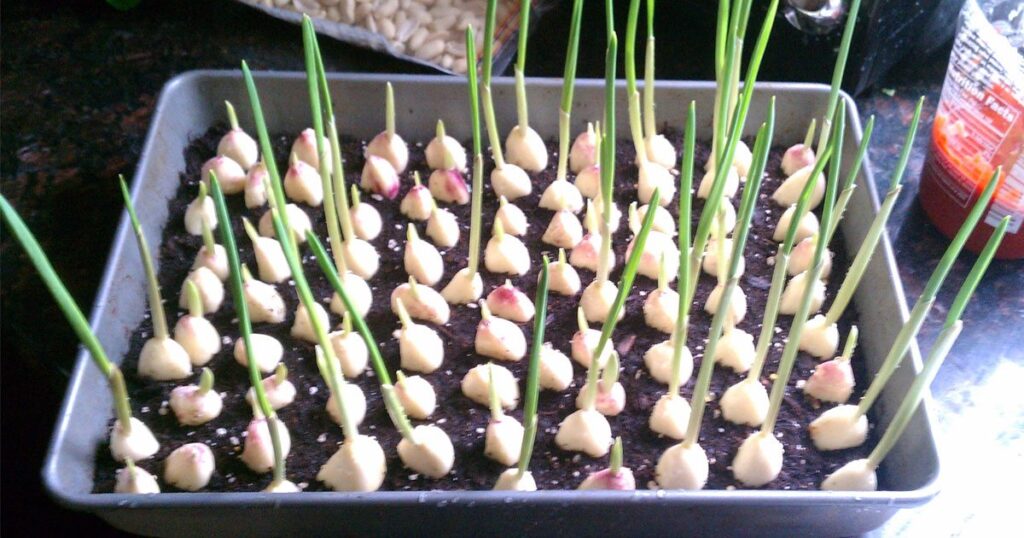
Garlic is one of the most useful crops you can grow at home. It takes up relatively little space, requires fairly simple care, stores well after harvest, and one healthy clove can eventually develop into an entire new bulb.
That is why you often see headlines promising an “endless supply of garlic.”
The idea is partly true—but there is an important detail:
🌱 Garlic does not reproduce endlessly by itself. To keep the cycle going, you need to save some healthy cloves from each harvest and replant them for the next crop.
Do that consistently, and you can create a renewable home garlic-growing routine year after year.
Here is how to plant, care for, harvest, cure, store, and replant garlic successfully. 🧄🌿
🧄 Can You Really Grow Garlic From One Clove?
Yes.
A garlic bulb is made up of individual cloves, and each healthy clove has the potential to grow into a new plant.
When conditions are right, that single clove forms:
🌱 roots
🌿 green leaves
🧄 a new underground bulb
The new bulb then contains multiple cloves that can be eaten or replanted.
This is what makes garlic such a satisfying crop for home gardeners.
🌱 Hardneck vs. Softneck Garlic
Before planting, it helps to know that garlic is commonly divided into two broad groups.
🧄 Hardneck garlic
Hardneck types usually:
- perform well in colder climates
- produce a central flowering stalk called a scape
- often have fewer but larger cloves
- tend to have strong flavor
The scapes are edible and are usually removed before harvest.
🧄 Softneck garlic
Softneck garlic often:
- performs better in milder climates
- stores longer
- produces many cloves
- rarely produces prominent scapes
Most garlic sold in supermarkets is often softneck, although this varies by region.
🍂 When Is the Best Time to Plant Garlic?
In many climates, autumn is the ideal planting season.
Garlic benefits from exposure to cool conditions before forming bulbs.
A common approach is to plant several weeks before the ground freezes, allowing the roots to begin developing before winter.
What about spring planting?
Spring planting can also work, especially in suitable climates.
However, depending on the variety and growing conditions, spring-planted garlic may produce smaller bulbs because it has had less time to establish.
If winters are very mild, choose a garlic type suited to your local climate.
🪴 Can You Grow Garlic in Containers?
Absolutely.
Garlic grows well in pots as long as the container is sufficiently deep and has excellent drainage.
Choose a pot that is at least around 20–25 cm (8–10 inches) deep, preferably deeper if possible.
The container must have drainage holes.
For multiple plants, use a wide container so each clove has enough room to develop a bulb.
🌞 Choose the Right Location
Garlic generally performs best in plenty of sunlight.
Aim for approximately:
☀️ 6–8 hours of direct sunlight per day
More light generally supports stronger growth and better bulb development.
Avoid deeply shaded locations if your goal is large bulbs.
🌱 Step 1: Prepare the Soil
Garlic prefers:
✔ loose soil
✔ good drainage
✔ moderate fertility
✔ plenty of organic matter
Heavy, compacted, waterlogged soil can encourage poor bulb formation and rot.
Before planting, loosen the soil and incorporate mature compost if needed.
Ideal soil
A fertile, crumbly soil that drains well is much better than soil that remains saturated after rain.
🧄 Step 2: Choose Healthy Garlic Bulbs
For the best results, start with garlic intended for planting from a reputable nursery, seed supplier, or trusted local source.
Why?
Garlic sold specifically for planting is more likely to be:
✔ adapted to local conditions
✔ correctly identified
✔ selected for good performance
Can supermarket garlic grow?
Sometimes, yes.
Many supermarket cloves will sprout.
However, they may not be well adapted to your climate, and some may have been stored or treated in ways that reduce sprouting.
For reliable harvests, planting stock is usually the better choice.
✋ Step 3: Separate the Cloves
Break the garlic bulb apart shortly before planting.
Keep the papery skin around each clove intact.
Choose the:
✔ largest
✔ healthiest
✔ firmest
cloves for planting.
Very small cloves often produce smaller plants and bulbs.
🌱 Step 4: Plant Pointed End Up
This part matters.
Each clove has:
🔺 a pointed end
⬇️ a flatter root end
Plant the clove with the pointed end facing upward.
The roots develop from the flatter base, while the shoot grows upward from the pointed tip.
📏 Step 5: Plant at the Right Depth and Spacing
A practical starting point is to plant each clove about:
5 cm (2 inches) deep, measured from the top of the clove to the soil surface.
Spacing of approximately:
10–15 cm (4–6 inches)
between cloves gives developing bulbs room to expand.
Rows can generally be placed farther apart if you’re growing a larger crop.
Local recommendations may vary by soil type and climate.
💧 Step 6: Water Properly
Garlic needs moisture, especially during active spring growth.
But it does not like permanently wet soil.
Water when the soil begins to dry, aiming for relatively even moisture rather than frequent shallow watering.
Avoid:
❌ constantly saturated soil
❌ standing water
❌ letting containers sit in water
As harvest approaches and leaves begin naturally drying, watering is often reduced.
🍂 Step 7: Add Mulch
A layer of mulch can be very helpful, particularly for autumn-planted garlic.
Suitable materials may include:
🍂 shredded leaves
🌾 straw
🌿 other clean organic mulch
Mulch can:
✔ moderate soil temperatures
✔ suppress weeds
✔ conserve moisture
✔ protect the soil surface
Avoid piling mulch excessively against emerging stems.
🌿 Step 8: Keep Weeds Under Control
Garlic does not compete particularly well with aggressive weeds.
Keep the bed reasonably weed-free, especially while plants are young.
Hand-pulling or shallow cultivation is usually preferable because deep hoeing can damage garlic roots and bulbs.
Mulch can reduce the amount of weeding required.
🌱 Step 9: Feed Garlic Appropriately
Garlic generally benefits from good fertility, particularly during the early stages of leaf growth.
Compost incorporated before planting is an excellent foundation.
Depending on your soil, additional nitrogen may be useful during early growth.
But once bulb development is well underway, excessive nitrogen can encourage lush leaves at the expense of bulb maturity.
Best approach
Use soil testing and local growing guidance when possible rather than applying large amounts of fertilizer blindly.
✂️ Step 10: Remove Garlic Scapes on Hardneck Varieties
Hardneck garlic produces a long flower stalk called a scape.
It usually emerges during late spring or early summer and eventually curls.
Many gardeners remove the scape when it starts curling.
Why?
Removing the scape can encourage the plant to direct more energy toward bulb development.
Bonus: scapes are edible
Don’t throw them away.
Garlic scapes can be used in:
🥗 salads
🍳 stir-fries
🌿 pesto
🍝 pasta
🥘 sauces
They have a fresh, mild garlic flavor.
🧄 When Is Garlic Ready to Harvest?
This is one of the most important parts of growing garlic.
Do not wait until every leaf is completely brown.
A better general indicator is when:
Several lower leaves have yellowed and dried, while some upper leaves remain green.
The exact timing varies depending on:
🌡 climate
🧄 variety
📅 planting date
💧 growing conditions
If you harvest too early, the bulbs may be small.
If you wait too long, the outer wrappers can deteriorate and bulbs may split apart.
👀 Check One Bulb First
If you’re unsure whether harvest time has arrived, carefully dig up one test plant.
Look for a well-developed bulb with clearly formed cloves and several intact papery wrappers.
If the bulb is still very small and immature, give the remaining plants a little longer.
🧤 How to Harvest Garlic
Avoid simply pulling strongly on the leaves.
Loosen the soil around the bulb using a garden fork or trowel, taking care not to pierce it.
Lift the bulb gently from the ground.
Don’t wash the garlic immediately if you plan to cure it for storage.
Brush off only loose soil.
🌬️ How to Cure Garlic Properly
Curing helps garlic develop better storage quality.
After harvest, place garlic in a:
✔ dry
✔ shaded
✔ well-ventilated
location.
Avoid intense direct sunlight during curing.
Leave the leaves and roots attached initially.
Depending on humidity and conditions, curing commonly takes a few weeks.
You’ll know the bulbs are curing successfully when:
🌿 leaves become dry
🧄 outer wrappers become papery
🌱 necks feel dry
✂️ Preparing Garlic for Storage
Once completely cured:
- trim the roots
- remove only loose dirt
- cut dried tops from hardneck garlic
- softneck garlic can sometimes be braided
Avoid stripping away too many protective wrappers.
Those dry outer layers help protect the cloves during storage.
🧺 How to Store Homegrown Garlic
Store cured garlic somewhere:
🌬 dry
🌑 dark
🧊 cool but not freezing
💨 well ventilated
Mesh bags, baskets, or other breathable containers are better than sealed plastic bags.
Humidity that is too high can encourage mold and sprouting.
Different garlic varieties have different storage lives, with many softneck varieties typically lasting longer than hardneck types.
♻️ How to Create a Continuous Garlic Supply
Here’s the real secret behind the “never buy garlic again” idea.
When your harvest is cured, don’t eat every bulb.
Set aside some of your healthiest, largest bulbs.
Then:
- Store them properly.
- Separate the cloves shortly before the next planting season.
- Choose the largest healthy cloves.
- Replant them.
- Harvest the next generation.
One bulb can contain several plantable cloves, allowing your garlic patch to expand over time.
🌱 Harvest → save → replant → repeat.
That is how you create a renewable home garlic cycle.
🧄 Should You Plant the Biggest Cloves?
Generally, yes.
Larger healthy cloves tend to have more stored energy and often produce stronger plants.
When selecting garlic for replanting, prioritize:
✔ large cloves
✔ healthy bulbs
✔ disease-free material
✔ bulbs that performed well in your garden
Over several seasons, this can help you maintain planting stock that performs well under your particular conditions.
🌸 Can You Grow Garlic From Seed?
Garlic is usually grown from cloves rather than true botanical seed.
Some hardneck varieties can produce bulbils in the flower head.
These can eventually be grown into full garlic bulbs, but the process generally takes longer than planting cloves.
For beginners, clove propagation is much easier.
🪴 Growing Garlic Indoors
You can grow garlic indoors, but expectations matter.
A clove planted in a small indoor pot can easily produce garlic greens, which are edible and flavorful.
Growing a full-size bulb indoors is more challenging because garlic needs:
☀️ abundant light
📏 enough root space
🌡 suitable temperature conditions
⏳ a long growing season
If you primarily want greens, indoor growing can be very easy.
If you want large storage bulbs, outdoor beds or large containers generally provide better conditions.
🌿 Growing Garlic Greens in a Small Pot
This is a fun kitchen project.
Plant several cloves in potting soil with the pointed ends up.
Place the container in a bright location and keep the soil lightly moist.
Green shoots will appear.
Once they grow several inches tall, snip small amounts for use in cooking.
They have a mild garlic flavor and can be added to:
🥗 salads
🍳 eggs
🍲 soups
🥔 potatoes
🍝 pasta
Don’t remove all the foliage at once if you want continued growth.
❤️ Is Garlic Really a “Superfood”?
Garlic is nutritious and contains a variety of sulfur-containing compounds, particularly compounds formed when garlic is chopped or crushed.
It can be a healthy part of a varied diet.
However, be careful with dramatic claims such as:
❌ “Garlic prevents colds by 63%.”
❌ “Garlic cures high blood pressure.”
❌ “Garlic prevents heart disease.”
Research has investigated garlic and cardiovascular or immune-related outcomes, but that doesn’t mean ordinary garlic should be presented as a guaranteed treatment or prevention method.
A better way to put it is:
Garlic is a flavorful, nutrient-containing food that can be enjoyed as part of a balanced diet.
🍽️ Why Homegrown Garlic Is Worth Growing
Even without medical claims, garlic has plenty going for it.
Homegrown garlic offers:
🧄 excellent flavor
🌱 an easy propagation cycle
🪴 relatively modest space requirements
📦 good storage potential
🍴 versatility in cooking
♻️ the ability to save cloves for replanting
Few garden crops give you quite as much culinary value from such a simple planting method.
❌ 8 Common Garlic-Growing Mistakes
1. Planting cloves upside down
Keep the pointed end facing upward.
2. Using tiny or unhealthy cloves
Save your strongest cloves for planting.
3. Planting in waterlogged soil
Garlic needs good drainage.
4. Allowing weeds to take over
Weeds compete for moisture and nutrients.
5. Overwatering
Constantly saturated soil can lead to rot.
6. Ignoring scapes on hardneck garlic
Removing them can support bulb development.
7. Harvesting too early
Immature bulbs may be small and poorly developed.
8. Waiting until every leaf is dead
Overmature bulbs may split and store poorly.
❓ Frequently Asked Questions
Can I grow garlic from supermarket cloves?
Often yes, but garlic sold for planting is usually a more reliable choice because it is selected for growing and may be better adapted to your region.
How long does garlic take to grow?
Garlic generally requires several months. Autumn-planted garlic is commonly harvested the following summer, depending on climate and variety.
Can one clove grow an entire bulb?
Yes. Under suitable conditions, one planted clove can develop into one new bulb containing multiple cloves.
How deep should garlic be planted?
Around 5 cm (2 inches) deep is a useful general starting point, although recommendations vary with climate and soil conditions.
Can garlic grow in pots?
Yes. Use a sufficiently deep container with drainage holes and enough spacing between cloves.
Does garlic need full sun?
Garlic generally performs best with abundant sunlight, often around 6–8 hours daily.
How do I know when garlic is ready to harvest?
Look for several lower leaves turning yellow or brown while some upper leaves remain green.
Should I cut garlic flowers?
For hardneck garlic, gardeners commonly remove the scapes before they fully mature.
Can I replant my own garlic?
Yes. Save healthy bulbs and replant selected cloves the following season.
Can I grow garlic forever from one bulb?
Not literally from one single clove forever, but you can maintain a continuing cycle by saving and replanting cloves from each harvest.
🌟 Final Thoughts
Growing garlic at home is surprisingly straightforward.
Start with a healthy clove, plant it pointed end up in fertile, well-drained soil, give it sunlight and consistent care, remove hardneck scapes when appropriate, and harvest once the lower leaves begin drying.
Then comes the most important step if you want a continuous supply:
🧄 Save some of your best bulbs instead of eating the entire harvest.
Replant those cloves during the next suitable planting season and repeat the cycle.
You may not literally eliminate the need to buy garlic forever after planting one clove—but with good planning, a small garlic bed can provide a dependable homegrown harvest year after year. 🌱🧄