
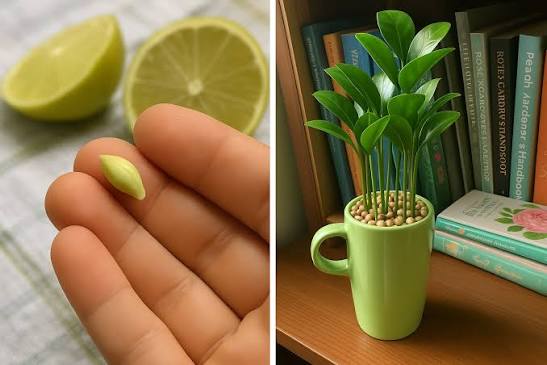
Instead of throwing away the seeds the next time you use a lemon, why not try growing one? 🌱
Growing a lemon tree from seed is an inexpensive and enjoyable gardening project that can be done indoors. You don’t need a large garden or expensive equipment—a small cup, fresh lemon seeds, suitable potting mix, warmth, and patience are enough to get started.
But there are a few misconceptions worth clearing up first. A lemon seedling won’t instantly fill your room with lemon fragrance, and a tree grown from seed can take many years to produce fruit. Still, watching a tiny seed develop into a beautiful citrus plant makes this a rewarding project.
Here’s how to do it properly.
🍋 Can You Really Grow a Lemon Tree From a Seed?
Yes! Fresh lemon seeds can germinate and grow into healthy citrus plants.
And contrary to a common gardening myth, the lemon doesn’t necessarily need to be organic. Seeds from conventionally grown lemons can germinate too.
What matters more is choosing seeds that are:
✔ fresh
✔ plump and undamaged
✔ taken from a ripe lemon
✔ kept moist before planting
Avoid seeds that look shriveled, damaged, or unusually small.
🥤 What You’ll Need
The project requires only a few basic materials:
- 1 fresh lemon
- Several lemon seeds
- Small cup or nursery pot
- Well-draining potting mix
- Water
- Clear plastic bag or plastic wrap — optional
- A warm, bright location
⚠️ Most important: drainage
If you’re using a decorative cup, it needs drainage holes at the bottom.
A cup without drainage can hold too much water, which increases the risk of root rot.
For that reason, a small nursery pot with drainage is even better. You can always place it inside a decorative cup.
🌱 Step 1: Prepare the Lemon Seeds
Cut open a ripe lemon and remove several healthy-looking seeds.
It’s better to plant several because not every seed will necessarily germinate.
Rinse the seeds gently with water to remove fruit pulp and sugar.
Should you dry the seeds?
No.
Plant them while they’re still fresh. Allowing citrus seeds to dry completely can reduce their chances of germinating successfully.
💡 Tip: Keep them wrapped in a slightly damp paper towel while preparing your pot.
And there’s no reason to put a lemon seed in your mouth to keep it moist, as some viral tutorials recommend.
🪴 Step 2: Prepare the Cup
Fill your cup or small pot with a light, well-draining potting mix.
Leave approximately 2–3 cm (about 1 inch) of space at the top.
Moisten the soil before planting.
You want it:
✔ evenly moist
✔ loose
✔ well drained
You don’t want it:
❌ muddy
❌ waterlogged
❌ completely saturated
If you squeeze the soil, water shouldn’t pour out of it.
🌱 Step 3: Plant the Seeds
Make a small hole approximately 1–1.5 cm (about ½ inch) deep.
Place one lemon seed inside and gently cover it with potting mix.
If you’re using a wider container, you can plant several seeds with some space between them.
Water gently afterward so the soil settles around the seed.
Don’t bury the seeds too deeply.
💧 Step 4: Keep the Soil Moist
Moisture is essential during germination.
Check the soil regularly and water when the surface begins to dry.
However, there’s an important distinction:
Moist soil encourages germination. Waterlogged soil encourages rot.
A spray bottle can be useful for small containers because it allows you to moisten the surface without flooding it.
🌡️ Step 5: Give the Seeds Warmth
Lemon seeds germinate best under warm conditions.
Place the container somewhere comfortably warm and protected from cold drafts.
At this stage, warmth is more important than intense direct sunlight.
You can optionally cover the container loosely with clear plastic to help maintain humidity.
If you use plastic
✔ Check the soil regularly.
✔ Allow some ventilation.
✔ Watch for excessive condensation.
✔ Don’t leave the pot baking in intense direct sunlight.
A covered container can heat up surprisingly quickly.
🌱 Step 6: Wait for Germination
Now comes the part that requires patience.
Under suitable conditions, you may notice the first green shoot appearing within a few weeks.
Around 2–6 weeks is a reasonable expectation, although germination time varies with seed freshness, temperature, moisture, and growing conditions.
Don’t throw the pot away just because nothing appears after exactly two weeks.
🌱 Nature doesn’t follow an exact calendar.
☀️ Step 7: Give the Seedling Plenty of Light
Once your lemon seedlings emerge, gradually provide them with plenty of bright light.
If you used a plastic cover, you can remove it once the seedlings have established themselves.
A bright window can work well indoors.
If natural light is insufficient, a suitable grow light can help prevent seedlings from becoming tall, thin, and weak.
Watch the leaves
A seedling leaning strongly toward the window may be asking for more light.
Rotate the pot occasionally to encourage more even growth.
🌿 Step 8: Keep Only the Strongest Seedlings
If several seeds germinate in the same container, allow them to develop their first leaves.
You can then separate healthy seedlings carefully into individual pots.
Don’t wait until their roots become heavily tangled.
Handle young roots gently during transplanting.
🪴 Step 9: Move Your Lemon Tree to a Larger Pot
The cute little cup isn’t your lemon tree’s permanent home.
As the seedling develops, its roots need more space.
Move it into a larger container with:
✔ drainage holes
✔ fresh potting mix
✔ enough room for root development
Increase container size gradually rather than moving a tiny seedling directly into an enormous pot.
Good drainage remains essential throughout the plant’s life.
💧 How Often Should You Water a Lemon Seedling?
There isn’t a universal schedule such as “water every three days.”
Watering depends on:
🌡️ temperature
☀️ sunlight
🪴 container size
🌱 plant size
💨 humidity
🧱 potting mix
Instead, check the soil.
Water when the upper layer begins to feel dry, then allow excess water to escape through the drainage holes.
Avoid this common mistake
Don’t leave the pot permanently sitting in water.
Citrus roots need both moisture and oxygen.
☀️ Can You Put Your Lemon Tree Outside?
Yes, when temperatures are suitable.
Lemon trees appreciate plenty of light, and an outdoor location can be excellent during warm weather.
But don’t move a young indoor seedling suddenly into intense summer sun.
🌞 Acclimate it gradually
Start with a protected, bright location and gradually increase its exposure to direct sunlight over several days.
This reduces the risk of leaf scorch.
Also protect young plants from:
❄️ frost
💨 severe wind
🔥 extreme heat
❄️ What Should You Do in Winter?
Lemon trees are sensitive to freezing temperatures.
In climates with cold winters, container-grown lemon trees generally need protection.
A bright indoor location can be useful during the colder months.
Keep the plant away from extreme temperature fluctuations and avoid placing it directly beside very hot radiators.
Growth may naturally slow when light levels fall.
🍋 Will a Lemon Tree Grown From Seed Produce Lemons?
This is one of the most important things to understand before starting.
Possibly—but don’t expect fruit anytime soon.
A seed-grown lemon tree can take many years to become mature enough to flower and fruit.
And there’s another catch.
A seed-grown citrus tree isn’t necessarily identical to the tree that produced the original fruit. Seed propagation introduces biological variability.
So the fruit eventually produced may differ from the lemon you bought.
🍋 If your goal is fruit…
A nursery-bought grafted lemon tree is generally a much better option because it is selected specifically for fruit production and typically bears much sooner.
🌱 If your goal is the experience…
Growing from seed is fantastic.
You get to watch the entire transformation:
seed → sprout → seedling → young citrus tree
That’s what makes this project so enjoyable.
🌸 Will a Lemon Seedling Make Your Room Smell Like Lemons?
Not in the way some viral posts suggest.
A tiny lemon seedling usually won’t act like a natural room fragrance.
Citrus foliage contains aromatic compounds, and leaves can release a pleasant citrus scent, particularly when gently touched or rubbed. Mature flowers can also be wonderfully fragrant.
But don’t expect a cup containing a young lemon plant to continuously perfume an entire bedroom.
It’s better to grow it because it’s:
🌱 attractive
🍋 interesting
🪴 decorative
♻️ inexpensive
👨👩👧 a fun gardening experiment
Consider the fragrance a possible bonus rather than the main reason for growing it.
🌿 7 Tips for a Healthy Lemon Seedling
For the best chance of success:
- Plant several fresh seeds rather than relying on one.
- Use a container with drainage holes.
- Keep the soil moist but never waterlogged.
- Provide warmth during germination.
- Give seedlings plenty of light after they emerge.
- Repot as the roots and plant grow.
- Be patient—citrus grown from seed is a long-term project.
❌ Common Mistakes to Avoid
One of the biggest advantages of growing lemons from seed is how simple the process is. Most failures come from a few avoidable mistakes.
Avoid:
❌ planting completely dried-out seeds
❌ using a cup without drainage
❌ keeping the soil constantly soaked
❌ burying seeds too deeply
❌ placing covered pots in scorching direct sunlight
❌ expecting every seed to germinate
❌ exposing indoor seedlings suddenly to intense outdoor sun
❌ expecting lemons after a few months
❌ assuming a seed-grown tree will reproduce the original lemon exactly
Getting the basics right makes a huge difference.
💡 Bonus: The Paper-Towel Germination Method
Want to watch the germination happen before planting?
Try this method.
Clean several fresh lemon seeds and place them between sheets of slightly damp paper towel.
Put the towel inside a loosely closed container or bag and keep it somewhere warm.
Check regularly to make sure the towel remains slightly moist and to watch for germination.
Once a root appears, carefully transfer the seed into potting mix.
🌱 Be gentle—the young root is delicate.
❓ FAQ – Growing a Lemon Tree From Seed
How long does a lemon seed take to germinate?
Often a few weeks under favorable conditions. Around 2–6 weeks is a useful guideline, but individual seeds can vary.
Do lemon seeds need sunlight to germinate?
Warmth and moisture are particularly important during germination. After the seedling emerges, provide plenty of light.
Do I need an organic lemon?
No. Seeds from conventionally grown lemons can also germinate.
Should I peel the outer coating from the seed?
It isn’t necessary. Fresh, cleaned seeds can be planted directly.
Can I grow a lemon tree permanently in a cup?
No. A cup is suitable only for starting the plant. Eventually, the seedling needs a larger container with good drainage.
Can I grow several lemon seeds together?
Yes, particularly during germination. Healthy seedlings can later be separated into individual containers.
Why is my lemon seed not germinating?
Possible causes include an old or damaged seed, excessively dry soil, waterlogging, low temperatures, or simply insufficient time.
Will my seed-grown tree produce lemons?
It may eventually flower and fruit, but it can take many years, and the resulting fruit isn’t guaranteed to be identical to the original lemon.
Can I keep my lemon tree indoors?
Yes, especially while young, provided it receives enough light. Mature citrus plants generally perform best with abundant light and suitable growing conditions.
Does a lemon plant naturally perfume a room?
Not strongly. Leaves can release a citrus aroma when touched, and flowers on a mature tree can be fragrant, but a young seedling isn’t a substitute for an air freshener.
🏁 Final Thoughts
Growing a lemon tree from seed is one of those wonderfully simple projects that turns something normally discarded into a living plant. 🍋🌱
Start with fresh seeds, use a well-draining container, maintain gentle moisture and warmth, and provide plenty of light once the seedlings emerge.
Just keep your expectations realistic.
Your little lemon plant probably won’t perfume the entire house or give you lemons next summer. Seed-grown citrus is a long-term project, and fruit production can take years.
But watching an ordinary lemon seed slowly become a beautiful green citrus plant?
That alone makes this little gardening experiment worth trying. 🌿✨